 Birch Bay Siding
 Building Decks for the Terrell Creek Climate
Homes in the Terrell Creek area near Birch Bay sit close enough to the water and the surrounding tree cover that a deck here works harder than a deck built twenty miles inland. Salt-tinged air off the bay, wind-driven rain that comes in sideways rather than straight down, and a moss season that can stretch from October through April all put steady pressure on wood, fasteners, and finishes. A deck built without those conditions in mind will look fine the first summer and start showing problems — soft boards, rust streaks, slick green film on the walking surface — within a year or two.
None of that means a deck near Terrell Creek has to be high-maintenance or short-lived. It means the framing, fastener choice, drainage, and material selection all need to be matched to this specific stretch of Whatcom County rather than pulled from a generic build spec.
Salt Air and Fasteners
Proximity to Birch Bay means airborne salt reaches decks that aren't even in direct view of the water. Standard galvanized fasteners can start corroding faster here than they would further inland, which shows up as rust streaks bleeding down the decking boards and, eventually, weakened connections at the framing. It's a maintenance and longevity issue, not a cosmetic one.
Driving Rain and Ledger Flashing
Storms off the Strait tend to drive rain at an angle, which pushes water into places a vertical-rain assumption would miss — behind ledger boards, under railing posts, into end grain that isn't sealed. The ledger connection where a deck attaches to the house is the single most common failure point on Pacific Northwest decks, almost always because flashing was skipped or installed incorrectly.
The Long Moss Season
Shade from surrounding trees, consistent moisture, and mild temperatures give moss and algae a long runway to establish on horizontal surfaces. Once it takes hold on a walking surface, it's not just unsightly — it's a slip hazard, and it holds moisture against the decking material, shortening its life.
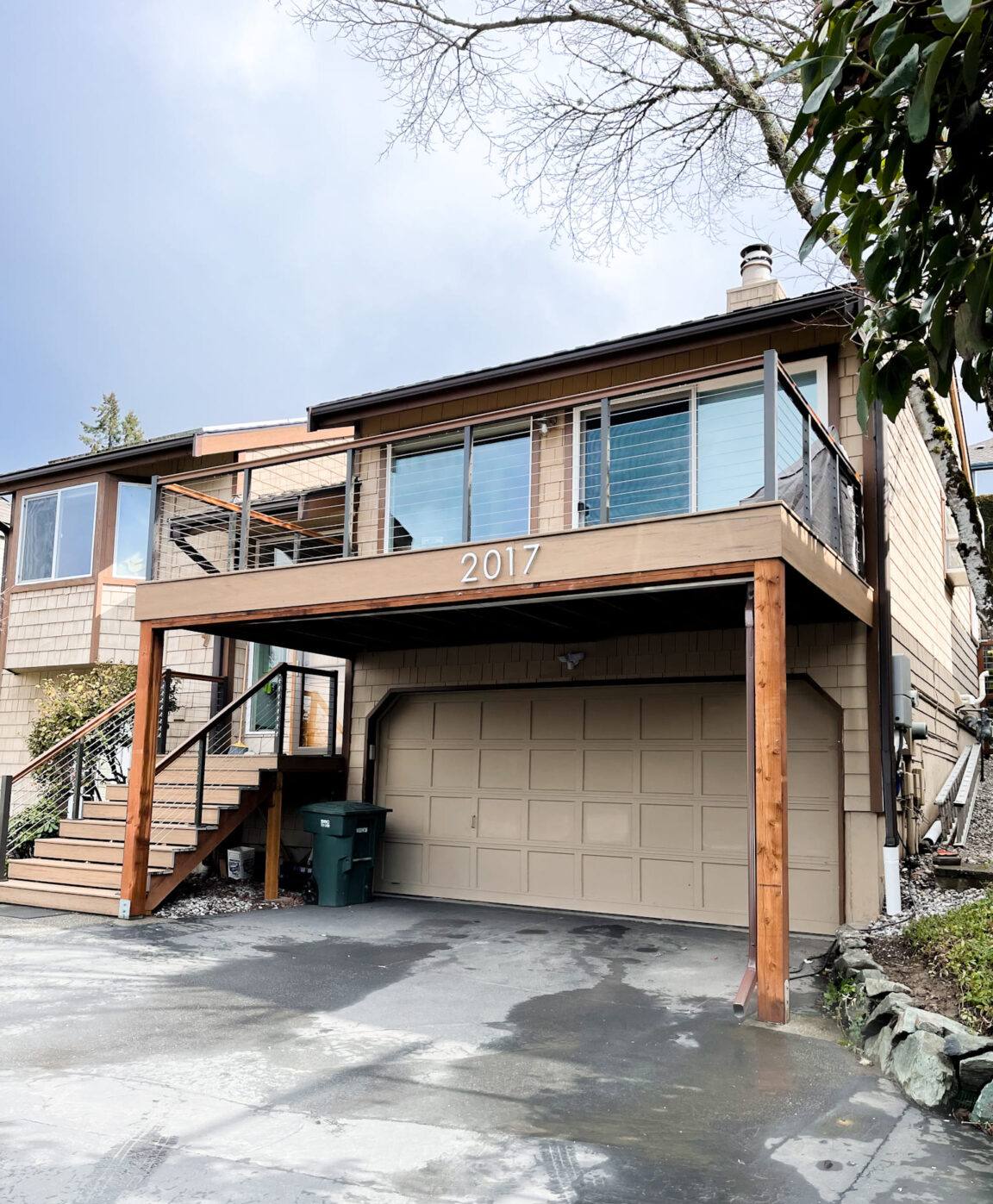
What Terrell Creek Properties Typically Need From a Deck
Lots in and around Terrell Creek tend to vary in how exposed they are — some are tucked under mature trees with heavy shade and moss pressure, others sit more open with more wind and salt exposure. Before we recommend a design or a material, we look at:
- How much direct sun the deck surface will actually get through the year, which drives moss and mildew risk
- Wind exposure and how close the site is to open water or a clearing where salt air travels unobstructed
- Grade and drainage around the footings — standing water at the base of posts is a slow, quiet way to lose a deck
- Existing tree cover and root systems near planned footing locations
- How the deck ties into the house — walkout basement, sliding door, elevated entry — since that dictates ledger and stair design
A deck plan that ignores these site-specific factors ends up needing repairs a properly assessed one wouldn't.
Decking Material Options That Hold Up Here
There's no single "best" decking material — there's a best material for a given site, budget, and maintenance appetite. Here's how the common options actually perform under Birch Bay's salt air, rain, and moss conditions:
| Material | Upfront Cost | Moisture & Moss Behavior | Maintenance |
|---|---|---|---|
| Pressure-treated fir/hem-fir | Lowest | Absorbs water readily; needs sealing to resist moss and rot | Annual cleaning and re-sealing recommended |
| Cedar | Moderate | Naturally rot-resistant, but still needs regular sealing near salt air | Periodic cleaning, re-oiling every couple of years |
| Composite decking | Higher | Doesn't absorb water or rot, but can still grow surface moss/mildew in constant shade | Periodic washing; no sealing or staining |
| PVC/capped composite | Highest | Fully moisture-resistant surface; best resistance to mildew staining | Lowest — occasional washing |
For a heavily shaded lot tight against tree cover, we're more likely to steer a homeowner toward composite or capped composite, simply because the maintenance burden of keeping wood clean and sealed in constant shade is real. For a more open, sun-exposed site, a well-built cedar or treated-wood deck with a good sealing schedule can perform very well and costs less to start.
Framing, Fasteners, and Footings Done Right
The visible decking gets all the attention, but the framing underneath is what determines whether the deck is still solid in fifteen years. For this area specifically, a correct job includes:
- Stainless steel or coated, corrosion-rated fasteners and structural hardware — not standard galvanized — given the salt air exposure
- Proper ledger flashing with a water-resistive barrier behind it, installed so driving rain can't work its way behind the board
- Footings set to local frost depth and bearing requirements, with attention to drainage around each post base so water doesn't pool against the wood or concrete
- Joist spacing and beam sizing matched to the actual decking material chosen, since composite and PVC products often have tighter span requirements than wood
- Gapping and airflow underneath the deck surface so boards can dry out between rain events instead of staying damp
Skipping any one of these doesn't usually show up as a visible problem right away — it shows up two, five, or ten years later as a soft spot, a loose post, or a stubborn moss patch that keeps coming back no matter how often it's cleaned.
Permitting Near Birch Bay and Whatcom County
Most decks attached to a house, or built more than a couple feet above grade, require a building permit through Whatcom County, along with guardrails and stair railings once the deck reaches a certain height. Permit requirements also touch on footing depth, ledger attachment, and guardrail spacing — details that are easy to get wrong if a build is planned without them in mind from the start. We handle the permitting process as part of the job rather than leaving it for the homeowner to sort out, and we design to code from day one instead of hoping an inspection passes.
Our Deck Building Process
- Site visit and assessment — we walk the property, look at sun exposure, drainage, tree cover, and how the deck will connect to the house.
- Design and material selection — we talk through material trade-offs honestly, based on your site and budget, not a one-size pitch.
- Permitting — we prepare and submit what Whatcom County requires so the build is legal and inspected, not just built.
- Construction — footings, framing, ledger flashing, decking, and railings, built to hold up under this area's rain and salt exposure.
- Final walkthrough — we go over the finished deck with you, including what maintenance it actually needs going forward.
Why a Crew That Already Works Terrell Creek Matters
A contractor who mostly builds decks in drier, inland parts of the state can still frame a deck that looks correct — but "looks correct" and "built for this climate" aren't the same thing. Working regularly in and around Birch Bay means we already know which fastener grades hold up against the salt air, how far the flashing needs to extend on a ledger to handle driving rain off the water, and which lots hold shade and moisture long enough to need a different material recommendation than the lot next door. That local pattern recognition is the difference between a deck that needs real repairs in year three and one that's still tight and solid well past year fifteen.
It also means fewer surprises during permitting, since we're familiar with what Whatcom County looks for on residential deck plans in this area.
Maintaining Your Deck Through Moss Season
Whatever material you choose, a little seasonal attention goes a long way in this climate. A simple yearly routine:
- Sweep debris and fallen leaves off the surface regularly, especially under tree cover — trapped organic matter is what feeds moss
- Wash the deck surface at least once a year with a deck-safe cleaner to remove early moss and algae growth before it establishes
- Check and re-seal wood decking on the schedule recommended for the product — don't wait until it looks gray and dry
- Inspect fasteners and hardware yearly for rust streaking or loosening, particularly near the ledger and stair connections
- Confirm gaps between boards stay clear so water keeps draining through instead of pooling on the surface
- Trim back overhanging branches where practical to reduce shade and debris buildup on the deck
Composite and PVC decking cut down on the sealing and staining work, but they still need periodic washing — moss doesn't care what the surface is made of if it stays damp and shaded long enough.
If you're planning a new deck or need an honest look at whether an existing one is holding up the way it should, we're glad to come take a look. Reach out for a free, no-pressure estimate — we'll walk the site with you and tell you plainly what your Terrell Creek property actually needs.