 Birch Bay Siding
 Storm Damage Roof Repair Built for Lummi Island Conditions
Lummi Island sits out in the water, and that changes how storms treat a roof compared to a house a few miles inland. Wind comes off the Strait with nothing to slow it down, salt air works into every exposed edge and fastener, and the ferry-access location means a homeowner can't always get a contractor out the same day a storm passes through. If you've got lifted shingles, a leak that started during the last windstorm, or moss that's been quietly working its way under your roofing for a couple of seasons, this page is about getting that specific problem fixed correctly — not a generic roof repair pitch.
Birch Bay Siding Company works roofs and exteriors across Whatcom County, including Lummi Island and the Birch Bay shoreline. We're not a roofing-only outfit that treats the roof as separate from everything else — a storm that damages your roof is usually stressing your siding, trim, and flashing at the same time, and we look at the whole envelope, not just the shingles.
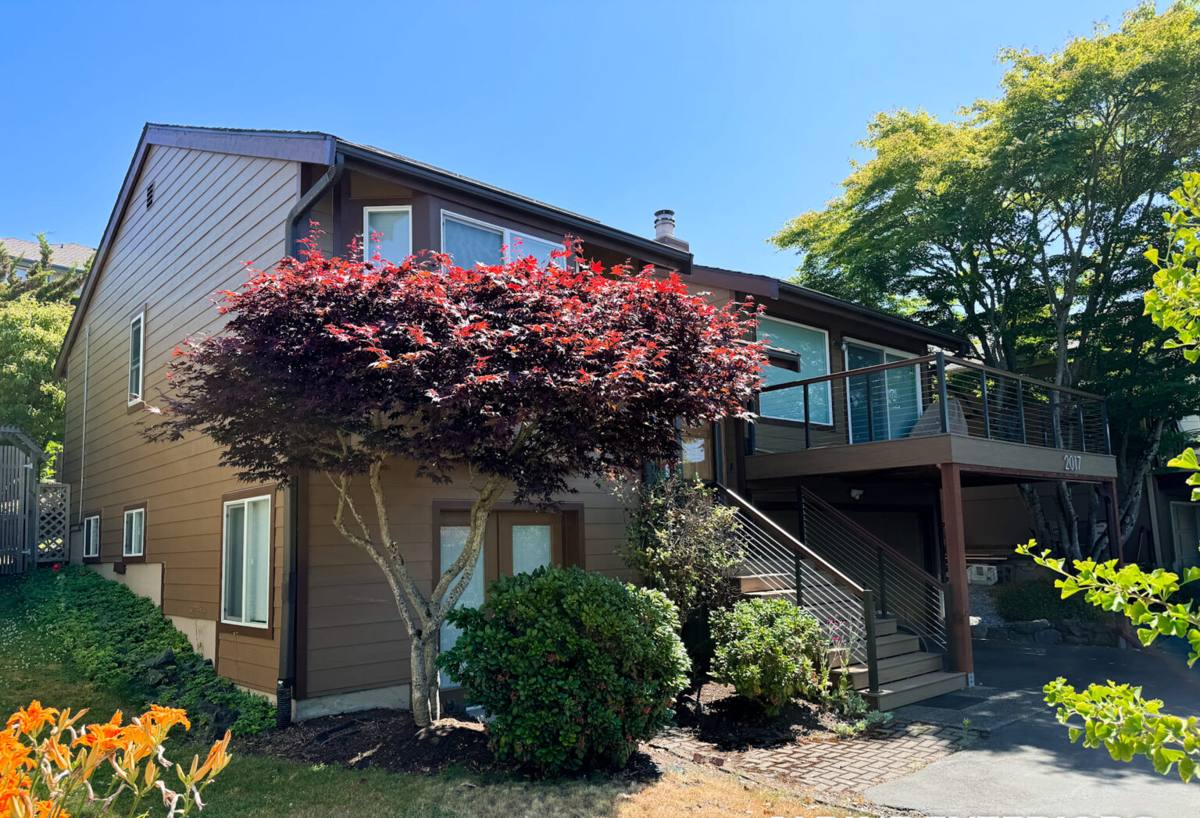
Why Storm Damage Here Looks Different Than Inland Damage
Three things combine on Lummi Island and the surrounding Birch Bay coastline to make storm damage harder on a roof than the same storm would be a few miles inland:
Salt Air
Airborne salt from the Strait of Georgia and the Sound settles on roofing materials and accelerates corrosion on exposed metal — nail heads, flashing, gutter fasteners, and any exposed metal roofing components. A fastener that would last decades inland can start rusting and losing its grip years earlier out here, which is exactly the kind of weak point a storm finds.
Driving Rain
Wind-driven rain doesn't just fall on a roof, it gets pushed sideways and upward under laps, around vents, and into any gap that a calm-weather rain would never reach. A roof that's watertight in normal conditions can still leak during a wind event because the water is being forced in at angles the original installation wasn't tested against.
A Long Moss Season
Whatcom County's wet stretch runs long, and shaded, north-facing roof sections on tree-covered lots (common on Lummi Island) stay damp for months at a time. Moss doesn't just look bad — it holds moisture against the roofing surface, lifts shingle edges as it grows, and gives wind something to grab onto during a storm. A roof with established moss growth is more vulnerable to storm damage than a clean one, not less.
Signs Your Roof Has Storm Damage
Some storm damage is obvious. A lot of it isn't, especially from the ground. Here's what we tell homeowners to check for after a windstorm or heavy rain event:
- Shingles that look lifted, curled, or missing entirely, especially on the side of the roof that faced the wind
- Granules collecting in gutters or at the base of downspouts (a sign of shingle wear or impact)
- New or worsening water stains on interior ceilings, especially near chimneys, skylights, or roof valleys
- Flashing that's visibly bent, pulled away from a wall or chimney, or missing sealant
- Sagging or soft spots in the roof deck, which usually means water has already gotten underneath
- Debris damage — branches, gravel, or impact marks from wind-carried material
- Gutters pulled loose or full of shingle fragments after a storm
If you see any of these, the right move is a roof inspection before the next storm, not after. Water that gets under a roofing system during one event tends to keep finding the same path during the next one, and the damage compounds.
What a Correct Storm Damage Repair Actually Involves
Storm repair gets done badly more often than most exterior work, mostly because it gets rushed. A patch that stops today's leak but doesn't address why the roof failed there in the first place just delays the next repair call. A proper job includes a few things a quick patch skips.
A Full Inspection, Not Just the Reported Leak
Water travels before it shows up as a stain. We trace the leak back to its actual entry point, which is sometimes several feet from where the ceiling damage appears, and we check the surrounding roof area for damage that hasn't caused a visible leak yet but will if left alone.
Matching the Existing Roofing System
Repairs need to tie into the existing shingle pattern, flashing details, and underlayment correctly. A mismatched patch — wrong shingle profile, poorly integrated flashing, or sealant used in place of proper flashing — often leaks again within a season or two, especially with the wind-driven rain this area gets.
Flashing and Fastener Upgrades Where It Makes Sense
Given the salt-air corrosion issue, we use fasteners and flashing that hold up to coastal exposure rather than just replacing like-for-like with materials that will corrode again on the same timeline. This is a judgment call based on the specific roof and its exposure, not a blanket upsell.
Moss and Debris Cleared Before Repair, Not After
If moss or organic debris contributed to the failure, we clear it and address the underlying cause (usually shade and moisture retention) as part of the repair, not as an afterthought. Patching over moss just hides the problem under new material.
Our Storm Damage Repair Process
- Initial contact and triage. If you have an active leak, we prioritize stopping active water intrusion first — tarping or emergency measures if needed — before scheduling the permanent repair.
- On-site inspection. We walk the roof (weather permitting) and document the damage with photos, which also serves as your record for insurance purposes.
- Written scope and estimate. You get a clear explanation of what failed, what we're proposing to fix, and why — not just a price with no context.
- Scheduling around ferry and weather logistics. For Lummi Island specifically, we plan material delivery and crew timing around ferry schedules and forecasted weather windows so the job isn't stalled halfway through.
- Repair execution. Matching materials, correct flashing integration, and fastener choices suited to coastal exposure.
- Final walkthrough. We show you what was done and what to watch for going forward.
Repair vs. Replacement: How We Help You Decide
Not every storm-damaged roof needs to be replaced, and not every roof that "just needs a patch" should stay patched. The right call depends on the roof's age, how widespread the damage is, and whether this is an isolated storm event or the latest in a pattern of recurring problems.
| Factor | Favors Repair | Favors Full Replacement |
|---|---|---|
| Roof age | Under 12–15 years, otherwise sound | Nearing or past expected service life |
| Damage extent | Localized to one section or slope | Widespread across multiple slopes |
| Storm history | First significant damage event | Recurring damage or leaks after multiple storms |
| Moss/moisture history | Minimal prior moss or trapped moisture | Long-term moss damage under the surface |
| Underlying deck condition | Deck is solid and dry | Deck shows rot or soft spots |
| Insurance scope | Adjuster approves targeted repair | Adjuster or inspection supports full replacement |
We'll give you an honest read on which side of this table your roof falls on. There's no benefit to us in overselling a replacement a homeowner doesn't need, and no benefit to you in a repair that won't hold.
Working With Insurance on Storm Damage
Most storm damage claims move faster and get resolved more fairly when the documentation is solid from the start. A few things that help:
- Photos of the damage taken as soon as it's safe to do so, from the ground and, if possible, closer up
- A written inspection report from a contractor, not just a verbal description
- Dated records of when the storm occurred and when the damage was first noticed
- A scope of work that separates storm-caused damage from any pre-existing wear, since insurers will distinguish between the two
We provide documentation homeowners can hand to their adjuster, and we're available to talk through the scope directly with an insurance company if that helps move the claim along. We don't handle the claim itself — that's between you and your insurer — but we make sure the roofing side of the paperwork is accurate and complete.
Why Local Experience on Lummi Island Matters
A crew that hasn't worked Lummi Island before runs into avoidable friction: ferry schedules that limit when materials and equipment can arrive, wind exposure patterns that are different on the island than on the mainland shoreline just a few miles away, and tree cover that creates moss and moisture conditions specific to certain lots. None of that is complicated, but it matters for scheduling a job correctly and not showing up unprepared.
We also see enough roofs across Birch Bay and the surrounding Whatcom County coastline to recognize patterns — which flashing details tend to fail first in this climate, which roof orientations take the worst of a southwesterly storm, and which moss situations are cosmetic versus which ones have already caused damage underneath. That pattern recognition is what separates a repair that holds from one that's back on the schedule next winter.
After the Repair: Keeping Storm Damage From Coming Back
A good repair buys you time, but the same conditions that caused the original damage are still present. A short list of maintenance habits that make a real difference on the coast:
- Clean gutters at least twice a year, more often under trees — clogged gutters push water back under roofing edges
- Have moss treated or removed before it establishes, especially on shaded, north-facing slopes
- Check flashing around chimneys, vents, and skylights annually, since these are the first points to fail under wind-driven rain
- Trim back overhanging branches that drop debris and keep sections of roof shaded and damp
- After any significant windstorm, do a quick visual check (or have us do it) before the next one arrives
If a recent storm left you with a leak, missing shingles, or damage you're not sure how serious it is, we're glad to come take a look. We offer free, no-pressure estimates for Lummi Island and Birch Bay homeowners — fill out the form below and we'll get back to you to schedule an inspection.