 Birch Bay Siding
 Storm Damage Roof Repair for California Creek Homes
California Creek sits close enough to Birch Bay and the Strait of Georgia that homes here take a different kind of beating than roofs even a few miles inland. Wind off the water drives rain sideways under shingles and flashing that would stay dry in a calmer storm. Salt-laden air speeds up corrosion on fasteners, flashing, and vent boots. And the long gray stretch of fall through spring keeps roofs wet and shaded long enough for moss to take hold in places sun never reaches. When a storm rolls through and does damage, repairing it correctly means understanding all three of those factors together, not just patching the spot that's leaking.
This page covers what storm damage repair actually looks like for a California Creek roof, what we check for, and how we approach the job so it holds up through the next storm season instead of just the next dry week.
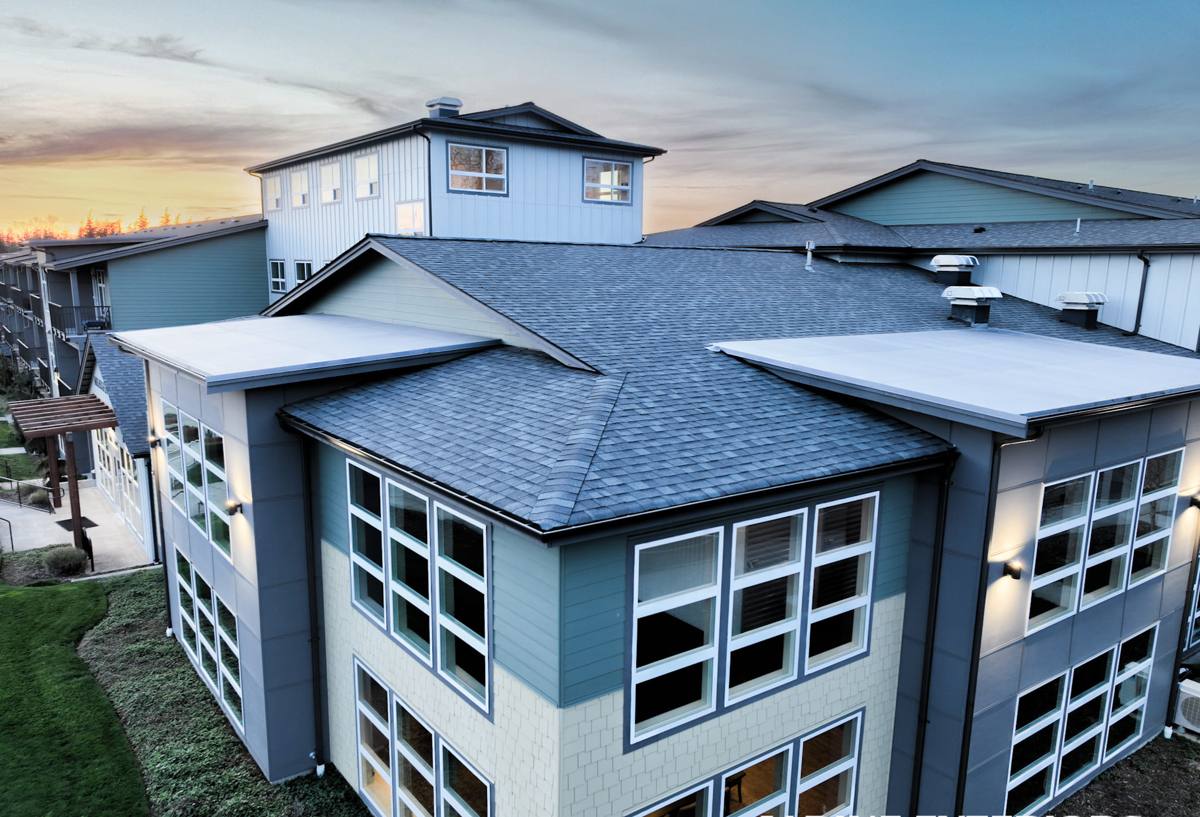
What Whatcom County Storms Do to a Roof
Wind-Driven Rain and Salt Air
Most roofing systems are designed assuming rain falls more or less straight down. That assumption breaks down in a coastal wind event. Gusts push water uphill under shingle tabs, through nail holes that were never meant to see standing water, and into any gap where flashing has started to lift. Add in the corrosive effect of salt air on exposed metal — nail heads, flashing seams, vent stacks — and you get failure points that wouldn't show up on a roof twenty miles inland at the same age.
Moss and Trapped Moisture
Birch Bay's climate keeps roofs damp for long stretches, especially on north-facing slopes and under tree cover, which is common around California Creek's more wooded lots. Moss doesn't just look bad — it holds moisture against the shingle surface, lifts tabs as it grows under the edges, and works its way into any seam that's already been weakened by wind or age. A roof that took storm damage and already has moss growth is dealing with two problems at once, and treating only the visible damage without addressing the moss usually means a repeat call within a year or two.
Signs Your California Creek Roof Has Storm Damage
Storm damage isn't always obvious from the ground. Some of it only shows up as a stain on a ceiling weeks later, after enough rain has worked its way through. Here's what we tell homeowners to look for after a wind or rain event:
- Shingles that look lifted, curled, or are missing outright, especially along ridges and roof edges where wind pressure is highest
- Granules collecting in gutters or at the base of downspouts — a sign of shingle surface wear or impact
- Flashing around chimneys, vents, or skylights that looks bent, separated, or has visible gaps
- Soft or discolored spots on interior ceilings or in the attic, particularly near exterior walls or valleys
- Moss buildup combined with any of the above — it hides damage and makes it worse over time
- Debris (branches, needles) packed into valleys or against roof-wall intersections, holding water in place
If you see any of these after a storm, it's worth getting a look before the next system moves through. Small gaps get bigger fast when they're exposed to repeated wind-driven rain.
What a Correct Storm Damage Repair Actually Involves
A Real Assessment, Not a Guess From the Ground
A proper storm damage repair starts with someone actually getting on the roof — not estimating from the driveway. We look at the full roof plane, not just the spot where the leak showed up inside, because wind damage rarely stays contained to one area, and water often travels along the underlayment before it finds its way through the ceiling. We also check flashing, vent boots, and any valleys, since those are the parts most likely to fail first in a coastal wind event.
Repair vs. Replace: How We Decide
Not every storm-damaged roof needs a full section replaced, but patching over damage that's more widespread than it looks is a false economy. Here's generally how that decision breaks down:
| Situation | Typical Approach | Why |
|---|---|---|
| A few shingles lifted or missing, roof otherwise sound and under 12-15 years old | Spot repair | Isolated damage on a roof with good remaining life doesn't justify a larger job |
| Flashing failure at chimney, vent, or valley | Flashing repair or replacement in that section | Flashing fails independently of shingle age and is a common source of storm leaks |
| Widespread granule loss, multiple damaged areas, heavy moss with lifted tabs | Full section or full roof replacement | Repeated patching on a roof already breaking down doesn't hold up through another storm season |
| Interior water staining with no clear single source | Full roof inspection before any repair quote | Water travels — chasing the visible stain without checking the whole plane often misses the real entry point |
We'll tell you honestly which category your roof falls into, including when a repair is genuinely the right call and a full replacement would be more than you need.
Our Process for California Creek Storm Repairs
- On-roof inspection — We check the full roof, not just the damaged area, including flashing, valleys, and vent penetrations.
- Photo documentation — Useful for your own records and for any insurance claim you decide to file.
- Straight explanation of findings — What's damaged, what's just worn, and what can wait.
- Written estimate — Clear on materials, scope, and what the repair does and doesn't cover.
- Repair work — Matching materials where possible, proper flashing technique, and attention to the seams and edges that take the brunt of coastal wind.
- Final check — We walk the repair with you before we consider the job done.
Materials and Methods We Use
For coastal Whatcom County roofs, we favor corrosion-resistant fasteners and flashing over standard-grade materials, since salt air shortens the life of anything that isn't rated for it. On shingle repairs, we match the existing product as closely as possible so the repaired section weathers at the same rate as the rest of the roof rather than standing out or aging differently. Where flashing has failed, we replace it properly rather than sealing over it — sealant alone on a coastal roof tends to fail again within a season or two once salt air and freeze-thaw cycling get to it. We're upfront when a cheaper fix is available but won't hold up long-term in this climate; that trade-off is yours to make, but we'll tell you what it is before you decide.
Insurance and Storm Claims
Many storm damage repairs in this area get filed through homeowners insurance, particularly after a named wind event. We can document damage in a way that's useful for a claim — clear photos, a written scope of the damage, and an honest assessment of cause. We're not a public adjuster and won't inflate a scope to pad a claim, but we'll make sure the documentation reflects what's actually there so you're not under-repairing a roof because an initial estimate missed something.
Why a Crew That Already Works California Creek Matters
Roofing crews that mostly work drier, inland areas don't always think about salt air corrosion or moss-driven moisture the way a coastal Whatcom County crew does. Working in and around Birch Bay regularly means we've seen how quickly a small flashing gap turns into a real leak once a few more windstorms hit it, and we plan repairs with that in mind instead of just matching the damage that's visible on the day of the estimate. That local pattern recognition is the difference between a repair that holds through one storm and one that holds through several.
Cost Factors for Storm Damage Roof Repair
| Factor | How It Affects the Job |
|---|---|
| Size and location of damage | A few shingles on an accessible slope costs far less than a wide area or a hard-to-reach valley |
| Flashing involvement | Flashing repair or replacement adds labor and material beyond a straight shingle swap |
| Roof pitch and access | Steep or high roofs require more safety setup and time |
| Moss or moisture damage present | Underlying decking damage found during repair can add scope once the roof is opened up |
| Material match availability | Older or discontinued shingle lines may require a closer color/style match or a broader repair area |
We won't know your exact numbers until we've actually been on the roof — anyone quoting a firm price sight unseen for storm damage is guessing.
Get an Honest Look Before the Next Storm
If a recent storm left you with a leak, missing shingles, or just a feeling that something's not right up there, it's worth having it looked at properly rather than waiting for the next system to make it worse. We offer free, no-pressure estimates for California Creek homeowners — you'll get a straight answer about what's actually going on with your roof and what it would take to fix it right. Use the form below to get started.