 Birch Bay Siding
 Blaine's Waterfront Climate Is Hard on Siding
Blaine sits right on Semiahmoo Bay and Drayton Harbor, at the far northwest corner of Whatcom County, close enough to the Strait of Georgia that homes here take a different kind of weather beating than siding was often designed for. Salt-laden air moves in off the water and settles on exterior walls, wind-driven rain comes in sideways during winter storms instead of falling straight down, and shaded, north-facing walls stay damp long enough during our gray stretches to grow moss and algae. None of that is unusual for this part of the county — it's just the tradeoff of living close to the water. But it means siding that would hold up fine forty miles inland can start failing early in Blaine.
When we replace siding on a home in this area, we're not just swapping old material for new. We're addressing the specific combination of salt exposure, sustained moisture, and biological growth that this stretch of coastline produces, and building the wall assembly to handle it for decades, not just years.
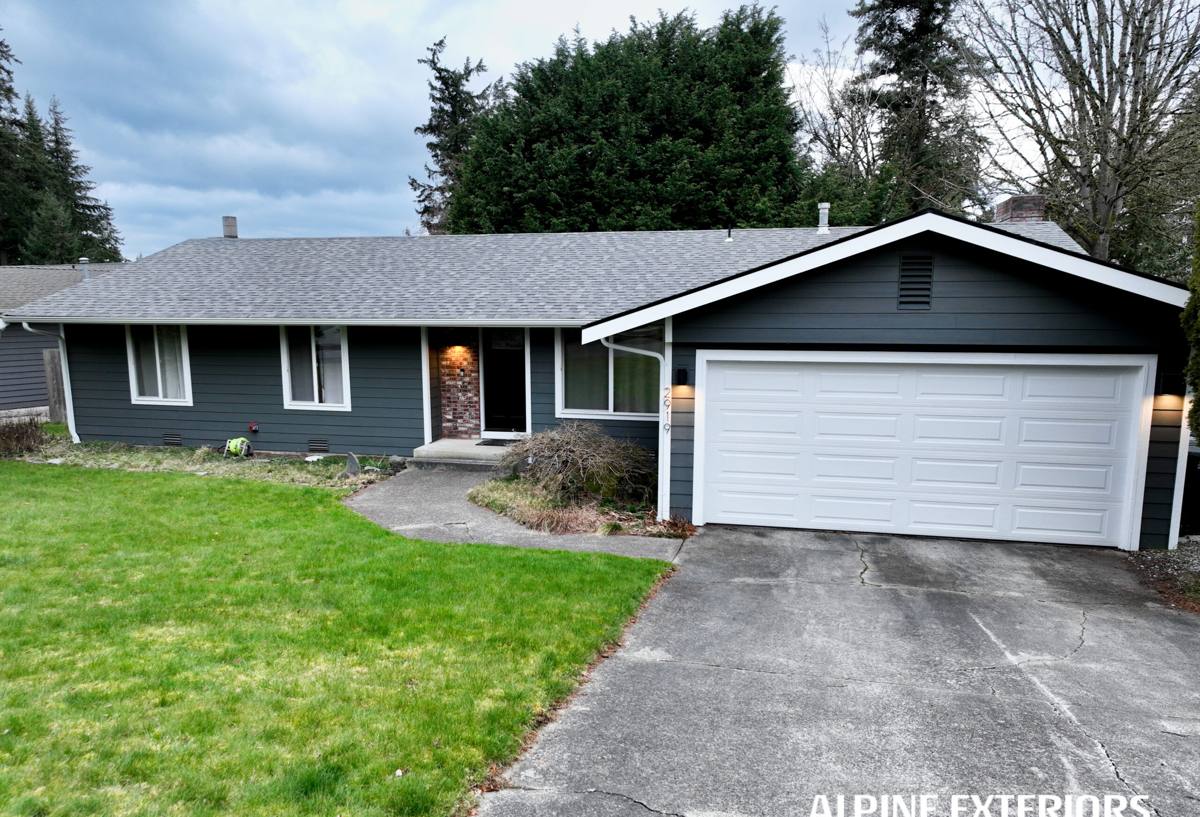
Signs a Blaine Home Needs Siding Replacement
Siding problems near the water don't always look dramatic at first. A lot of the damage happens behind the surface before it shows up on the outside. Homeowners in Blaine should watch for:
- Soft or spongy spots when you press on siding, especially near the bottom courses and around window trim
- Persistent moss or dark streaking on shaded walls that keeps returning after cleaning
- Paint that's bubbling, peeling, or failing faster than it used to, particularly on the side of the house facing the water
- Visible gaps, warping, or cupping in individual boards or panels
- A chalky, corroded look to metal fasteners or trim near the siding
- Rising energy bills that suggest the wall assembly behind the siding is no longer doing its job
- Interior signs — musty smell, staining, or soft drywall near exterior walls — that point to moisture getting past the siding
Any one of these on its own might just mean a repair. Several at once, especially combined with the age of the siding, usually means it's time to talk about full replacement before the sheathing and framing underneath start taking damage too.
What a Correct Siding Replacement Actually Involves
Tear-Off and Inspection
Replacement starts with removing the old siding down to the sheathing, not covering over it. This is the only point in the project where we can actually see the condition of the wall — soft sheathing, rot around old flashing, or water staining that tells us moisture has been getting in for a while. On a Blaine home, this step matters more than usual, because damage from long-term moisture exposure near the water is often further along than it looks from outside.
Moisture Barrier and Drainage Plane
A correctly detailed weather-resistive barrier, properly lapped and sealed at every penetration, is what keeps incidental water moving down and out instead of into the wall. In a wind-driven rain environment like Blaine's, we also pay close attention to creating a drainage gap behind the siding so that any moisture that does get past the cladding has somewhere to go besides sitting against the sheathing.
Fastening and Fit
Fiber cement siding has specific fastening requirements — nail placement, spacing, and penetration depth all affect how well the material performs over time. Fastening too tight, too loose, or in the wrong location is one of the most common causes of early siding failure, regardless of how good the material itself is.
Trim, Flashing, and Transitions
Most siding failures start at the details, not the flat field of the wall: window and door flashing, roof-to-wall intersections, deck ledgers, and outside corners. These are the spots where water finds its way in, and where a rushed installation shows up first as a callback a few years later.
Why We Install Only James Hardie Fiber Cement
We made a deliberate decision to install one siding system — James Hardie fiber cement — instead of offering a menu of vinyl, engineered wood, and other fiber cement brands. That's not about brand loyalty; it's about what holds up in a marine climate like Blaine's without turning into an ongoing maintenance project for the homeowner.
| Material | Behavior in Salt Air & Sustained Moisture | Why It Affects Our Recommendation |
|---|---|---|
| Vinyl siding | Can warp, fade, or become brittle with UV and temperature swings; seams offer more entry points for wind-driven rain | Not the moisture and impact performance we want backing a Blaine wall assembly |
| Primed spruce / cedar | Organic wood substrate is naturally attractive to moisture and moss in shaded, damp conditions | Requires more frequent recoating and repair in this climate than most homeowners want |
| Engineered wood (LP SmartSide) | Wood-strand core can swell or degrade at cut edges and fastener points if moisture gets past the coating | Edge and joint sealing has to be maintained perfectly, indefinitely, to avoid problems |
| James Hardie fiber cement | Non-combustible, dimensionally stable material that doesn't rot, and factory ColorPlus finish resists salt-air fading | The performance profile we're willing to put our name behind on coastal homes |
James Hardie's HZ5 product line is engineered specifically for climates with freeze-thaw cycles and sustained moisture exposure — a good match for Whatcom County's coastal weather. The ColorPlus factory finish is baked on under controlled conditions and backed by its own finish warranty, which matters in an area where a site-applied paint job would otherwise be fighting salt air and rain from day one.
Our Process for Blaine Siding Replacement Projects
- On-site assessment — we walk the exterior, check for the signs listed above, and look at exposure on each side of the home, since the water-facing walls usually need more attention than the sheltered ones
- Detailed proposal — scope, product selection, and a clear breakdown of what's included, so there's no ambiguity about what you're paying for
- Tear-off and sheathing inspection — old siding comes off, and we address any rot or damage found underneath before anything new goes up
- Weather barrier and drainage plane installation — done to manufacturer spec, with extra attention at penetrations and transitions
- Hardie siding installation — fastened and fitted to James Hardie's requirements, not shortcuts
- Trim, caulking, and final detailing — the finishing work that determines how the house actually performs against weather
- Final walkthrough — we go over the finished work with you before calling the job done
Cost Factors for Siding Replacement in Blaine
Every home is different, so we don't quote pricing without seeing the house, but these are the main factors that move the cost of a project up or down:
| Factor | How It Affects the Project |
|---|---|
| Condition of sheathing underneath | Rot repair discovered during tear-off adds material and labor that can't be known until the old siding is off |
| Home size and wall complexity | More corners, dormers, and trim details mean more cutting, fitting, and flashing work |
| Siding profile and finish selection | Lap width, texture, and ColorPlus color all carry different material costs within the Hardie lineup |
| Water exposure on each elevation | Walls facing the bay or prevailing wind may warrant added drainage detailing, which affects labor |
| Access and site conditions | Multi-story sections, tight lot lines, or landscaping obstacles can affect equipment and labor time |
Why a Crew That Already Works Blaine Matters
Siding installation isn't one-size-fits-all, even within the same county. A crew that regularly works homes near Semiahmoo Bay knows which elevations tend to take the worst of the wind-driven rain, where moss shows up first, and how much drainage detailing is worth the extra effort versus overkill on a given house. That judgment comes from doing the work in this specific area repeatedly, not from a general knowledge of siding installation. It also means a crew that's around after the project is done — for warranty questions, for a caulking touch-up years down the line, or just to answer a question about how the siding is holding up.
Maintaining Your New Siding in Blaine's Climate
James Hardie siding, installed correctly, is low-maintenance — but low-maintenance isn't no-maintenance, especially this close to the water. A periodic rinse-down removes salt residue and slows moss growth on shaded walls. Keeping gutters clear and downspouts directed away from the foundation prevents water from splashing back up onto lower courses. And an annual walk-around to check caulking at trim and penetrations catches small gaps before they become entry points for the kind of driving rain this area gets in the winter months. None of this is heavy work, but it's the difference between siding that looks and performs well for its full service life and siding that starts showing problems a decade early.
If your Blaine home's siding is showing wear, or you're just planning ahead for a home near the water, we're happy to take a look and talk through what we'd recommend. Reach out for a free, no-pressure estimate using the form below.