 Birch Bay Siding
 Why Ferndale Decks Wear Out Faster Than the Brochures Suggest
Ferndale sits close enough to the water and the marine air moving in off Birch Bay and the Strait that homes here deal with a different kind of weather load than decks built further inland. Salt-laden air accelerates corrosion on anything metal - fasteners, joist hangers, post bases - long before the wood itself shows obvious damage. Add in Whatcom County's driving, wind-pushed rain and a moss season that can run from fall through spring, and you have a combination that attacks a deck from several directions at once: corrosion from the air, saturation from the rain, and slow rot fed by moss and algae that hold moisture against the wood far longer than plain sun and air would allow.
None of that means a Ferndale deck is doomed. It means a deck here needs to be built and repaired with those specific stressors in mind, not with generic techniques borrowed from a drier climate. A repair that would hold up fine in eastern Washington can fail here in a few seasons if it ignores moisture management and fastener corrosion.
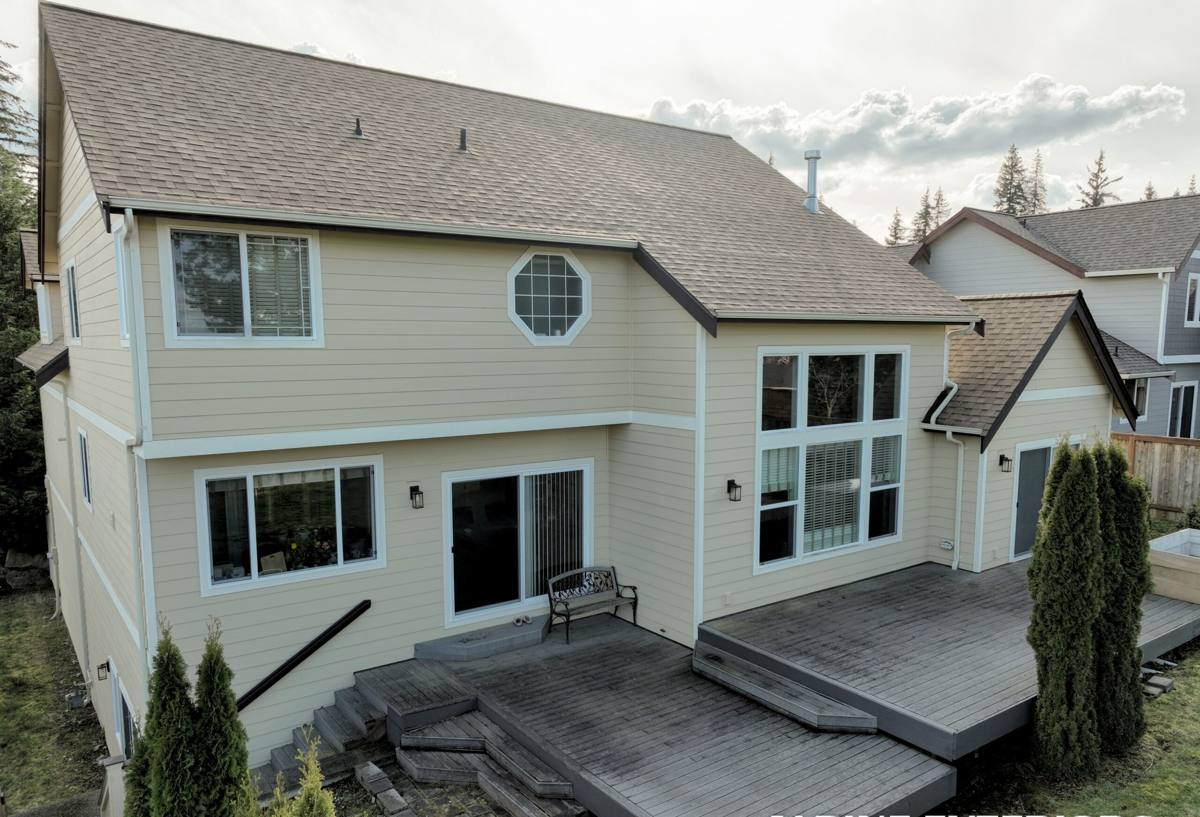
Signs a Ferndale Deck Needs Repair, Not Just a Pressure Wash
A lot of deck problems in this area get missed for years because they hide under a coat of moss or a rug. By the time they're visible, the underlying wood or hardware has often been compromised for a while. Watch for these signs:
- Soft, spongy, or springy spots in the decking boards, especially near the house or in shaded corners that stay damp longest
- Rust streaks bleeding from screw heads, joist hangers, or post brackets
- Gaps opening up where the deck meets the house (the ledger board connection), or visible daylight behind the flashing
- Wobble or movement in the railing posts when you push on them
- Persistent green or black moss growth that keeps coming back within weeks of cleaning
- Stair stringers that flex or creak more than they used to
Any one of these on its own might be minor. Several together, particularly around the ledger board or support posts, usually point to a structural issue that a surface-level fix won't solve.
What a Correct Deck Repair Actually Involves
Start With What's Underneath, Not Just the Surface
A repair that only replaces the boards you can see and leaves the framing untouched is a cosmetic fix, not a structural one. A correct repair starts by pulling decking in the affected areas and inspecting the joists, beams, ledger board, and connection hardware underneath. In this climate, that's often where the real damage is - a deck can look presentable on top while the framing underneath has been quietly absorbing moisture for years.
The Ledger Board Connection Deserves Special Attention
The ledger board - the piece that attaches the deck to the house - is the single most common failure point on older decks in wet climates. If it was under-flashed, poorly fastened, or has been trapping water against the house rim joist, it can rot from the inside while looking fine from below. Proper repair means checking the flashing detail at this connection and correcting it if water has been getting behind the ledger, not just re-securing the existing hardware.
Fasteners and Hardware Matter More Here Than People Expect
Standard fasteners that are fine in a dry inland climate can corrode noticeably faster this close to saltwater air. We use fastener and hardware grades rated for exterior, corrosion-prone environments, and we replace any hangers, bolts, or brackets showing rust rather than leaving them in place because they're "not broken yet." A repair is only as strong as its weakest connector.
Repair or Replace? How We Help You Decide
Not every deck problem calls for a full rebuild, and not every deck is worth patching. The right call usually comes down to how far the damage has spread and how the deck was originally built.
| Factor | Leans Toward Repair | Leans Toward Replacement |
|---|---|---|
| Framing condition | Joists and beams are sound; only isolated boards or hardware are affected | Rot has spread through multiple joists or the ledger board itself |
| Age of the deck | Built or rebuilt within the last 10-15 years with decent framing | Original construction is older and was never inspected below the surface |
| Extent of moss/moisture damage | Limited to shaded corners or a few boards | Widespread across the deck, especially near the house connection |
| Code compliance | Original ledger attachment and railing meet current safety standards | Ledger, footings, or railings don't meet current code and would need correction anyway |
| Cost over time | Targeted repair costs a fraction of full replacement | Repeated repairs are starting to approach the cost of rebuilding once |
We'll give you a straight answer on which side of that table your deck falls on, including what we find once we get underneath it - not just what the estimate would prefer.
Our Deck Repair Process
- On-site inspection. We walk the whole deck, check the ledger connection, probe suspect boards and posts, and look at the framing wherever we can access it.
- Honest scope of work. You get a clear explanation of what's failing, why, and what it will take to fix it correctly - including if we think a partial repair won't hold and a larger repair or replacement is the more honest recommendation.
- Structural repair first. Any compromised framing, ledger flashing, or hardware gets corrected before anything cosmetic happens. This is the step that gets skipped in a lot of quick patch jobs, and it's the step that determines whether the repair actually lasts.
- Decking and finish work. Damaged boards are replaced to match as closely as possible, railings are re-secured or rebuilt to be solid, and stairs are checked for level and stringer integrity.
- Final walkthrough. We go over what was done, what to expect from the materials used, and simple maintenance that will extend the life of the repair given the local climate.
Material Choices for a Salt-Air, High-Moisture Climate
We don't push one decking material as a cure-all - each option has real trade-offs, and the right choice depends on your deck, your budget, and how much upkeep you want to take on.
Pressure-Treated Wood
Still a solid, affordable choice for framing and often for decking itself, provided it's properly sealed and maintained. Its main trade-off in this climate is that it needs regular re-sealing to keep moisture from working into the grain, particularly on horizontal surfaces that stay damp under moss or debris.
Cedar
Naturally more rot- and insect-resistant than standard framing lumber and a common choice regionally, but it's softer and will show wear from foot traffic and moisture over time faster than composite. It also needs periodic finish maintenance to keep that resistance working for you.
Composite Decking
Higher upfront cost, but low maintenance and strong resistance to moisture absorption and moss staining - a real advantage given how long moss season runs here. The trade-off is that composite doesn't "breathe" the way wood does, so proper spacing and ventilation underneath matter even more to avoid trapping moisture against the framing below.
Whatever material you choose for the visible decking, we hold the same standard for what you don't see: corrosion-resistant fasteners, properly flashed ledger connections, and framing that's been checked, not assumed sound.
Maintenance That Actually Extends a Ferndale Deck's Life
- Sweep debris and standing moss off the deck surface regularly through fall and winter, not just once in spring
- Keep gutters and downspouts near the deck clear so runoff isn't draining directly onto or under it
- Check railings and stair posts for movement at least once a year
- Look underneath the deck once a season for rust streaks, soft wood, or gaps at the ledger board
- Re-seal wood decking on the schedule the product calls for - don't wait until it visibly grays or absorbs water
- Trim back vegetation that shades the deck and keeps it damp longer than open sun exposure would
Why It Matters That We Already Work in Ferndale
A deck repair crew that works Ferndale and the wider Whatcom County area regularly knows what to check first because we've seen the same failure patterns on decks facing the same weather. We know which connection points tend to fail from salt-air corrosion, which shaded spots hold moss and moisture the longest, and what local permitting and code requirements apply to structural deck work in this county. That familiarity means less time spent diagnosing and more time spent fixing the actual problem - and a repair built to hold up against the conditions your deck actually faces, not generic conditions from somewhere drier.
If your deck has soft spots, rust stains, persistent moss, or just doesn't feel as solid as it used to, we're happy to take a look and give you a straightforward assessment. Reach out for a free, no-pressure estimate using the form below - we'll tell you honestly what we find and what it would take to fix it right.