 Birch Bay Siding
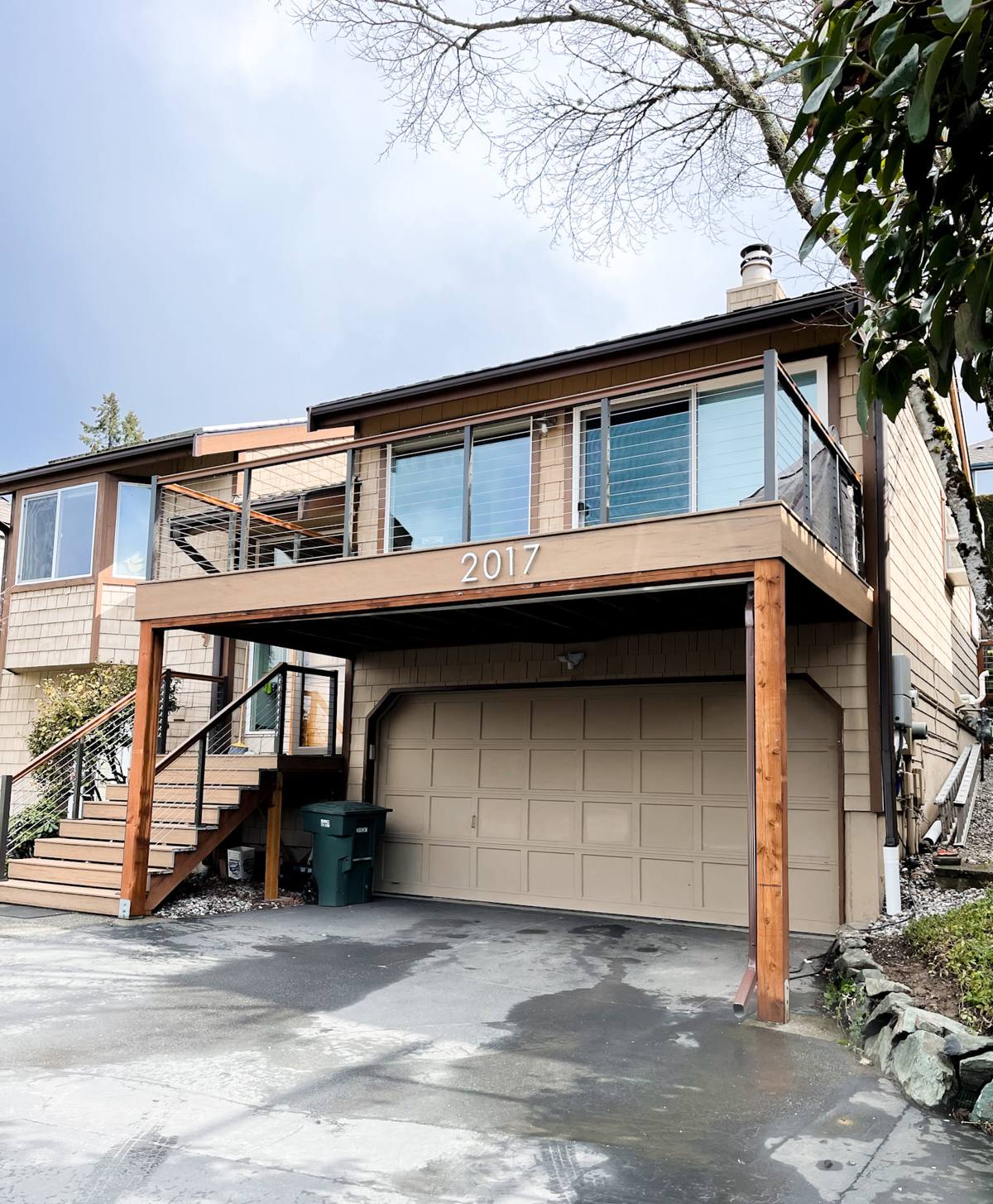
 Decks on Semiahmoo Take a Different Kind of Beating
A deck built a few miles inland in Whatcom County ages differently than one built on Semiahmoo. Out here, the deck sits close to open water, catches salt-laden wind off Semiahmoo Bay and the Strait, and stays damp longer through the fall and winter than decks tucked back in the trees. If you've owned a deck out here for more than a few years, you've probably already noticed it: fasteners bleeding rust before their time, board tops staying dark and slick well into spring, or a railing post that's gone soft where it meets the decking.
None of that means your deck was built wrong. It usually means it was built for a different exposure than the one it's actually sitting in. Semiahmoo's combination of salt air, wind-driven rain, and a moss season that can run six or seven months a year asks more of a deck than a standard build handles well. Replacement is a chance to correct that, not just swap old boards for new ones in the same configuration.
What Actually Fails First Out Here
Fasteners and Hidden Hardware
Salt air accelerates corrosion on anything less than fully rated stainless or heavy-duty coated fasteners. On older Semiahmoo decks we've looked at, the decking boards themselves are often still structurally fine while the nails, screws, or joist hangers underneath are the real problem. Once fasteners start to corrode, they lose grip strength long before it's visible from the top of the deck.
Ledger Boards and the House Connection
The ledger board — where the deck attaches to the house — is the single most important structural connection on most decks, and it's also the spot most exposed to wind-driven rain coming off the water. Poor flashing at the ledger lets water track behind it and into the rim joist and framing, which is slow, hidden rot that doesn't show up until the deck already feels spongy.
Board Tops and Moss Buildup
Whatcom County's long wet season means moss and algae get a real foothold on any horizontal wood surface that doesn't dry out fast. On a shaded or water-facing deck, that green film holds moisture against the board and turns a routine cleaning issue into a slip hazard and a wood-degradation issue at the same time.
What a Correct Deck Replacement Looks Like Here
Replacing a deck on Semiahmoo isn't just pulling up old boards and laying down new ones. A correct job addresses the framing, the fasteners, the flashing, and the decking material together, because any one weak link undoes the benefit of the others.
- Full inspection of the substructure — posts, beams, joists, and ledger — before any decking goes down, so rot or undersized framing gets caught and corrected, not covered up
- Proper ledger flashing and house-side water management, since this is the connection point most exposed to driving rain
- Corrosion-resistant fasteners and hardware rated for coastal exposure, not standard interior-grade hardware
- Joist tape or a comparable moisture barrier on top of framing members to slow the freeze-thaw and wet-dry cycling that breaks down wood over time
- Decking material chosen for how it actually performs in salt air and shade, not just how it looks on day one
- Railing and stair connections rebuilt to current code, since older decks in this area were often built under looser standards
- Grading and drainage checked underneath the deck so water doesn't pool against posts or footings
Decking Material Choices for a Salt-Air, High-Moss Exposure
There's no single "best" decking material for every home — it depends on your budget, how much upkeep you want to do, and how exposed your specific lot is to wind and water. Here's how the common options actually perform in a Semiahmoo-type environment, in plain terms.
| Material | Salt Air Behavior | Moss/Algae Resistance | Maintenance |
|---|---|---|---|
| Pressure-treated wood | Fasteners and hardware corrode faster than the wood itself | Needs regular cleaning and re-sealing to resist growth | Highest — annual cleaning, periodic sealing |
| Cedar | Naturally rot-resistant but still needs finish protection near salt spray | Can develop moss/mildew if not cleaned and finished | Moderate to high — finish maintenance every 1-3 years |
| Composite decking | Handles salt air well; won't corrode or rust like wood fasteners can | Some early composite products stained in shaded, damp spots — modern capped composites resist this much better | Low — periodic washing |
| PVC decking | Fully synthetic, unaffected by salt exposure | Very good moisture resistance; low organic growth | Low — occasional washing |
We're honest with clients about the trade-offs rather than pushing one product. Composite and PVC cost more up front but ask far less of you over the life of the deck, which matters on a site where the climate is already working against low-maintenance materials. Wood costs less initially but only performs as advertised if someone keeps up with cleaning and sealing on schedule — something that's easy to fall behind on with a second home or a busy household.
Why the Framing Matters More Than the Boards
Homeowners often call about "deck replacement" thinking only about the decking boards on top, but the framing underneath is what determines whether the new deck lasts 10 years or 25. On Semiahmoo, we pay particular attention to:
- Post and footing condition — footings that were undersized or set too shallow for the soil and moisture conditions here
- Beam and joist spacing — older decks are sometimes framed to a lighter standard than current code calls for, especially under heavier composite decking
- Rim joist and ledger rot — the most common hidden failure point, usually invisible until the deck is opened up
If the framing is sound, we can often reuse it and focus the budget on decking, railing, and connection upgrades. If it isn't, replacing boards over compromised framing just delays a bigger problem — and on a coastal site, that problem tends to move faster than homeowners expect.
Our Process for a Semiahmoo Deck Replacement
- On-site assessment — we walk the existing deck, check the framing where accessible, and talk through how you actually use the space (entertaining, grilling, water access, etc.)
- Material and layout discussion — we go over decking options, railing style, and any layout changes, with honest pros and cons for your specific exposure
- Written estimate — clear scope, materials, and timeline before any work starts, no surprise change orders for things we could have caught up front
- Permitting — deck replacements involving structural changes typically require a permit in Whatcom County; we handle that coordination
- Demo and framing repair — old decking and any compromised framing come out, structure gets corrected before new material goes down
- Decking, railing, and stair installation — built to current code with hardware rated for the coastal exposure
- Final walkthrough — we go over the finished deck with you and cover any maintenance specific to the material you chose
Timing a Deck Replacement Around Whatcom County Weather
Deck replacement can happen most of the year here, but scheduling matters. Framing and structural work goes faster and holds up better when it's done in a drier stretch, which typically means spring through early fall in this part of Washington. Winter jobs are possible and sometimes necessary if a deck has failed, but wet-season work requires more care with tarping, drying time, and sequencing so water doesn't get trapped in new framing before it's sealed up.
If your deck is showing early warning signs — soft spots, rust streaks, a railing that flexes more than it used to — it's worth getting it looked at before the wet season rather than during it. A deck that fails structurally in December is a much bigger headache than one addressed in September.
Signs Your Semiahmoo Deck Needs Replacement, Not Just Repair
Not every deck problem means a full replacement. But a few signs usually mean patching won't hold:
- Soft or spongy decking in multiple areas, not just one board
- Visible rot or rust at the ledger board or main support posts
- Railings that flex noticeably or feel loose at the base
- Persistent moss or dark staining that returns quickly after cleaning
- A deck more than 20-25 years old that hasn't had major structural work done
If you're only seeing one or two of these on an otherwise sound deck, a repair or partial rebuild might be the more honest recommendation — we'll tell you that if it's true, rather than selling a full replacement you don't need.
Why a Crew That Already Works Semiahmoo Matters
Semiahmoo isn't a typical inland Whatcom County build site. A crew that mostly works drier, more sheltered lots can underestimate how fast salt air and standing moisture work on fasteners and framing out here. Working this area regularly means we already know which details — ledger flashing, hardware grade, decking gaps for drainage — aren't optional extras, they're the difference between a deck that holds up and one that needs attention again in five years. That local familiarity also means fewer surprises during permitting and a realistic sense of how weather windows here actually affect a build schedule.
If your deck is showing its age or you're planning a full replacement, we're happy to take a look and give you a straight answer on what it needs. Fill out the form below for a free, no-pressure estimate.