 Birch Bay Siding
 Sandy Point's Siding Problem Is a Climate Problem
Sandy Point sits close enough to the water that its siding lives a harder life than siding twenty miles inland. Homes here take on salt-laden air off the water, wind-driven rain that gets pushed sideways into wall assemblies most siding was never designed to handle, and a long stretch of the year — fall through spring — when surfaces stay damp enough for moss and algae to take hold and stay there. None of that is unusual for Whatcom County's coastline, but it does mean siding repair in Sandy Point isn't the same job as siding repair in a dry inland neighborhood. A patch that would last a decade somewhere else can fail in a season here if it's done without accounting for the exposure.
This page is about repair specifically — not full siding replacement — for homeowners in and around Sandy Point who have damage, staining, soft spots, or failing caulk lines and want to know what a correct fix actually looks like.
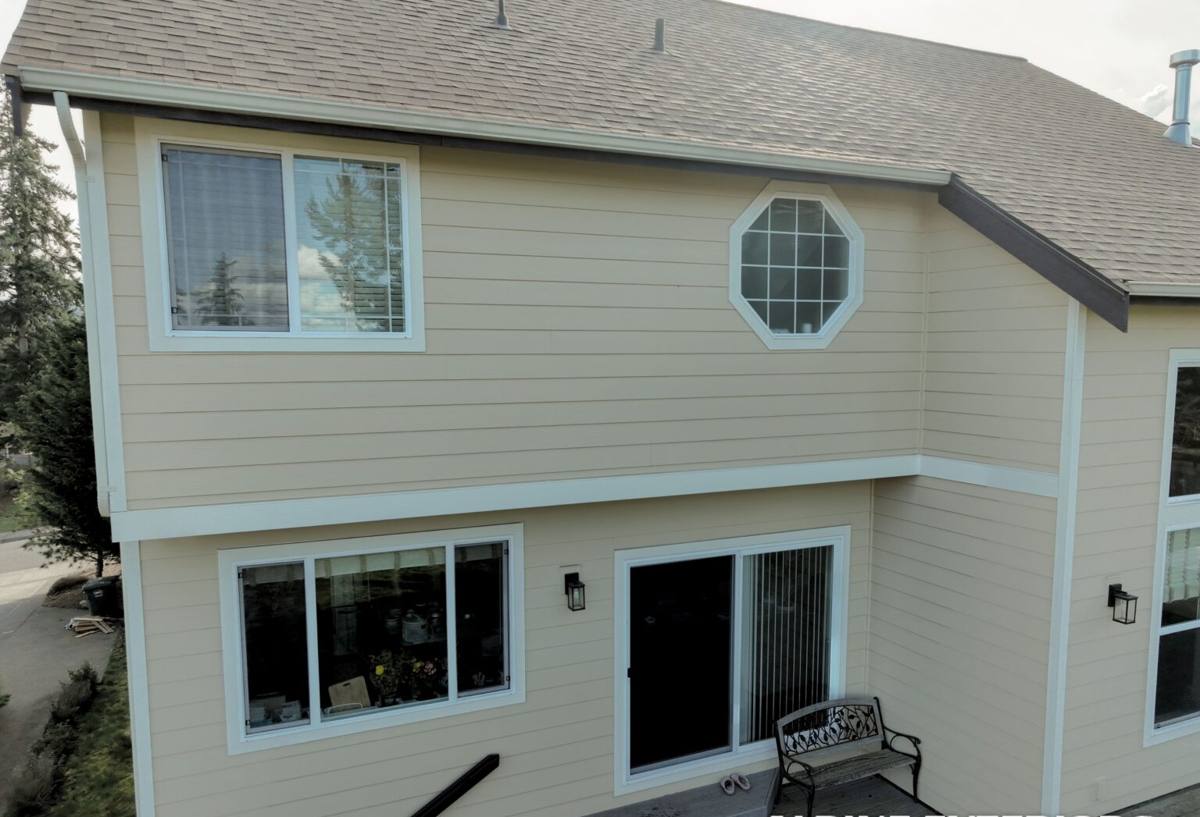
What Salt Air, Driving Rain, and Moss Season Do to Siding
Salt Air and Corrosion
Airborne salt doesn't just sit on the surface — it works into fasteners, trim flashing, and any exposed metal edge. Over years, that shows up as rust streaking below nail heads, corroded trim caps, and paint that fails faster near the ground and around window heads facing the water. Siding itself can tolerate salt exposure fine if it's the right material and it's finished correctly; the fasteners and flashing around it are usually the weaker link.
Wind-Driven Rain
Rain that falls straight down is easy for any siding to shed. Rain that's being pushed horizontally by wind off the water is a different problem — it finds every gap in a lap joint, every under-caulked seam, every place where flashing was skipped or installed backward. Once water gets behind the siding rather than running down the face of it, the damage happens where you can't see it until it's already serious: sheathing rot, stained interior drywall, or a soft spot that gives when you press on it.
Moss and Prolonged Moisture
Whatcom County's wet season runs long, and shaded or north-facing walls in Sandy Point can stay damp for weeks at a stretch. Moss and algae don't just look bad — they hold moisture against the siding surface far longer than bare siding would dry on its own, which accelerates any rot or coating breakdown that's already started. Siding that's constantly damp behind a layer of moss ages faster than the same siding kept clean and dry.
Signs Your Siding Needs Repair, Not Just a Wash
Some problems are cosmetic and some mean water is already inside the wall. Knowing the difference before you call someone saves time and, often, money.
- Soft, spongy, or flexing sections when you press on the siding by hand
- Dark staining that reappears within weeks of cleaning, especially near seams or below windows
- Visible gaps, cracks, or separation at lap joints and corner trim
- Caulk that's cracked, shrunk, or pulled away from the joint it's supposed to seal
- Rust streaks running down from fastener heads or metal flashing
- Moss or algae that returns quickly after washing, particularly on shaded walls
- Paint or factory finish peeling, chalking, or bubbling in isolated patches
- A musty smell or visible staining on interior walls near an exterior wall
Any of the first three or the last one are worth a prompt inspection — they usually mean moisture has already gotten past the siding, not just sitting on top of it.
Repair or Replace? How We Decide
Not every damaged section needs full replacement, and not every homeowner needs to hear "you need all new siding" for a problem that's actually contained. We look at how much of the wall is affected, whether the sheathing underneath is still sound, and how the existing material has held up overall.
| Situation | Usually Repair | Usually Replace |
|---|---|---|
| Damage confined to one or two panels/sections | Yes | No |
| Underlying sheathing is dry and solid | Yes | No |
| Rot or soft spots found in multiple, unrelated areas | No | Yes |
| Original siding is near or past its expected service life | No | Yes |
| Damage traces back to a single fixable cause (bad flashing, one failed seam) | Yes | No |
| Recurring moisture damage across several past repairs | No | Yes |
When repair is the right call, we say so — a smaller, correctly done fix is often the better outcome for both the house and the budget.
What a Correct Siding Repair Actually Involves
Matching Materials, Not Just Color
A patch that's the wrong thickness, profile, or finish will telegraph on the wall even if the color is close, and it can behave differently in weather than the surrounding material — expanding, absorbing moisture, or aging at a different rate. Getting the match right, including matching factory-finished color where the existing siding is Hardie's ColorPlus finish, is part of doing the repair correctly rather than just covering the hole.
Fixing the Cause, Not Just the Symptom
Rotted siding is usually a symptom of a moisture path, not the root problem itself. If we replace a damaged section without correcting the flashing, caulking, or drainage gap that let water in, the new material fails the same way in a few years. Every repair we do starts with figuring out how water got in, because that's the part that actually needs fixing.
Flashing, Sealing, and Drainage Details
In a wind-driven-rain environment like Sandy Point's, the details around windows, corners, and butt joints matter more than the siding material itself. Correct head flashing, properly lapped house wrap, and a drainage gap that lets any moisture that does get behind the siding drain and dry out are what actually keep a repair from repeating itself.
Why We Only Work With James Hardie Fiber Cement
We install James Hardie fiber cement exclusively — we don't install vinyl, LP SmartSide, Cemplank, Allura, or primed wood siding. For repair work, that means when we're replacing a damaged section, we're doing it with a non-combustible, moisture-resistant material engineered for exactly the coastal Pacific Northwest exposure Sandy Point deals with, including Hardie's HZ5 climate-specific product line built for wetter regions. It holds its factory-applied ColorPlus finish far longer than field-applied paint, it doesn't feed moss and mildew the way wood-based siding can, and it doesn't swell or delaminate from repeated wetting the way some engineered wood products can under sustained moisture exposure.
If your home currently has a different siding material — vinyl, LP SmartSide, cedar, or something else — we can still assess and repair it. What we're honest about is this: if a section keeps failing in the same spot, patching it with more of the same material usually just buys you a few more years before the same repair call. For sections with a history of repeat damage, we'll tell you plainly when converting that area to Hardie is the more durable long-term fix, rather than continuing to patch a material that's fighting the local climate.
Cost Factors for Sandy Point Siding Repairs
Every repair is different, but the same handful of factors drive most of the cost variation we see on jobs in this area.
| Factor | Why It Matters |
|---|---|
| Extent of hidden damage | Sheathing or framing repair behind the siding adds labor beyond the visible patch |
| Wall height and access | Second-story or hard-to-access walls near the water take longer to work safely |
| Color and finish matching | Older ColorPlus colors may need custom matching if the exact shade isn't current |
| Flashing and trim condition | Corroded or missing flashing often needs replacement alongside the siding itself |
| Number and location of damaged sections | Scattered repairs across multiple walls take more setup time than one contained area |
We give a firm, itemized number after inspecting the actual damage — not a phone estimate — because the difference between a surface patch and a repair that includes sheathing work is significant enough that guessing isn't useful to you.
Our Process for Sandy Point Repairs
- Inspection. We look at the visible damage and check surrounding areas for moisture that hasn't shown up as visible damage yet.
- Diagnosis. We trace the damage back to its cause — flashing, caulking, drainage, or material failure — before proposing a fix.
- Written scope and estimate. You get a clear description of what's being repaired, with what materials, and why.
- Material matching. We source Hardie panels and ColorPlus finishes to match your existing siding as closely as possible.
- The repair. Damaged material comes out, any underlying rot or moisture damage gets addressed, and new material goes in with correct flashing and sealing.
- Cleanup and walkthrough. We clear the site and walk the finished work with you before we consider the job done.
Why Hiring a Crew That Already Works in Sandy Point Matters
Coastal exposure isn't uniform even within a small area — a wall facing the water takes a different beating than a wall tucked behind the house or shaded by trees, and a crew that's worked a number of homes in and around Sandy Point has already seen how that plays out on real houses. That familiarity shows up in small but real ways: knowing which wall orientations tend to hide moisture problems, sizing up how much wind-driven rain exposure a given wall actually gets, and not treating every repair like it's the first coastal Whatcom County job we've done. It also means shorter response times and a crew that isn't learning the local climate on your dime.
Maintaining Your Siding After the Repair
A correct repair should be close to maintenance-free, but a little seasonal attention extends the life of both the new and existing siding.
- Rinse siding with a garden hose once or twice a year to keep salt residue from building up
- Check and re-caulk any joints that look cracked or shrunk before the wet season starts
- Keep gutters clear so overflow isn't running down the siding face
- Trim back vegetation and branches that keep a wall shaded and slow to dry
- Address any new soft spots, staining, or moss regrowth early rather than waiting for it to spread
- Avoid pressure washing directly at seams or under lap joints, which can force water behind the siding
If you're seeing damage, staining, or moss that keeps coming back on a Sandy Point home, we're happy to take a look and give you an honest read on what it needs — a targeted repair or something more. Reach out for a free, no-pressure estimate using the form below.