 Birch Bay Siding
 Roofing in Sandy Point Has Its Own Set of Problems
Sandy Point sits right up against the water, and that location shapes everything about how a roof ages here. Homes a few miles inland in Whatcom County deal with plenty of rain, but they don't get the same combination of salt-laden air, near-constant wind exposure, and the long gray stretch of moss season that Sandy Point roofs face year after year. If you're looking at a roof replacement, it's worth understanding what makes this stretch of shoreline different before you pick a contractor or a material.
We've worked on homes throughout Birch Bay and the surrounding waterfront communities, and Sandy Point roofs consistently show wear patterns you don't see as much a few miles inland — accelerated fastener corrosion, algae and moss establishing faster on north-facing slopes, and edge and flashing failures where wind-driven rain gets pushed sideways instead of falling straight down.
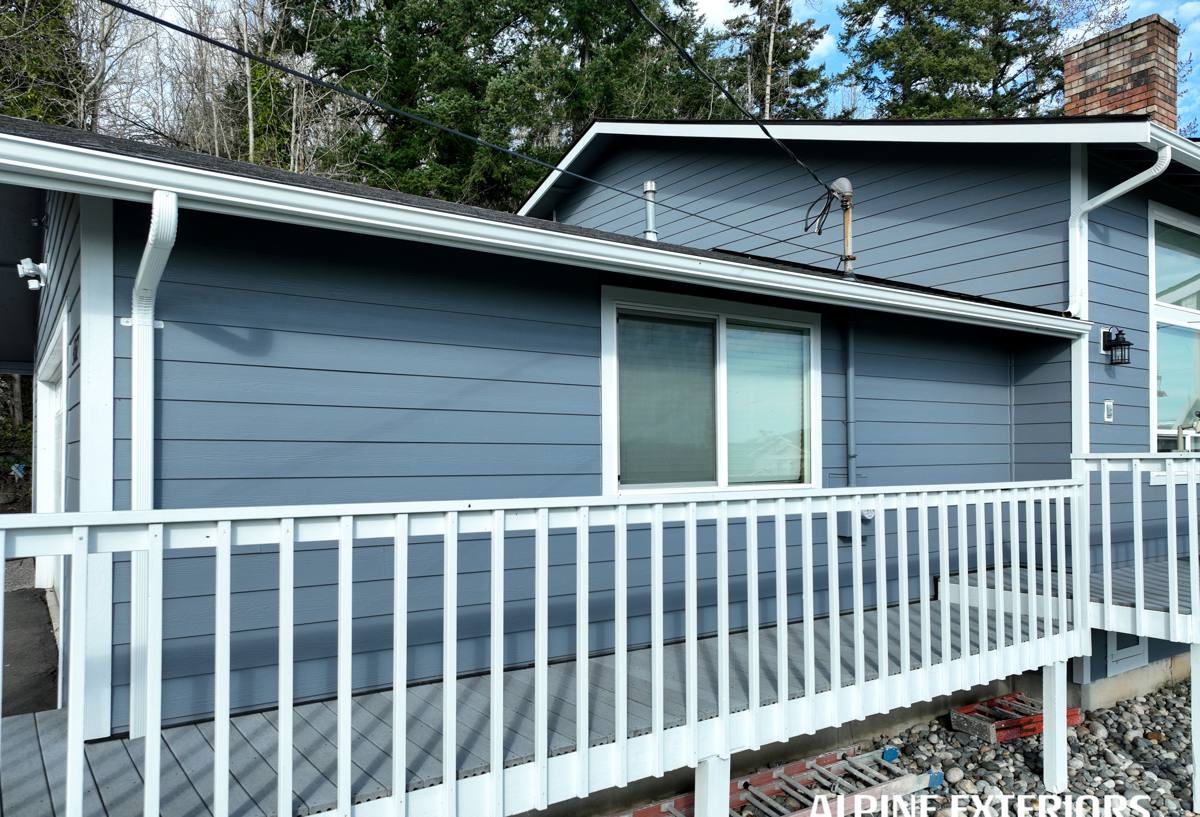
What the Coastal Climate Actually Does to a Roof
Salt Air and Metal Components
Salt air accelerates corrosion on anything metal — nails, flashing, vent boots with metal collars, drip edge, and any exposed fasteners. On a standard asphalt shingle roof, the fasteners are usually the first thing to suffer, and once a fastener starts corroding, it loses holding power long before you'd notice a leak. That's part of why we pay close attention to fastener spec on Sandy Point jobs rather than just using whatever's standard inland.
Driving Rain and Wind
Because Sandy Point is exposed to wind coming off the water, rain doesn't just fall — it drives sideways into laps, seams, and flashing details. A roof detail that's perfectly adequate in a sheltered inland yard can leak here if the laps, underlayment coverage, and flashing overlaps aren't built with that wind-driven exposure in mind.
Moss and Algae
Whatcom County's damp, mild climate already favors moss growth, and Sandy Point's shaded, moisture-holding microclimates near the water make it worse. Moss doesn't just look bad — it holds moisture against the roof surface, lifts shingle edges as it grows, and can work its way under laps over a few seasons if it's left unchecked.
Signs a Sandy Point Roof Needs Replacing (Not Just Repair)
- Granule loss heavy enough that you can see bare asphalt on multiple slopes, not just one worn spot
- Moss or algae covering large sections rather than a few patches, especially on north- or shade-facing slopes
- Curling, cupping, or cracked shingles across the field of the roof rather than in one isolated area
- Rusted or failing metal flashing around chimneys, vents, and valleys
- Soft spots in the decking when walked, or visible sagging along the roofline
- Repeated leaks in different spots each winter, rather than one recurring issue that repair keeps fixing
- A roof at or past the manufacturer's expected service life for this exposure, even if it "looks okay" from the ground
One or two of these on their own might mean a targeted repair is enough. Several together, especially on a roof that's already 18-20+ years old, usually means the underlying materials and fasteners are worn out across the whole roof, not just in the spots you can see.
What a Roof Actually Needs to Hold Up on This Stretch of Coast
Underlayment That Does More Than the Minimum
Code-minimum underlayment is built for average conditions, not driving coastal rain. For Sandy Point, we generally spec synthetic underlayment with ice-and-water shield style membrane at eaves, valleys, and any low-slope transitions — anywhere wind-driven rain is most likely to find a path under the shingles.
Corrosion-Resistant Fasteners and Flashing
Standard electro-galvanized nails and flashing corrode faster in salt air. We use fasteners and flashing rated for coastal exposure — it costs a bit more up front, but replacing corroded fasteners in 8 years instead of 20+ isn't a real savings.
Ventilation That Accounts for Moisture Load
A roof system that can't breathe traps moisture underneath it, and in a climate this damp, trapped moisture leads to rot and premature deck failure regardless of how good the shingles are. Proper intake and exhaust ventilation matters more here than in a drier climate.
Material Choice That Resists Moss
Algae-resistant shingle lines (with copper or zinc granule treatments) genuinely help slow moss and algae growth in a climate like this. We'll walk you through which product lines make sense for your budget and your roof's exposure and shading rather than pushing one brand across every job.
Roofing Material Options for Sandy Point Homes
| Material | Coastal Performance | Typical Lifespan Here | Trade-Offs |
|---|---|---|---|
| Architectural asphalt shingle (algae-resistant) | Good, with correct fasteners and flashing | 20-25 years | Best value; still needs periodic moss treatment |
| Standard 3-tab asphalt shingle | Fair — wears faster in salt air and moss-prone shade | 12-18 years | Lowest upfront cost, shortest coastal life |
| Metal roofing (standing seam, coastal-rated coating) | Very good — sheds moss and handles wind-driven rain well | 40-50+ years | Higher upfront cost; requires correct coastal-rated fasteners and coating |
| Synthetic/composite shingle | Good, moisture- and impact-resistant | 25-40 years | Higher cost than asphalt; fewer local install crews familiar with it |
We don't default to the most expensive option on every job — a well-installed architectural asphalt system with the right underlayment and flashing details will serve most Sandy Point homes well. Where a home has heavy shade, a low-slope section, or an owner who wants to minimize maintenance long-term, metal or a moss-resistant composite often earns its higher cost.
Our Roof Replacement Process
1. On-Site Inspection and Assessment
We look at the whole system, not just the shingles — decking condition, existing ventilation, flashing details, and any moisture or moss patterns specific to your home's exposure and shading. This is also where we confirm whether a repair could reasonably extend the roof's life or whether replacement is the honest recommendation.
2. Material and Scope Walkthrough
We go over material options in plain terms — cost, expected lifespan in this climate, and maintenance trade-offs — so you're picking based on your priorities, not a sales pitch.
3. Tear-Off and Deck Inspection
Full tear-off lets us actually see the decking. Any rot or soft spots get replaced before new material goes down — covering a compromised deck just hides the problem.
4. Underlayment, Flashing, and Ventilation Install
This is where coastal-specific detailing happens: enhanced underlayment at vulnerable areas, corrosion-resistant flashing and fasteners, and ventilation sized correctly for the home.
5. Roofing Material Installation
Installed to manufacturer spec, with extra attention to lap and fastener patterns in wind-exposed areas.
6. Final Walkthrough and Cleanup
We walk the finished roof with you, cover any maintenance recommendations (moss treatment timing, gutter clearing, etc.), and make sure the site is cleaned up — magnet-swept for stray nails included.
Cost Factors for a Sandy Point Roof Replacement
- Roof size and pitch — steeper or more complex rooflines take longer and use more material
- Material choice — asphalt, metal, and composite carry different upfront and lifespan-adjusted costs
- Decking condition — rot found during tear-off adds material and labor, but it's not optional to skip
- Number of layers to remove — a roof with an existing layer or two takes longer to strip
- Ventilation and flashing upgrades — bringing an older system up to current best practice adds some cost but reduces future problems
- Access and site conditions — steep lots, tight waterfront access, or limited staging space can affect labor time
We give a written estimate that breaks these out so you can see exactly what you're paying for, rather than a single lump number.
Why Local Experience on This Coastline Matters
A roof replacement isn't just about installing shingles correctly in general — it's about knowing which details matter most for the specific exposure a home has. A crew that mostly works inland jobs in Whatcom County may not automatically account for the salt air, wind-driven rain, and moss pressure that define roofing on the Sandy Point shoreline. We've built our fastener specs, flashing details, and material recommendations around what actually holds up out here, because we've seen what fails and why.
That local knowledge also shows up in smaller ways — knowing which slopes on a typical Sandy Point lot tend to hold moss longest, understanding how wind direction off the water affects where driving rain hits hardest, and building in maintenance guidance that actually fits this climate instead of generic advice.
Maintaining Your New Roof in a Moss-Prone Climate
- Have moss and algae growth treated or removed at the first sign of it, rather than waiting for it to spread
- Keep gutters clear so water isn't backing up under the eaves during heavy rain
- Trim back overhanging branches that keep roof sections shaded and damp
- Schedule a roof inspection every year or two, especially after major storms
- Address any small flashing or fastener issues promptly — in salt air, small problems don't stay small for long
If you're weighing a roof replacement for a home in Sandy Point, we're glad to take a look and walk you through what your roof actually needs — no pressure, no upsell, just a straight assessment. The estimate is free; use the form below to get started.