 Birch Bay Siding
 Metal Roofing in Sandy Point: Built for This Exact Stretch of Coastline
Sandy Point sits close enough to the water that the air itself works against a roof year-round. Salt-laden wind off the Strait of Georgia, long stretches of driving rain, and a moss season that barely lets up from October through May all put steady pressure on roofing materials. A roof here doesn't just need to shed water — it needs to hold up to corrosion, wind uplift, and constant damp without babysitting. Metal roofing, installed correctly, is one of the few systems that genuinely matches what this location demands.
We work on homes throughout Birch Bay and the surrounding Whatcom County shoreline, and Sandy Point comes with its own particular set of conditions. This page covers what a metal roof needs to do here, what a correct installation actually involves, and how we approach the job from first look to final walk-through.
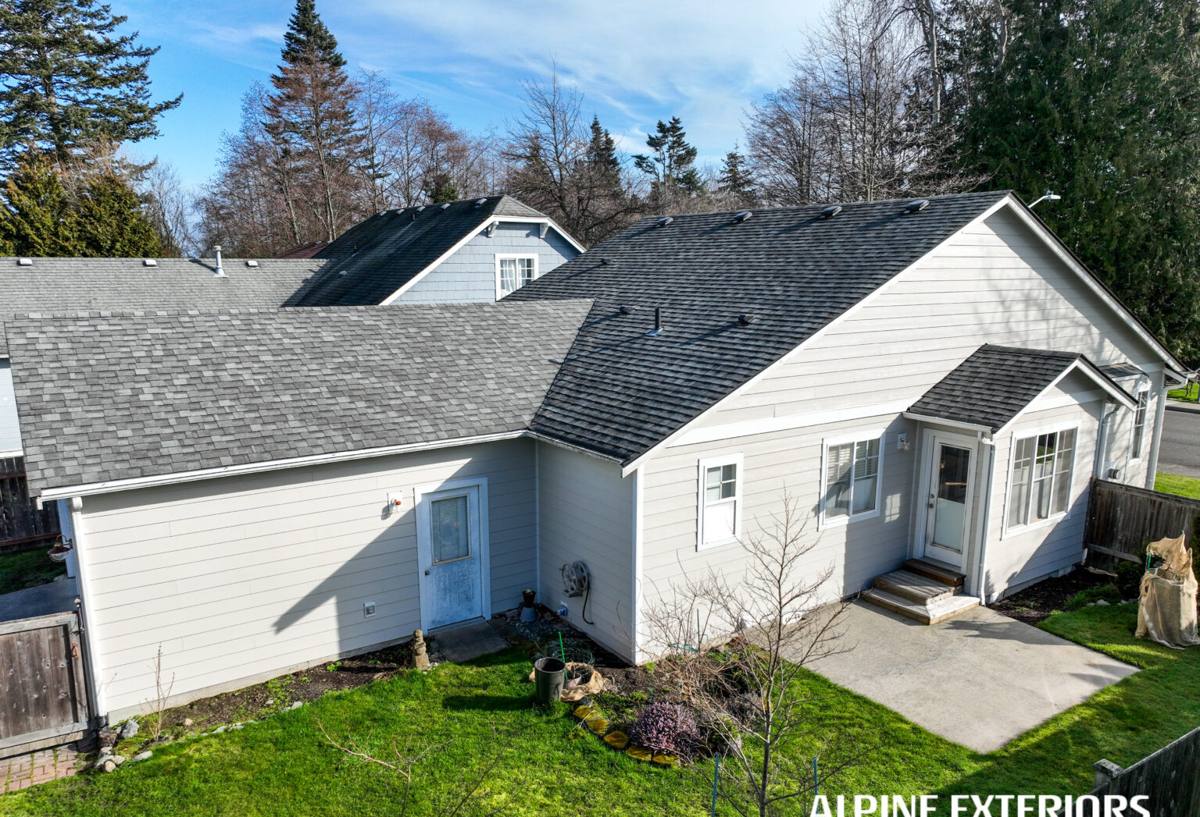
Why Sandy Point's Climate Is Tougher on Roofs Than Most Whatcom County Neighborhoods
Proximity to saltwater changes the math on roofing materials. Salt air accelerates corrosion on any exposed metal — fasteners, flashing, panel edges — faster than it would a few miles inland. Combine that with near-constant humidity and moss spores carried on the wind, and you get a roof environment that punishes shortcuts.
The three things working against a Sandy Point roof
- Salt air corrosion — untreated or poorly coated fasteners and trim can start showing rust streaks well before a standard roof would inland
- Driving rain — wind-driven rain off the water pushes moisture sideways and upward under laps, seams, and flashing that aren't detailed for it
- Extended moss season — shaded, north-facing, and low-slope sections stay damp long enough for moss and algae to take hold and hold moisture against the roof surface
None of these are exotic problems. They're the same forces every Whatcom County coastal roof deals with, just concentrated. The fix isn't a different roof type so much as a correctly specified and correctly installed one.
Why Metal Holds Up Better Here Than Most Alternatives
Metal roofing isn't the right fit for every house or every budget, and we'll say so plainly if that's the case. But for Sandy Point's conditions specifically, it has real structural advantages worth understanding before you decide.
What metal does well in this environment
- Sheds moss and standing moisture better than shingles because there's no porous surface for spores to root into
- Handles wind-driven rain more reliably when seams and laps are properly engineered, since there are far fewer exposed edges than a shingle field
- Resists the freeze-thaw and moisture-cycling wear that gradually breaks down asphalt granules near the water
- Lasts significantly longer than asphalt shingle systems when the coating and fastener spec match the coastal exposure
Where metal still needs the right details
Metal's weak points in a salt-air setting are almost always at the connections — fasteners, flashing, penetrations, and panel-to-panel seams. A metal field panel rarely fails on its own. What fails is a cheap fastener corroding at the head, a flashing detail that wasn't lapped correctly against wind-driven rain, or a coating spec that wasn't rated for the exposure. That's where the installation matters as much as the material.
What a Correct Metal Roof Installation Involves
A metal roof is only as good as the details underneath and around it. For a Sandy Point home, we pay particular attention to a handful of things that generic installation guides don't emphasize enough.
Underlayment and deck prep
Given the moisture load here, we don't treat underlayment as an afterthought. A synthetic, high-temp, self-adhering underlayment at eaves, valleys, and penetrations gives the deck a second line of defense if wind-driven rain ever gets past the panel seams — which, over decades near the water, it eventually will at some point.
Fastener and hardware spec
This is the single most common shortcut we see on older coastal installs. Standard fasteners corrode faster in salt air than the panels they're holding down. We spec fasteners and clips rated for coastal/marine exposure, not the generic hardware that's fine 10 miles inland but undersized for this air.
Flashing and seam detailing
Driving rain off the water finds any weakness in flashing laps, especially around chimneys, skylights, and roof-to-wall transitions. Correct lap direction, sealant choice, and overlap length matter more here than in calmer inland conditions.
Ventilation
A well-ventilated attic keeps condensation from forming on the underside of metal panels — a real issue in a consistently damp, moss-prone climate. We check existing ventilation as part of every metal roofing estimate rather than assuming it's adequate.
Panel Types and What They Mean for a Home Like Yours
There isn't one "best" metal roofing product — there's a best fit for your roof's slope, exposure, and budget. Here's how the common options stack up for a Sandy Point property specifically.
| Panel Type | Best For | Coastal Consideration |
|---|---|---|
| Standing seam | Most roof shapes, higher-end finish | Concealed fasteners reduce corrosion points — our preferred option this close to the water |
| Exposed-fastener panel | Budget-conscious projects, simple roof lines | Requires periodic fastener inspection and eventual re-torquing or replacement in salt air |
| Stone-coated steel | Homeowners wanting a shingle-like appearance | Good moss resistance; coating integrity at cut edges needs careful sealing |
| Corrugated/ribbed steel | Outbuildings, shops, secondary structures | Economical, but exposed fasteners are the first thing to watch in salt air |
For most primary residences in Sandy Point, we lean toward standing seam because it minimizes the exposed hardware that salt air targets first. That said, budget, roof complexity, and the look you want all factor in — we'll walk through the honest trade-offs for your specific roof rather than push one product.
What Drives Cost on a Sandy Point Metal Roof
Every roof is different, but the same handful of factors move the price up or down on nearly every metal roofing job we bid in this area.
| Factor | Why It Matters |
|---|---|
| Roof complexity | More valleys, dormers, and penetrations mean more flashing work and labor time |
| Panel type | Standing seam typically costs more upfront than exposed-fastener panel, but needs less long-term maintenance |
| Existing deck condition | Moisture damage from a prior roof's shortcomings sometimes means deck repair before new panels go on |
| Tear-off vs. overlay | Full tear-off costs more but lets us properly inspect and address deck and ventilation issues |
| Coastal-rated hardware | Marine-grade fasteners and coatings cost more than standard but are the difference-maker in this air |
We won't quote a number without seeing the roof — pitch, square footage, and existing condition all matter — but we'll always explain what's driving the estimate line by line.
Our Process for a Sandy Point Metal Roofing Project
- On-site assessment — we inspect the existing roof, deck condition, ventilation, and any signs of moss or moisture intrusion specific to your property's exposure
- Honest product recommendation — we walk through panel options and hardware specs suited to your roof's slope, exposure, and budget, without steering you toward the most expensive option by default
- Written estimate — a clear breakdown of materials, labor, and any deck repair or ventilation work identified during assessment
- Deck prep and underlayment — proper prep work before a single panel goes on, since this is where most long-term failures start
- Installation — panels, flashing, and fasteners installed to coastal-exposure standards, not generic inland specs
- Final walk-through — we go over the finished roof with you, including basic maintenance expectations for this climate
Signs a Sandy Point Roof Needs Attention Now
Some warning signs are specific to this coastal environment and worth catching early, before they turn into deck or interior damage.
- Rust streaking at fastener heads or panel edges, especially on roofs facing the water directly
- Moss buildup on shaded or low-slope sections that hasn't been addressed in more than a season
- Water staining on interior ceilings after wind-driven rain events specifically, rather than steady rainfall
- Loose or lifting flashing around chimneys, vents, or roof-to-wall transitions
- Visible sagging or soft spots in the deck, which usually points to trapped moisture underneath an aging roof
If any of these sound familiar, it's worth having a roof looked at before the next storm season rather than after.
Why Local Experience with Sandy Point Conditions Matters
A metal roofing crew that mostly works inland Whatcom County jobs will spec the same hardware and details they'd use anywhere else — and on a roof this close to the water, that gap shows up early as rust and premature wear. Working Sandy Point and the broader Birch Bay coastline regularly means we already account for the salt exposure, the wind-driven rain angles, and the moss pressure in how we spec every job, not as an afterthought after something fails.
That local familiarity also means fewer surprises during the estimate. We know what to check for on a coastal roof before we ever get on the ladder, which makes for a more accurate first quote and fewer change orders once work begins.
If your Sandy Point home needs a new metal roof, a repair, or just an honest assessment of what shape your current roof is in, we're glad to take a look. Reach out for a free, no-pressure estimate using the form below.