 Birch Bay Siding
 Roof Repair on Semiahmoo: A Different Kind of Wear
Semiahmoo sits on a narrow spit between Semiahmoo Bay and Drayton Harbor, right at the edge of Blaine and the Canadian border. It's one of the more exposed residential settings in Whatcom County — water on more than one side, open wind with little to break it, and a marine climate that stays damp for long stretches of the year. Roofs out here don't wear the same way roofs a few miles inland do, and that difference shows up specifically in how they fail: flashing lets go sooner, fasteners corrode faster, and moss holds on longer than it would on a sheltered, sun-facing roof in Blaine proper.
Roof repair is a different job than full replacement, and it deserves its own approach. A repair only works if whoever's doing it correctly identifies what's actually failing — a single flashing detail, a run of damaged shingles, a ventilation problem feeding moisture from the inside — rather than patching the visible symptom and leaving the real cause in place. This page covers what Semiahmoo homes typically need from a roof repair, what a correct repair actually involves, and how our process works.
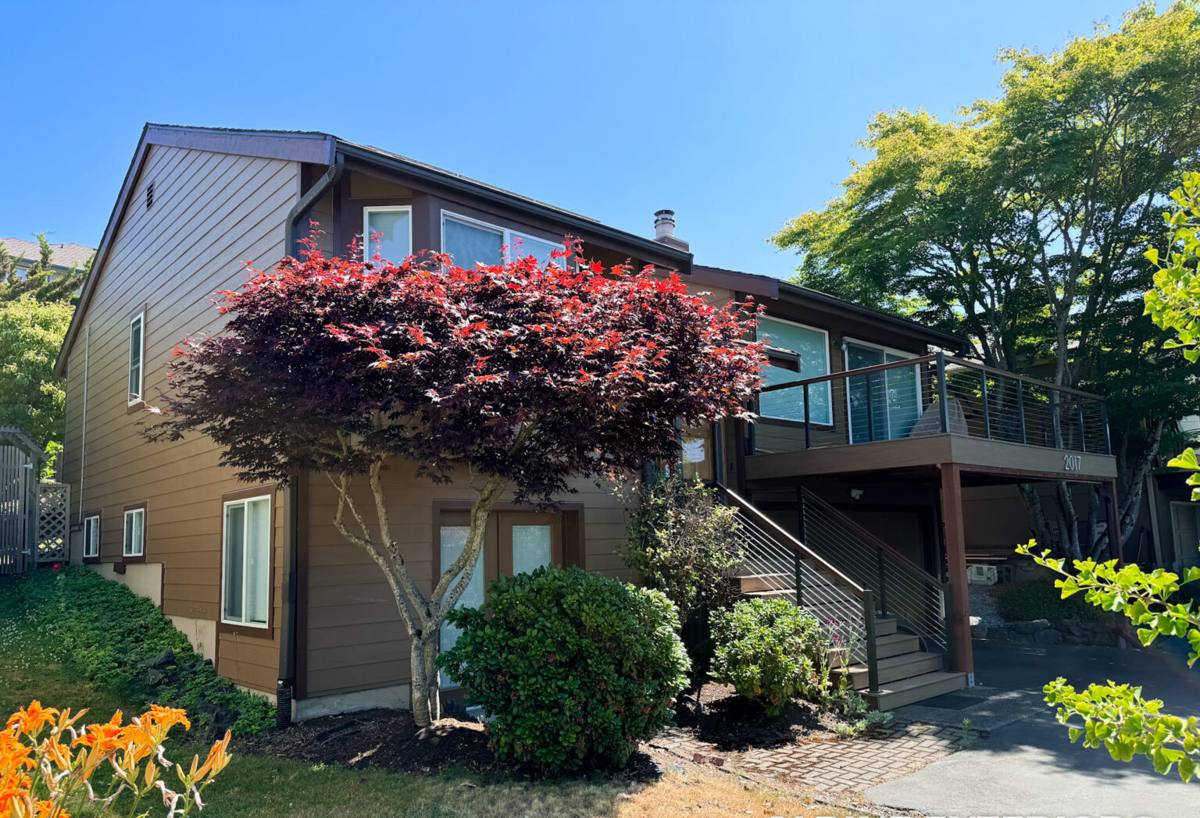
What This Climate Does to a Roof
Salt Air From More Than One Direction
Because Semiahmoo has water on multiple sides, roofs here take on salt-laden air from more directions than a typical inland roof ever sees. Salt accelerates corrosion in fasteners, flashing, and any exposed metal — vent stacks, gutter hardware, chimney caps. A fastener or flashing spec that would hold up fine forty miles inland can start rusting within a few years on the spit. That corrosion is usually invisible until it shows up as a stain, a loose shingle, or a leak at a fastener head that's already failed.
Driving Rain With Almost No Windbreak
With little to slow it down, wind off the water pushes rain sideways instead of letting it fall straight down. That sends water into laps, seams, and flashing joints that would stay dry in a calmer setting. Roofs built or repaired to a minimum standard tend to leak first at valleys, chimney flashing, and roof-to-wall transitions — exactly the spots where wind-driven rain finds the weakest seal.
A Moss and Mildew Season That Runs Long
Mild temperatures and near-constant humidity add up to a moss and mildew season that stretches across most of the year in this part of Whatcom County, and Semiahmoo's waterfront exposure doesn't shorten it. Moss isn't just a cosmetic issue — it holds moisture against the roofing surface, lifts shingle edges over time, and works its way under laps that weren't sealed well to begin with. North-facing slopes and anything shaded by trees or a neighboring structure usually show it worst.
Signs a Semiahmoo Roof Needs Repair
Not every issue means a full re-roof. These are the signals that typically point to a targeted repair rather than replacement, assuming the roof is otherwise within its service life:
- A leak in one identifiable area rather than scattered across multiple sections
- Missing, cracked, or lifted shingles limited to a section rather than the whole field
- Flashing that's visibly rusted, lifted, or gapped around chimneys, vents, or skylights
- Moss buildup concentrated on shaded slopes that's starting to lift shingle edges
- Granule loss showing up in gutters after a specific storm rather than steadily over years
- Soft spots near a known penetration point, like a vent or skylight curb
- Water staining on an interior ceiling that appears after wind-driven rain events specifically
Repair or Replace: Making the Right Call
The honest answer depends on the roof's age, how widespread the damage is, and what's actually causing it. We won't push a full replacement when a repair will genuinely solve the problem, and we won't recommend patching a roof that's failing broadly just to avoid a harder conversation.
| Situation | Usually Points To | Why |
|---|---|---|
| Isolated leak, roof under 15–20 years old | Repair | Localized failure at a specific flashing or shingle point, not a systemic material issue |
| Leaks in multiple, unrelated areas | Replacement | Suggests the underlayment or material itself is failing broadly, not just one detail |
| Moss confined to shaded slopes, shingles otherwise intact | Repair plus cleaning | Growth can often be removed and the affected shingles replaced without a full tear-off |
| Widespread granule loss, curling, or brittleness | Replacement | Material is nearing end of service life; repairs won't hold long-term |
| Storm damage to a specific slope or section | Repair | Targeted damage can usually be addressed without disturbing an otherwise sound roof |
| Roof deck showing rot or soft sheathing in multiple spots | Replacement | Structural issues under the surface usually extend beyond what a surface repair can fix |
What a Correct Roof Repair Actually Involves
Diagnosis Before Any Work Starts
A repair is only as good as the diagnosis behind it. Water can travel a surprising distance from where it enters to where a stain shows up inside, so we trace the actual entry point rather than assuming the ceiling stain sits directly under the leak. On a windward roof like Semiahmoo's, that often means checking flashing and laps upwind of the visible damage, not just the spot directly above it.
Flashing Repair and Replacement
Flashing is where most repairable leaks actually originate — around chimneys, skylights, vent penetrations, and roof-to-wall transitions. We replace corroded or failed flashing with corrosion-resistant material suited to salt air exposure, and we integrate it properly with the surrounding underlayment rather than relying on sealant alone to hold it together. Sealant is a backup, not a fix.
Matching Materials on Partial Repairs
When a repair involves replacing a section of shingles or roofing material, matching the existing product as closely as possible matters for both appearance and performance — mismatched materials can shed water differently at the seam between old and new. We source matching or close-equivalent material where it's available and are upfront when an exact match isn't possible.
Moss and Organic Growth Removal
Moss removal on an active roof needs to be done carefully — aggressive scraping can damage granules and shorten the life of otherwise sound shingles. We remove growth using methods that don't strip the roofing surface, then address any shingles it's already lifted or damaged underneath.
Ventilation Check
Some roof problems that look like a leak from outside are actually condensation from poor attic ventilation. Part of a proper repair diagnosis includes checking whether intake and exhaust ventilation are working correctly, since a repair that ignores a ventilation problem tends to resurface as the same "leak" again within a season or two.
Common Repair Types on Semiahmoo
| Repair Type | Typical Cause Here | What the Fix Involves |
|---|---|---|
| Flashing repair | Salt-air corrosion, wind-driven rain forcing water past worn seals | Remove and replace flashing with corrosion-resistant material, re-integrate with underlayment |
| Storm damage patch | Wind lifting or tearing shingles on the most exposed slope | Replace damaged shingles and check surrounding fasteners for wind uplift damage |
| Moss-related shingle repair | Long moss season on shaded, north-facing slopes | Careful moss removal, replacement of any lifted or cracked shingles underneath |
| Fastener corrosion repair | Standard fasteners rusting faster in salt-laden air | Replace with corrosion-resistant fasteners rated for marine exposure |
| Valley or penetration leak | Water finding its way into a poorly lapped valley or vent boot | Re-flash or reseal the penetration with proper lapping technique |
Our Roof Repair Process
- On-site inspection. We look at the roof surface, flashing, attic, and ventilation to identify the actual source of the problem, not just where symptoms are showing up.
- Honest assessment. We tell you plainly whether the issue calls for a repair or whether it's pointing toward a bigger problem that repair alone won't solve.
- Written scope and estimate. Before any work starts, you get a clear description of what's being repaired and why.
- Repair work. Flashing, shingles, fasteners, or ventilation components are addressed to manufacturer specification, using materials suited to this climate's salt and moisture exposure.
- Cleanup and inspection. We clear debris from the work area and check the completed repair against the original diagnosis before calling the job done.
- Follow-up. We're available to check back if a repaired area doesn't perform the way it should, since a repair that doesn't hold isn't finished.
Cost Factors for Roof Repair Here
Repair costs vary more than replacement costs, since the price depends heavily on what's actually wrong rather than a straightforward per-square calculation. These are the main variables that move a repair estimate up or down:
- Extent of the damage — a single flashing repair costs far less than addressing damage across multiple slopes
- Roof access and pitch — steep or hard-to-reach areas add labor and safety setup time
- Material matching — sourcing a discontinued or uncommon shingle color or profile can add cost and time
- Underlying cause — a repair that also requires addressing a ventilation or deck issue costs more than a surface-level fix
- Storm timing — repairs booked right after a regional wind event may face longer lead times industry-wide, not just with one contractor
Why Hire a Crew That Already Works Semiahmoo
A roofer who mostly works calmer inland jobs isn't wrong about roofing in general — they're just working from a different set of defaults. Flashing specs, fastener grades, and moss-handling approaches that are adequate on a typical sheltered Blaine roof are often undersized for what a spit property like Semiahmoo deals with year-round. A crew that already works this stretch of coastline has seen which repair details actually hold up out here and which ones fail again within a season, because they've been called back to fix the ones that didn't.
That local pattern recognition matters most on a repair specifically, since a repair is only as good as correctly identifying the real cause the first time. Guessing wrong on a windward, salt-exposed roof usually means a callback, and a callback on a roof means water has already found its way in again.
A Simple Checklist Before Hiring for Roof Repair on Semiahmoo
- Ask how they diagnose the actual source of a leak, not just where the stain shows up
- Confirm they carry current Washington contractor licensing and active liability insurance
- Ask what fastener and flashing materials they use for salt-air, wind-driven exposure
- Get a written scope of the specific repair before work begins, not just a verbal estimate
- Ask whether they'll follow up if the repaired area doesn't hold through the next storm season
Maintaining a Roof After Repair
A correctly diagnosed and completed repair still benefits from some basic upkeep given the conditions on the spit:
- Keep gutters clear so water isn't backing up under roof edges during wind-driven rain
- Have moss addressed early each season rather than letting it spread across a full slope
- Trim back tree cover that keeps a section of roof shaded and slow to dry out
- Schedule a periodic check of flashing points, especially after a significant windstorm
- Report any small leak signs right away rather than waiting to see if they get worse
If your roof is showing signs of trouble or you just want a second opinion on whether it needs repair or something bigger, we're glad to take a look. Reach out below for a free, no-pressure estimate.