 Birch Bay Siding
 Cottonwood Beach sits close enough to the water that its roofs live a harder life than roofs a few miles inland. Salt-laden air, wind-driven rain off the Strait, and a moss season that can run eight or nine months a year all work on shingles, flashing, and fasteners in ways that don't show up until a leak forces the issue. As a siding contractor that also handles roof repair throughout Birch Bay, we see the same failure patterns over and over in this neighborhood — and we've built our repair process around them rather than treating every roof like it's in a dry inland subdivision.
Why Cottonwood Beach Roofs Wear Differently
Three things set the pace of roof aging here, and they compound each other rather than acting alone.
Salt Air
Proximity to Birch Bay and the Strait of Georgia means airborne salt settles on roofing metal, fasteners, and flashing year-round. Salt accelerates corrosion on exposed nail heads, drip edge, and any galvanized or uncoated metal, which is exactly the kind of small failure that turns into a hidden leak.
Driving Rain
Storms coming off the water don't just fall straight down — they push rain sideways under shingle tabs, around vent boots, and into any gap in flashing that a calmer climate would never test. Roofs that would hold up fine in a still, dry region get exposed at every seam and penetration here.
A Long Moss Season
Whatcom County's damp, shaded conditions give moss and algae a long growing window. Moss doesn't just look bad — it holds moisture against the roof surface, lifts shingle edges as it grows, and channels water sideways instead of letting it shed. Left alone through a wet fall and winter, a patch of moss can turn a roof that had years of life left into one that's actively leaking.
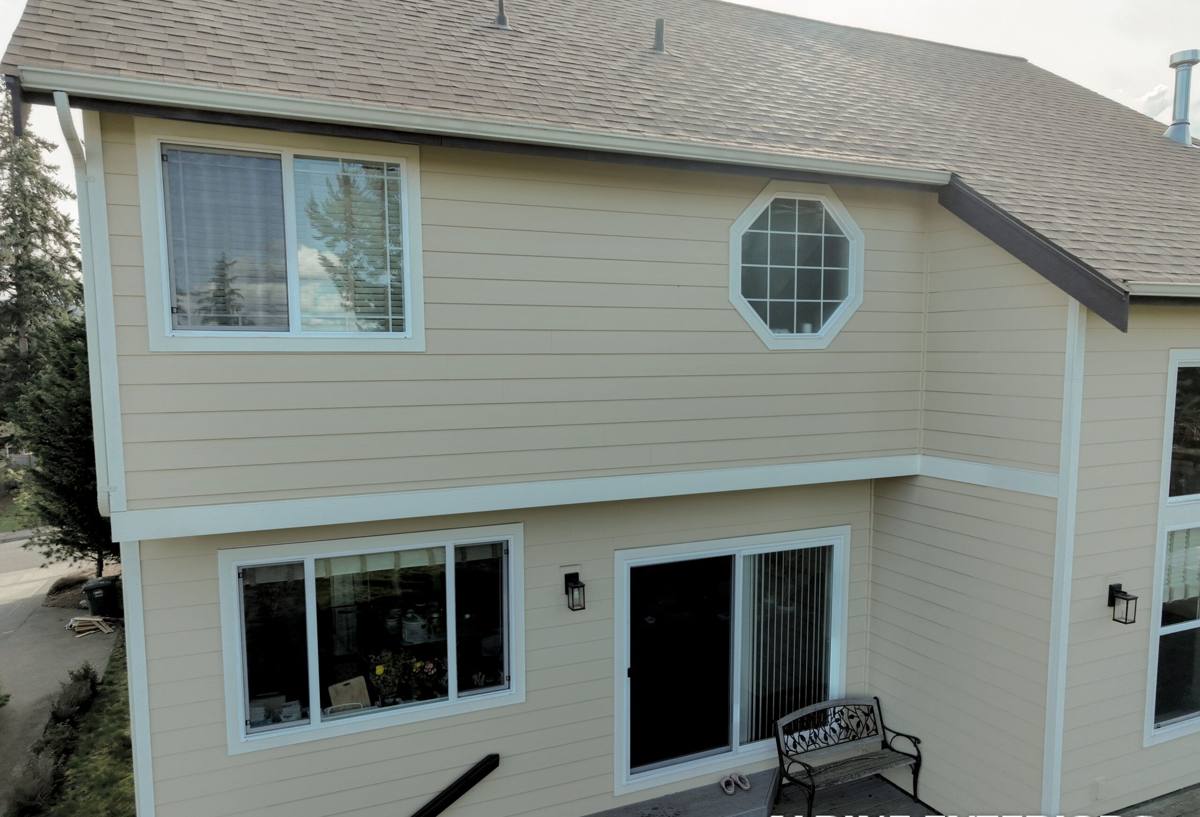
Common Roof Repair Issues We Find in Cottonwood Beach
- Moss and algae buildup along north-facing slopes and shaded valleys, often thickest where tree cover blocks sun and airflow
- Lifted or cracked shingle tabs from repeated wind-driven rain working under the edges
- Corroded or failing flashing around chimneys, skylights, and roof-to-wall transitions where salt air has accelerated rust
- Deteriorated vent boot seals — the rubber collars around plumbing vents are usually the first thing to crack and let water in
- Clogged or undersized gutters that back water up under the first course of shingles during heavy rain
- Soft or delaminated roof decking found once a slow leak has been running longer than the homeowner realized
- Nail pops and exposed fasteners where corrosion or shrinkage has worked nails loose from the deck
What a Correct Roof Repair Actually Involves
A roof repair that actually holds up in this climate is more than swapping a few shingles. We treat every repair as three steps, in order.
1. Find the Real Source
Water travels. A stain on a ceiling in one room can trace back to a flashing failure several feet away, or to moss that's been redirecting runoff for a season. We trace the path before we touch a shingle, because patching the visible spot without finding the actual entry point just delays the next leak.
2. Repair the Structure, Not Just the Surface
If water has been getting in for a while, the decking underneath may be soft or delaminated. Shingling over compromised decking looks fine for a season and then fails again — so any soft sheathing gets cut out and replaced before new roofing goes down over it.
3. Rebuild the Weak Point to Outlast the Original
Wherever we're already open — a flashing detail, a vent boot, a valley — we upgrade it rather than replicate what failed. That usually means better underlayment at that spot, corrosion-resistant fasteners, and flashing details sized for driving rain, not just vertical rainfall.
Repair vs. Replace: How We Make the Call
Not every roof problem in Cottonwood Beach needs a full replacement, and not every roof is a good candidate for another repair. We look at age, extent of damage, and how much of the roof is affected before recommending either path.
| Sign | Usually Points to Repair | Usually Points to Replacement |
|---|---|---|
| Leak source | Isolated to one flashing detail, vent, or valley | Multiple leak points across different roof planes |
| Roof age | Well within its expected lifespan | At or past the material's typical service life |
| Decking condition | Solid, dry sheathing around the damaged area | Widespread soft spots or rot found during inspection |
| Moss/algae extent | Localized patches, shingles still intact underneath | Heavy coverage with shingle granule loss across large areas |
| Shingle condition | Most of the field is sound; damage is limited | Widespread curling, cracking, or brittleness roof-wide |
We'll walk you through which column your roof falls into and why, not just tell you what we recommend.
Our Roof Repair Process, Start to Finish
Inspection
We get on the roof (weather permitting) and check the field, flashing, vents, valleys, and gutters, plus the attic side where accessible, to see whether water has been getting into the structure and how far it's traveled.
Written Scope and Estimate
You get a clear explanation of what's actually failing, what we propose to do about it, and a written estimate before any work starts. No surprise change orders for problems we should have caught during inspection.
Repair Work
We remove damaged materials down to sound decking, address the actual cause of the leak, and rebuild the affected area with materials and fastening appropriate for a driving-rain, salt-air environment.
Cleanup and Walkthrough
Debris and old materials are hauled off, and we walk the completed repair with you so you know exactly what was done and what to watch for going forward.
Materials and Methods We Use — and Why
In a coastal, moss-heavy climate, the small details matter more than the brand name on the shingle bundle.
- Corrosion-resistant fasteners and flashing instead of standard galvanized where salt exposure is significant, since bare or thinly coated metal corrodes faster this close to the water
- Properly lapped underlayment at valleys, eaves, and penetrations so wind-driven rain can't work its way past a single layer of protection
- New vent boots and pipe collars rather than caulk-and-patch fixes, since the rubber seals are a wear item that caulking only masks temporarily
- Ice-and-water membrane at vulnerable transitions — chimneys, skylights, roof-to-wall joints — as a second line of defense behind the visible flashing
We won't cut corners with a quick surface patch on a problem that needs the deck opened up, and we'll say so plainly if that's what your roof needs — even if it's not what you were hoping to hear.
Moss, Algae, and Salt Air: What Ongoing Maintenance Looks Like
Repair work holds up longer when it's paired with basic seasonal upkeep, especially in a neighborhood like Cottonwood Beach where moss pressure never really lets up.
- Keep gutters and downspouts clear so water sheds off the roof instead of backing up under shingles
- Have moss physically removed rather than just treated, since dead moss left in place still holds moisture
- Trim back overhanging branches where possible to cut down on shade and debris that feed moss growth
- Have flashing and vent boots checked every couple of years, since these small components fail well before the shingle field does
- Address small leaks immediately rather than waiting for a wet season to pass — decking damage gets more expensive the longer it sits
What Affects the Cost of a Roof Repair
| Factor | Why It Matters |
|---|---|
| Extent of the damage | A single flashing repair costs far less than a section with rotted decking |
| Roof accessibility | Steep pitches, multiple stories, or limited access add labor and setup time |
| Decking condition | Discovering soft sheathing during the repair adds material and labor beyond the original scope |
| Moss/algae removal | Heavy buildup requires careful manual removal to avoid damaging shingles underneath |
| Material match | Matching existing shingle color and profile can affect sourcing time and cost |
We give a written estimate after inspection, not a phone-quote guess — a roof repair without eyes on the actual damage isn't a number you can rely on.
Why Hiring a Crew That Already Works Cottonwood Beach Matters
A contractor who works this stretch of Whatcom County regularly knows which flashing details tend to fail first in salt air, which slopes hold moss longest, and how hard the driving rain off the water actually pushes water into a roof system. That's the difference between a repair that's built for the coast and one that's built for a climate this neighborhood doesn't have. We're a Birch Bay-based crew — we're not driving in from out of the area for a one-off job, and we're not guessing at what this weather does to a roof over time.
Before You Hire: A Quick Checklist
- Ask for a written estimate based on an actual inspection, not a phone quote
- Confirm they'll check the decking, not just replace surface shingles
- Ask what fasteners and flashing materials they use in coastal, salt-air conditions
- Ask how they handle moss removal — scraping and treating is different from a quick rinse
- Get the scope of work in writing before anything is removed from your roof
- Ask about warranty coverage on both materials and labor
If you're dealing with a leak, moss buildup, or damaged flashing on a Cottonwood Beach roof, we're happy to take a look and give you a straight answer about what it actually needs. Use the form below to request a free, no-pressure estimate.