 Birch Bay Siding
 Roofing in Point Whitehorn: A Different Set of Conditions
Point Whitehorn sits close enough to the Strait of Georgia that salt-laden air, wind-driven rain, and long stretches of shade under fir and cedar canopy are just part of owning a home there. Those three things together — salt, moisture, and shade — are exactly what shortens the life of a roof that wasn't built or installed with this specific stretch of Whatcom County in mind. A roof that would hold up fine twenty miles inland can wear out early here if the materials, flashing details, and ventilation weren't chosen for coastal exposure.
This page covers roof replacement specifically for Point Whitehorn properties — what the climate actually does to a roof over time, what a correct replacement involves, and how our process works for homeowners in this area.
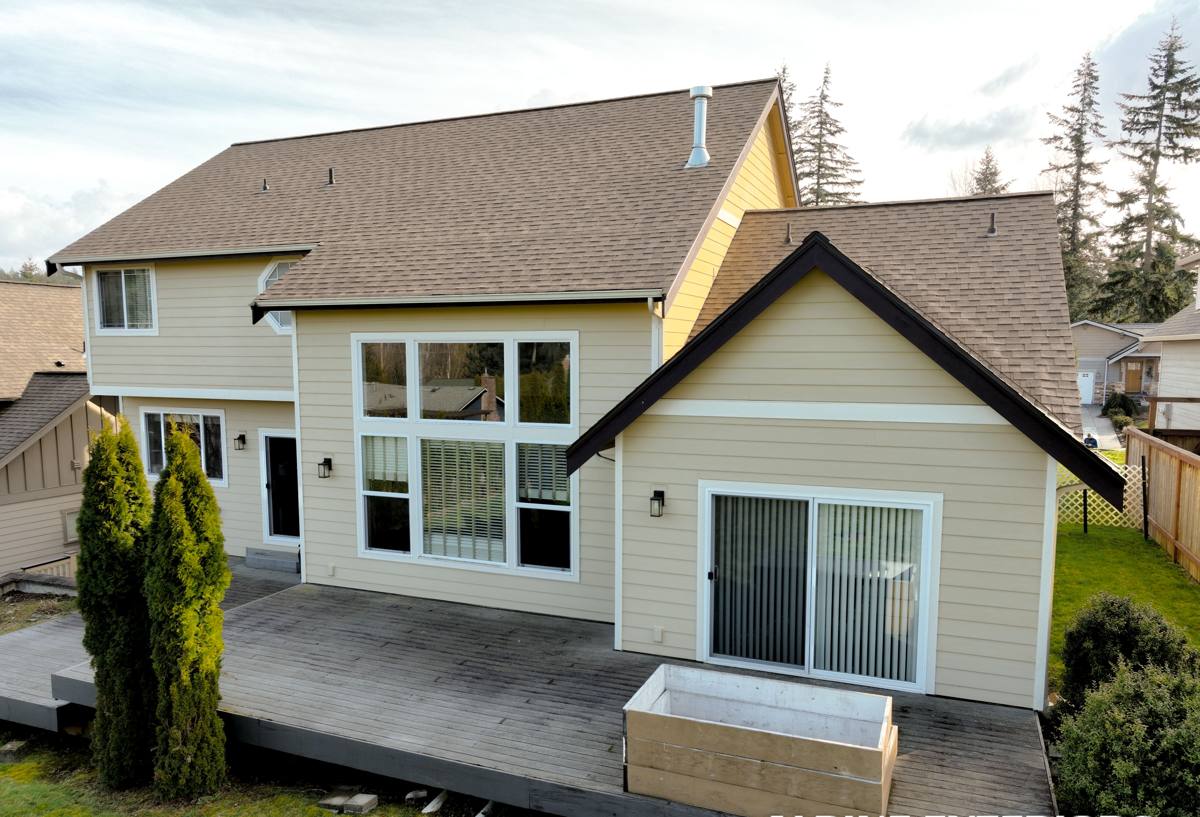
What This Climate Does to a Roof
Salt Air and Metal Fatigue
Airborne salt accelerates corrosion on any exposed metal — flashing, fasteners, vents, and gutter hardware. Bare or poorly coated metal components can start showing rust and pitting years before a roof's shingles or panels are actually worn out. On a coastal replacement, the metal details matter as much as the roofing material itself.
Driving Rain and Wind-Driven Water
Storms coming off the water don't just fall straight down — wind pushes rain sideways and up under laps, ridge caps, and flashing edges that would stay dry in a calmer climate. Roofs here need underlayment and flashing systems designed to shed water that's moving horizontally, not just vertically.
Moss, Shade, and a Long Wet Season
Point Whitehorn's tree cover keeps large sections of many roofs shaded most of the day, and the Pacific Northwest's long wet season gives moss and algae months to establish themselves. Moss holds moisture against the roofing surface, works its way under shingle edges, and can lift material over time — turning a cosmetic issue into a leak path if it's left unmanaged.
Signs a Point Whitehorn Roof Needs Replacement, Not Another Repair
- Granule loss heavy enough that you can see bare asphalt on multiple shingles, not just a few
- Moss or algae growth that comes back within a season or two of cleaning
- Curling, cracked, or lifted shingle edges, especially on shaded north- and west-facing slopes
- Rusted or visibly deteriorating flashing around chimneys, vents, and valleys
- Daylight visible through the roof deck from the attic, or damp insulation after storms
- A roof that's approaching or past its material's expected service life, especially if it was installed without coastal-grade details
- Repeated patch repairs in the same areas that keep reopening
One or two of these on their own might still be repairable. Several at once, or a roof past the age where repairs make financial sense, usually points to replacement.
What a Correct Replacement Involves Here
Full Tear-Off and Deck Inspection
We don't install new roofing over old material. A full tear-off is the only way to actually see the deck — and in a wet, shaded climate like this, that inspection matters. Soft, delaminated, or water-stained decking gets replaced before anything new goes down. Covering a compromised deck just locks moisture problems in place under a new roof.
Underlayment Built for Wind-Driven Rain
Given how often wind pushes rain sideways here, we use synthetic or ice-and-water underlayment at eaves, valleys, and other vulnerable areas rather than relying on standard felt alone. This is one of the details that separates a roof built for this specific stretch of coastline from a generic install.
Corrosion-Resistant Flashing and Fasteners
Given the salt air, we spec flashing, fasteners, and vent hardware rated for coastal exposure rather than standard-grade components. It costs a bit more up front and avoids early corrosion that turns into leaks around chimneys, skylights, and roof-to-wall transitions years before the shingles themselves are due for replacement.
Ventilation That Accounts for Shade
Shaded roofs stay damp longer after rain, which makes proper intake and exhaust ventilation more important, not less. Balanced ventilation helps the roof deck dry out between storms and keeps moisture from building up in the attic, which in turn protects the underlayment and decking from the inside as well as the outside.
Moss-Resistant Details
Where a home sits under heavy tree cover, we talk through moss-resistant shingle options (some come with zinc or copper granule strips) and proper roof-to-tree clearance as part of the plan — not as an afterthought after moss has already become a recurring problem.
Material Comparison for Coastal, Shaded Roofs
| Material | How It Handles Salt Air | How It Handles Moss/Shade | Typical Lifespan |
|---|---|---|---|
| Architectural asphalt shingle | Good, with corrosion-resistant flashing and fasteners | Moderate; moss-resistant lines help in shaded areas | 25–30 years |
| Standing seam metal | Very good with a marine-grade coating; poor if uncoated | Very good — sheds moss easily due to smooth, steep surface | 40–50+ years |
| Composite/synthetic shake | Good; low-maintenance in salt exposure | Good | 30–50 years |
| Wood shake or shingle | Requires regular maintenance to resist salt and rot | Needs active moss management; highest upkeep in shade | 20–30 years with upkeep |
There's no single "best" material for every Point Whitehorn home — it comes down to how much tree cover the roof sits under, how exposed the home is to wind off the water, budget, and how much ongoing maintenance you want to take on. We walk through these trade-offs honestly rather than pushing one product across every job.
Cost Factors for a Point Whitehorn Roof Replacement
| Factor | Why It Moves the Price |
|---|---|
| Roof size and pitch | More surface area and steeper slopes mean more material and labor time |
| Deck condition | Rotted or soft decking found during tear-off has to be replaced before re-roofing |
| Material choice | Asphalt, metal, and composite products carry different material and installation costs |
| Number of penetrations | Chimneys, skylights, and vents each need individual flashing detail work |
| Access and tree cover | Limited access or heavy tree cover can add setup time and disposal considerations |
| Ventilation upgrades | Adding or correcting intake/exhaust ventilation is worth pricing in on older homes |
Exact pricing depends on what we find once we're on the roof and, for tear-offs, on the deck. We'd rather walk your specific roof and give you real numbers than quote a range that doesn't mean much for your home.
Our Process
1. On-Site Inspection
We walk the roof and attic, check the deck where accessible, note flashing condition, ventilation, tree exposure, and any moss or moisture issues specific to the property.
2. Straight Talk About Options
We explain what we found, what's driving the recommendation, and what material and detail choices make sense for that particular roof — no pressure toward the most expensive option if it isn't warranted.
3. Written Estimate
You get a clear scope of work and price before anything is scheduled, including what happens if we find deck damage once tear-off starts.
4. Tear-Off and Replacement
Full removal of old roofing, deck repair as needed, correct underlayment and flashing installation, and the new roofing material installed to manufacturer and coastal-detail specifications.
5. Cleanup and Walkthrough
Site cleanup including magnetic sweep for nails, and a final walkthrough so you know what was done and what to watch for going forward.
Why It Matters to Hire a Crew That Already Works Point Whitehorn
A crew that regularly works this part of Birch Bay already knows which slopes on a given lot tend to hold moss, how far wind-driven rain typically travels up a roof in a coastal storm, and which flashing and fastener grades actually hold up here instead of corroding early. That's knowledge you don't get from a crew that mostly works drier, more sheltered inland neighborhoods and treats every job the same way.
Local familiarity also means fewer surprises with Whatcom County permitting requirements and disposal logistics for a tear-off — practical details that keep a project on schedule instead of stalling it.
After Your New Roof Goes On
- Have gutters and downspouts cleared regularly — clogged gutters back water up under eaves, especially during heavy coastal storms
- Keep overhanging branches trimmed back where practical to reduce shade and debris buildup
- Schedule a moss check-up before the wet season each year, particularly on shaded slopes
- Have flashing and fastener points inspected periodically for early signs of corrosion
- Address small leaks or lifted shingles quickly — in this climate, small issues don't stay small for long
If your roof is showing wear or you're just not sure where it stands, we're happy to take a look. We offer free, no-pressure estimates for Point Whitehorn homeowners — you can use the form below to get started.