 Birch Bay Siding
 Why Roofs in Blaine Wear Differently Than Roofs Inland
Blaine sits right on the water, and that changes what a roof has to deal with year after year. Salt-laden air from Semiahmoo Bay and the Strait of Georgia settles on shingles, flashing, and fasteners in a way that inland Whatcom County homes never experience. Add in driving, wind-pushed rain that comes in sideways off the water, and a moss season that can stretch for most of the year in our marine climate, and you have a roof system that's under near-constant stress even when nothing looks obviously wrong.
None of this means a roof in Blaine has to fail early. It means the installation has to be done with those specific conditions in mind — the right materials, the right fastener choices, and details like flashing and ventilation done correctly the first time. A roof designed for a dry inland climate and simply dropped onto a Blaine home is starting from behind.
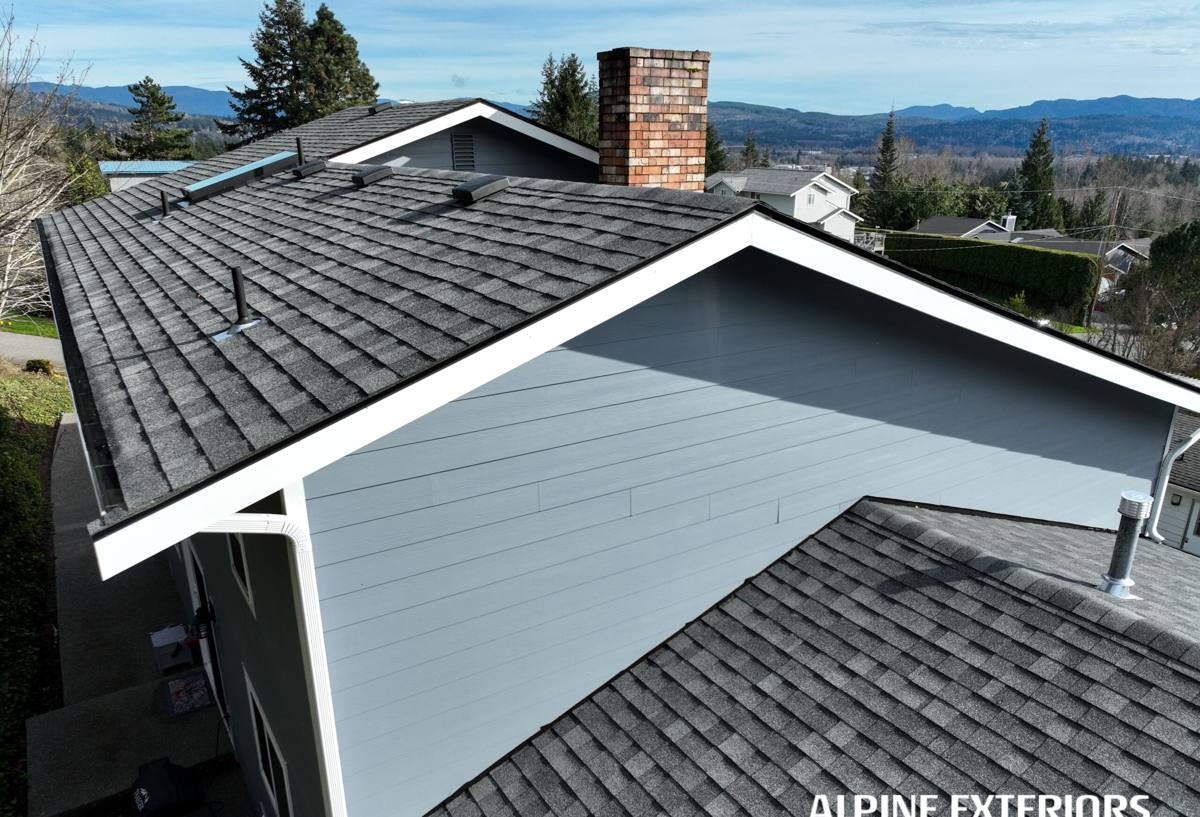
What "Correct" Actually Means for a New Roof Installation
A new roof is more than shingles nailed to plywood. A properly installed roof system in this area includes several layers working together, and skipping or shortcutting any one of them is usually where problems start.
The Core Components
- Tear-off and deck inspection — removing old roofing down to the sheathing so soft spots, rot, or old moisture damage can be found and repaired before anything new goes down
- Ice and water shield — a self-adhering waterproof membrane at eaves, valleys, and around penetrations, which matters more here than in drier parts of the state because of how often wind-driven rain gets pushed uphill under shingles
- Synthetic underlayment — a water-resistant layer across the full deck as a second line of defense
- Roofing material — shingles, metal, or another system matched to the home and budget
- Flashing — the metal detailing around chimneys, walls, skylights, and valleys where most leaks actually originate
- Ventilation — intake and exhaust venting that lets the attic breathe and dry out
Every one of those layers matters everywhere, but in a salt-air, high-rainfall environment like Blaine, the margin for error is smaller. A weak point that might take a decade to show up in a dry climate can show up in a few wet winters here.
Choosing a Roofing Material for This Climate
There isn't one "best" roofing material for every home — it depends on the roof's pitch, the home's style, and the budget. But some materials handle salt air and constant moisture better than others, and it's worth understanding the trade-offs before deciding.
| Material | How It Handles Salt Air & Moisture | Maintenance Considerations |
|---|---|---|
| Architectural asphalt shingles | Good performance when properly ventilated; algae-resistant granules help slow staining near the coast | Moderate — periodic moss removal and gutter care |
| Standing seam metal | Sheds water and resists moss well due to smooth, steep-draining surface; coated finishes resist salt corrosion | Low — occasional fastener and sealant checks |
| Cedar shake | Attractive but more sensitive to constant moisture and salt exposure over time | Higher — requires regular treatment and closer monitoring |
| Basic 3-tab shingles | Lower cost but shorter lifespan under sustained wind and rain exposure | Moderate to high as the roof ages |
For most Blaine homes, we lean toward architectural shingles or standing seam metal because both hold up well against the combination of salt air and near-constant moisture without demanding a lot of upkeep. That said, the right choice always depends on the specific home, its roofline, and what the homeowner wants long-term — we'll walk through the honest trade-offs for your situation rather than pushing one product.
Why We're Selective About Certain Products
We don't install every product on the market, and that's a deliberate professional standard rather than a knock on any manufacturer. Some roofing systems are more sensitive to installation technique, require more frequent maintenance to perform as designed, or come with warranty structures that put more burden back on the homeowner. In a climate where a roof gets tested by weather almost every month of the year, we'd rather stand behind a smaller number of systems we know perform well here than offer something that looks good on paper but creates headaches for the homeowner down the road.
Ventilation and Moisture: The Part Homeowners Don't See
Blaine's long moss season isn't just a cosmetic issue — it's a symptom of a roof surface that stays damp longer than it should. Moss holds moisture against the shingle surface, and over time that moisture works its way under the granules and shortens the roof's life. Good roof design fights this from two directions: a roofing material and slope that shed water efficiently, and attic ventilation that keeps the underside of the deck dry.
Poor attic ventilation is one of the most common issues we find when we tear off an older roof in this area. Trapped, humid air condenses on the underside of the sheathing, which can cause rot, mold, and premature failure of the new roofing installed above it — even if the shingles themselves are high quality. A correct installation always includes a look at intake vents (usually at the soffits) and exhaust venting (ridge or box vents) to make sure air is actually moving through the attic, not just assumed to be.
Our Installation Process
We follow the same disciplined process on every roof, adjusted for the specific house and its exposure to wind and water.
- On-site inspection — we assess the current roof, attic ventilation, and any trouble spots before quoting anything
- Written estimate — clear scope of work, material options, and pricing with no vague allowances
- Tear-off — full removal of old roofing and disposal, with the deck inspected as it's exposed
- Deck repair — any damaged or soft sheathing is replaced, not covered over
- Underlayment and ice/water shield installation — installed at eaves, valleys, and penetrations first
- Flashing and ventilation work — new flashing where needed, ventilation corrected or upgraded
- Roofing material installation — installed to manufacturer specifications, not shortcuts
- Final walkthrough — cleanup, site check for stray fasteners, and a review of the finished roof with the homeowner
Every step gets documented, and homeowners are welcome to ask questions or check in at any point during the job — this isn't a process we want to rush through.
Flashing and Valleys: Where Most Roof Leaks Actually Start
Homeowners often assume a leak means bad shingles, but the truth is most roof leaks trace back to flashing — the metal detailing around chimneys, skylights, sidewalls, and valleys. Shingles are designed to shed water across a flat plane; flashing is what handles the transitions and penetrations where water naturally wants to find a way in.
In a wind-driven rain environment like Blaine's, flashing has to be installed with extra attention to overlap direction and sealant placement, since water isn't always falling straight down — it's being pushed sideways and sometimes even slightly upward under eaves during a storm. Valleys, in particular, concentrate a large volume of water runoff and need either a properly woven shingle valley or metal valley flashing installed correctly, not just caulked and hoped for.
What a New Roof Costs, and What Drives the Price
Every roof is priced based on its own specifics, but the main cost factors are consistent from job to job. Understanding them helps you evaluate quotes and know what you're actually paying for.
| Cost Factor | Why It Matters |
|---|---|
| Roof size and pitch | Steeper, larger, or more complex rooflines require more material and labor time |
| Number of layers to remove | Tearing off multiple old layers costs more than a single-layer tear-off |
| Deck condition | Rotten or soft sheathing found during tear-off adds repair cost, but skipping this repair isn't an option |
| Material choice | Standard architectural shingles, premium shingles, and metal roofing all carry different material costs |
| Ventilation upgrades | Adding or correcting intake/exhaust ventilation is a smaller cost that protects the whole investment |
| Roof accessories | Chimneys, skylights, and multiple valleys all add flashing labor and material |
Rather than quoting a rough number without seeing the roof, we walk every job in person first. A fair, itemized estimate protects both the homeowner and the crew doing the work, and it's the only way to give you a number you can actually trust.
Why Hiring a Crew That Already Works in Blaine Matters
Roofing crews that work primarily inland don't always think about the details that matter most on the water — the extra corrosion resistance needed on fasteners and flashing, the ventilation strategy that accounts for a longer damp season, or the wind exposure that comes with being close to open water. A crew that regularly works Blaine and the surrounding Birch Bay and Whatcom County area already has that context built into how they plan and install a roof, rather than treating it as an afterthought.
Local familiarity also means a straightforward relationship with permitting, a realistic understanding of typical weather windows for scheduling tear-off days, and a crew that isn't guessing at what a coastal roof needs to hold up over time. That's the difference between a roof that's technically installed correctly and one that's installed correctly for where it actually sits.
Protecting Your New Roof After Installation
A well-installed roof still benefits from some basic homeowner attention, especially given how long moss season runs in this part of Whatcom County.
- Keep gutters clear so water isn't backing up under the roof edge
- Have moss growth addressed early, before it works under the shingle surface
- Trim back overhanging branches to reduce shade and debris buildup on the roof
- Check attic ventilation isn't blocked by insulation or storage over time
- Have the roof looked at after any major windstorm to catch lifted shingles or flashing early
- Schedule a periodic visual inspection rather than waiting for a leak to show up inside the house
None of this is difficult, but it's the kind of small maintenance that keeps a correctly installed roof performing the way it was designed to for its full lifespan.
Get a Straight Answer for Your Home
If you're weighing a new roof for your Blaine home, we're glad to come take a look, answer your questions honestly, and put together a clear, no-pressure estimate. There's no obligation — just a straightforward assessment of what your roof actually needs. Use the form below to get started.