 Birch Bay Siding
 Why Ferndale Roofs Take a Different Kind of Beating
Ferndale sits close enough to the water that salt air is part of daily life, and far enough into Whatcom County's wet-season pattern that roofs here rarely get a real break between rain events. That combination is hard on roofing in ways that don't always show up right away. Salt-laden moisture works into fastener heads and cut edges. Long stretches of damp, shaded weather feed moss and lichen growth on north-facing slopes and anywhere debris collects. None of this is dramatic on its own, but over ten or fifteen years it adds up to premature rust, lifted shingles, and soft decking that homeowners don't discover until there's a stain on the ceiling.
Metal roofing handles this environment better than most materials when it's specified and installed correctly for the coast — meaning the right coating system, the right fastener hardware, and flashing details that account for wind-driven rain rather than just straight-down rain. Get any of those wrong and you've traded one set of problems for another.
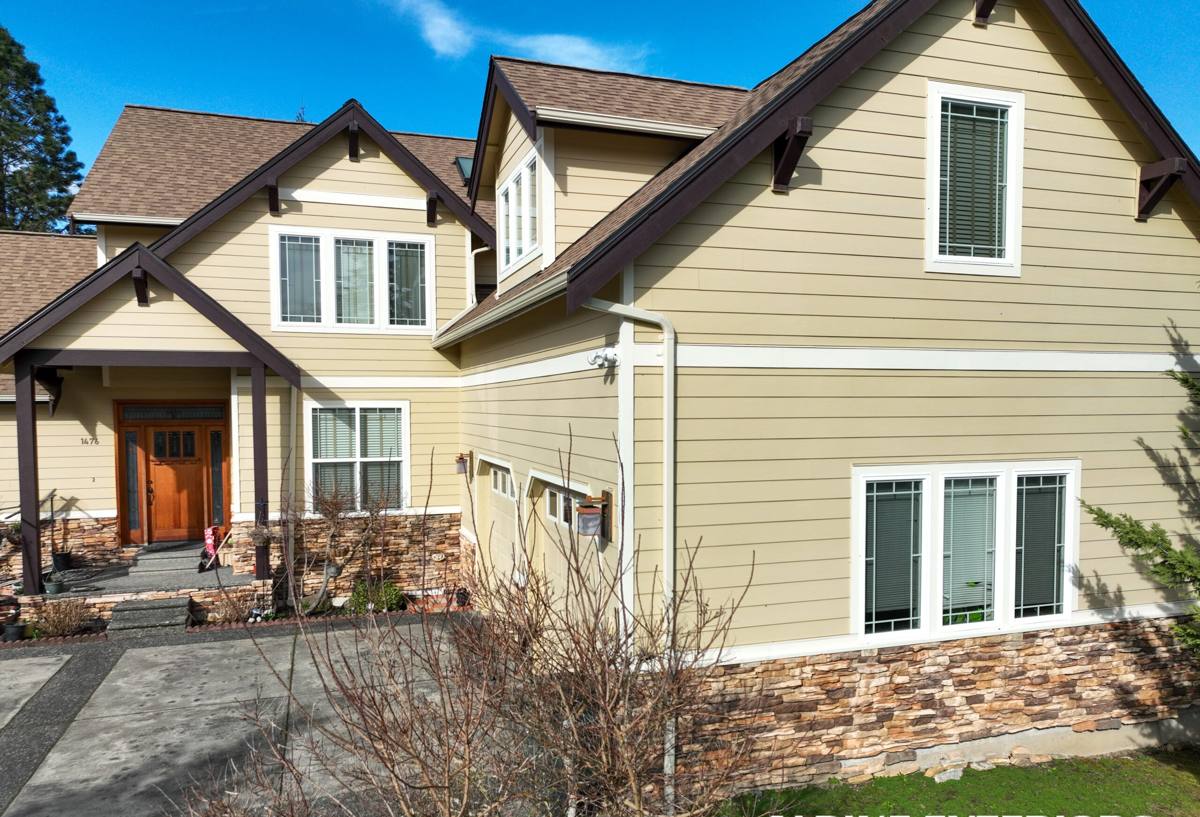
What Salt Air, Rain, and Moss Actually Do to a Roof
Salt Air and Corrosion
Airborne salt accelerates corrosion on any exposed metal — fasteners, flashing, panel edges, and cut ends where factory coating has been compromised. Bare or poorly coated steel can start showing surface rust within a few years this close to the water. This is why coating quality and fastener selection matter more here than they would forty miles inland.
Driving Rain
Storms off the water rarely fall straight down. Wind-driven rain pushes moisture sideways and upward under laps, around penetrations, and along valleys — spots that a roof designed only for vertical rainfall won't seal against. This is where most metal roof leaks in this area actually originate: not on the open field of the roof, but at transitions.
Moss and Organic Growth
Shaded roof sections, tree cover, and the long stretch of grey, damp weather typical of a Whatcom County winter give moss and lichen exactly the conditions they need. On asphalt shingles, moss lifts tabs and holds moisture against the deck. On metal, the risk is different — moss can still take hold in seams, at panel overlaps, and in valleys where debris collects, trapping moisture against the coating and encouraging localized corrosion over time.
Signs a Ferndale Roof Is Due for a Metal Upgrade
- Granule loss, curling, or missing shingle tabs after wind events
- Moss or dark streaking concentrated on shaded or north-facing slopes
- Rust staining at valleys, flashing, or fastener heads on an existing metal roof
- Ceiling stains or musty attic smell after driving rain, not just heavy downpours
- A roof approaching or past the manufacturer's expected service life for its material
- Visible fastener backout or panel movement on an older exposed-fastener metal roof
Any one of these on its own might just need a repair. Several together usually mean the roofing system as a whole is past the point where patching makes financial sense.
Metal Roofing Systems We Install
Not every metal roof is built the same way, and the difference matters more in a coastal, high-moisture area like Ferndale than it would somewhere drier. We install standing seam and profile-panel systems suited to this climate, and we're upfront about the trade-offs between them so homeowners can make an informed choice rather than just picking based on price.
| System Type | Best For | Coastal Considerations |
|---|---|---|
| Standing seam (concealed fastener) | Long-term, low-maintenance ownership | No exposed fasteners to corrode; handles wind-driven rain and expansion/contraction well |
| Exposed-fastener panel | Budget-conscious projects, outbuildings | Lower upfront cost, but fastener gaskets and heads need periodic inspection in salt air |
| Stone-coated steel | Homeowners wanting a traditional roof profile in metal | Good impact and wind resistance; coating and edge detailing still critical near the water |
For most Ferndale homes we lean toward standing seam when budget allows, specifically because it removes the exposed-fastener corrosion risk that salt air makes worse over time. Where exposed-fastener panels make sense for the project, we spec corrosion-resistant hardware and inspect it as part of ongoing maintenance rather than treating it as install-and-forget.
What a Correct Installation Actually Involves
Metal roofing looks simple from the ground, which is part of why it's easy to install poorly. The parts that actually determine whether a roof performs for its full service life are mostly invisible once the job is done.
Deck and Underlayment
We check the existing deck for soft spots, rot, or delamination before anything goes down — a metal roof installed over a compromised deck will fail regardless of the panel quality. A high-temperature, self-adhering underlayment goes down as the moisture barrier, with extra attention at eaves and valleys where wind-driven rain is most likely to intrude.
Flashing and Penetrations
Valleys, chimneys, vent stacks, and wall transitions are where the majority of leaks originate on any roof, metal included. We custom-fit flashing at these points rather than relying on generic trim pieces, and we detail them specifically for sideways rain, not just vertical runoff.
Fasteners and Hardware
In a salt-air environment, fastener choice is not a minor detail. We use corrosion-resistant fasteners rated for coastal exposure, and on standing seam systems the clip-and-seam design keeps fasteners fully concealed and out of the weather entirely.
Ventilation
Proper intake and exhaust ventilation keeps moisture from building up in the attic space, which matters as much for preventing condensation-driven rot as it does for energy performance. A metal roof installed over a poorly ventilated attic can trap moisture underneath it just as easily as any other roofing material.
Our Process, Start to Finish
- On-site assessment: We inspect the existing roof, deck condition, ventilation, and any problem areas specific to your home's exposure and layout.
- Honest recommendation: We walk through system options and coating grades suited to Ferndale's climate, with real trade-offs explained, not just upsold.
- Written estimate: Clear scope, materials, and timeline before any work begins.
- Tear-off and deck repair: Old roofing removed, deck inspected and repaired as needed before underlayment goes down.
- Installation: Panels, seams, flashing, and fasteners installed to manufacturer and coastal-specific detailing standards.
- Final walkthrough and cleanup: We review the finished roof with you and make sure the site is left clean.
Cost Factors for a Ferndale Metal Roof
Metal roofing costs more upfront than asphalt shingles, and the final number depends on several factors specific to your home and this area. We don't quote a number without seeing the roof, but these are the main drivers:
| Factor | Why It Matters Here |
|---|---|
| Panel system chosen | Standing seam costs more than exposed-fastener panel but removes long-term fastener maintenance |
| Coating grade | Higher-grade coatings resist salt-air corrosion longer, which matters more near the water than inland |
| Roof complexity | Valleys, dormers, and multiple penetrations increase flashing labor and material |
| Deck condition | Rot or soft decking found during tear-off adds repair cost before installation can proceed |
| Ventilation upgrades | Older homes often need intake or exhaust vent corrections as part of the reroof |
Broadly, expect metal roofing to run higher than asphalt shingle replacement, with the gap narrowing over the life of the roof once you factor in the shingle roof's shorter service life and the moss and rain-driven maintenance common in this area.
Maintaining a Metal Roof in a Coastal Climate
- Clear debris from valleys and around penetrations at least once a year, more often under tree cover
- Check for moss or organic growth building up in shaded areas each fall before the wet season sets in
- Inspect exposed fasteners (if applicable) for backout or early rust every year or two
- Keep gutters clear so water isn't sitting against eave flashing
- Have a professional inspection after any major windstorm, not just on a fixed schedule
A metal roof installed correctly for this climate needs far less attention than shingles, but "low maintenance" isn't "no maintenance" — a few minutes of seasonal upkeep is what separates a twenty-year roof from a forty-year one.
Why a Local Crew Matters for This Job
A metal roof detailed for a dry inland climate and one detailed for Ferndale's salt air and driving rain are not the same job, even if the panels look identical. Crews who work this stretch of Whatcom County regularly know where wind-driven rain tends to find weak flashing, which slopes hold moss longest through a wet winter, and which fastener and coating combinations actually hold up near the water instead of just on paper. That experience shows up in the small decisions — how a valley is detailed, how much lap is used at an eave, which hardware goes on the order — that determine whether a roof performs quietly for decades or starts causing problems in year six.
If you're considering a metal roof for your Ferndale home, we're happy to take a look and talk through what your specific roof needs — no pressure, no obligation. Use the form below to request a free estimate.