 Birch Bay Siding
 Marietta's Marine Climate Puts Real Demands on Exterior Siding
Marietta sits close enough to the water that homes here deal with a combination of weather stresses that inland Whatcom County properties simply don't face as often. Salt-laden air moves in off the water, wind-driven rain hits walls at an angle instead of falling straight down, and shaded, damp conditions during much of the year create ideal growing conditions for moss and algae on siding. Any one of these on its own is manageable. Together, over years, they're what separates siding that still looks good at year fifteen from siding that's already failing at year eight.
Why Salt Air Matters
Airborne salt is corrosive to metal fasteners and trim, and it accelerates the breakdown of paint films and lower-grade siding materials. It also tends to hold moisture against a surface longer than dry inland air would, which matters more than most homeowners expect — it's not the salt itself that rots a wall, it's the extra time that surface stays wet.
Why Moss Season Matters
Whatcom County's long, wet stretch of the year gives moss and algae months to establish themselves on north- and west-facing walls, under eaves, and anywhere tree cover blocks sun and airflow. Moss holds water against whatever it's growing on. On a siding product that isn't dimensionally stable or that absorbs moisture, that's a slow, steady path to swelling, soft spots, and paint failure.
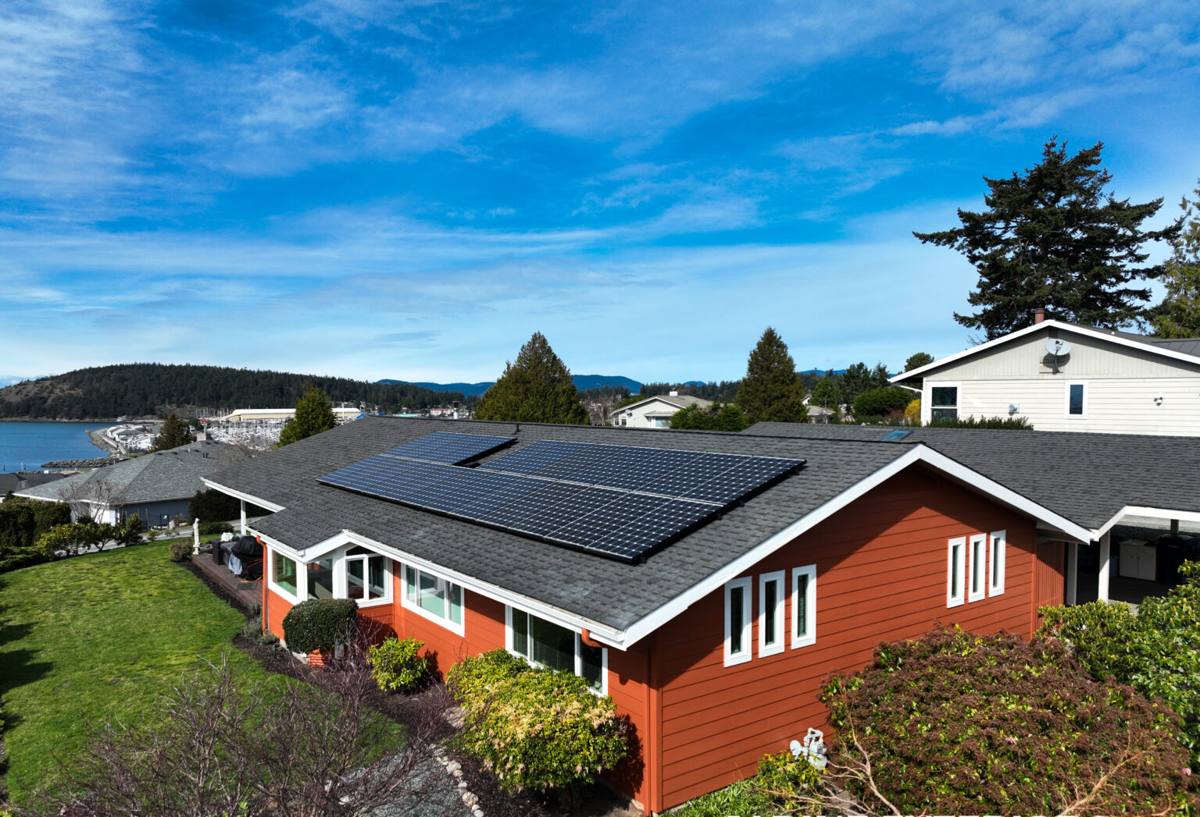
What Marietta Homeowners Should Expect From Correctly Installed Fiber Cement
Fiber cement siding is made from cement, sand, and cellulose fibers, pressed and cured into boards and panels. Done right, it gives you a siding material that doesn't rot, doesn't feed moss the way wood-based products can, holds its shape in wet-dry cycles, and is non-combustible — a real consideration during Pacific Northwest wildfire smoke seasons even this far north. The "correctly installed" part is doing a lot of work in that sentence, though. Fiber cement is a forgiving material in terms of longevity, but it's not a forgiving material to install poorly — gaps, wrong fasteners, or missed flashing details show up as problems years later, usually behind the wall where you can't see them until they're expensive.
Why We Install Only James Hardie Fiber Cement
We standardized on James Hardie products and don't install vinyl, LP SmartSide, primed wood, cedar, or other fiber cement brands. That's a deliberate professional call, not a sales preference. Hardie's HZ5 product line is engineered specifically for climates like ours — more freeze-thaw cycling and sustained moisture than the HZ10 line built for hot, humid Southern climates. The ColorPlus factory finish is baked on under controlled conditions rather than sprayed on-site, which matters directly for a salt-air, high-UV-exposure environment: factory finishes hold color and resist chalking longer than field-applied paint typically does. Hardie also backs the product with a transferable limited warranty, which carries real weight if you sell the home within the coverage period. We'd rather install one product well and stand behind it than offer several and hedge on all of them.
What a Correct Fiber Cement Installation Involves
Moisture Management Behind the Siding
The siding itself is only one layer of the wall's defense against water. A correct installation includes a weather-resistive barrier, proper flashing at every window, door, and penetration, and — on most Marietta homes given our rain exposure — a rainscreen gap that lets any moisture that does get past the siding drain and dry out instead of sitting against the sheathing. A weep screed or starter strip at the base of the wall gives that moisture somewhere to exit. Skip these details and the siding can look fine on the surface while the wall behind it is quietly rotting.
Fastening and Clearances
Hardie publishes specific fastening patterns, nail types, and clearance requirements — siding-to-grade, siding-to-roofline, siding-to-deck — and those numbers exist for a reason. Too little clearance at the bottom edge means splash-back and standing moisture get a running start on the siding's most vulnerable spot. Wrong fastener spacing or the wrong fastener material entirely can void the manufacturer's warranty, which defeats a big part of why you'd choose Hardie in the first place.
Joints, Caulking, and Where Not to Caulk
One of the more common mistakes we see on prior installs is caulking joints that Hardie's specifications actually call for as open, drainable gaps. Caulking every seam looks tidy at first but can trap moisture instead of letting it escape. Correct installation follows the manufacturer's joint treatment details exactly, not what looks cleanest on install day.
Our Process for Marietta Projects
- Site assessment — we look at existing siding condition, sheathing moisture, moss/algae patterns, and which elevations take the worst weather exposure on your specific lot.
- Product and color selection — HZ5 panel or lap siding, trim profiles, and a ColorPlus finish chosen with this area's sun and salt exposure in mind.
- Tear-off and substrate repair — any rotted sheathing or framing found during removal gets addressed before new siding goes on, not covered over.
- Weather barrier and drainage plane installation — housewrap, flashing, and rainscreen furring set up correctly before a single piece of siding is hung.
- Siding installation to manufacturer spec — fastening, clearances, and joint treatment following Hardie's published details.
- Final detailing and cleanup — trim, caulking only where specified, and a final walkthrough.
Signs Your Current Siding Is Already Losing the Fight
- Persistent moss or algae staining that comes back within weeks of cleaning
- Paint that's peeling, bubbling, or chalking heavily on north- or west-facing walls
- Boards that feel soft, spongy, or visibly warped or cupped
- Visible gaps opening up at trim, corners, or butt joints
- Water stains or musty smells on interior walls backing onto exterior siding
- Caulk that's cracked, shrunk, or pulled away from joints
Any one of these is worth a look. Several at once usually means moisture has already gotten past the siding and into the wall assembly, and the fix is more than cosmetic.
What Drives the Cost of a Fiber Cement Project in Marietta
| Cost Factor | Why It Matters |
|---|---|
| Home size and elevation count | More square footage and more wall complexity (dormers, bump-outs) means more material and labor |
| Existing siding removal and sheathing repair | Rot found during tear-off has to be repaired before new siding goes on — this is the most common cause of cost changes mid-project |
| Trim and accent detail complexity | Board-and-batten sections, shakes, or elaborate trim packages take more time than plain lap siding |
| Site access and conditions | Slopes, dense landscaping, or limited staging area near the water can slow crew logistics |
| Color and finish selection | Standard ColorPlus colors versus custom or premium finishes affect material pricing |
| Number of stories | Taller walls require more scaffolding and staging time |
We won't quote a project without walking the property — anyone offering a firm number over the phone for a home they haven't seen is guessing, and on a coastal property that guess is more likely to be wrong.
Maintenance in a Coastal, Moss-Prone Climate
Fiber cement is low-maintenance compared to wood, but "low" isn't "none," especially here. A yearly rinse-down removes salt residue and early moss growth before it establishes. Keeping vegetation trimmed back from walls improves airflow and sun exposure, which is the single biggest factor in how fast moss comes back. Gutters and downspouts that are clogged or misdirected send extra water down the wall face, so keeping them clear reduces splash-back at the base of the siding — the area most exposed to standing moisture. A quick annual check of caulk lines at windows and trim catches small failures before they become a path for water intrusion.
Why Hiring a Crew That Already Works This Area Matters
Whatcom County's coastal microclimate isn't uniform — a home two miles inland from Birch Bay can have noticeably different exposure than one facing open water. A crew that already works Marietta and the surrounding area knows which elevations typically need the most attention to drainage detailing, understands local permitting expectations, and has already seen how Hardie products perform on homes in this specific climate over time — not just in a manufacturer's general climate guidance. That local track record shows up in the small decisions on a job: where to add extra flashing, how much rainscreen gap to use on a particularly exposed wall, which trim details hold up best against driving rain off the water.
If you're weighing a siding replacement or want a second opinion on a bid you've already received, we're glad to walk your property and give you a straightforward, no-pressure estimate — just fill out the form below.