 Birch Bay Siding
 Siding on Lummi Island Works Harder Than Siding Almost Anywhere Else
Lummi Island sits out in the water, and that changes the math on siding. A home a few miles inland in Whatcom County deals with rain and cool, damp winters like the rest of the region. A home on Lummi Island deals with all of that plus near-constant salt-laden air coming off the water, wind-driven rain that hits siding sideways instead of straight down, and long stretches of shade and moisture on the north and west faces of a house where moss and algae get a real foothold. None of that is exotic or rare — it's just more of what already stresses siding everywhere in this part of Washington, concentrated onto a smaller strip of land surrounded by saltwater.
That combination is hard on the wrong siding material and forgiving of almost nothing when the installation itself is sloppy. Salt air accelerates corrosion of fasteners and trim. Driving rain finds every gap in flashing and house wrap. Moss holds moisture against a wall for weeks at a time, which is exactly the condition that rots wood-based products and delaminates poorly bonded ones. If you're planning a siding replacement on Lummi Island, the material and the workmanship both need to be matched to that reality, not to a generic "Pacific Northwest" spec sheet.
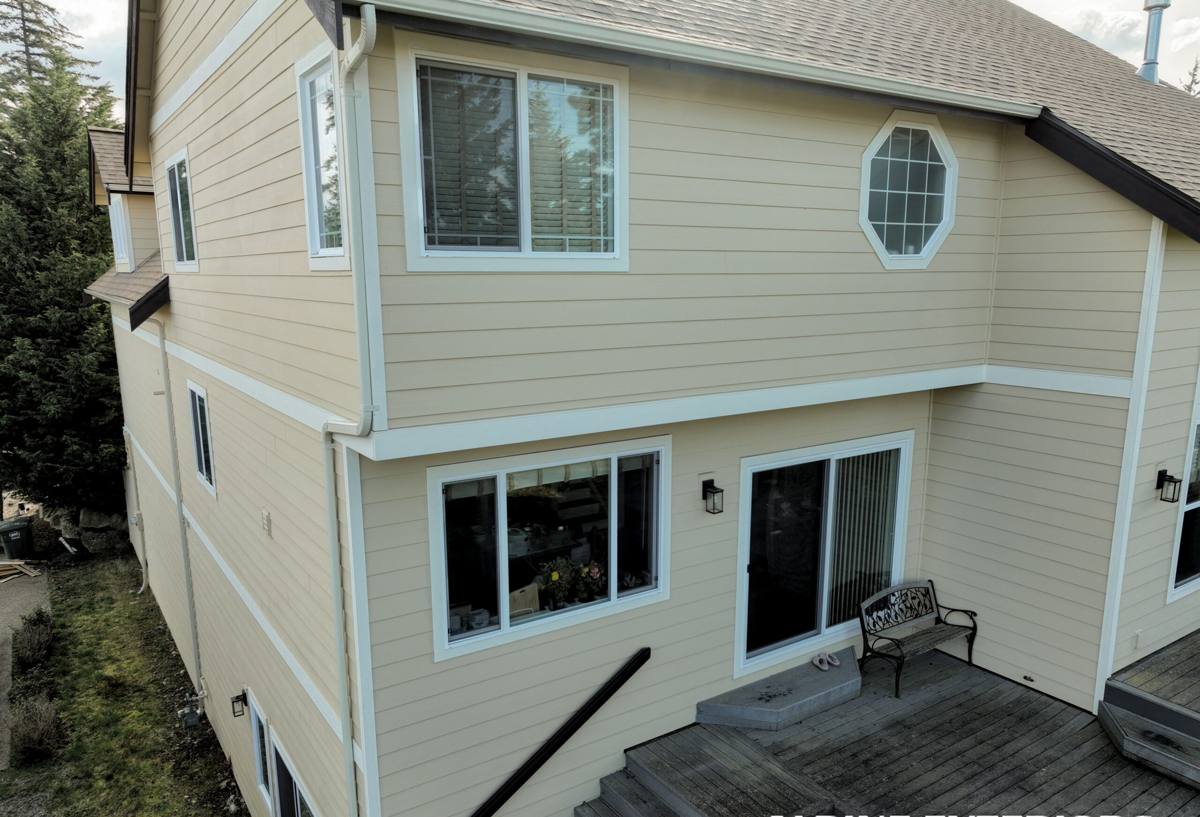
What a Real Siding Replacement Involves — Not Just a New Skin
A proper siding replacement is not a matter of stripping old boards and nailing up new ones in the same pattern. Done right, it's a full envelope job:
- Complete tear-off of the old siding so the sheathing underneath can actually be inspected, not guessed at
- Repair or replacement of any rotten or water-damaged sheathing and framing found underneath
- A new water-resistive barrier installed correctly — lapped shingle-style, sealed at every penetration
- New flashing at windows, doors, decks, and roof-to-wall intersections, since old flashing is almost always the real point of failure
- Correct fastener selection and spacing for the specific siding product, not "whatever's on the truck"
- Proper joint treatment, caulking, and factory- or field-applied finish so seams don't become the next entry point for water
On a salt-air, high-moisture site like Lummi Island, the tear-off step matters more than usual. It's common to find hidden moisture damage behind old siding that never showed on the surface — the kind of thing you can't budget around until the old material is off the wall and the sheathing is exposed.
Why We Only Install James Hardie Fiber Cement
We're a James Hardie-only siding crew. We don't install vinyl, LP SmartSide, cedar, primed spruce, or other fiber cement brands, and that's a deliberate standard, not a sales pitch. On a site like this, the reasoning is straightforward:
- Non-combustible core — fiber cement doesn't feed a fire the way wood-based products can, which matters for insurance and long-term risk regardless of location.
- Moisture and rot resistance — Hardie's cement composition doesn't absorb and swell with moisture the way wood-based siding does, which is the single biggest failure mode we see in damp, shaded, salt-air conditions.
- ColorPlus factory finish — a baked-on finish that holds color and resists the chalking and fading that comes from years of UV and salt exposure, without needing repainting on the same cycle as field-painted products.
- HZ5 product engineering — Hardie's HZ5 line is engineered for cold, wet, freeze-prone climates, which fits the Pacific Northwest coastal environment far better than a one-size-fits-all product.
- A real transferable warranty — backed by installation to Hardie's own specifications, which is why correct installation isn't optional on our jobs.
We've looked at the alternatives and we're honest about their upsides — vinyl is cheap and low-maintenance in mild conditions, cedar looks great fresh off the wall, LP SmartSide is lighter and easier to handle. But on a wind-exposed, salt-air, moss-prone island site, those trade-offs consistently work against the homeowner over a 15-30 year horizon: vinyl warps and cracks in temperature swings and impact, wood-based products need ongoing sealing and repainting to keep moisture out, and the maintenance burden lands on the homeowner every few years. Fiber cement done right removes most of that burden.
How We Approach a Lummi Island Job Specifically
Working on Lummi Island means factoring in ferry scheduling and limited crossing windows into how a job is planned, so materials, crew, and equipment arrive on the right sailing and the job doesn't stall waiting on a delivery. That's a logistics detail, not a technical one, but it's the kind of thing that separates a crew that already works out here from one that's never priced a job across the water. We plan deliveries and crew days around the ferry schedule up front, so a Lummi Island job runs on the same timeline as a mainland one.
Our Process
- On-site estimate — we walk the exterior, check for existing moisture damage, and measure exposure on each elevation, since the water-facing and shaded sides of a Lummi Island home almost always need closer attention than the sheltered sides.
- Written scope and product plan — which Hardie profile and HZ5 configuration fits the home, with a clear line-item scope so there's no ambiguity about what's included.
- Tear-off and sheathing inspection — old siding comes off, sheathing is inspected, and any repairs are flagged and priced before new material goes up, not discovered as a surprise mid-job.
- Barrier, flashing, and fastening — water-resistive barrier, flashing at every penetration, and fastening per Hardie spec.
- Installation and finish detailing — siding installed, joints and trim finished, site cleaned up.
- Final walkthrough — we go over the finished work with you before calling the job done.
Signs Your Siding Is Telling You It's Time
Salt air and moss don't always announce themselves as obvious damage right away. Some signs are worth acting on before they become bigger problems:
- Soft or spongy spots when you press on siding, especially near the bottom courses or under windows
- Persistent moss or dark streaking on north- and west-facing walls that pressure washing only removes temporarily
- Visible cupping, warping, or gaps opening up between boards or panels
- Peeling or bubbling paint, or chalky residue that wipes off on your hand
- Rusty streaks around fasteners or trim, a sign of fastener corrosion from salt exposure
- Rising utility bills or noticeably drafty rooms, which can point to a failing water-resistive barrier behind the siding
Any one of these on its own might be minor. Several together, especially on the water-facing side of the house, usually means the siding system has been letting moisture in for a while.
What Drives the Cost
Every siding replacement is priced around the specifics of the house, but the same factors move the number up or down on nearly every job:
| Factor | Why It Matters |
|---|---|
| Extent of hidden damage | Rotten sheathing or framing found during tear-off adds repair scope that can't be fully known until the old siding is off |
| Home size and elevation complexity | Dormers, bump-outs, and multiple stories add cutting, flashing, and labor time |
| Siding profile chosen | Lap, shingle, and panel Hardie profiles differ in material and install time |
| Trim and accessory work | Fascia, soffits, and trim replaced alongside siding add scope but avoid mismatched materials later |
| Site access and logistics | Ferry scheduling and staging on an island site factor into crew and delivery planning |
| Existing paint or coating removal | Some old siding systems require extra prep or disposal handling |
We give a written, itemized estimate after the on-site walk so you can see exactly what's driving the price, rather than a single lump number.
Maintenance After Installation
One of the practical benefits of a correctly installed Hardie system is how little ongoing maintenance it asks for compared to wood-based siding. It doesn't need repainting on the same cycle, and the factory finish is built to handle UV and salt exposure. That said, a few basics keep any siding system performing well in this environment:
- Rinse salt residue and grime off exterior walls periodically, especially on water-facing elevations
- Keep gutters clear so water doesn't sheet down the wall face during heavy rain
- Trim back vegetation that shades a wall and keeps it damp, since that's where moss gets its start
- Have caulking and trim joints checked every few years, since sealant is the one component that does wear out over time regardless of siding material
Why Local Experience on Lummi Island Matters
A crew that hasn't worked on the island before will price the job like any mainland Whatcom County house and then run into surprises: ferry timing that limits delivery windows, wind exposure that changes flashing and fastening decisions, or moisture damage patterns that show up in different places than they expect. A crew that already works Lummi Island builds those realities into the estimate and the schedule from day one, so the number you're quoted is the number the job actually costs, and the timeline holds up once work starts.
If your siding is showing wear, or you're just planning ahead for a home on Lummi Island, we're happy to walk the property and give you a straight, no-pressure estimate — use the form below to get started.