 Birch Bay Siding
 James Hardie Siding for Marietta Homes
Marietta is a low-lying, unincorporated stretch of Whatcom County out toward the water, and it sits in the same general exposure zone as the rest of the county's shoreline communities near Birch Bay. Homes here deal with a steady mix of salt-influenced marine air, wind-driven rain off the water, and enough shade and dampness through the year to keep moss and mildew active on more of the house than most inland Whatcom County properties ever see. That combination is exactly what wears through a mediocre siding job faster than the sales brochure ever admits, and it's why we install one siding system in this area rather than whatever happens to be cheapest that week.
We install James Hardie fiber cement siding exclusively for Marietta homeowners. Not a mix of brands depending on the bid, not an occasional Hardie job between vinyl installs — this is the one material we put our name behind, because it's the one that's held up consistently on the properties we've serviced and repaired in this specific corner of the county.
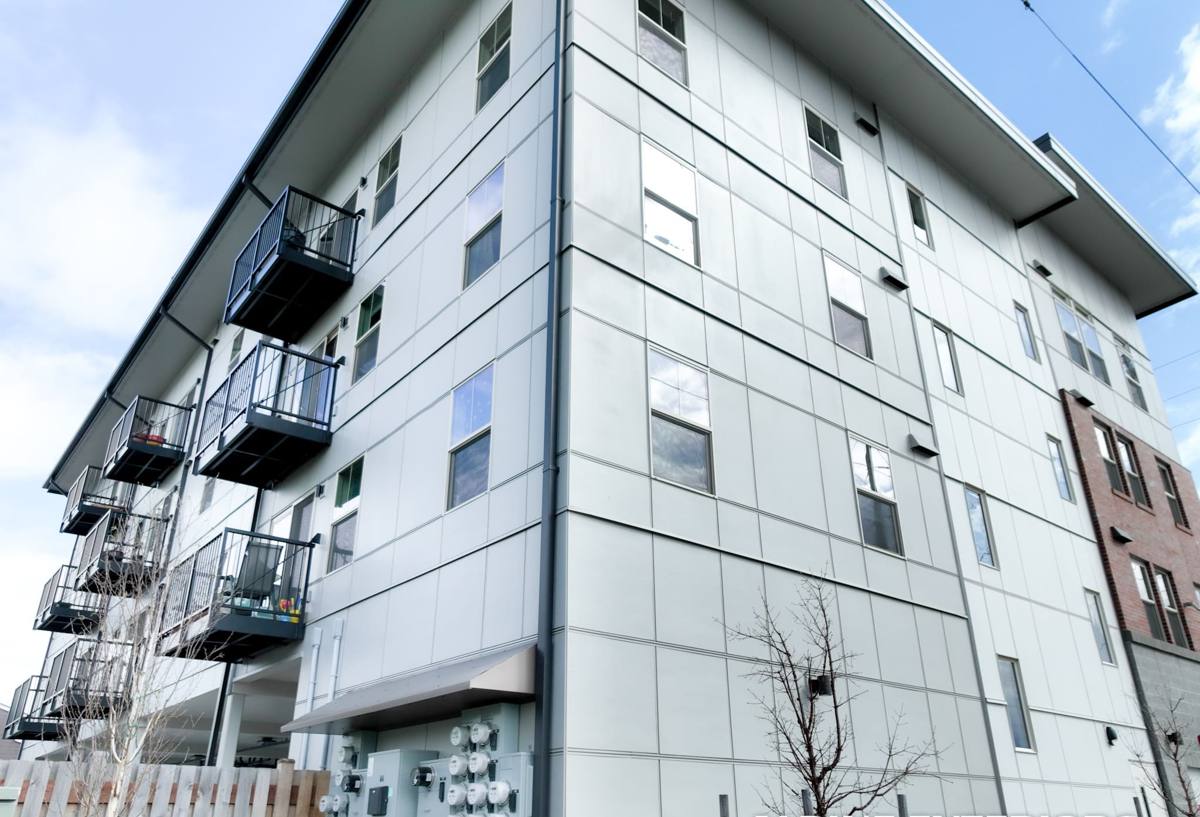
What This Climate Does to Siding
Salt Air and Ongoing Moisture
Marietta's proximity to the water means homes here pick up more salt-laden air than a property set well back from the coastline. Salt speeds up corrosion in fasteners, flashing, and hardware, and it breaks down lower-grade paints and finishes faster than a dry inland climate would. A siding job that ignores that reality — plain steel fasteners, a finish that was never engineered for coastal exposure — tends to show its age within a handful of years, not decades.
Driving Rain, Not Straight-Down Rain
Wind off the water pushes rain sideways into lap joints, trim seams, and window flashing instead of letting it run straight down and off the wall. That's a heavier, more persistent moisture load on the building envelope than a simple annual rainfall total suggests, and it's the reason siding and flashing details that would be fine in a calm, sheltered location can still fail here. Water finds the weak point from the side, not from above.
A Long Moss and Mildew Season
Between the mild temperatures, the shade a lot of Whatcom County properties get from mature trees, and near-constant moisture, moss and mildew stay active across most of the year rather than dying back in a dry summer stretch. North-facing and shaded walls are usually first to show it, and any siding material that's even a little porous or that traps moisture against the substrate becomes a growth surface over time. On the low, flat ground common around Marietta, water and humidity also tend to sit rather than drain away quickly, which stretches that damp window even further.
Why James Hardie Is What We Install Here
We used to offer a broader range of siding products. We stopped, and the decision came from a pattern we kept seeing on service calls and tear-offs in exactly this kind of salty, wet, low-lying environment — not from a supplier deal or a marketing angle.
- Non-combustible core: Fiber cement doesn't feed a fire the way wood-based siding can, which matters for household safety and can matter for insurance underwriting too.
- Factory-applied ColorPlus finish: The color is baked on under controlled factory conditions rather than brushed on in the field, so it resists fading, chalking, and moisture intrusion far longer than site-applied paint.
- Climate-engineered HZ5 formulation: Hardie's HZ5 product line is built for regions with heavy, sustained moisture exposure and freeze-thaw cycling — a solid match for a low, wet, marine-influenced area like Marietta.
- Dimensional stability: Fiber cement doesn't swell, cup, or warp the way engineered wood siding can after repeated wet-season moisture cycles.
- Strong transferable warranty: Hardie backs its products with one of the more robust warranty structures in the industry, provided the installation follows spec — real protection, not just a marketing claim.
We don't install LP SmartSide, vinyl siding, Cemplank, Allura, primed spruce, or cedar. Every one of those has a place in the broader market and homeowners elsewhere who are happy with them. But for a Marietta property taking this much sustained moisture and salt exposure, we've made the professional call that one fully-trusted system beats a cheaper option that quietly shifts maintenance risk back onto the homeowner a few years down the line.
What a Correct Installation Actually Involves
Material choice only gets a Marietta home halfway there. The rest comes down to installation discipline, and this is where a lot of the difference between a siding job that lasts three decades and one that starts failing in five actually lives.
Clearances and Water Management
Hardie siding has to be held off rooflines, decks, and grade by the manufacturer's specified clearances. A board butted tight against a deck ledger or set too close to grade becomes a moisture trap that wicks water into the cut edge over time — a slow failure that's invisible until it isn't.
Fastening and Nailing Pattern
Nails need to be the correct type, driven to the correct depth, at the correct spacing, and placed the right distance from board ends. Overdriven nails or fasteners in the wrong spot affect how the siding handles wind load, which matters more on an exposed, water-adjacent property than it does further inland, and out-of-spec fastening can jeopardize warranty coverage.
Flashing and Wall Integration
The siding is the visible layer, but kick-out flashing where a roofline meets a wall, pan flashing over windows and doors, and a properly lapped weather-resistive barrier behind the boards are what actually keep wind-driven rain from reaching the sheathing. These details rarely show up as a line item on an estimate, but they're the difference between a wall that performs for decades and one that rots quietly from the inside.
Cut-Edge Sealing and Touch-Up
Every field cut on ColorPlus-finished material needs to be sealed or touched up with Hardie's approved products, not whatever paint happens to be in the truck. It's a small step, and it's exactly the kind of detail that separates a crew that installs Hardie every day from one treating it like any other board.
Repair, Partial Replacement, or Full Re-Side?
Not every siding problem on a Marietta home calls for tearing the whole thing off. A storm-damaged section, an isolated trim failure around a window, or a piece that's taken impact can often be repaired and matched into existing Hardie siding without touching the rest of the wall. But when moisture has clearly been tracking behind the siding for a while, or the home still has an aging, non-Hardie product nearing the end of its service life, patching it usually just delays a bigger job while hidden rot keeps spreading underneath. We'll tell you honestly which situation you're in rather than defaulting to whichever answer sells more work.
Cost Factors for a Marietta Siding Project
| Factor | What It Affects | Why It Matters in Marietta |
|---|---|---|
| Tear-off vs. overlay | Labor scope and access to the sheathing | Tear-off reveals hidden moisture or rot damage that's common under older siding in this climate |
| Substrate condition | Repair costs before new siding goes on | Long-term trapped moisture near low, damp ground can rot sheathing and framing before it's visible from outside |
| Trim and detail complexity | Labor time and material waste | More corners, windows, and rooflines mean more flashing and clearance details to get right |
| Product line and profile | Material cost | HZ5 lap siding, panels, and trim priced together as one matched system, rather than mixed products |
| Site access | Labor time and equipment needs | Low-lying lots and tighter setbacks can affect staging and scaffolding |
Exact numbers depend on the specific house and its exposure, which is why we walk the property in person and give a real, written estimate instead of quoting off a generic price sheet.
Signs Your Siding Needs Attention
- Moss or dark staining that returns quickly after cleaning, especially on shaded or north-facing walls
- Soft or spongy siding low on the wall or around window and door trim
- Rusting fasteners, corroding flashing, or chalky, faded finish
- Cracked, chipped, warped, or missing siding sections, particularly after a windstorm
- Visible gaps at seams, corners, or trim joints where caulk has taken the place of proper flashing
- Paint or touch-up color that no longer matches the surrounding siding
- Rising heating or cooling costs that could point to a wall assembly no longer sealing properly
Why a Crew That Already Works Marietta Matters
A contractor who works this specific part of Whatcom County regularly already knows how salt air, wind-driven rain, and a long moss season behave on real houses here — not just how a product performs on a manufacturer's spec sheet. That familiarity shows up in the practical decisions made on install day: which walls stay wet longest and need extra attention, where added flashing or drainage detailing genuinely pays off, and which fastening choices are worth the extra time so you're not dealing with a callback after the first hard winter storm. A crew installing Hardie for the first time on a Marietta property is guessing at some of that. A crew that's done it repeatedly in this exact climate isn't.
What to Expect When You Call Us
Every project starts with an on-site look at what's actually on the wall now, including an honest read on how the existing siding and any trapped moisture have held up over time. From there we put together a clear, written scope covering product line, install details, and warranty terms before anything is signed. During the job, we handle clearances, fastening, and flashing to Hardie's published spec as standard practice, not as an optional upgrade, and you get the manufacturer's warranty documentation along with our own workmanship warranty in writing at the end.
If you're weighing new siding for a Marietta home, or you already have fiber cement on the house and want an honest opinion on how it was installed, we're glad to take a look. Reach out using the form below for a free, no-pressure estimate.