 Birch Bay Siding
 Why Ferndale Siding Wears Out Faster Than Homeowners Expect
Ferndale sits in a part of Whatcom County where the weather doesn't do your siding any favors. You're close enough to the Salish Sea that salt-laden air reaches homes well inland, and that salt air accelerates corrosion on fasteners, trim, and any siding product that isn't built to handle it. Add in the driving rain that comes off the water during fall and winter storms, and siding here takes on wind-driven moisture from angles that inland Washington homes rarely see.
Then there's moss. Whatcom County's long, wet, mild winters create a moss and algae season that can run eight months or more. Moss doesn't just look bad on siding and trim — it holds moisture against the surface, and sustained moisture contact is exactly what breaks down wood-based and poorly sealed siding products over time. A siding replacement done for a Ferndale home has to account for all three of these factors at once, not just one of them.
This is a local service page focused specifically on siding replacement in Ferndale — full removal of failing siding and installation of a new, correctly detailed system. If your siding is still sound and you're dealing with isolated damage, that's a repair conversation, not a replacement one, and we'll tell you that honestly during an estimate.
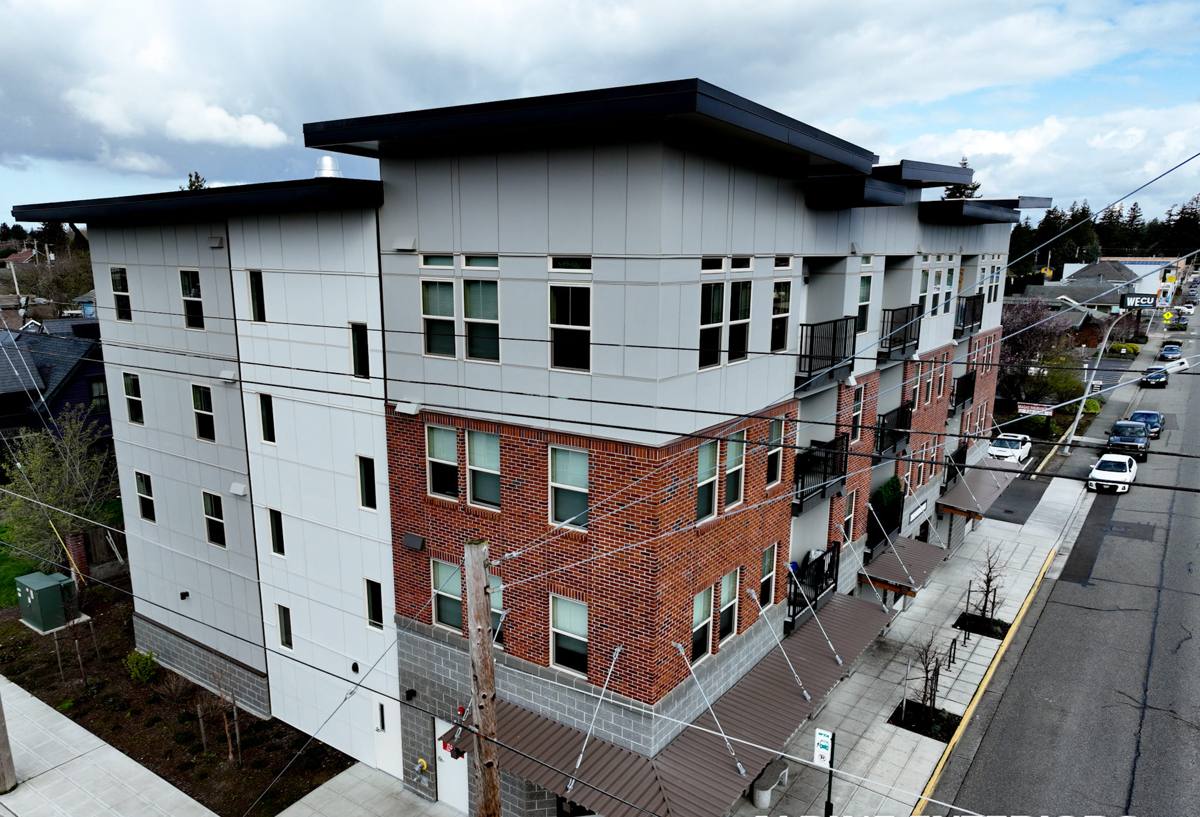
What a Correct Replacement Actually Involves
Siding replacement is not a cosmetic swap. The visible siding is the last layer installed and the first layer to fail if anything underneath it was done wrong. In a climate like Ferndale's, the work that happens before a single piece of siding goes up matters more than the siding itself.
Full Tear-Off and Substrate Inspection
We remove the old siding down to the sheathing, which is the only way to actually see what's happening behind it. This is where hidden problems show up — soft sheathing from long-term moisture intrusion, rot around window and door openings, or old flashing that was never installed correctly in the first place. You can't fix what you can't see, and you can't see it until the old siding is off.
Water-Resistive Barrier and Flashing
A weather-resistive barrier goes over the sheathing, and every penetration — windows, doors, hose bibs, light fixtures, vents — gets flashed so water is directed out and down, never trapped behind the siding. Given how much driving rain this area gets, flashing details at horizontal trim and window heads are one of the first things we check on any Ferndale home, old or new.
Gapping, Fastening, and Clearances
Fiber cement siding needs specific gaps at butt joints and trim to allow for expansion and to keep water from wicking in, and it needs to be fastened per the manufacturer's specification, not "close enough." Ground clearance at the base of the wall also matters — siding installed too close to grade, decks, or planting beds stays wet longer and is where we most often see moss and staining start on homes in this area.
Why We Only Install James Hardie Fiber Cement
We install James Hardie siding exclusively. That's a deliberate standard, not a lack of options. In a coastal-influenced, high-moisture climate like Whatcom County's, the product choice matters as much as the installation.
James Hardie fiber cement is non-combustible, dimensionally stable, and factory-finished with ColorPlus technology, which bakes the color on under controlled conditions rather than relying entirely on field-applied paint. That matters here specifically because it reduces the recoating burden that salt air and constant moisture place on painted wood-based sidings. Hardie also builds HZ5-engineered products designed for harsher, wetter climate zones, and backs installations with a strong transferable warranty when the job is done to spec — which is exactly why the installation details above aren't optional extras.
We don't install LP SmartSide, vinyl, Cemplank, Allura, primed spruce, or cedar. Some of those are reasonable products with real strengths. Our reasoning is climate-specific: engineered wood products depend on intact factory sealing and diligent field caulking to keep moisture out, and any breach becomes an ongoing maintenance item in a place that stays wet most of the year. Vinyl can warp and fade under UV and thermal cycling and doesn't hold up structurally the way fiber cement does. Raw or primed wood siding requires a repainting and caulking schedule that's hard to keep up with given how long our wet season runs. We'd rather install one product correctly and stand behind it than offer several and hedge on which one holds up.
Signs a Ferndale Home Needs Replacement, Not Repair
Not every siding problem means a full tear-off. But certain signs point to a system that's failed at the substrate level, where patching won't solve the underlying issue.
- Soft or spongy spots when you press on the siding, especially near the bottom courses or below windows
- Persistent moss or dark staining that returns within weeks of cleaning, even in the same spots each year
- Visible gaps, warping, or buckling at seams and butt joints
- Paint that's peeling or bubbling from the inside out, rather than simple weathering on the surface
- Interior signs like peeling paint, musty smell, or discoloration on walls that share an exterior wall with damaged siding
- Siding that was installed tight to grade, a deck, or a planter bed with no visible drainage gap
If you're seeing more than one of these, especially the soft-spot test combined with returning moss, that's usually a replacement conversation rather than a repair one.
Our Process, Start to Finish
- Estimate and inspection: We walk the exterior, check problem areas up close, and give you a straightforward assessment — repair, partial replacement, or full replacement.
- Scope and product selection: We confirm the James Hardie product line, profile, and color, and lay out the flashing and water-management plan for your home's specific exposure.
- Tear-off: Old siding and trim come off, sheathing is inspected, and any rot or damage is documented and addressed before anything goes back on.
- Weather barrier and flashing: New water-resistive barrier and flashing go in at every penetration and transition.
- Installation: Hardie siding and trim go up to manufacturer fastening and clearance specs.
- Final walk-through and cleanup: We review the finished work with you and clear the site of debris and old material.
Cost Factors for Ferndale Siding Replacement
Every home is different, but the same handful of factors drive most of the cost difference between projects in this area.
| Factor | Why It Matters Here |
|---|---|
| Extent of substrate damage found at tear-off | Rot from long-term moisture intrusion has to be repaired before new siding goes on — this is the biggest source of cost variation |
| Home size and wall complexity | More corners, dormers, and trim details mean more labor and material for proper flashing |
| Siding profile and color | Lap width, texture, and ColorPlus finish options affect material cost |
| Site access and exposure | Homes with more direct wind-driven rain exposure need more careful flashing detail, which affects labor time |
| Trim and accessory scope | Fascia, soffit, and trim replacement alongside siding adds to the total but keeps the whole exterior system consistent |
We'll give you a specific number after seeing the home in person — broad ranges without an inspection aren't much use to you, and we'd rather be accurate than fast.
Why a Crew That Already Works This Area Matters
Siding contractors who work Whatcom County regularly already know how homes here behave in this weather — where moss tends to establish first, how driving rain hits certain wall exposures harder than others, and how to detail flashing for a climate that stays wet most of the year rather than one that sees occasional storms. That local pattern recognition shows up in the small decisions during a job: where to add extra flashing attention, how much ground clearance to leave, which trim details need the most care.
A crew that's done this work up and down the Whatcom County coastline also understands the permitting and inspection expectations locally, and can plan around the realistic weather windows for tear-off and installation so your home isn't sitting exposed longer than it needs to be.
Living With Your New Siding Through Our Wet Season
Correctly installed James Hardie siding is low-maintenance, but "low-maintenance" doesn't mean "zero attention" in this climate. A yearly rinse-down to knock off early moss growth, keeping gutters clear so water isn't sheeting down the wall face, and trimming back vegetation that holds moisture against the siding will keep a correctly installed system looking and performing the way it's supposed to for the long haul.
If you're seeing early signs of siding failure on a Ferndale home, or you just want an honest read on whether you're looking at repair or replacement, we're happy to take a look. Reach out for a free, no-pressure estimate — there's a form right below to get started.