 Birch Bay Siding
 Ferndale Roofs Take a Different Kind of Beating
Ferndale sits close enough to Birch Bay and the Strait of Georgia that homes here deal with a roofing environment that's tougher than it looks from the ground. It's not one big storm that wrecks a roof in this part of Whatcom County — it's the slow, steady combination of salt-laden air off the water, driving rain that comes in sideways during winter fronts, and a moss season that can run eight or nine months out of the year. Each of those factors attacks a roof differently, and a repair that doesn't account for all three usually fails again within a year or two.
We work on roofs throughout Ferndale and the surrounding Whatcom County communities regularly, which means we're not guessing at how a roof here ages. We're looking at the same north-facing slopes holding moisture, the same wind-driven rain finding its way under improperly lapped flashing, and the same salt-air corrosion on fasteners and metal that we see street after street. That local pattern recognition is a big part of what makes a repair actually hold.
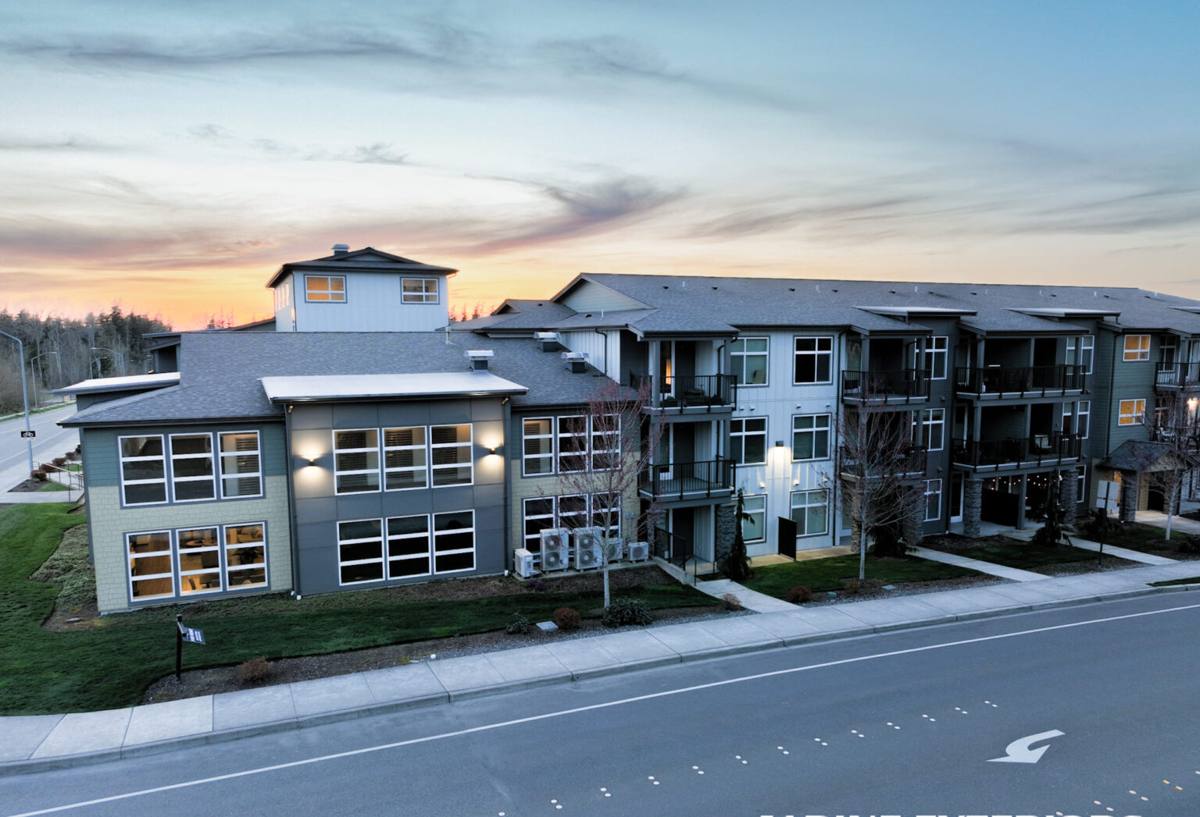
Signs a Ferndale Roof Needs Repair — Not Full Replacement
Most homeowners call us after noticing a stain on a ceiling, but by the time water shows up indoors, the roof has usually been compromised for a while. Catching problems earlier saves money and often means a targeted repair is all that's needed. Watch for:
- Granules collecting in gutters or at downspout outlets — a sign shingles are wearing thin
- Dark streaking or thick moss mats, especially on north- and west-facing slopes
- Curling, cracked, or lifted shingle edges, particularly after a windy winter
- Rusted or lifted flashing around chimneys, vents, and roof-to-wall transitions
- Soft or spongy spots when walked (we check this carefully and only when safe to do so)
- Daylight visible through the attic sheathing at joints or nail penetrations
- Interior stains that appear only during or right after heavy rain
None of these automatically mean a full tear-off. A large share of what we're called out for in Ferndale is legitimately fixable with a well-executed repair — the trick is diagnosing the actual cause instead of just patching the symptom.
Why Moss Is More Than a Cosmetic Problem Here
Moss gets treated as an eyesore, but on a Ferndale roof it's a mechanical threat. Moss holds moisture directly against the shingle surface for days at a time, which accelerates granule loss and, over a few seasons, can lift shingle tabs enough for wind-driven rain to get underneath. In shaded, north-facing sections that don't get much sun exposure, moss can re-establish within a single wet season if it isn't properly removed and the roof isn't treated to slow regrowth.
What a Correct Roof Repair Actually Involves
A roof repair done right is more than swapping out a few visibly damaged shingles. Water rarely stays where it enters — it travels along the underlayment or decking until it finds a low point or a nail hole, so the visible damage and the actual entry point are often several feet apart. Our process on every repair includes:
- Full slope inspection, not just the reported problem area, since one failure point often means others are close behind
- Decking check at and around the repair site — soft or delaminated plywood gets replaced, not covered over
- Underlayment assessment in the affected section, since older felt underlayment breaks down faster under our rain volume than modern synthetic products
- Flashing review at every penetration nearby — chimneys, plumbing vents, skylights, and wall step-flashing are the most common real source of leaks blamed on shingles
- Fastener check, since salt air corrodes exposed or improperly set nails faster than most homeowners expect
- Matching materials as closely as possible so the repair doesn't stand out or create a new water-shedding seam
Skipping any of these steps is how a "fixed" roof leaks again the next winter — usually in a slightly different spot, which makes homeowners think it's a new problem when it's really the same one.
Our Process, Start to Finish
We keep this straightforward on purpose:
- Inspection and honest assessment — we walk the roof (weather permitting) and check the attic from inside, and we'll tell you plainly if a section is a repair candidate or heading toward replacement
- Written scope and price — you'll know what's being done and why before any work starts, no vague line items
- Repair work — removal of damaged material, decking replacement where needed, correct flashing detail, and shingle or material matching
- Moss and debris clearing — as part of most repair visits, since leaving moss in place near the repair undermines the fix
- Final walk-through — we show you what was done and what to watch for going forward
Repair vs. Replacement: What Actually Drives the Decision
Homeowners often assume any leak means a new roof is coming. In our experience working Ferndale roofs, that's frequently not the case — but there are honest thresholds where repair stops making financial sense. This is a general guide, not a quote; every roof is different.
| Factor | Favors Repair | Favors Replacement |
|---|---|---|
| Roof age | Under roughly 15 years | Nearing or past the material's expected service life |
| Extent of damage | Isolated to one slope or penetration | Multiple slopes, widespread granule loss |
| Decking condition | Solid, dry sheathing found at repair site | Soft, delaminated, or repeatedly wet decking |
| Moss/algae history | Manageable with cleaning and treatment | Chronic regrowth causing recurring shingle lift |
| Prior repairs | First or second repair on the roof | Roof has a long history of patch-on-patch fixes |
We'll walk you through where your roof actually falls on this table rather than defaulting to whichever answer is more profitable for us.
Materials We Use, and the Trade-Offs Involved
For repairs, matching the existing roofing material is usually the right call — mixing shingle types or brands on the same slope can create subtle differences in thickness and granule wear that show up over time, and it can affect how a manufacturer's warranty treats that section. When exact matches aren't available (common on older roofs), we use the closest equivalent in weight and profile and place it where the difference will be least visible.
We're selective about underlayment and flashing materials specifically because of the coastal air here. Non-corrosion-resistant fasteners and thin aluminum flashing tend to degrade faster in a salt-air environment, so where it's practical during a repair, we upgrade to corrosion-resistant fasteners and flashing rather than reusing what's already failing. It costs a little more upfront but it's the difference between a repair that lasts and one we're back to redo in three years.
Why a Crew That Already Works Ferndale Matters
Roofing crews that mostly work inland or in drier climates don't always account for how much moisture management matters here. A repair approach that's perfectly fine in a low-humidity region can underperform in Whatcom County, where roofs stay damp longer after rain, get less direct sun on shaded slopes, and deal with salt air compounding normal wear. Working Ferndale roofs regularly means we're not learning these lessons on your house — we already know which flashing details tend to fail first in this area, which slopes hold moss longest, and which shortcuts show up as callbacks two winters later.
It also means faster, more accurate diagnosis. A lot of roof repair estimating is pattern matching — knowing what a given stain, sag, or moss pattern usually means before opening anything up. That comes from repetition in this specific climate, not from a general roofing background.
Keeping a Repaired Roof in Good Shape
A repair is only as good as the maintenance that follows it. A few habits go a long way in this climate:
- Have moss removed and slopes treated before it thickens into mats, not after
- Keep gutters clear so water isn't backing up under the shingle edge during heavy rain
- Trim back overhanging branches that keep shaded slopes wet longer than they need to be
- Have flashing and penetrations checked every couple of years, since these fail well before field shingles usually do
- Get a post-storm check after any unusually high wind event, even if nothing looks obviously wrong from the ground
These are small, low-cost habits, but they're the difference between a repair that lasts a decade and one that needs revisiting every couple of winters.
Get an Honest Look at Your Roof
If you're dealing with a leak, moss buildup, or just want a second opinion before committing to a bigger project, we're happy to take a look. We'll give you a straight answer on whether a repair makes sense for your Ferndale home, what it would involve, and what to expect going forward — no pressure, no upsell. Reach out below for a free estimate.