 Birch Bay Siding
 Composite Decking for Ferndale's Coastal Climate
Ferndale sits close enough to the Salish Sea that homes here deal with the same weather punishment as the rest of Whatcom County's coastline: salt-laden air, long stretches of driving rain, and a moss season that can run from October well into April. A deck isn't a weekend accessory out here — it's an exterior structure that has to survive the same conditions that wear down siding, fences, and fascia boards. We're a Birch Bay-based crew, and Ferndale is inside our regular service area, so this page is about one thing specifically: composite decking, done right, for the way weather actually behaves in this part of the county.
A lot of composite decking material is sold and installed the same way nationwide, without much thought for what happens when a board sits under standing moisture for six months a year with salt air working on every fastener. That's the gap we're addressing here — not the product in general, but what it takes to make a composite deck perform for the long haul in Ferndale specifically.
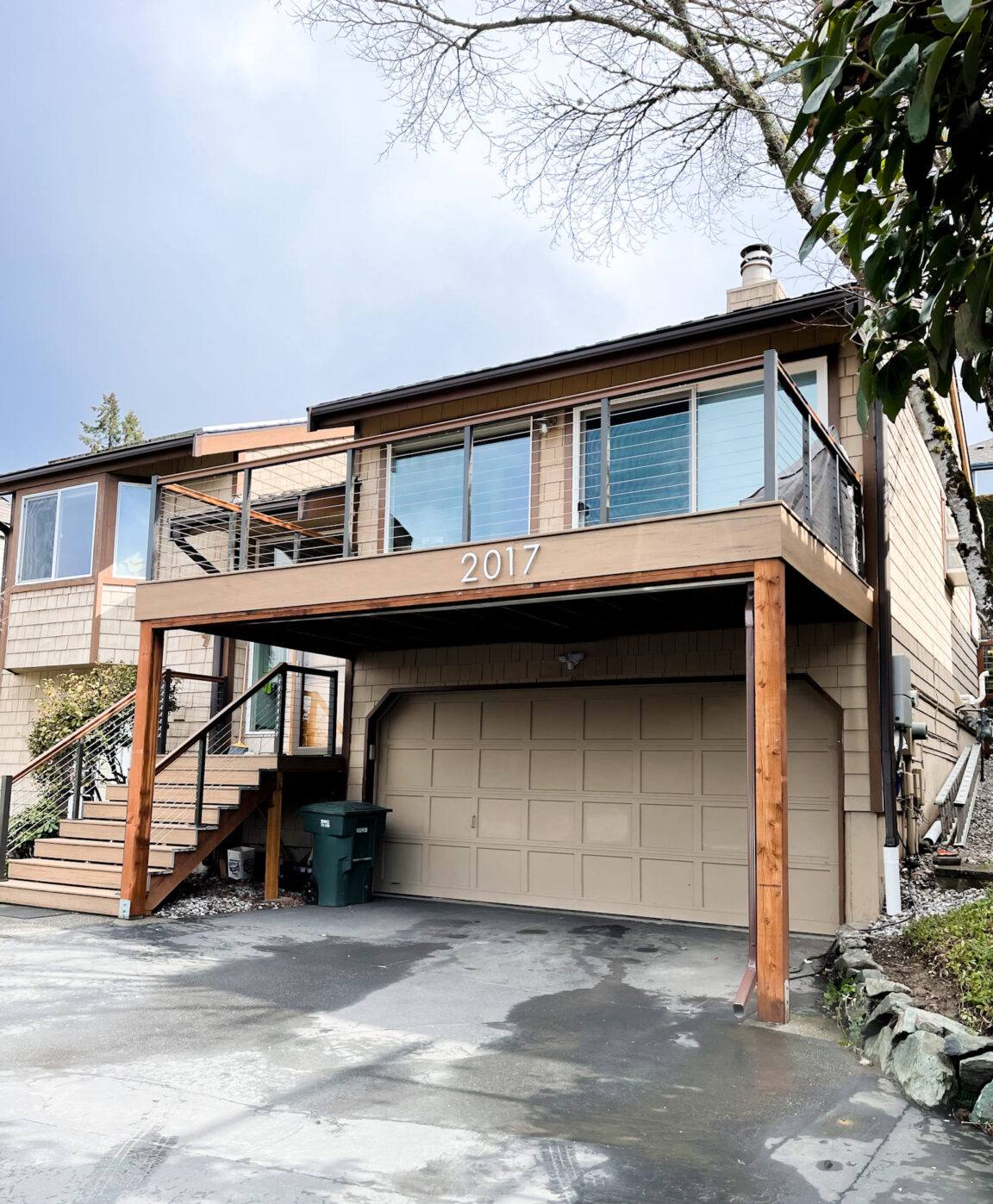
What This Climate Actually Does to a Deck
Salt Air and Metal Hardware
Proximity to the water means airborne salt settles on everything outdoors, including deck hardware. Fasteners, brackets, and ledger board connectors that aren't rated for coastal exposure will corrode faster here than they would twenty miles inland. This is one of the most common shortcuts we see on decks built by crews unfamiliar with the area — standard-grade screws and joist hangers that looked fine on install day and started rusting within a couple of seasons.
Driving Rain and Moisture Intrusion
Whatcom County rain doesn't always fall straight down — wind off the water pushes it sideways, which means it gets up under rail posts, into ledger board connections, and into any gap where flashing was skipped. Composite boards themselves shed water fine, but the framing, fasteners, and ledger attachment underneath are where water damage actually starts if those details are rushed.
Moss, Algae, and Shaded Areas
The long wet season here supports moss and algae growth on any exterior surface that stays damp, and decks with limited sun exposure or tight board spacing are prime targets. Moss on a deck surface isn't just cosmetic — it holds moisture against the board and creates a slick, slip-hazard surface during the exact months when rain already makes footing worse.
Composite vs. Wood Decking: A Straight Comparison
We install both wood and composite decking, and each has a place. For Ferndale's climate specifically, here's how they compare on the factors that matter most:
| Factor | Composite Decking | Wood Decking |
|---|---|---|
| Moisture resistance | Boards don't absorb water or rot; core is engineered to shed moisture | Absorbs moisture, prone to rot and splitting without regular sealing |
| Moss/algae resistance | Capped boards resist growth better; still needs periodic cleaning | Porous surface holds moisture, grows moss faster in shaded areas |
| Maintenance | Occasional washing; no staining or sealing required | Annual or biannual sealing/staining to hold up in this climate |
| Upfront cost | Higher material cost | Lower material cost |
| Long-term cost | Lower over 15-20 years — no refinishing cycle | Higher over time due to recurring maintenance and earlier replacement |
| Appearance consistency | Consistent color and grain, doesn't gray or splinter | Natural look but weathers unevenly, especially with salt air exposure |
Neither is objectively "better" in every case — a homeowner who wants the lowest upfront cost and doesn't mind annual maintenance may still choose wood. But for most Ferndale homeowners weighing decades of salt air and rain against their time, composite is the lower-hassle option, which is why it's become the more common request on our local jobs.
What a Correct Composite Deck Installation Involves
The board itself is only part of a deck. Most of the failures we get called out to inspect on other contractors' work trace back to framing and attachment details, not the composite decking material. A correct installation for this climate includes:
- Pressure-treated or coated framing rated for ground contact and moisture exposure, not standard interior-grade lumber
- Corrosion-resistant fasteners and hardware — stainless steel or coated hardware rated for coastal/marine-adjacent exposure, not generic zinc-plated screws
- Proper ledger board flashing where the deck attaches to the house, so water is directed away from the structure instead of trapped behind it
- Adequate joist spacing matched to the specific composite board's manufacturer specs — composite boards often require tighter spacing than wood to prevent sagging
- Airflow underneath the deck so moisture doesn't get trapped between the framing and the ground, which matters more here given how many wet months the ground stays saturated
- Hidden fastener systems where the board profile supports them, which reduces surface penetration points where water and salt air can work into the board over time
Skipping any of these doesn't show up on install day. It shows up two or three winters later, when a section of decking feels spongy underfoot or a rail post starts to lean — and by then the fix usually costs more than doing it right the first time would have.
How We Approach a Ferndale Composite Deck Job
1. On-Site Assessment
We look at sun exposure, drainage, existing framing condition (for replacement decks), and how close the site is to prevailing wind and rain direction. This tells us where moss risk is highest and whether extra drainage or flashing work is needed before decking goes down.
2. Material Selection
We walk through board options based on the homeowner's budget, color preference, and how much sun exposure the deck gets — this affects both moss resistance and heat retention, which we cover in more detail below.
3. Framing and Structural Prep
Any existing framing that's compromised gets addressed before new decking goes on top of it. We don't install new composite boards over framing we can't stand behind — that's a corner we won't cut regardless of what it saves on the quote.
4. Installation
Boards go down per manufacturer spacing and fastening specs, with attention to expansion gaps (composite material expands and contracts with temperature more than most homeowners expect) and consistent fastener corrosion resistance throughout.
5. Final Walkthrough
We walk the finished deck with the homeowner, cover basic care, and point out anything worth knowing about that specific site — shaded corners that may need more frequent cleaning, for example.
Choosing the Right Board for This Climate
Not all composite decking is built the same way, and the difference matters more here than in drier climates. Fully capped composite boards — meaning the core is wrapped on all sides with a protective polymer shell — hold up better against moisture intrusion and moss growth than partially capped or uncapped boards, which can absorb water at cut ends or through the exposed core over time. For a coastal Whatcom County property, we generally steer homeowners toward fully capped boards unless budget makes that impractical, in which case we make sure exposed cut ends are properly sealed during install.
Color also plays a role beyond looks. Darker boards absorb more heat in direct sun, which isn't a huge issue given this area's moderate summers, but lighter and mid-tone colors tend to show less algae staining over time in shaded, damp corners — worth factoring in in areas with tree cover or north-facing exposure.
Maintenance Through a Long Moss Season
Composite decking is lower-maintenance than wood, not maintenance-free. In this climate, a simple seasonal routine keeps a deck looking and performing the way it should:
- Sweep debris (leaves, needles, moss spores) off the deck regularly through fall and winter, especially in shaded corners
- Wash the deck surface with a soft-bristle brush and mild soap and water once or twice a year — pressure washing is fine at low pressure but can damage board caps if held too close
- Check and clear gaps between boards where debris and moisture collect, since trapped organic matter is what feeds moss growth
- Inspect fasteners, rail connections, and stairs annually for any early corrosion or looseness, particularly after the wettest months
- Trim back overhanging vegetation that keeps sections of the deck shaded and damp longer than the rest of the surface
Cost Factors for a Ferndale Composite Deck
Every deck is priced on its own specifics, but these are the main variables that move the number up or down:
| Factor | How It Affects Cost |
|---|---|
| Deck size and shape | Larger and multi-level decks require more material and labor hours |
| Board grade (capped vs. uncapped) | Fully capped boards cost more upfront but reduce long-term maintenance |
| Existing framing condition | Replacement framing adds cost but is non-negotiable if the substructure is compromised |
| Railing and stair systems | Composite or metal rail systems vary widely in material cost |
| Site access | Difficult access (grade, distance from driveway) adds labor time |
| Hardware spec | Coastal-rated fasteners and hangers cost more than standard-grade hardware but are worth it here |
We give straightforward numbers based on the actual site rather than a generic per-square-foot estimate pulled from a national average, since so much of the real cost here comes from framing condition and hardware spec rather than the composite boards themselves.
Why a Crew That Already Works Ferndale Matters
Whatcom County building requirements, typical soil and drainage conditions, and the specific way weather hits this stretch of coastline aren't things you learn from a manual — they're things you learn from doing decks here repeatedly. A crew that already works Birch Bay and Ferndale knows which hardware grade actually holds up locally, which board colors show algae staining fastest in shaded yards, and what framing details get skipped by contractors who aren't accounting for this climate. That local pattern recognition is what keeps a deck from becoming a callback two winters after install.
It also means faster response if something needs a look after the fact — warranty questions, a fastener that's showing early wear, or a maintenance question — because we're not driving in from out of the area to handle it.
If you're planning a new composite deck or replacing an aging wood deck in Ferndale, we're glad to walk the site, look at what you're working with, and put together a straightforward estimate — no pressure, no obligation. Use the form below to get started.