 Birch Bay Siding
 Why Lummi Island's Marine Climate Wears Out Windows Faster
Lummi Island sits fully exposed to the marine air that moves through Whatcom County off the Salish Sea, and that exposure changes what a window has to survive. Salt-laden air corrodes hardware, pits aluminum, and slowly breaks down cheap weatherstripping. Driving rain, pushed sideways by wind off the water, finds every gap in flashing and trim that a calmer inland site would never expose. And the long, damp moss season that settles over this part of Washington keeps north-facing walls and window sills wet for weeks at a stretch, which is exactly the condition that rots wood frames and swells poorly sealed vinyl.
None of this means island homes need exotic products. It means the details that get skipped in a quick, low-bid window job — flashing sequence, sill pan design, sealant choice, hardware grade — matter more here than they would twenty miles inland. A window that's rated fine on paper can still fail early on Lummi Island if it's installed without accounting for what the site actually throws at it.
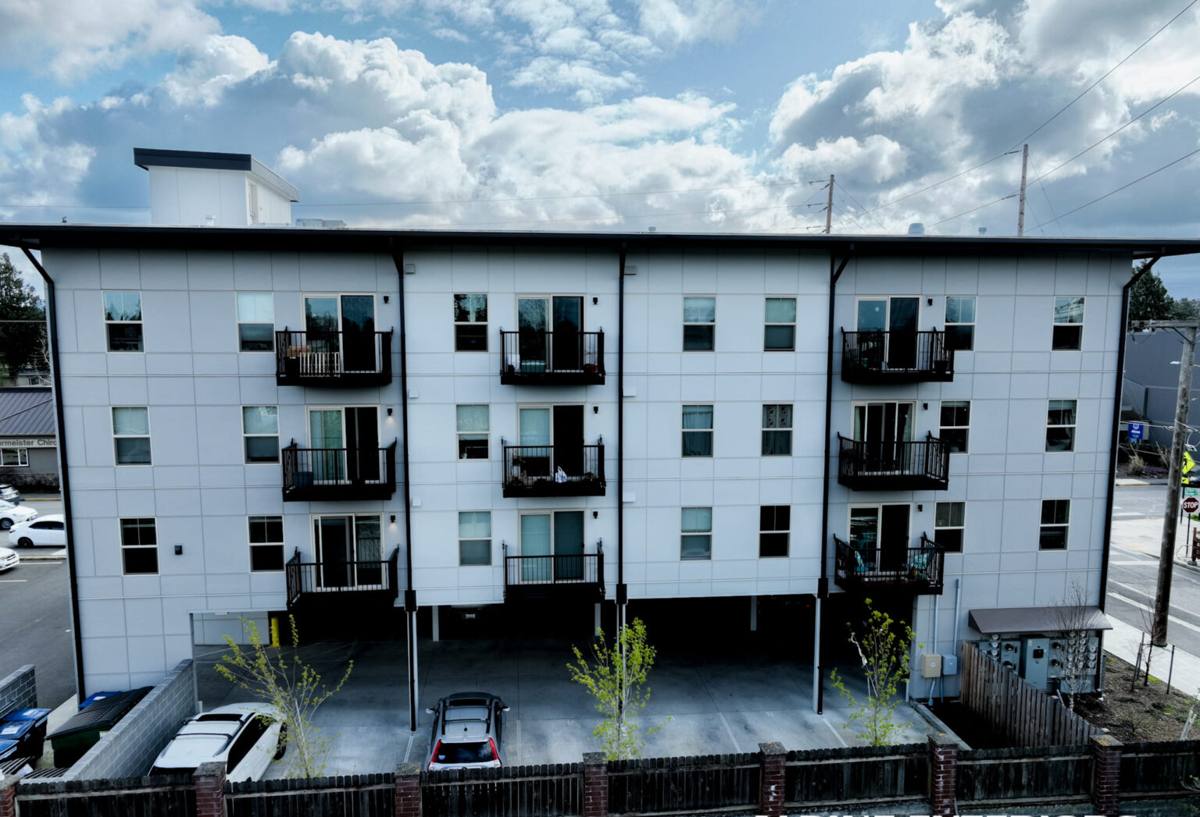
What "Energy-Efficient" Should Mean for This Site
Energy efficiency in a window comes down to how well it stops air movement, how well the glass resists heat transfer, and how long that performance holds up once salt air and moisture start working on the seals and hardware. For Lummi Island homes we weigh three things together, not separately:
Frame and Glass Performance
Double-pane, gas-filled (argon is standard) units with a low-E coating are the baseline for this climate. The U-factor — how well the window resists heat loss — matters more here than the Solar Heat Gain Coefficient, since Northwest Washington winters are about heat retention, not sun blocking. We look for U-factors that meet or beat Washington's energy code minimums for our climate zone, not just whatever a supplier happens to stock.
Air and Water Sealing
A high-performance window installed with a weak seal underperforms a modest window installed correctly. On a site that takes direct, wind-driven rain, the sill pan, flashing tape, and sealant details around the rough opening do as much for comfort and energy loss as the glass package itself.
Long-Term Hardware Durability
Salt air is hard on standard steel and untreated aluminum hardware. We favor corrosion-resistant hardware and finishes on island jobs, because a window that seals perfectly on install day but has its locking hardware seize or corrode within a few years stops being energy-efficient the moment it won't close tight anymore.
Signs Your Current Windows Are Costing You Money
- Visible condensation or fogging between the glass panes — the seal has failed and the gas fill is gone
- A noticeable draft near the sash or frame edge on windy days
- Sills or lower frame corners that feel soft, discolored, or stay damp after rain
- Hardware that's stiff, corroded, or won't latch tightly anymore
- Visible daylight or gaps around the frame from outside
- Rooms near exterior windows that are noticeably colder or draftier than the rest of the house
Any one of these is worth a look. Several together usually means the window's air seal is compromised, and the home is losing conditioned air whether or not the glass itself is still intact.
What a Correct Installation Actually Involves
Replacing a window looks simple from the outside — old unit out, new unit in — but the steps that determine whether it performs for fifteen years or fails in three all happen before the new window ever goes into the opening.
- Remove the old unit and inspect the rough opening. This is where we find rot, soft framing, or old flashing failures that caused the original problem — issues that are common on older island homes that have taken decades of wind-driven rain.
- Repair any damaged framing or sheathing before anything new goes in. Installing a new window into a compromised opening just resets the clock on the same failure.
- Install a sloped sill pan and proper flashing sequence so any water that does get past the exterior cladding drains back out instead of pooling against the frame.
- Set the window level, plumb, and square, and shim it correctly so the frame isn't under stress that will eventually crack the seal.
- Seal and insulate the gap between the window frame and the rough opening with the right materials — not just spray foam alone, which can trap moisture if it's the only barrier used.
- Finish the exterior trim and flashing so water is directed away from the opening, not into it.
Frame Material Comparison for a Salt-Air, High-Moisture Site
| Material | How It Handles This Climate | Maintenance |
|---|---|---|
| Vinyl | Good moisture and salt resistance, won't rot or corrode, consistent seal performance | Low — occasional cleaning |
| Fiberglass | Excellent dimensional stability in temperature and moisture swings, strong long-term performance | Low |
| Wood (clad exterior) | Warm appearance, but the exposed wood core is vulnerable if the exterior cladding or seal is ever breached | Higher — requires monitoring of cladding seams and caulk lines |
| Aluminum (uncoated) | Prone to pitting and corrosion in direct salt air without a marine-grade finish | Higher — finish and hardware need regular attention |
We don't rule any of these out categorically — a well-detailed wood-clad window can perform fine on a protected wall. But on exposure lines that take direct weather off the water, vinyl and fiberglass consistently give homeowners the least maintenance burden for the money.
How We Handle Lummi Island Jobs
Working on Lummi Island means planning around the ferry, and we build that into the schedule rather than treating it as a surprise. Materials, crew, and equipment all have to be staged and timed around ferry sailings, so we confirm measurements and order windows well ahead of the install date to avoid a crew standing around waiting on a delayed delivery. We also batch trips where it makes sense — grouping site visits, deliveries, and install days efficiently so the job moves at a normal pace instead of dragging out over extra ferry crossings.
On site, the process is the same rigor we use anywhere in Whatcom County: full opening inspection, correct flashing and sill pan work, and hardware selection suited to the exposure the specific wall actually gets. A window on a sheltered south wall doesn't need the same hardware grade as one facing open water, and we make that call based on what we see on the walkthrough, not a one-size answer.
What Affects the Cost of a Window Replacement Project
| Factor | Why It Matters |
|---|---|
| Number and size of openings | Larger and more numerous windows increase material and labor |
| Frame material chosen | Vinyl, fiberglass, and clad-wood price differently, and performance needs vary by wall exposure |
| Condition of the rough opening | Rot or framing repair adds labor before the new window can go in |
| Glass package | Higher-performance low-E coatings and gas fills cost more upfront but reduce ongoing heat loss |
| Access and logistics | Second-story openings, tight access, or ferry-dependent scheduling can affect labor time |
We walk every job in person before quoting, because opening condition and exposure vary window to window even on the same house — a number based on square footage alone isn't reliable on a site like this.
Keeping New Windows Performing Through the Moss Season
Even a correctly installed window benefits from a little seasonal attention on a site that stays damp for months at a time.
- Clear debris and moss buildup from sills and tracks so water doesn't sit against the frame
- Check exterior caulk lines once a year for cracking or separation, especially after a hard winter
- Operate hardware periodically so hinges and locks don't seize from disuse and salt exposure
- Keep gutters and downspouts clear so roof runoff isn't sheeting down over window heads
- Watch for any soft spots or discoloration at the sill or lower corners and address them early
Catching a small sealant gap or a bit of trapped moisture early is a five-minute fix. Left through another wet season, it becomes a frame repair.
Why It Matters That We Already Work on Lummi Island
A crew that's never dealt with ferry-dependent scheduling will either underquote the logistics or pass that inefficiency on in the price. A crew that hasn't worked a lot of direct salt-air exposure may not think to spec corrosion-resistant hardware or a more robust sill pan detail on a west-facing wall — because inland, it simply hasn't come up. We've built our process around what this specific stretch of Whatcom County actually requires, from the Birch Bay mainland out to the island, and that shows up in fewer callbacks and windows that still seal tight five and ten years out.
If your windows are drafty, fogged, or just original to a house that's due, we're happy to walk the property, look at each opening's actual exposure, and put together a straightforward plan — no pressure, no upsell on parts of the house that don't need it. Use the form below to request a free estimate.