 Birch Bay Siding
 Why Sandy Point Decks Wear Out Faster Than You'd Expect
Sandy Point sits right up against the water, and that location is exactly what makes it a tough spot for outdoor structures. A deck built the same way you'd build one ten miles inland simply won't hold up the same way out here. Salt-laden air moves off the water and settles on every exposed surface, driving rain comes in sideways during winter storms, and the shaded, damp stretches of Whatcom County give moss and algae months at a time to take hold. None of that is unusual for this part of the Washington coast — it's just something a deck has to be built to handle from the start, not something you patch around later.
We've worked on homes throughout Birch Bay and the surrounding waterfront communities long enough to know that the decks that fail early almost always fail for the same handful of reasons: the wrong fasteners, poor drainage, a ledger board that was never properly flashed, or decking material that was a fine choice somewhere else but a poor one this close to saltwater. This page is about what a Sandy Point deck actually needs, not a generic rebuild.
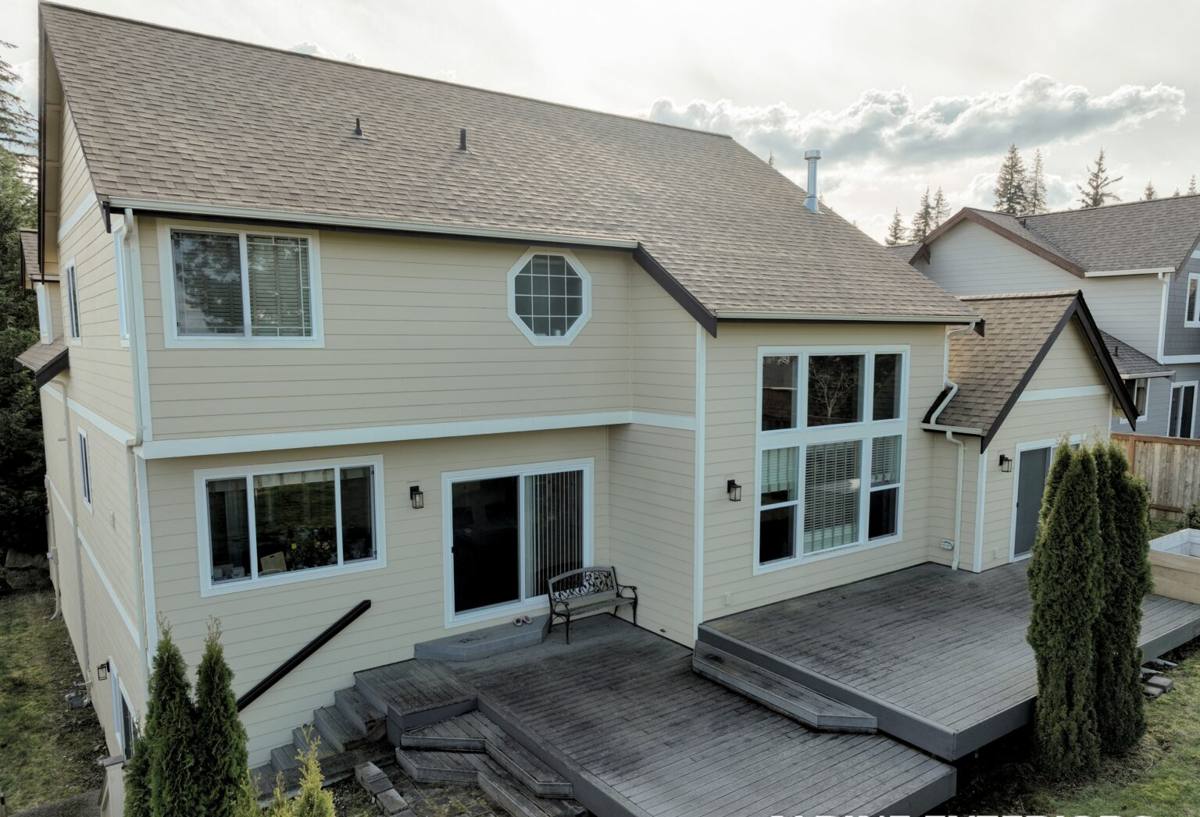
What Salt Air, Rain, and Moss Actually Do to a Deck
Fasteners and Hardware
Ordinary galvanized fasteners and joist hangers corrode faster in a salt-air environment than most homeowners expect. Once corrosion starts on a nail, screw, or hanger, it weakens the connection long before it's visible from the surface. On a beachfront or near-beachfront property, that clock runs faster than it does even a few miles away.
Ledger Board and House Connection
The ledger board — where the deck attaches to the house — is the single most important structural connection on the whole deck, and it's also the spot most exposed to wind-driven rain. If it wasn't flashed correctly when the deck was built, water works its way behind the board and into the rim joist, and that rot is often invisible until the connection itself is compromised.
Decking Surface and Moss Growth
Whatcom County's long wet season means horizontal wood surfaces stay damp for extended stretches, especially in shaded areas or spots that don't get much wind to dry them out. Moss and algae aren't just a slip hazard — on wood decking they hold moisture against the board and accelerate rot; on composite decking they can stain the surface if it isn't cleaned periodically.
Signs a Sandy Point Deck Needs Replacing, Not Just Repair
Not every tired-looking deck needs a full tear-out. But there are signs that go beyond cosmetic wear and point to a structural problem that repair won't fix:
- Soft, spongy, or springy spots when you walk across the deck
- Visible gaps, staining, or soft wood where the deck meets the house (the ledger area)
- Rust streaks running down from screws, nails, or joist hangers
- Wood that's splitting, cupping, or delaminating rather than just graying
- Railings or posts that flex or wobble when leaned on
- Persistent moss or dark staining that comes back within weeks of cleaning
- A deck original to a home built more than 20-25 years ago, especially if the framing has never been inspected
If you're only seeing surface graying and the structure underneath still feels solid, that's often a cleaning-and-refinishing job rather than a replacement. We'll tell you honestly which situation you're in — there's no reason to replace a deck that just needs maintenance, and no reason to keep patching one that's structurally done.
Choosing Decking Material for a Waterfront Property
Every decking material has real trade-offs, and those trade-offs shift when a home is exposed to salt air and heavy seasonal rain the way Sandy Point properties are. There's no single "best" material — there's a best fit for how you use the deck and how much upkeep you want to take on.
| Material | How It Handles This Climate | Maintenance |
|---|---|---|
| Pressure-treated wood | Affordable and strong, but needs consistent sealing to resist moisture and moss; more prone to splintering over time in a wet climate | Annual cleaning and periodic re-sealing |
| Cedar | Naturally moisture- and insect-resistant, ages to a soft gray if left untreated; still benefits from periodic care near saltwater | Moderate — cleaning and optional staining |
| Composite decking | Doesn't absorb moisture or splinter; some boards can show mineral or algae staining in shaded, damp spots without occasional cleaning | Low — periodic washing |
| PVC / capped polymer decking | Fully resists moisture absorption and is a strong fit for direct salt exposure, at a higher upfront cost | Lowest — occasional washing |
Whatever surface material you choose, the framing underneath matters more to long-term durability than the decking itself. A high-end composite board fastened to a poorly flashed, undersized frame will still fail early — just from underneath instead of on top.
What a Correct Deck Replacement Involves
Full Tear-Out, Not a Deck-Over
We remove the old decking and inspect the framing, ledger, and posts before deciding what stays and what goes. "Decking over" an old structure without checking what's underneath just hides a problem that's already in progress, and on a saltwater-exposed property that's a bad bet.
Ledger Flashing Done Right
Where the new deck attaches to the house, we install proper flashing so wind-driven rain can't work its way behind the ledger board and into the house framing. This is the step that gets skipped most often on older or budget rebuilds, and it's the one most responsible for early structural failure near the water.
Corrosion-Resistant Fasteners and Hardware
We use fasteners and joist hangers rated for the exposure a waterfront deck actually sees, not the minimum grade that would be fine ten miles inland. It costs more up front and it's the difference between a deck that lasts and one that starts showing rust streaks within a couple of seasons.
Framing and Footings
Posts, footings, and joists are sized and spaced to current code, with attention to drainage around footings so standing water isn't sitting against untreated wood or concrete through the wet months.
Railings and Guards
Railing height, baluster spacing, and post attachment are built to current code — this matters as much for safety as for passing inspection, especially on elevated decks common near the water.
Our Process, Start to Finish
- On-site walkthrough. We look at the existing deck, the house connection, and the site conditions in person before quoting anything.
- Honest assessment. We'll tell you plainly whether you need a full replacement, a partial rebuild, or just maintenance — and why.
- Written estimate. Materials, scope, and timeline laid out clearly, with material options and their real trade-offs explained.
- Permitting. We handle the permit paperwork where required so you don't have to navigate it yourself.
- Demolition and framing. Old structure removed, framing and ledger connection built or replaced to code.
- Decking, railings, and finish work. Surface material installed, railings set, and site cleaned up when the work is done.
- Final walkthrough. We go over the finished deck with you before we consider the job complete.
Permits and Local Considerations
Deck replacement projects in Whatcom County typically require a permit, particularly when the structure is being rebuilt rather than simply resurfaced, or when it's attached to the house. Requirements can also be shaped by shoreline proximity, since Sandy Point and other Birch Bay waterfront areas can fall under additional shoreline management considerations depending on the specific property. We check what applies to your address as part of the estimate process rather than guessing, and we handle the paperwork so it's one less thing on your plate.
Cost Factors for a Sandy Point Deck Replacement
Every deck is different, and we don't think broad national average numbers are useful to a homeowner trying to plan a real project. What we can tell you honestly is what tends to move the price up or down on jobs like this:
| Factor | Why It Affects Cost |
|---|---|
| Deck size and footprint | More square footage means more material, framing, and labor hours |
| Decking material chosen | Pressure-treated wood, cedar, composite, and PVC span a wide cost range per square foot |
| Height and structure | Elevated decks common on waterfront lots require more substantial framing, footings, and often stairs or additional railing |
| Condition of existing framing | Framing that needs to be replaced rather than reused adds material and labor beyond the surface decking |
| Ledger and flashing work | Correcting a poorly flashed or rotted ledger connection is more involved than a straightforward reattachment |
| Railing style and code updates | Bringing older railings up to current code can add scope on a replacement project |
| Permitting requirements | Shoreline-adjacent properties can involve additional review depending on the specific site |
A firm number only comes from seeing the actual deck and site, which is exactly what a free estimate is for.
Why Hiring a Crew That Already Works in Sandy Point Matters
A deck built for a dry inland yard and a deck built to hold up a few hundred feet from saltwater aren't the same project, even if they look identical from the street. A crew that regularly works Birch Bay's waterfront neighborhoods already knows which fasteners hold up, how aggressive the moss season really gets on shaded framing, and where driving rain tends to find the gaps in a ledger connection that wasn't flashed right the first time. That's knowledge you don't get from a generic deck-building checklist — it comes from seeing what actually fails on homes in this specific stretch of Whatcom County, year after year, and building differently because of it.
It also means we're not guessing at permitting or shoreline-related requirements for the first time on your project. We've been through that process for homes in this area before, which keeps things moving instead of stalling out on paperwork nobody anticipated.
Get a Free, No-Pressure Estimate
If your deck is showing signs of wear, feeling soft underfoot, or just due for an honest second look, we're glad to come take a look and tell you straight what we find — whether that means a full replacement, a partial rebuild, or just some maintenance to get more years out of what you have. Use the form below to request a free estimate, and we'll go from there.