 Birch Bay Siding
 Fiber Cement Siding Built for the Nooksack Climate
Nooksack sits inland along the Nooksack River in Whatcom County, and while it's set back from the direct shoreline exposure that waterfront communities deal with, it still gets the full brunt of what makes this region hard on exterior building materials: long stretches of driving rain through fall and winter, a moss and mildew season that can run most of the year on shaded walls, and marine-influenced weather systems that carry moisture-laden, salt-tinged air well inland off the Salish Sea. That combination wears down lower-grade siding materials faster than homeowners expect, especially on north-facing and tree-shaded walls where things stay damp longest.
We install James Hardie fiber cement siding exclusively, and Nooksack is part of our regular Whatcom County service area. This page covers what fiber cement siding specifically needs to hold up on a Nooksack home, what a correct installation actually involves, and how our process works from first estimate to finished project.
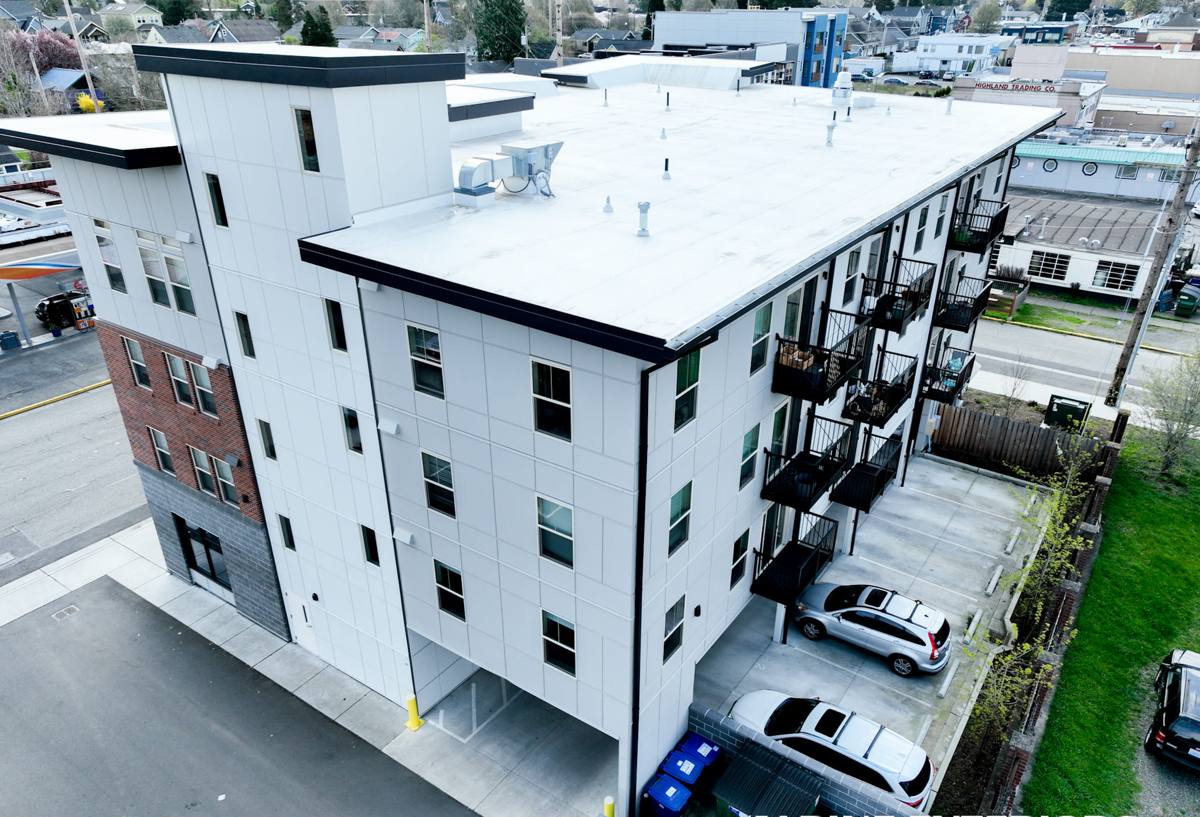
What Whatcom County Weather Does to Siding Over Time
Driving Rain and Wind-Driven Moisture
Rain in this part of Washington doesn't just fall straight down — storm systems moving through push it sideways into wall assemblies, window trim, and the joints between siding boards. That kind of wind-driven moisture finds gaps that a calmer, drier climate would never expose. Siding that isn't installed with proper drainage detailing behind it can trap that water against the wall sheathing instead of shedding it, which is where rot and hidden damage usually start.
A Long Moss and Mildew Season
Mild temperatures and near-constant moisture add up to a moss and mildew season that can stretch across most of the year on shaded or poorly-ventilated walls. Any siding material that's even slightly porous becomes a growth surface over time, and once moss and mildew take hold, they hold moisture against the surface even longer, which accelerates whatever damage was already starting underneath.
Marine-Influenced Air Reaches Inland
Nooksack isn't a waterfront property, but weather systems off the Salish Sea still move salt-tinged, moisture-heavy air across inland Whatcom County. It's a lighter exposure than a shoreline home deals with, but it's still enough to accelerate corrosion on lower-quality fasteners and hardware and to stress finishes that weren't built for a wet climate. Materials chosen for a drier region simply don't get tested the same way out here.
Why We Only Install James Hardie Fiber Cement
We used to install a broader range of siding products. We don't anymore, and that change came directly from what we kept finding on tear-offs and service calls in this specific climate — not from a supplier relationship or a sales pitch. On a Nooksack home, the siding has to handle sustained wet-season moisture and a long moss cycle without warping, swelling, or losing its finish, and James Hardie's fiber cement is what we've found consistently does that when it's installed correctly.
- Non-combustible core: Fiber cement doesn't feed a fire the way wood-based products can, which matters for both safety and, in many cases, insurance considerations.
- Factory-applied ColorPlus finish: The color is baked on under controlled factory conditions rather than brushed or sprayed on site, so it resists fading, chalking, and moisture intrusion far longer than field-applied paint.
- Climate-engineered HZ formulations: Hardie's HZ5 product line is engineered for regions with heavy moisture exposure and freeze-thaw cycling, which describes Whatcom County's weather pattern well.
- Dimensional stability: Fiber cement doesn't swell, cup, or warp the way engineered wood siding can after repeated wet-season cycles.
- Strong transferable warranty: Hardie backs the product with one of the more substantial warranty structures in the industry, provided the installation follows their published spec.
We won't install LP SmartSide, vinyl siding, Cemplank, Allura, primed spruce, or cedar. Each has a place in the market, and plenty of homeowners are satisfied with them in other climates or on other budgets. But for the wet, moss-prone conditions a Nooksack home deals with year-round, we've made a professional call: we'd rather stand fully behind one system than offer a cheaper option that shifts more long-term maintenance risk onto the homeowner.
What a Correct Installation Actually Involves
Fastening and Clearance
Hardie's performance depends on installation matching their published spec, not just on the product itself. That means the correct fastener type, spacing, and penetration depth, along with proper clearance from grade, roofing, and decks so water has room to shed away from the bottom edge of the siding instead of wicking up into it.
Drainage Behind the Panels
In a climate that sees this much sustained moisture, a rain-screen or drainage gap behind the siding isn't optional — it's what lets any water that does get past the surface drain and dry out instead of sitting against the wall sheathing. This detail is invisible once the job is finished, which is exactly why it's worth asking about before work starts.
Joints, Trim, and Flashing
Every seam, corner, and window or door opening is a place water can find its way in if it's not detailed correctly. That means factory-mitered or properly caulked joints, correctly lapped flashing at every horizontal transition, and trim that's sealed where it needs to be and left to breathe where it doesn't. A Hardie product installed loosely will still develop moisture problems in this climate — the material is only as good as the crew putting it up.
Choosing the Right Siding Style for a Nooksack Home
James Hardie makes several siding profiles, and the right one usually comes down to the home's architecture and how much of the wall stays shaded through the year.
| Style | Best fit | Climate consideration |
|---|---|---|
| HardiePlank lap siding | Traditional and most common home styles | Reliable water shedding when lapped and fastened to spec; the most widely proven profile in this climate |
| HardiePanel vertical siding | Modern builds, accent walls, gable ends | Fewer horizontal laps means fewer potential water entry points on tall wall sections |
| HardieShingle | Craftsman and cottage-style homes | More surface texture, which means more attention needed on shaded, moss-prone walls |
| Board and batten | Farmhouse and modern-rustic styles | Strong vertical water shedding, popular for gables and accent sections on this type of build |
All of these are available in Hardie's ColorPlus factory finish, and the HZ5 formulation is the right call for this region regardless of which profile fits the home.
What Drives the Cost of a Nooksack Siding Project
Every home is different, but a handful of factors consistently move the price on a fiber cement siding job in this area. We give exact numbers only after walking a property, but this is what to expect going in.
| Factor | Why it matters |
|---|---|
| Home size and wall complexity | More square footage and more corners, dormers, or gables mean more cutting, fitting, and labor time |
| Condition of existing siding | Straightforward tear-off costs less than a wall with hidden rot or sheathing damage that needs repair first |
| Siding profile chosen | Lap siding is generally the most economical; board and batten and shingle profiles run higher due to labor |
| Trim and detail work | Extensive window and corner trim, or fully custom trim packages, add both material and labor time |
| Access and site conditions | Multi-story walls, tight lot lines, or difficult equipment access can add time to any project |
Our Process for a Nooksack Siding Project
We start with an on-site assessment of the existing siding and look specifically for how it's handled moisture over time — soft spots, failed caulking, or signs of moss holding water against the wall longer than it should. From there we put together a clear, written scope and timeline before any work begins, including which Hardie profile and color fit the home. During the project itself, drainage detailing, correct fastening, and proper flashing at every transition are handled as standard practice, not optional add-ons. We walk the finished job with the homeowner before calling it done.
What to Look For in a Nooksack Siding Contractor
- Current Washington contractor licensing and active liability insurance
- Direct, verifiable experience installing James Hardie products, not just siding in general
- A written scope of work that specifies fastener type, drainage detailing, and Hardie's HZ5 spec
- A clear explanation of how they'll handle flashing and moisture management, not just the visible finish
- Willingness to walk the property and explain what they find before quoting a price
Why Local Experience Matters
Whatcom County's weather isn't uniform — a shaded, north-facing wall on an inland lot behaves differently than a sun-exposed wall a mile away, and a crew that works this region regularly learns to read those differences before a single board goes up. That's different from a contractor who installs siding occasionally in a dozen different climates and treats every job the same way. Experience with this specific pattern of driving rain, long moss seasons, and inland marine air is what shows up years later in whether the siding is still performing the way it should.
If you're weighing options for siding on a Nooksack property, we're happy to walk the exterior with you and give an honest read on what it needs. Reach out below for a free, no-pressure estimate.