 Birch Bay Siding
 Why Bellingham Windows Take a Different Kind of Beating
Bellingham sits close enough to Birch Bay and the greater Whatcom County shoreline that homes here deal with a specific combination of stresses most window manufacturers design around, but don't always design for: salt-laden air moving in off the water, driving rain that hits siding and window assemblies sideways rather than straight down, and a long, damp moss season that keeps exterior surfaces wet for weeks at a stretch. None of these are dramatic events. They're slow, cumulative, and they show up years later as fogged glass, soft trim, sticking sashes, or water staining below a sill that was "fine" the last time anyone looked closely.
A window that's correctly chosen and correctly installed for this climate doesn't need to be exotic. It needs the right glass package, the right frame material for a salt-air environment, and flashing detail that assumes wind-driven rain will hit the wall, not just fall on it. That's the standard we hold every custom window job to in Bellingham and across the rest of our Whatcom County service area.
What "Custom" Actually Means for a Window Project
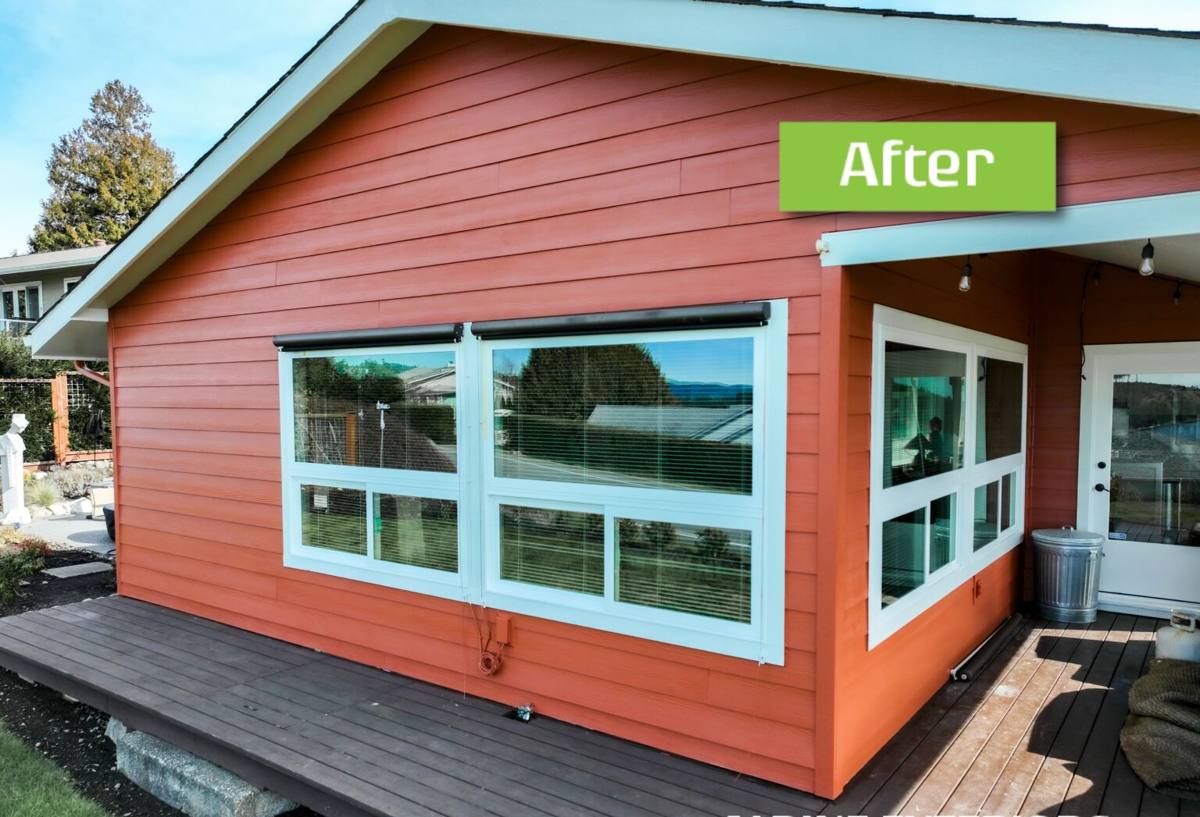
Custom windows aren't just non-standard sizes. On most Bellingham homes, especially older ones, custom work means matching an opening that's slightly out of square, replacing a shape that isn't made off-the-shelf anymore (arched tops, odd bays, tall narrow lights), or upgrading performance without changing the exterior look of a house that has character worth keeping.
Common reasons Bellingham homeowners go custom
- Original openings are out of square or slightly settled, and stock sizes won't seal properly without expensive framing work
- A bay, bow, or angled window needs to match an existing roofline or trim detail
- The home has a specific architectural style (Craftsman, farmhouse, coastal cottage) where sightlines and grille patterns matter
- Replacing one window without matching sash proportions on the rest of the house would look obviously wrong from the street
- Performance upgrades (better glass, better seals) are needed but the exterior opening and trim need to stay untouched
Custom doesn't have to mean expensive for expensive's sake. Often it means precise measurement and a manufacturer order that fits the first time, instead of a stock unit that gets shimmed, caulked heavily, and hoped into place.
Frame Materials: What Holds Up Near the Water
Frame material choice matters more here than in drier inland climates, because the combination of moisture and salt air accelerates whatever weaknesses a material already has. We walk every Bellingham customer through the real trade-offs rather than pushing one product.
| Frame Material | How It Handles Salt Air & Moisture | Maintenance | Typical Fit |
|---|---|---|---|
| Vinyl | Won't corrode; performs well in coastal air when properly installed | Low — occasional cleaning | Most homes, best value |
| Fiberglass | Excellent stability, resists expansion/contraction from temperature and moisture swings | Low | Higher-end replacements, larger openings |
| Wood (clad exterior) | Good if cladding is intact; exposed wood is vulnerable to the region's damp, moss-prone conditions | Higher — exterior cladding and joints need periodic inspection | Historic or period-accurate homes |
| Aluminum | Prone to condensation and thermal transfer without a thermal break; can corrode faster near salt air over time | Moderate | Rare for residential in this climate; we generally steer away from it here |
Our default recommendation for most Bellingham replacement and custom projects is vinyl or fiberglass, specifically because they don't give salt air or moisture a foothold the way bare or lightly-clad materials can. Where a homeowner wants the look of true wood on a historic home, we're upfront that it comes with a maintenance commitment — that's not a reason to avoid it, just something to plan for.
Glass Packages Worth Discussing
Double-pane, low-E glass is the practical minimum for this climate. On homes facing prevailing wind and rain, or anywhere condensation and heat loss have been a recurring complaint, we'll talk through upgraded spacer systems and glass coatings that reduce interior condensation — which, in a persistently damp region, is often more of a day-to-day annoyance than the R-value number itself.
The Installation Detail That Actually Prevents Water Damage
Most window failures we get called out to fix in this area aren't glass failures — they're water intrusion at the frame edge, sill, or flashing. Driving rain off the water finds any gap in the weather barrier and pushes water sideways and upward, not just down. That means installation sequence and flashing detail matter as much as the window itself.
What a correct installation includes
- Sill pan flashing that directs any water that gets past the window back out, not into the wall cavity
- Proper integration with the house's existing weather-resistive barrier (housewrap or building paper), lapped correctly so water sheds down and out
- Backer rod and sealant at the right joints — not caulk smeared over everything as a catch-all
- Shimming and fastening that keeps the frame square and doesn't bow it, which is what causes seals to fail early
- Interior and exterior trim reinstalled or replaced so the whole assembly is sealed, not just the window unit itself
This is also where "custom" pays off: a window ordered to fit the actual opening needs far less field modification, which means fewer places for a rushed shim job or gap to become a future leak.
Moss Season and Your Windows
Whatcom County's long wet season keeps north-facing and shaded walls damp for extended stretches, and that's exactly where moss and mildew take hold — not just on roofs, but on sills, trim, and the lower edges of window frames. Moss and algae growth on wood trim or unsealed joints holds moisture against the surface, which is how small caulk failures turn into rot over a couple of seasons if they go unnoticed.
Windows installed with proper drainage paths and sealed trim resist this far better than older installations where caulk was the only defense. Part of a correct custom window job is making sure water has somewhere to go — weep holes clear, sills sloped to shed, and trim gaps sealed — so moss doesn't get the standing moisture it needs to establish itself.
Our Process for a Bellingham Custom Window Job
- On-site assessment — we measure every opening individually rather than assuming uniformity, check for square, and look at existing flashing and trim condition
- Material and glass selection — walked through with the homeowner, matched to sun exposure, wind exposure, and the home's style
- Custom order — manufactured to the actual opening dimensions, not a nearest-stock-size compromise
- Removal and prep — old units removed carefully, opening inspected for hidden water damage before anything new goes in
- Flashing and installation — sill pan, weather barrier integration, and sealant done to a sequence that assumes this climate's rain, not a dry-climate shortcut
- Trim and finish — interior and exterior trim completed to match the home
- Walkthrough — operation, locks, and drainage checked with the homeowner before we consider the job done
Signs It's Time to Replace, Not Just Repair
- Fogging or moisture between panes — the seal has failed and can't be restored
- Soft or spongy trim/sill wood, especially on north- or west-facing walls
- Windows that are difficult to open, close, or lock, particularly after damp weather
- Visible gaps, drafts, or daylight around the frame
- Persistent condensation on the interior glass that a good low-E package would reduce
- Moss or dark staining building up at the sill or lower frame corners year after year
Why Local Installation Experience Matters
A window that performs well in a drier or more sheltered climate can underperform here if it's installed the way a generic national crew would install it — because the failure points in Bellingham aren't the same as they'd be somewhere inland. Crews who work this area regularly know which walls take the worst of the wind-driven rain, how long moss season really runs, and where salt air does the most damage over time. That translates into flashing decisions, material recommendations, and sealant choices that hold up, instead of a standard install that looks fine on day one and starts failing in year three.
We also know that Bellingham has a mix of housing stock — from older homes near the water to newer construction further out — and a custom window plan that's right for one isn't automatically right for the other. Getting that match right the first time is the difference between a window project you deal with once and one you're revisiting in a few years.
What Reasonable Cost Factors Look Like
Every project is different, but the main drivers of cost on a custom window job are consistent. We go over these directly with homeowners before any work starts so there are no surprises.
| Cost Factor | Why It Matters |
|---|---|
| Frame material | Vinyl is typically the most economical; fiberglass and clad wood cost more upfront but offer different durability and appearance trade-offs |
| Opening size and shape | Standard rectangular openings cost less than arched, bayed, or oversized custom shapes |
| Glass package | Upgraded low-E coatings and spacer systems add cost but reduce condensation and heat loss |
| Existing damage | Rot or water damage found during removal adds repair scope before the new window goes in |
| Trim and finish work | Matching existing interior/exterior trim profiles takes more labor than a simple swap |
| Number of openings | Doing multiple windows in one project is generally more cost-efficient per unit than one-off replacements |
We provide a written, itemized estimate so homeowners can see exactly what's driving the number — not a flat per-window price that hides what's actually being done.
Ready for an Honest Look at Your Windows?
If you're noticing drafts, fogged glass, sticking sashes, or moss buildup around your window frames, it's worth having a local crew take a look before a small issue turns into a wall repair. We offer free, no-pressure estimates for Bellingham homeowners — come talk to us about what your home actually needs, and we'll give you a straight answer, whether that's a full custom window replacement or something simpler.