 Birch Bay Siding
 Decks Built for the Terrell Creek Side of Birch Bay
Terrell Creek sits in the low-lying drainage area along Birch Bay, where the ground stays damper longer than it does up on the bluffs and the air carries a steady dose of salt off the water. A deck built here has to handle a different set of stresses than a deck built twenty miles inland, and a design that works fine in a dry, sheltered yard can start failing within a few seasons once it's exposed to Birch Bay's combination of salt air, driving rain, and a moss season that runs longer than most homeowners expect. This page is about that one job — custom deck construction for homes in and around Terrell Creek — and what it actually takes to get it right in this specific stretch of Whatcom County.
We're not going to walk through every deck-building basic here. Instead, this is about the local factors that change how a deck should be designed, framed, and finished when it's going into the ground near Terrell Creek, and why a crew that already works this area brings something a general contractor from out of town usually doesn't.
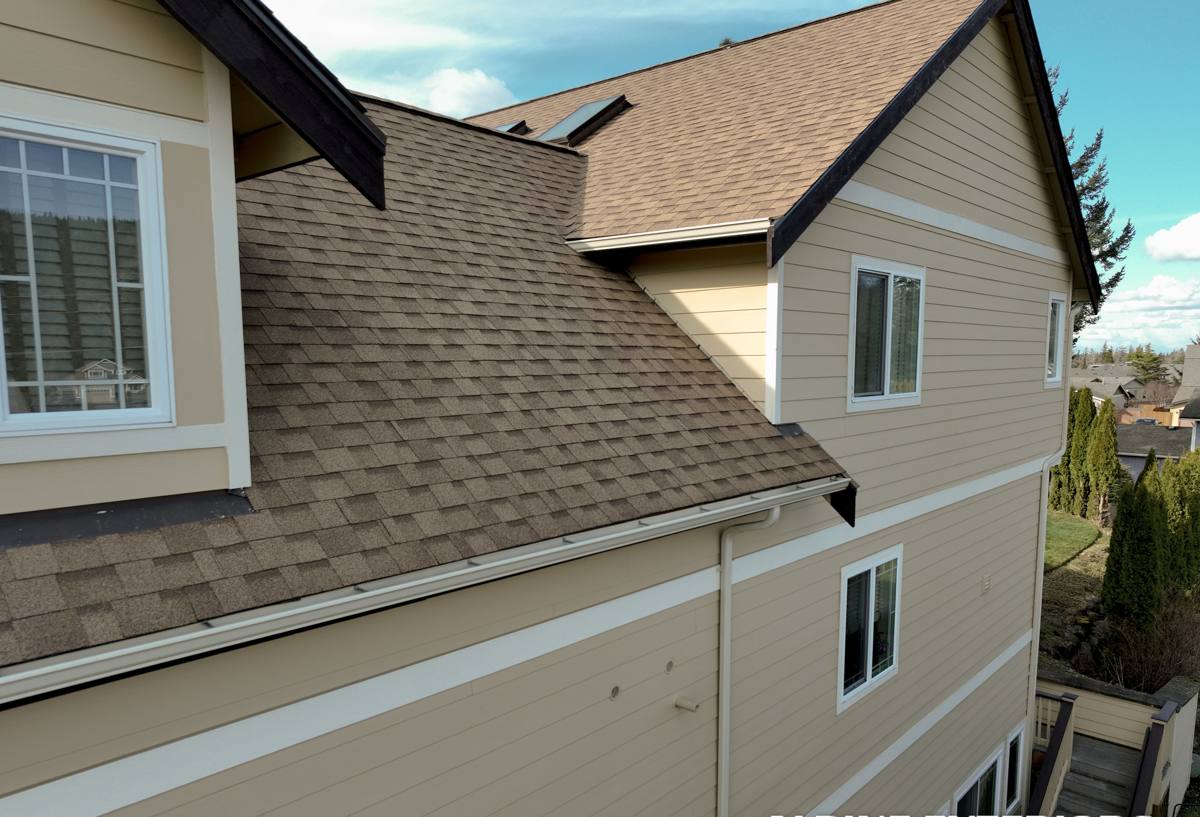
What Salt Air, Rain, and Moss Season Do to a Deck
Three things define outdoor construction around Birch Bay, and they compound each other in ways that are easy to underestimate.
Salt Air
Even set back from the water, homes near Terrell Creek get salt-laden air moving through regularly. Salt is corrosive to standard steel fasteners, and it accelerates the breakdown of lower-grade metal flashing and hardware. Over a few years, uncoated or poorly-rated fasteners can corrode enough to weaken a structure well before the wood itself would have failed on its own.
Driving Rain
Birch Bay doesn't just get a lot of rain — it gets wind-driven rain that comes in at an angle, which means water finds its way into joints, ledger connections, and fastener holes that would stay dry in a calmer climate. Any gap in the flashing or any spot where water can sit instead of shed becomes a rot starting point.
Moss Season
Because Terrell Creek's low ground holds moisture longer and gets less direct sun exposure through fall and winter than open, elevated lots, moss and algae growth tends to start earlier and last longer here. Moss on deck boards isn't just cosmetic — it holds water against the wood surface, and on painted or sealed surfaces it accelerates the breakdown of the coating itself.
None of these factors are reasons to avoid building a deck near Terrell Creek — they're just design inputs. A deck built with the right materials, the right drainage detailing, and the right hardware handles all three without much trouble. One built to a generic spec sheet usually doesn't.
Choosing the Right Decking Material for This Climate
There's no single "best" decking material — the right choice depends on how much upkeep a homeowner wants to do and how much they want to spend up front versus over time. Here's how the common options stack up specifically against Birch Bay's conditions.
| Material | How It Handles Salt Air & Rain | Moss/Algae Resistance | Maintenance Load |
|---|---|---|---|
| Pressure-treated wood | Good if properly sealed and re-coated; framing-grade treatment resists rot well | Needs regular cleaning and re-sealing to stay ahead of it | Higher — annual inspection and periodic refinishing |
| Cedar | Naturally rot-resistant, but surface can gray and soften faster in constant damp | Moderate — still needs cleaning in shaded, damp areas | Moderate to higher — benefits from regular oiling |
| Composite decking | Excellent — doesn't absorb moisture the way wood does | Good, though some boards can still develop surface algae in deep shade | Lower — periodic washing, no sealing or staining |
| PVC/capped composite | Excellent — fully sealed surface resists water and salt exposure | Best of the group in persistently damp, shaded spots | Lowest — occasional cleaning only |
Wood Decking
Wood still has a place near Terrell Creek, especially where a homeowner wants a natural look or is matching an existing structure. The trade-off is honest: wood needs a real maintenance commitment in this climate — cleaning, inspection, and re-sealing on a schedule — or it will show the effects of moss season faster than it would somewhere drier.
Composite and Capped Composite
For homeowners who want to spend less time on upkeep, composite and capped composite boards generally perform better against this specific combination of salt, rain, and shade-driven moss growth, since they don't absorb water the way wood fibers do. The trade-off is a higher material cost up front and a different look and feel underfoot, which some homeowners prefer and others don't. We'll talk through both honestly rather than pushing one option — it comes down to what the homeowner wants to manage over the life of the deck.
Framing, Footings, and Ledger Attachment
The decking surface gets all the attention, but the structure underneath is what determines whether a deck lasts fifteen years or thirty. In Terrell Creek's damper, lower-lying ground, three structural details matter more than usual.
- Footing depth and drainage: Footings need to be set below frost depth and, just as important, in soil conditions that won't shift or hold standing water against the concrete over time. Low-lying, damp ground calls for extra attention to drainage around footings during excavation.
- Ledger board flashing: The connection where a deck attaches to the house is the single most common source of hidden rot on any deck, anywhere — and it's made worse by driving rain that pushes water sideways into any gap. Proper flashing, correctly layered with the house's existing water barrier, is not optional in this climate.
- Post and beam material: Framing lumber rated for ground contact and treated appropriately for a damp, salt-exposed environment holds up far better than standard construction-grade lumber substituted to save cost.
A deck can look finished and solid for years while a poorly flashed ledger board or an under-treated post quietly rots from the inside. That's why the framing inspection matters as much as the final walkthrough — problems here don't show up until they're expensive.
Fasteners, Flashing, and Railings — Where Cheap Decks Fail First
If there's one place we see corner-cutting shorten the life of a deck near the water, it's hardware. Standard zinc-coated screws and brackets are fine in a dry inland yard; near Terrell Creek's salt air, they corrode faster than the wood or composite around them, and once a fastener weakens, it can compromise the connection long before anyone notices from the surface.
Correct practice for this area means:
- Stainless steel or high-grade coated fasteners rated for coastal or marine-adjacent exposure, not standard exterior-grade hardware.
- Hot-dip galvanized or stainless structural brackets and hangers at every load-bearing connection.
- Continuous, properly lapped flashing at the ledger board and any point where the deck meets the building envelope.
- Railing posts anchored with hardware matched to the same corrosion-resistance standard as the rest of the structure — railings take constant hand contact and weather exposure and are often the first thing to loosen on an under-built deck.
None of this is exotic — it's the difference between building to a generic spec and building for the specific conditions a Terrell Creek deck will actually face over the next twenty-plus years.
What Drives Cost on a Terrell Creek Deck
Every deck project is different, so we won't quote a number without seeing the site, but the factors that move cost up or down are consistent. Here's what actually drives the estimate.
| Factor | Why It Matters Here |
|---|---|
| Decking material chosen | Wood costs less up front; composite and capped composite cost more but reduce long-term maintenance in this climate |
| Footing and access conditions | Low-lying, damp, or hard-to-access lots near Terrell Creek can require extra excavation and drainage work |
| Deck height and railing requirements | Taller decks trigger additional structural and code requirements, plus more railing hardware |
| Size and layout complexity | Multi-level decks, built-in seating, or non-rectangular layouts add framing time |
| Existing structure condition | Replacing an old deck often includes tear-out and ledger repair, which adds scope beyond new construction |
We walk every site in person before giving a number, because two lots that look similar on paper can have very different soil, drainage, and access conditions once you're standing on them.
Our Process, From Design to Finished Deck
The process is straightforward, and we keep it that way on purpose.
- On-site walkthrough: We look at the yard, the grade, existing drainage, and how the deck will connect to the house before discussing materials or layout.
- Design and material selection: We talk through wood versus composite honestly, based on how much maintenance the homeowner wants to take on, and design the layout around how the space will actually be used.
- Permitting: Deck construction in Whatcom County typically requires a building permit, and larger or higher decks may involve additional structural review. We handle this step as part of the project rather than leaving it to the homeowner.
- Framing and inspection: Footings, framing, and ledger attachment go in first, built to the standards this climate requires — this is the stage where the deck's long-term durability is actually decided.
- Decking, railing, and finish work: Surface material, railings, and any trim or finish work are completed last, once the structure underneath is sound.
- Final walkthrough: We go over the finished deck together, including basic care guidance specific to the material chosen.
Maintaining Your Deck Through a Coastal Whatcom County Year
A well-built deck near Terrell Creek still needs some seasonal attention — the goal is to catch small issues before moss season or winter rain turns them into structural ones.
- Sweep debris and standing organic matter off the deck surface regularly, especially in shaded corners where moss gets a foothold first.
- Check and clear gaps between boards so water keeps draining through instead of pooling.
- Inspect railing posts and stair connections yearly for any looseness — this is often the first sign of fastener corrosion.
- Look at the ledger board flashing line where the deck meets the house for any staining or gaps.
- Clean and, if wood, re-seal on the schedule appropriate to the product — don't wait for visible graying or moss growth to start.
- Keep gutters and downspouts near the deck clear so runoff isn't dumping extra water directly onto or under the structure.
Why a Crew That Already Works Terrell Creek Matters
A lot of deck problems near Birch Bay don't come from bad workmanship in a general sense — they come from a design or material choice that would have been fine somewhere else but wasn't right for this specific ground and this specific air. A crew that already works the Terrell Creek area knows the drainage patterns, knows which hardware grade actually holds up here, and doesn't have to learn the local building department's expectations on someone else's project.
That local experience shows up in small decisions throughout a build — where to route water away from footings, how much flashing overlap to use at the ledger, which fastener grade is worth the extra cost — and those small decisions are exactly what determines whether a deck is still solid in fifteen years or starting to show problems in five.
If you're planning a new deck or replacing an aging one near Terrell Creek, we're happy to come take a look, walk the site with you, and put together a straightforward, no-pressure estimate. There's a form below to get that started.