 Birch Bay Siding
 Custom Decks in Custer: Built for a Wet, Moss-Prone Corner of Whatcom County
Custer sits inland from the Salish Sea, in the flatter agricultural stretch of Whatcom County between Ferndale and Birch Bay. It doesn't take the direct wave spray a true waterfront lot does, but it still sits close enough to the water to get salt-laden marine air on winter storms, long runs of driving rain through fall and winter, and a moss and mildew season that can stretch across most of the year on any shaded or north-facing surface. A deck is one of the least forgiving structures on a property in that kind of climate — it's outdoors year-round, it takes rain and sun directly, and unlike a wall, people walk on it, which means the margin for a soft board or a corroded fastener is a lot smaller.
We build custom decks for homes throughout this part of Whatcom County, and on a project like this the design is only half the job. The other half is making sure the structure underneath, the fasteners holding it together, and the materials on top are all specified for a climate that stays wet for months at a stretch. A deck built the same way you'd build one in a dry inland climate will show problems here years earlier than it should.
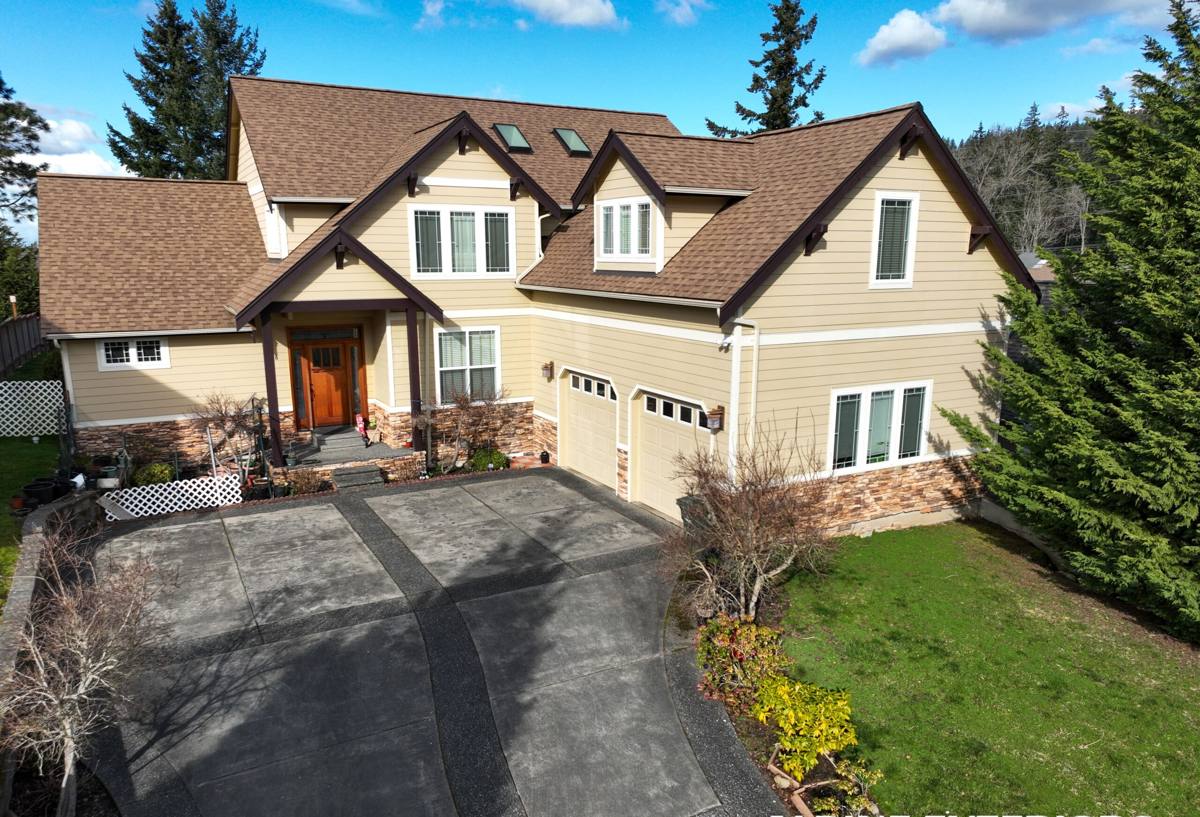
What Custer's Climate Does to a Deck
Driving Rain and Standing Water
Custer's open, flat terrain doesn't offer much of a wind break, and storms coming off the water push rain sideways as often as straight down. On a deck, that means water gets driven into joints, under railings, and against any horizontal surface where it can pool instead of shedding. Decking with poor drainage gaps, framing without a slight pitch, or ledger connections without proper flashing are the details that turn ordinary rain into a long-term moisture problem.
Salt-Laden Air and Fastener Corrosion
Even set back from the water, Custer gets enough marine air carried inland to accelerate corrosion on lower-grade hardware over time. On a deck this shows up first in fasteners, joist hangers, and structural screws — the parts you don't see once the decking is installed. Standard zinc-coated fasteners that would be fine in a dry inland climate can start corroding within a few years out here, which is a real problem when those fasteners are what's holding the structure together.
Moss, Algae, and Constant Shade
Mild, damp conditions through most of the year give moss and algae a long growing season across Whatcom County, and decks are especially exposed because they're horizontal — spores and moisture settle and stay rather than running off the way they do on a wall. Shaded decks under tree cover or on the north side of a house are usually the first to show green growth on boards, and that growth isn't just cosmetic. It holds moisture against the decking surface and makes boards slicker and more slip-prone underfoot.
Sun Exposure and Wood Movement
Custer doesn't get extreme heat, but summer stretches with real sun exposure on an open deck still cause wood to dry, shrink, and check faster than it does on a shaded wall. Combined with a winter's worth of swelling from constant moisture, that cycle of wetting and drying is what causes boards to cup, crack, or work fasteners loose over a few seasons if the material and finish aren't suited to it.
Choosing a Decking Material for This Climate
There's no single right decking material for every project — it depends on budget, how much maintenance a homeowner wants to keep up with, and how much direct sun and moisture the deck's location gets. What matters most in a climate like Custer's is picking a material with your eyes open about the trade-offs, rather than picking on appearance alone.
| Material | Moisture Behavior | Maintenance | Relative Cost |
|---|---|---|---|
| Pressure-treated wood | Resists rot with proper sealing, but needs upkeep to stay protected | Annual cleaning and periodic re-sealing | $ |
| Cedar | Naturally rot-resistant but still needs finish maintenance in constant moisture | Regular cleaning, re-staining every few years | $$ |
| Uncapped composite | Better than wood, but can absorb moisture at cut ends and through the core | Low — occasional cleaning | $$ |
| Capped composite / PVC | Fully sealed surface resists moisture, staining, and moss growth best | Lowest — cleaning only | $$$ |
For a shaded or heavily rain-exposed Custer property, we generally steer homeowners toward capped composite or PVC decking, simply because a fully encapsulated board doesn't give moss and moisture the same foothold that wood or uncapped composite does. That said, wood and cedar decks built and maintained correctly can absolutely hold up here — it comes down to whether a homeowner wants that maintenance routine or would rather trade upfront cost for less upkeep down the line.
What's Underneath Matters More Than What's On Top
A deck's surface material gets most of the attention, but the framing, footings, and connections underneath are what actually determine whether it lasts. In a climate like Custer's, we treat a few structural details as non-negotiable rather than upgrades:
- Footings sized and set to local frost and soil conditions — not guessed at, and not undersized to save cost
- Ledger board flashing that ties into the house's existing weather barrier and siding — this is the single most common source of hidden rot on deck-to-house connections
- Joist tape or a comparable protective barrier on top of framing lumber — it keeps standing water from sitting directly against the joist under the decking
- Corrosion-resistant structural fasteners and hardware rated for the decking material used — mixing incompatible metals accelerates corrosion in both
- A slight pitch built into the framing — so water sheds off the deck instead of pooling on the surface
None of this is visible once a deck is finished, which is exactly why it's worth asking a contractor about before hiring one. A deck can look finished and clean for a season or two even with a poorly flashed ledger board or undersized footings — the problems that come from cutting corners underneath usually show up years later, as rot, sag, or movement, once they're much more expensive to fix.
Railings, Fasteners, and Finish Details
Railings and fascia take the same weather exposure as the deck surface, sometimes worse, since they're vertical and catch wind-driven rain directly. We match railing material to the decking choice — composite or aluminum railing systems for a low-maintenance build, or wood railing finished and maintained the same way as a wood deck. Fastener choice matters just as much here as on the structure below: exposed screws and connectors should be rated for the decking material and finished in a way that resists the marine air this area sees. Visible corrosion streaks running down a deck's fascia board are almost always a sign that standard-grade fasteners were used somewhere they shouldn't have been.
Signs Your Custer Deck Needs Attention
- Boards that feel soft, spongy, or spring underfoot when walked on
- Green or black growth on the deck surface that comes back quickly after cleaning
- Visible gaps, movement, or rust streaks at the ledger board where the deck meets the house
- Fasteners that are rusted, backing out, or leaving dark stains around the screw head
- Railings that feel loose, wobbly, or flex more than they used to
- Standing water that doesn't drain off the deck surface within an hour or two after rain stops
Any one of these on its own might be a minor fix. Several showing up together, especially near the ledger connection or main support posts, usually means it's worth having someone look at the structure rather than just the surface.
How We Build Decks for Custer's Conditions
We start with a site visit to look at sun exposure, drainage, existing siding condition where a deck will attach to the house, and how the homeowner actually plans to use the space — entertaining, everyday access, hot tub support, and so on all affect the structural design. From there we talk through decking material trade-offs honestly, based on how much sun or shade the specific location gets and how much maintenance the homeowner wants to take on, rather than defaulting to one product for every job.
On the build itself, footings are set to appropriate depth and size for the load and local soil conditions, ledger flashing is tied into the existing wall assembly rather than just caulked and hoped for, and every fastener and piece of hardware is chosen to match the decking material and hold up under this area's marine air exposure. We treat that structural work as standard on every deck we build, not as an upgrade homeowners have to specifically request.
A Checklist Before Hiring for Deck Work in Custer
- Confirm current Washington contractor licensing and active liability insurance
- Ask specifically how they handle ledger board flashing and footing depth, not just decking material options
- Get a written scope of work and a clear timeline before any work begins
- Ask whether the permit for the deck is being pulled, and by whom — permit requirements vary by size and height
- Ask what fastener and hardware grade is included, especially for anything below the decking surface
Why a Local Crew Matters for Deck Work
A contractor who regularly builds and repairs decks in this part of Whatcom County already knows how driving rain and marine air behave here compared to a drier, more sheltered inland climate. That shows up in decisions a homeowner might never think to ask about — how deep a footing gets set, whether ledger flashing gets tied properly into the existing siding, which fastener grade gets specified below the decking surface. Those are the decisions that determine whether a deck holds up cleanly for decades or starts showing rot, corrosion, and movement within a handful of wet winters.
If you're planning a new deck in Custer, replacing an aging one, or just want an honest read on whether an existing deck's structure is sound, we're happy to take a look. Reach out below for a free, no-pressure estimate.