 Birch Bay Siding
 Building Decks for Birch Bay Village's Coastal Conditions
Birch Bay Village sits close enough to the water that every outdoor structure on the property deals with salt-laden air, wind-driven rain coming off the bay, and long stretches of gray, damp weather that keep wood surfaces wet far longer than homeowners further inland ever have to deal with. A deck built here isn't just a place to put a grill and some chairs — it's a structure that has to shed water fast, resist corrosion in its fasteners, and stand up to moss and algae that can turn a walking surface slick and green if it's not detailed correctly from the start.
We've built and repaired decks up and down this stretch of Whatcom County, and the pattern is consistent: decks that fail early almost always fail for the same handful of reasons — undersized ledger flashing, fasteners that weren't rated for coastal exposure, framing that traps moisture instead of shedding it, or decking boards installed without enough gap and airflow underneath. None of that is expensive to get right at the time of construction. It's expensive to fix later.
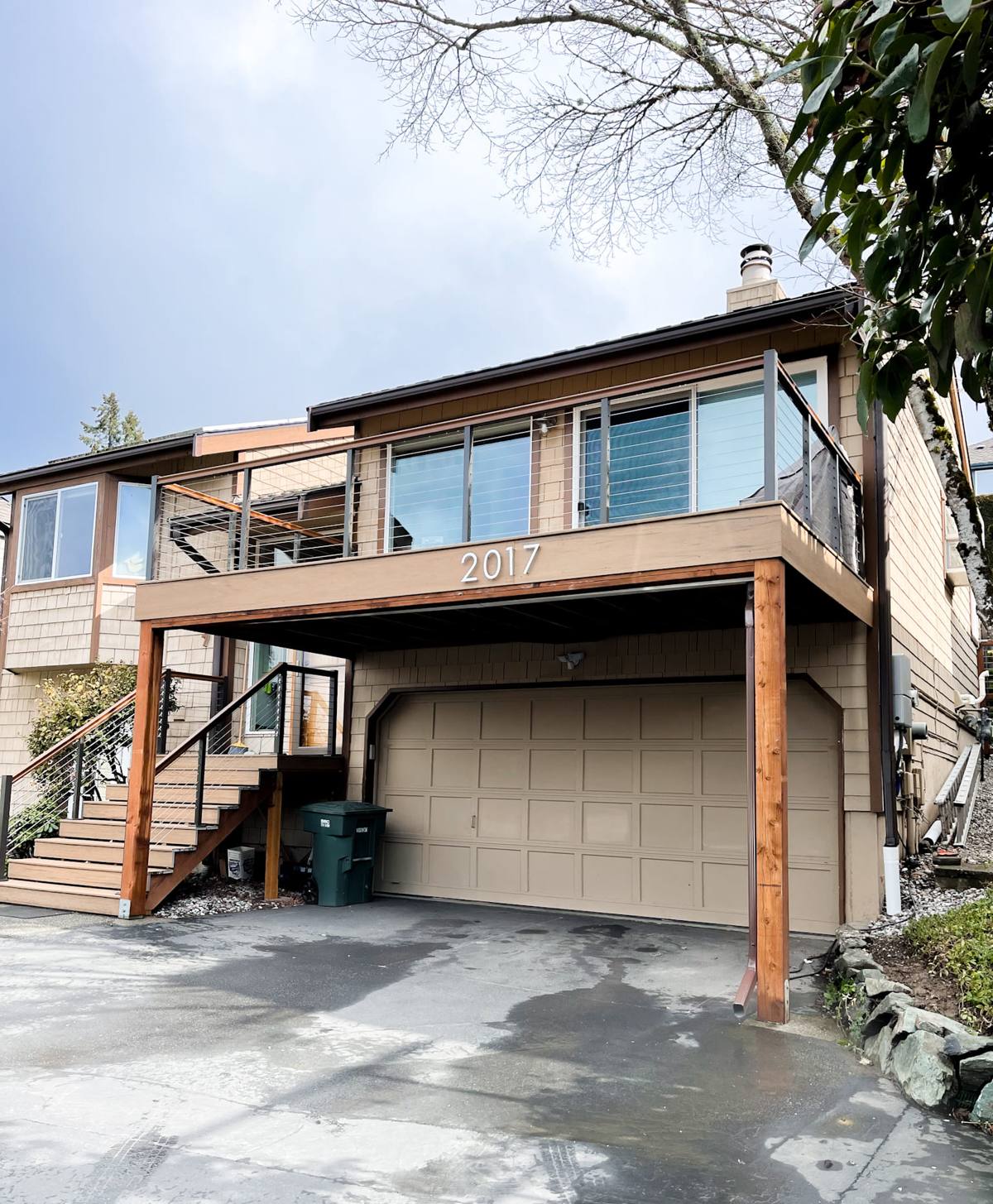
What Birch Bay's Climate Does to a Deck
Salt Air and Corrosion
Proximity to Birch Bay means airborne salt settles on every exposed surface, including metal. Standard interior-rated screws, joist hangers, and bolts will corrode faster here than they would in a drier, inland part of Whatcom County. Corroding fasteners don't just look bad — they lose holding strength, and a deck's structural integrity depends entirely on the hardware holding the frame together.
Driving Rain and Moisture Intrusion
Wind off the bay pushes rain sideways as often as it falls straight down, which means water gets driven into places a calm-weather deck design wouldn't have to account for — under railings, behind ledger boards, into end-grain cuts that weren't sealed. Any gap in flashing or sealant becomes a point where water works its way into framing lumber and starts rot from the inside, often long before it's visible from the surface.
Moss, Algae, and Surface Wear
Birch Bay's damp season runs long, and shaded or low-airflow sections of a deck stay wet enough, long enough, for moss and algae to take hold. Beyond looking neglected, a mossy deck surface is a real slip hazard on stairs and landings. Board spacing, orientation, and how much sun and airflow a deck gets all factor into how much maintenance it will need to stay clean and safe.
What a Correctly Built Deck Needs Here
- Ledger flashing that fully sheds water away from the house rim joist, not just a bead of caulk behind the board
- Stainless steel or coated coastal-rated fasteners and joist hangers throughout, not standard galvanized hardware
- Proper joist spacing and blocking so the frame doesn't flex or trap standing water on top of joists
- Decking gaps sized for drainage and for the seasonal swelling that comes with our wet-dry cycle
- Post bases set above grade and away from standing water, with proper footing depth for our soil and frost conditions
- Railing posts through-bolted, not just lag-screwed into rim joists, for real structural attachment
- Stair stringers and treads detailed to shed water off the walking surface, not pool it
Decking Material Options for Birch Bay Village Homes
There isn't a single right material for every deck — it depends on budget, how much maintenance a homeowner wants to take on, and how exposed the deck is to sun, shade, and salt air. Here's how the common options actually compare in this climate:
| Material | Moisture Performance Here | Maintenance | Typical Lifespan |
|---|---|---|---|
| Pressure-treated wood | Good if properly sealed and re-coated regularly; end cuts need extra attention | Annual cleaning and re-sealing recommended | 15-20 years with upkeep |
| Cedar | Naturally rot- and insect-resistant, but still needs sealing against our rain and salt exposure | Periodic cleaning and staining/sealing | 15-20 years with upkeep |
| Composite decking | Excellent — doesn't absorb water or swell, resists moss better than wood on shaded sections | Occasional washing, no sealing or staining | 25-30+ years, manufacturer-dependent |
| PVC decking | Excellent — fully synthetic, no wood fiber to trap moisture | Occasional washing | 25-30+ years, manufacturer-dependent |
For decks with heavy shade or close proximity to the water — which describes a good number of Birch Bay Village lots — we lean toward recommending composite or PVC decking for the walking surface, simply because the maintenance burden of keeping wood sealed against constant moisture is real and ongoing. That said, plenty of homeowners prefer the look and feel of real wood and are willing to keep up with sealing on a yearly cycle. Either choice can hold up here if it's installed and detailed correctly — the framing, flashing, and fastener decisions underneath matter more than the surface material alone.
Framing and Structure: Where Most Deck Failures Actually Start
Homeowners tend to focus on the decking boards because that's what they see and touch, but the framing underneath is what determines whether a deck lasts 10 years or 30. In our climate, the ledger connection to the house is the single most important detail on the entire structure — it's the point where two different materials meet, where water wants to collect, and where a poorly flashed connection can quietly rot a rim joist for years before anyone notices a soft spot underfoot.
We also pay close attention to how joists are spaced and blocked, because a frame that flexes under load accelerates wear on the decking fasteners above it and can eventually work screws loose, which then opens tiny gaps for water to get into the board itself. None of this is visible in a finished deck, which is exactly why it matters who's building it and how.
Our Process for Building a Custom Deck in Birch Bay Village
- On-site assessment. We look at sun exposure, prevailing wind and rain direction, existing drainage on the lot, and how the deck will connect to the house.
- Design and material selection. We walk through decking material, railing style, and layout options based on how the space will actually be used and how much maintenance the homeowner wants to take on long-term.
- Permitting. Deck size, height, and railing requirements are subject to Whatcom County building code — we handle the permit process so the structure is built to code from the start, not retrofitted later to pass inspection.
- Framing and flashing. This is where the coastal-specific details go in — ledger flashing, coated or stainless fasteners, proper footing depth, and blocking.
- Decking and railing installation. Boards are spaced and oriented for drainage and airflow; railings are through-bolted for real structural strength.
- Final walkthrough. We go over the finished deck with the homeowner, including what maintenance (if any) the chosen material will need going forward.
Why It Matters That We Already Work in Birch Bay Village
A deck design that works fine in a dry inland climate can fail early here if it's built without accounting for salt air and driving rain — and a crew that hasn't built along this specific stretch of coastline doesn't always know that until a callback shows up two or three years later. We've already worked through the flashing, fastener, and framing decisions that hold up in Birch Bay's conditions specifically, on lots with the same wind exposure and moisture patterns as yours. That's not a marketing point — it's the difference between a deck that needs re-sealing and minor upkeep on a normal schedule, and one that develops soft spots and rust streaks well before it should.
We also know the Whatcom County permitting process for residential deck construction, which keeps the project moving instead of stalling out waiting on paperwork we've never dealt with before.
Maintenance Realities for Deck Owners in This Area
Whatever material you choose, a deck in Birch Bay Village will need more attention to moss and moisture than the same deck would need somewhere drier. A realistic maintenance rhythm looks like:
- Annual cleaning to clear debris, moss growth, and organic buildup from between boards and in corners
- Inspecting fasteners and railing connections yearly for corrosion or loosening
- Re-sealing or staining wood decking on the schedule the product calls for — typically every 1-2 years depending on sun exposure
- Keeping gutters and downspouts clear so roof runoff isn't dumping extra water onto or near the deck structure
- Checking under-deck drainage and grading periodically, especially after major storms
Composite and PVC decking cut down significantly on the sealing and staining line items, but even those materials still need periodic washing to keep moss and algae from getting a foothold in shaded areas.
Get a Straightforward Estimate
If you're planning a new deck or replacing one that's showing its age, we're happy to come take a look, talk through material options that fit your budget and how you'll use the space, and give you an honest assessment of what the project involves. Use the form below to request a free, no-pressure estimate for your Birch Bay Village property.