 Birch Bay Siding
 Custer Sits in a Tough Spot for Siding
Custer doesn't get talked about as a coastal community the way Birch Bay does, but it sits close enough to the water that homes here deal with a similar mix of problems: salt-laced air drifting in off the Strait of Georgia and Birch Bay itself, long stretches of driving rain off the Pacific, and a wet season that runs far longer than most homeowners expect when they first move to Whatcom County. That combination is hard on exterior materials. Salt air accelerates corrosion on fasteners and trim. Wind-driven rain finds every gap in a siding system that wasn't installed with real attention to water management. And months of damp, shaded conditions turn any surface that holds moisture into a moss and algae farm.
None of that is unique to one street or subdivision in Custer — it's the baseline climate reality for this part of the county. What it means practically is that siding choice and installation quality matter more here than they would in a drier inland climate. A product and a crew that cut corners in Arizona might hold up fine. In Custer, the same shortcuts show up as cupped boards, soft trim, and streaked moss within a few years.
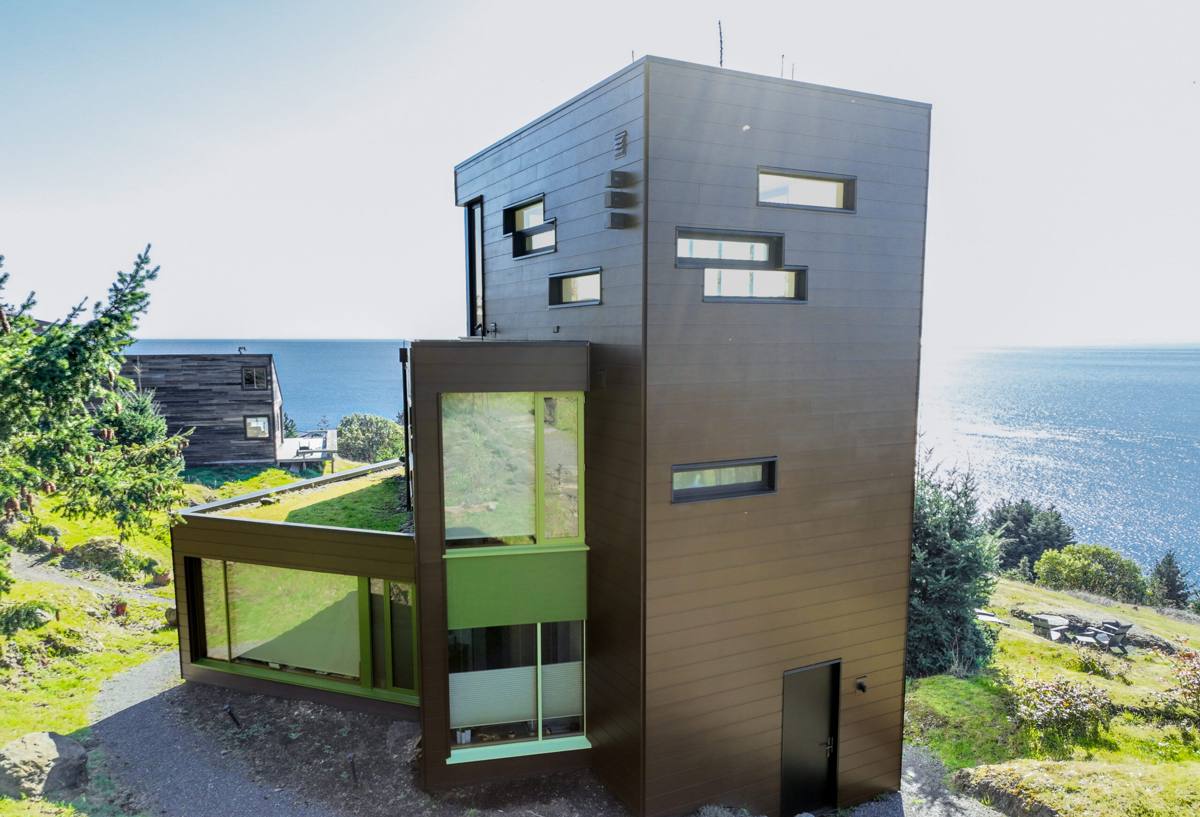
Why We Only Install James Hardie Here
We install James Hardie fiber cement siding exclusively — not vinyl, not LP SmartSide, not cedar, not primed spruce. That's a deliberate standard, not a sales pitch. Fiber cement is inorganic: it's made from cement, sand, and cellulose fibers, so it doesn't feed mold or rot the way wood-based products can, and it doesn't soften, warp, or become brittle in temperature swings the way vinyl can. For a climate that spends a large part of the year wet, that's the difference between siding that ages gracefully and siding that becomes a maintenance project.
James Hardie also engineers specific product lines for different climate zones, and the Pacific Northwest falls into their moisture-focused HZ5 category. That means the boards, the recommended fastening patterns, and the factory finish are all specified for a region that deals with sustained rain and humidity — not a generic, one-size-fits-all product.
What the Product System Actually Includes
- Fiber cement lap boards, panels, or shingle-style siding engineered for moisture resistance
- ColorPlus factory-baked finish, which resists fading and chipping better than field-applied paint
- Manufacturer-specified trim, starter strips, and flashing details designed to work as a system
- A transferable limited warranty that stays with the home if it's sold
Signs a Custer Home's Siding Is Losing the Battle
Because of the salt air and rain exposure, siding problems in this area tend to show up in predictable ways. Knowing what to look for helps you catch issues before they become structural.
- Dark green or black streaking on north-facing or shaded walls — early moss and algae growth
- Soft or spongy spots when you press on trim boards or corner boards
- Visible gaps or separation at seams and joints where caulking has failed
- Peeling or bubbling paint, especially on older wood or composite siding
- Rust streaks below nail heads or metal trim pieces
- Warping, cupping, or bowing panels, particularly on walls that face prevailing weather
- Higher heating bills that suggest water intrusion behind the siding is degrading insulation
What a Correct Installation Actually Involves
Fiber cement siding is only as good as the installation underneath it. James Hardie publishes detailed fastening and flashing specifications, and in a wet climate like Whatcom County, skipping or fudging these details is where most premature failures start.
Water Management Comes First
Before a single board goes up, the wall needs a properly lapped weather-resistant barrier, correctly integrated flashing around every window, door, and penetration, and rainscreen or drainage gap detailing where it's called for. Siding is the last line of defense, not the only one — if the water management layer behind it is wrong, no amount of good siding will keep a wall dry.
Clearances and Gaps
Hardie siding needs specific clearance from grade, roofing, decks, and other flatwork — typically several inches — so water can't wick up into the bottom edge of the boards. It also needs proper gapping at butt joints and trim to allow for expansion without trapping moisture.
Fastening
Corrosion-resistant fasteners, driven to the correct depth and spacing, are non-negotiable this close to salt air. Overdriven or underdriven nails are a leading cause of cracking and loosening over time.
Caulking and Sealants
Manufacturer-approved sealants at joints and trim, applied correctly, keep water out without trapping it inside the wall assembly. Cheap or misapplied caulk fails first, and it fails quietly — usually behind the siding where you can't see it.
Choosing the Right Hardie Profile for a Custer Home
James Hardie makes several siding profiles, and the right one depends on the home's style and how much weather exposure specific walls get.
| Profile | Best For | Notes for This Climate |
|---|---|---|
| HardiePlank lap siding | Traditional and craftsman-style homes | Most common choice; wide range of widths and textures |
| HardiePanel vertical siding | Modern homes, accent walls, gable ends | Works well combined with lap siding for visual breaks |
| HardieShingle | Cottage and Craftsman-style homes | More seams to detail correctly — installation quality matters even more |
| Board and batten (panel-based) | Farmhouse and contemporary styles | Popular in rural Whatcom County settings; needs careful batten spacing for drainage |
How Our Process Works
1. On-Site Assessment
We look at the existing siding, the condition of the sheathing and water barrier underneath where accessible, and any problem areas — moss buildup, soft trim, past water intrusion — before we ever talk product or price.
2. Detailed, Written Estimate
You get a clear scope of work: which Hardie products, which trim details, how tear-off and disposal are handled, and a realistic timeline. No vague allowances.
3. Prep and Water Management
Old siding comes off, sheathing gets inspected and repaired as needed, and the weather barrier and flashing go in correctly — this is the step that determines how the job performs in ten years, not just how it looks on day one.
4. Installation to Manufacturer Spec
Boards are fastened, gapped, and sealed according to James Hardie's published requirements for this climate zone, not shortcuts that happen to look fine at a distance.
5. Final Walkthrough
We walk the finished job with you, point out the details, and make sure everything matches what was scoped.
What Affects the Cost
Every home is different, but the same factors drive cost on nearly every Hardie project in this area.
| Factor | Why It Matters |
|---|---|
| Home size and wall complexity | More corners, gables, and dormers mean more cutting, trim, and labor time |
| Condition of existing sheathing | Rot or water damage found during tear-off adds repair scope |
| Siding profile and texture | Shingle-style and board-and-batten details take more labor than straight lap siding |
| Trim and accent choices | Custom trim packages and color-matched accessories add cost |
| Access and site conditions | Steep lots, mature landscaping, or limited access can slow the job |
We give straightforward ranges during the estimate, not a number pulled out of thin air, and we flag anything that could change the price before we start — not after.
Why It Matters That We Already Work in Custer
A crew that regularly works the Birch Bay and Custer area already understands how this specific stretch of Whatcom County behaves — which wall orientations take the worst of the wind-driven rain, how fast moss establishes on shaded siding here, and how to sequence a project around the wetter months instead of fighting them. That's not something you can fully replicate by reading a spec sheet from out of the area. It also means we're not guessing on local permitting requirements or showing up without the right experience for a climate that punishes rushed work.
Maintenance After the Job Is Done
James Hardie siding installed correctly needs far less upkeep than wood or vinyl, but "less" isn't "none." A periodic rinse to knock off moss and salt residue, a visual check of caulking at joints and trim every year or two, and prompt attention to any soft spots or gaps keep the system performing for its full service life. Because the ColorPlus finish is factory-applied, most homeowners don't repaint — but it's still worth a look after major storms, which this area gets its share of.
If your Custer home's siding is showing streaking, soft trim, or you're just planning ahead, we're happy to take a look and give you a straight, no-pressure estimate for James Hardie siding built for this exact climate. Use the form below to get started.