 Birch Bay Siding
 Building and Replacing Decks in Custer's Coastal Climate
Custer sits in that stretch of north Whatcom County close enough to Birch Bay and the Salish Sea that the weather off the water shapes how outdoor structures age here. Homes a few miles inland still catch salt-laden wind on stormy days, and the region's long, wet fall-through-spring stretch keeps wood surfaces damp for weeks at a time. A deck built without that reality in mind — using the wrong fastener metal, skipping flashing details, or picking a decking material that holds moisture — doesn't fail because of bad luck. It fails because the climate did exactly what it does every year, and the structure wasn't built to handle it.
Deck replacement is different from deck repair. Repair patches what's failing today. Replacement means starting from the structure up — ledger, framing, footings, and decking — so the new deck is built to the same standards that hold up against Whatcom County's rain, humidity, and moss pressure for the long haul, not just the first season or two.
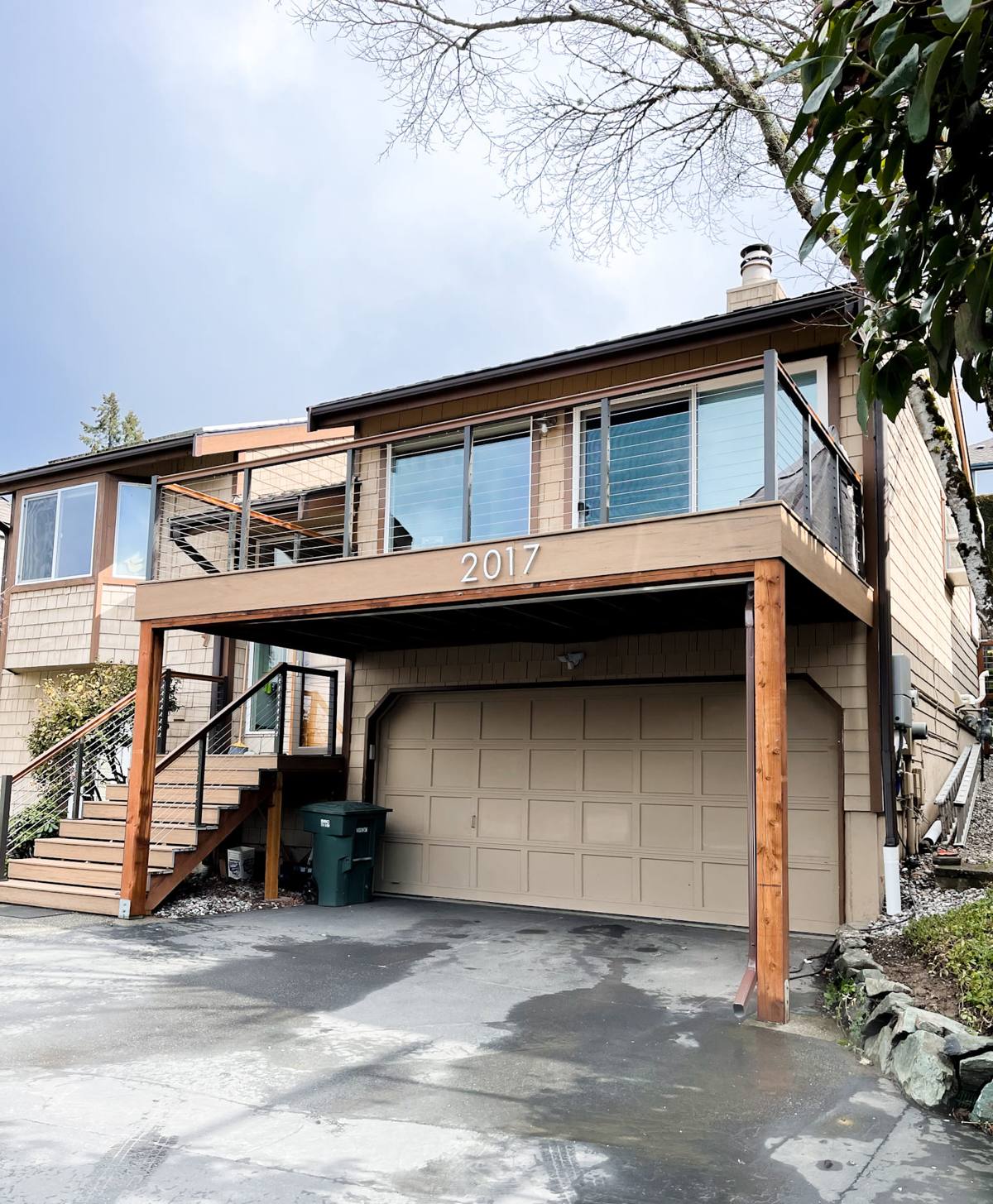
Signs Your Custer Deck Has Reached the End of Its Life
Not every tired-looking deck needs full replacement, but there's a point where patching individual boards or re-securing loose railings stops being worth it. In our experience working this part of Whatcom County, these are the signs that mean it's time to replace rather than repair:
- Soft or spongy spots in the decking that give slightly underfoot, especially near the house or in low-drainage areas
- A ledger board pulling away from the house rim joist, or visible gaps and staining where it meets the siding
- Persistent green or black staining that comes back within weeks of cleaning, even after pressure washing
- Fasteners that are rusted, bleeding orange streaks into the wood, or backing out on their own
- Footings that have shifted or heaved, causing the deck to feel uneven or bounce when walked on
- Railings that flex or wobble under normal pressure — a structural issue, not a cosmetic one
- Wood that's gray, splintering, or crumbles when probed with a screwdriver at ground contact points
Any one of these on its own might be repairable. Several at once, especially involving the ledger or footings, usually means the structural system underneath has been compromised and a patch job just delays the inevitable.
What a Correct Deck Replacement Actually Involves
A deck is only as good as what's underneath the decking boards. Most of the problems we see on older decks in this area trace back to shortcuts taken in the structural layer — the part nobody sees once the project is finished.
Ledger Board and Structural Attachment
The ledger board — where the deck attaches to the house — is the single most important connection on the entire structure, and it's also the point most exposed to water intrusion if it isn't flashed correctly. In a climate with as much sustained rainfall as Whatcom County gets, a ledger without proper flashing will trap water against the house's rim joist and framing, leading to rot that's often hidden until it's serious. We install ledger flashing that sheds water away from the house, with proper fasteners rated for exterior, treated-lumber contact.
Framing, Footings, and Joist Spacing
Footings need to sit below frost depth and bear on solid, undisturbed soil — not fill dirt or old, cracked concrete pucks left from a previous deck. Joist spacing depends on the decking material you choose; composite and PVC decking generally require tighter joist spacing than solid wood to prevent flexing over time. We size the framing to the decking, not the other way around.
Flashing and Waterproofing
Beyond the ledger, every point where the deck structure meets a vertical surface — posts against a house wall, stair stringers, built-in bench supports — is a place water can collect if it isn't detailed correctly. Given how many wet days this region sees in a typical year, we treat flashing as a structural requirement, not an optional upgrade.
Choosing Decking Material for Whatcom County Weather
The decking surface itself gets the most attention, but the right choice depends on how much upkeep you're willing to do versus what you want to spend upfront. Here's how the common options hold up in a climate defined by long wet seasons and heavy moss pressure:
| Material | Moisture & Moss Behavior | Maintenance | Typical Lifespan |
|---|---|---|---|
| Pressure-treated wood | Absorbs moisture readily; needs sealing to resist staining and moss growth | Annual cleaning and re-sealing recommended | 10–15 years with upkeep |
| Cedar | Naturally rot-resistant but still needs sealing in a wet climate to hold its color and resist moss | Sealing every 1–2 years | 15–20 years with upkeep |
| Composite (capped) | Sheds water well; resists staining and moss better than wood surfaces | Periodic washing, no sealing needed | 25–30 years, per manufacturer warranty |
| PVC decking | Fully synthetic; least absorbent, most resistant to moss and mildew staining | Occasional washing | 25–30+ years, per manufacturer warranty |
Solid, uncapped wood decking is still a fine choice for homeowners who like the look and are willing to keep up with sealing on a schedule — but in a climate where moss can take hold within a single wet season, skipped maintenance shows up fast. Capped composite and PVC cost more upfront but shed water and resist the green staining that's a constant fight on shaded, north-facing decks in this area. We'll walk through the honest trade-offs for your specific site — sun exposure, tree cover, and how the deck is used — rather than push one product across the board.
Our Deck Replacement Process
- On-site assessment. We inspect the existing deck's framing, ledger, footings, and any moisture or rot damage, and check drainage and sun exposure around the site.
- Honest scope and estimate. You get a clear breakdown of what needs replacing structurally versus cosmetically, with material options and pricing explained plainly.
- Permitting. We handle the Whatcom County permit application where required, based on the deck's size, height, and attachment to the house.
- Demolition and disposal. The old deck is removed and hauled away, and we inspect the house's rim joist and siding behind the old ledger for hidden damage before rebuilding.
- Structural rebuild. New footings, framing, ledger flashing, and joists are installed to current code, sized for your chosen decking material.
- Decking, railing, and stairs. Surface material, railings, and stairs are installed per manufacturer spec, with attention to fastener spacing and drainage gaps.
- Final walkthrough. We go over the finished deck with you, including maintenance guidance specific to the material you chose.
Permits and Site Conditions Around Custer
Whatcom County requires permits for most deck replacements, particularly when the new structure changes size, height, or the way it attaches to the house. This isn't paperwork you can skip and hope nobody notices — an unpermitted deck can complicate a home sale down the road, and inspections exist for a reason: they catch structural issues like undersized footings or missing ledger flashing before they become expensive problems. We handle the permit process as part of the job rather than leaving it for the homeowner to sort out separately.
Custer's mix of rural and semi-rural properties also means site conditions vary more than in a tightly platted subdivision — soil drainage, tree cover, and how close the property sits to open fields or water can all affect footing placement and how quickly moss establishes on a shaded deck surface. We evaluate each site rather than applying a one-size approach.
Living With a Deck in a Wet, Mossy Climate
Even a well-built deck needs some seasonal attention in this part of Washington. A few habits go a long way toward protecting the investment:
- Sweep leaves and debris off the deck surface regularly in fall — trapped organic matter is what feeds moss and mildew growth
- Clean gaps between boards periodically so water and debris don't accumulate and hold moisture against the framing
- Check the ledger flashing area annually for any staining or gaps where it meets the house
- Re-seal wood decking on schedule — waiting until it looks faded means the wood has already started absorbing more water than it should
- Keep nearby vegetation trimmed back to let sun and air reach shaded corners where moss takes hold fastest
None of this is difficult, but skipping it is exactly how a deck that should last two decades starts showing structural problems in half that time.
What It Costs to Replace a Deck in Custer
Deck replacement costs vary based on size, decking material, structural condition underneath, and site access. Rather than quote a flat number that doesn't reflect your actual property, here's what tends to move the price:
| Cost Factor | Why It Matters |
|---|---|
| Deck size and layout | More square footage and complex shapes (multi-level, angles, built-in features) mean more material and labor |
| Decking material | Pressure-treated wood costs less upfront than capped composite or PVC, which cost more but need less maintenance over time |
| Structural condition | Rotted framing, failed footings, or ledger damage hidden under the old deck add rebuild scope once uncovered |
| Height and railing requirements | Taller decks generally require code-compliant railings and sometimes additional structural bracing |
| Site access | Decks over difficult terrain, sloped yards, or with limited equipment access take more labor time |
We give real numbers after seeing the site and understanding what you actually want, not a generic range that doesn't hold up once we're standing on the old deck.
Why Hire a Crew That Already Works This Area
Deck construction that works fine in a drier climate can fail early here if it isn't detailed for sustained rain, salt-influenced air, and a moss season that stretches most of the year. A crew that regularly works Custer and the surrounding Birch Bay area already knows how local soil drains, which sites are prone to heavier moss pressure, and how Whatcom County's permitting process actually runs — not from a manual, but from doing the work here repeatedly. That local familiarity shows up in fewer surprises during the project and a deck that's actually built for the conditions it has to survive, not a generic spec sheet.
If your deck is showing its age or you're planning a replacement before it becomes a safety issue, we're happy to take a look and give you a straightforward assessment — no pressure, no upsell. Request a free estimate using the form below and we'll set up a time to walk the site with you.