 Birch Bay Siding
 Building Decks in Custer's Coastal Climate
Custer sits inland just enough from the Salish Sea to feel like it should be sheltered from the weather that hits Birch Bay and Semiahmoo directly — but it isn't. The same weather systems that bring driving rain off the water push through Custer too, and the salt air carried on prevailing winds settles on everything within a few miles of the coast, decks included. Add in Whatcom County's long, damp shoulder seasons — the stretch from October through April where surfaces rarely fully dry out — and you get a moss and algae season that can run seven or eight months a year on a deck that isn't built or maintained to shed water properly.
A deck in Custer isn't fighting the same battle as a deck in Spokane or even a deck forty miles inland. It's fighting standing moisture, slow-drying wood grain, fastener corrosion from salt-laden air, and moss that gets a foothold in any spot where water sits longer than a day or two. None of that means you need an exotic build. It means the ordinary parts of deck construction — flashing, fastener choice, gap spacing, ventilation underneath — have to be done right the first time, because this climate finds every shortcut.
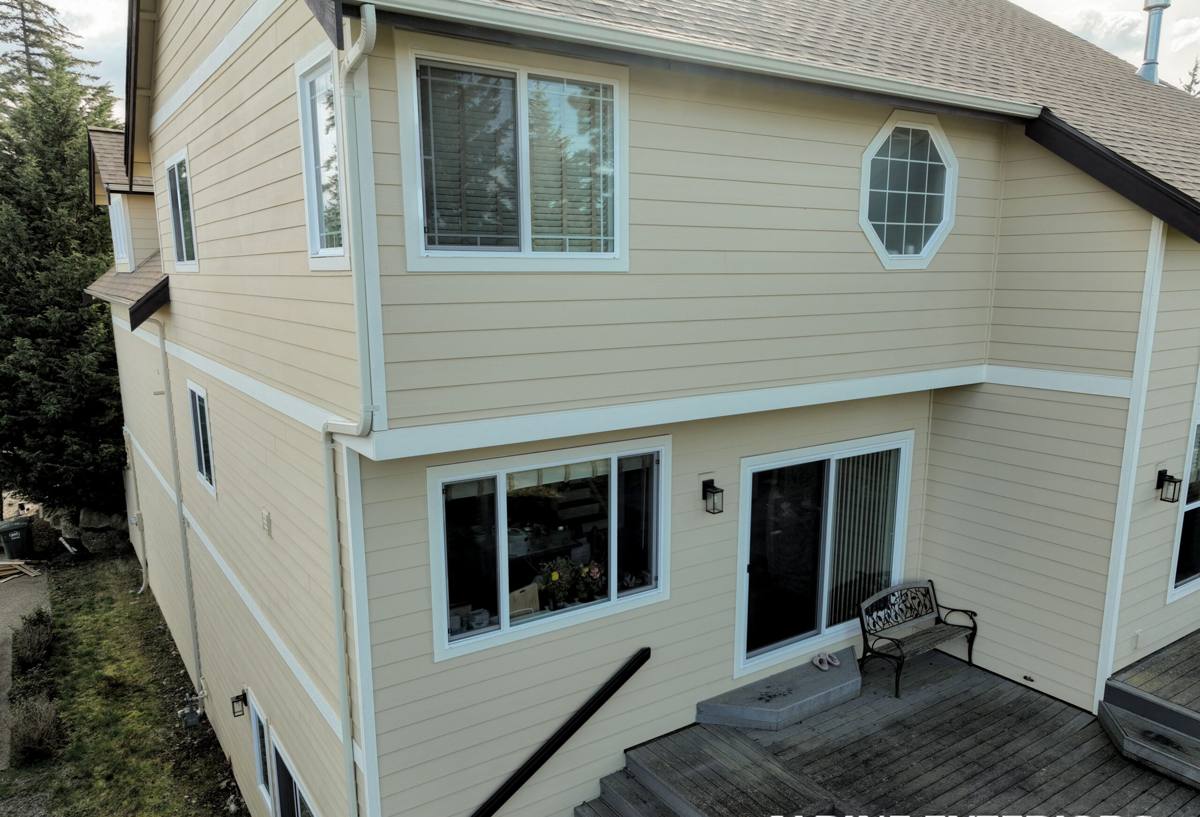
What a Custer Deck Actually Needs
Moisture Management Comes First
Most deck failures we see in this area aren't structural in the dramatic sense — they're slow rot at the ledger board, corroded fasteners nobody can see until a board is loose, or joists that stayed damp underneath long enough to start breaking down. The fixes are not exotic: proper ledger flashing where the deck ties into the house, a drainage plane that actually directs water away from framing instead of trapping it, and deck board spacing that lets air move and water drain instead of pooling.
Fastener and Hardware Corrosion
Salt air accelerates corrosion on standard fasteners faster than most homeowners expect. We use coated or stainless hardware rated for coastal exposure on connectors, joist hangers, and structural screws — not because code always demands it, but because replacing a rusted hanger three years in means tearing into a deck that should have lasted decades.
Moss and Algae Aren't Cosmetic Problems
On a poorly built deck, moss isn't just an eyesore — it's a sign that a surface is staying wet longer than it should. Moss holds moisture against wood or composite decking, and over a full Whatcom County winter that constant dampness is what actually shortens a deck's life. Board spacing, joist spacing that limits sag (which creates low spots where water sits), and choosing a decking material that doesn't hold moisture in its surface all reduce how much of a foothold moss gets in the first place.
Decking Material Choices for This Climate
There's no single right answer for every Custer property — it depends on budget, how much upkeep you want to do, and how close you are to the water. Here's how the common options actually perform in this specific climate, not in a showroom.
| Material | How it handles salt air & moisture | Maintenance in this climate | Typical lifespan here |
|---|---|---|---|
| Pressure-treated wood | Handles moisture fine if properly sealed; grain can trap surface moisture if finish is neglected | Needs re-sealing every 1-2 years to resist moss and graying | 15-20 years with upkeep |
| Cedar | Naturally rot-resistant, but softer surface can hold moisture in shaded, damp spots | Periodic cleaning and oil/sealant to prevent moss and silvering | 15-25 years with upkeep |
| Composite decking | Doesn't absorb moisture into the board core; surface texture matters for moss resistance | Occasional washing; no sealing required | 25-30+ years, manufacturer-dependent |
| PVC/capped polymer | Fully sealed surface, best resistance to salt air staining and moisture wicking | Lowest maintenance; occasional cleaning | 25-30+ years, manufacturer-dependent |
We're honest with Custer clients that low-maintenance materials cost more up front but pay that back in fewer weekends spent sealing, scrubbing moss, and replacing boards. For a property close to Drayton Harbor or the Birch Bay shoreline, that math tips toward composite or PVC even faster than it does further inland.
Why We're Selective About Certain Wood Products
Some lower-grade treated lumber and thin-cap composite products are simply harder to install correctly and don't age well in a marine-influenced climate — not because the products are bad everywhere, but because their moisture tolerance and warranty structure aren't built for this level of sustained dampness. When a manufacturer's warranty carves out coastal or high-humidity exclusions, we tell clients that up front rather than let them find out later.
Our Deck Building Process
- On-site assessment — we look at drainage, sun/shade exposure, proximity to the water, and how the deck ties into your existing structure before recommending materials.
- Design and material selection — sizing, board pattern, railing style, and material chosen for your budget and how much upkeep you actually want to do.
- Permitting — Whatcom County requires permits for most new decks over a certain height or size; we handle the application and inspection scheduling.
- Demo and site prep — removal of any existing structure, grading adjustments if drainage needs correcting.
- Framing — ledger flashing, joist layout, footing depth appropriate for our frost line and soil conditions.
- Decking and railing installation — proper board spacing for drainage and airflow, fastener choice rated for coastal exposure.
- Final walkthrough — we go over maintenance expectations specific to the material you chose and this climate.
Permits and Code in Whatcom County
Most decks attached to a house and elevated above a certain height need a building permit in Whatcom County, and guardrail height, baluster spacing, and footing depth are all inspected against current code. Skipping the permit process is a common shortcut on older Custer decks, and it shows up later as a problem during a home sale when an unpermitted structure gets flagged in inspection. We pull permits as a standard part of the job, not an upsell.
Common Problems We Fix on Existing Custer Decks
- Ledger boards rotted from missing or improperly installed flashing where the deck meets the house
- Rusted joist hangers and fasteners from standard (non-coastal-rated) hardware
- Moss buildup in low spots caused by sagging joists or boards installed too tight together
- Railings that no longer meet current code spacing, often on decks built or altered years ago
- Undersized or poorly ventilated framing that traps moisture beneath the deck surface
- Stairs with inconsistent rise/run, a common safety issue on older DIY builds
Maintenance That Actually Matters Here
Whatever material you choose, a few habits make the biggest difference in this specific climate:
- Clear leaves and debris from board gaps before fall rains set in — trapped debris is where moss starts
- Rinse salt residue off deck surfaces and railings periodically if you're near the water
- Check and re-seal wood decking on the schedule the finish manufacturer recommends, not just when it looks dry
- Inspect under the deck once a year for standing water, sagging joists, or corrosion on hardware
- Keep gutters and downspouts near the deck clear so runoff isn't dumping extra water onto or under it
Cost Factors for a Custer Deck
| Factor | Why it moves the price |
|---|---|
| Decking material | Pressure-treated is the lowest upfront cost; composite and PVC cost more but reduce long-term maintenance |
| Size and shape | Multi-level decks, curves, and larger footprints add framing and labor complexity |
| Height off grade | Taller decks need deeper footings and more substantial railing/stair structures |
| Site access and prep | Sloped Custer lots or limited equipment access can add labor time |
| Railing style | Cable, glass, and custom railing systems cost more than standard baluster railing |
| Coastal-rated hardware | Corrosion-resistant fasteners and connectors cost more than standard hardware but reduce future repairs |
We give straightforward, itemized estimates so you can see where the money goes and where you have room to adjust — this isn't a business built on vague allowances.
Why Hiring a Crew That Already Works Custer Matters
A deck built to a generic spec sheet can look fine the day it's finished and still struggle within a few years if it wasn't built for this specific mix of salt air, sustained dampness, and moss pressure. We work throughout Birch Bay and Custer regularly, which means we already know which details — flashing at the ledger, hardware grade, board spacing, drainage under the frame — matter most in this particular stretch of Whatcom County. That's not a marketing line; it's the difference between a deck that needs real attention at year five and one that's still solid at year twenty.
We also know the county's permitting process and inspection expectations, which keeps the project moving instead of stalling on paperwork. And because we're local, follow-up questions or a maintenance check a few years down the road don't require finding a contractor all over again.
Get a Straight Answer on Your Deck Project
If you're planning a new deck in Custer or dealing with an aging one that's showing rot, moss, or corrosion, we're happy to take a look and give you an honest assessment — no pressure, no inflated scope. Fill out the form below for a free estimate, and we'll walk you through material options and a realistic budget for your specific property.