 Birch Bay Siding
 Roofing in a Salt-Air, Moss-Heavy Corner of Whatcom County
Cottonwood Beach sits close enough to the water that homes here take a different kind of beating than a roof twenty miles inland. Salt-laden air corrodes exposed metal faster, wind-driven rain finds its way under shingles that are only "mostly" sealed, and the shaded, damp stretches of the neighborhood grow moss on a schedule that has nothing to do with the calendar. An asphalt shingle roof installed the same way you'd install one in a dry inland subdivision will not perform the same way here. It needs the right materials, the right fastening pattern, and the right underlayment and flashing details from day one, or the homeowner ends up paying for it in five to eight years instead of twenty or more.
We work on roofs throughout Birch Bay and Cottonwood Beach regularly, which means we're not guessing at what this stretch of Whatcom County does to a roof over time — we're looking at it on every job.
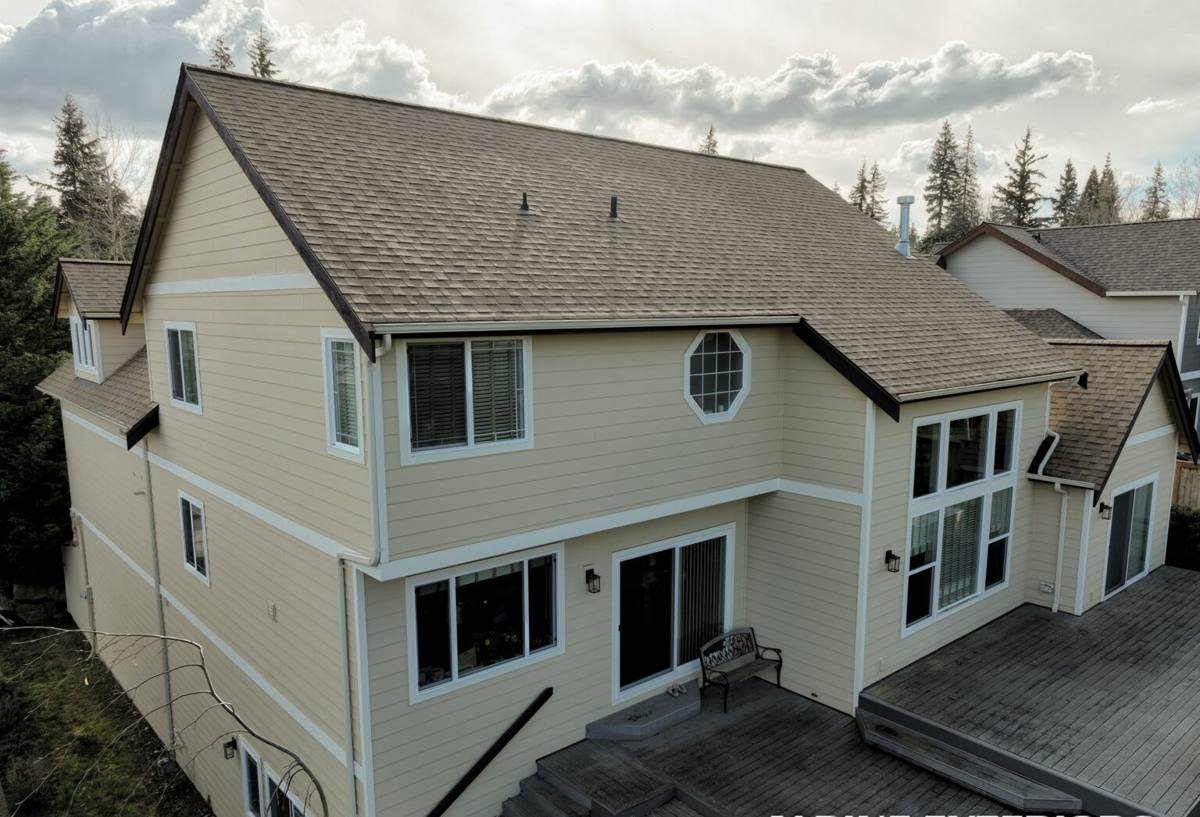
What Cottonwood Beach's Climate Actually Does to a Shingle Roof
Salt Air and Corrosion
Airborne salt doesn't just affect siding and window hardware — it accelerates corrosion on roofing fasteners, flashing, and vent boots. Galvanized nails and cheap flashing lose their protective coating faster near the water, and once that coating is gone, rust works quickly. Over a decade or two, corroded fasteners can loosen their grip on shingles, and pitted flashing starts to leak at the seams long before the shingles themselves are worn out.
Driving Rain
Storms coming off the water tend to arrive with wind, which pushes rain sideways instead of letting it fall straight down and shed off the roof surface. That means water gets tested against every seam, every nail head, and every place two roof planes meet — valleys, chimneys, skylights, and wall intersections. A roof that would hold up fine in calm rain can still leak under wind-driven rain if the underlayment and flashing weren't installed with that specific stress in mind.
Moss and Sustained Moisture
Whatcom County's long, wet stretch of the year — combined with shade from mature trees common around Birch Bay — creates ideal conditions for moss and algae growth on north-facing and shaded roof slopes. Moss isn't just cosmetic. As it grows, it holds moisture against the shingle surface, lifts shingle edges as its root structure spreads, and can work granules loose over time, shortening the roof's effective life.
What a Correctly Installed Roof Looks Like Here
A shingle roof built for this specific environment includes several details that matter more here than they would in a drier, calmer climate:
- Synthetic or high-quality felt underlayment installed as a genuine water-shedding layer, not just a nailing surface
- Ice-and-water shield or equivalent self-adhered membrane at eaves, valleys, and any low-slope transitions where wind-driven rain tends to back up
- Corrosion-resistant fasteners and flashing suited to a coastal-influenced environment, not the cheapest galvanized option
- Properly lapped and sealed step flashing and counter-flashing at every wall, chimney, and skylight intersection
- Balanced ridge and soffit ventilation, since trapped moisture in the attic contributes to both moss growth from below and premature shingle aging
- Shingles rated for algae resistance on shaded or north-facing slopes where moss pressure is highest
None of this is exotic. It's standard, well-understood roofing practice — the difference is that in Cottonwood Beach, skipping any one of these steps shows up as a problem years sooner than it would somewhere drier and calmer.
Repair, Replacement, or Maintenance: How We Figure Out What You Need
Not every roofing call ends in a full tear-off, and we don't treat every job like it should. When we look at a roof in Cottonwood Beach, we're weighing a few specific things:
Age and Remaining Life
Standard three-tab asphalt shingles typically run 15–20 years; architectural (dimensional) shingles typically run 25–30 years, though coastal exposure can shorten that range if past maintenance was inconsistent. If a roof is within a few years of its expected lifespan and already showing granule loss or curling, patching a leak is often a short-term fix that delays a replacement you'll need anyway.
Extent of Moss and Moisture Damage
Light surface moss on a roof that's otherwise sound can often be treated and controlled. Moss that's lifted shingle tabs or moisture that's worked into the decking underneath is a different situation — that usually means replacing the affected section, or the whole roof if the damage is widespread.
Flashing and Fastener Condition
Because corrosion here tends to outpace shingle wear, we check flashing and exposed fasteners even on roofs that look fine from the ground. A roof with good shingles but failing flashing is a leak waiting to happen, and it's usually a cheaper fix than people expect if it's caught before the leak causes interior damage.
| Situation | Typical Approach | Why |
|---|---|---|
| Isolated leak, roof under 10 years old | Targeted repair | Underlying material is sound; issue is usually flashing or a localized fastener failure |
| Moss buildup, no lifted shingles | Treatment and cleaning | Addresses the growth before it causes physical damage |
| Widespread granule loss, curling shingles | Full replacement | Shingles are past their protective life regardless of individual leak points |
| Multiple flashing points corroded or failing | Flashing replacement, possibly with reroof | Corrosion typically affects all similarly exposed flashing at once, not just one spot |
| Roof near end of rated lifespan | Full replacement | Repairs at this stage rarely outlast the cost of doing it once, correctly |
Our Process for a Cottonwood Beach Roofing Job
1. On-Site Assessment
We walk the roof (or use appropriate access equipment on steeper pitches) to check shingle condition, flashing, ventilation, and any signs of moisture intrusion at the decking level. We also look at the roof's exposure — which slopes face the water and prevailing wind, and which are shaded enough to be moss-prone.
2. Honest Scope and Materials Recommendation
We tell you what we actually see — not the worst-case sales pitch and not a rosier picture than the roof deserves. If a repair will genuinely hold, we say so. If the roof is past the point where repair makes sense, we explain why, in plain terms, with the specific evidence we found.
3. Tear-Off and Deck Inspection (for Replacements)
On a full reroof, removing the old shingles lets us inspect the decking underneath. Any water-damaged or soft plywood gets identified and replaced before new roofing goes down — installing new shingles over a compromised deck just hides a problem rather than solving it.
4. Underlayment, Flashing, and Ventilation First
Before a single shingle goes down, the water management layer goes in: underlayment, ice-and-water membrane where needed, and flashing at every penetration and intersection. This is the layer that actually keeps water out — shingles are the visible surface, but the underlayment and flashing are what determine whether wind-driven rain stays outside.
5. Shingle Installation
Shingles are installed to manufacturer specification for nail placement and exposure, using fasteners rated for this environment. Proper nailing pattern matters more here than in calmer climates — an under-nailed shingle is far more likely to lift in a coastal wind event.
6. Final Walkthrough
We review the completed work with you, point out anything worth knowing for future maintenance — like which slopes are most likely to need moss treatment first — and make sure you understand what warranty coverage applies to the materials and the labor.
Maintenance That Actually Extends a Roof's Life Here
A well-installed roof still needs a bit of ongoing attention in this climate. A simple annual or biannual check covers most of what matters:
- Clear debris and organic buildup from valleys and gutters, especially after fall storms
- Check shaded, north-facing slopes for early moss growth before it spreads or lifts shingles
- Look at flashing around chimneys, vents, and skylights for early rust or lifted edges
- Confirm attic ventilation isn't blocked by insulation, which can trap moisture and accelerate both moss growth and shingle aging from underneath
- After any significant windstorm, do a visual check for lifted or missing shingles rather than waiting for a leak to show up inside
Catching a small flashing or moss issue early is almost always cheaper and simpler than dealing with the water damage it causes if it's ignored for a couple of seasons.
Why Local Experience on This Specific Coastline Matters
Roofing fundamentals are the same everywhere, but the failure points are not. A crew that mostly works inland is used to thinking about heat and general wear; they may not automatically account for salt-accelerated fastener corrosion or size up moss risk on a shaded, damp lot the way a crew that works Birch Bay and Cottonwood Beach routinely does. We're not learning this environment on your roof — we're applying what we've already seen play out on similar homes nearby, from material choices down to which slopes tend to need extra attention.
That local familiarity also shows up in smaller, practical ways: knowing which products hold up honestly to Whatcom County's wet season versus which ones look good on a spec sheet but carry a heavier long-term maintenance burden, and being upfront about that trade-off rather than steering you toward whatever is easiest to install.
What to Expect Cost-Wise
Asphalt shingle roofing costs vary by roof size, pitch, number of penetrations (chimneys, skylights, vents), tear-off requirements, decking condition, and shingle grade chosen. A straightforward repair might run a few hundred dollars; a full tear-off and replacement on an average home is typically a multi-thousand-dollar project. Rather than quote a number that doesn't apply to your roof, we provide a specific written estimate after an on-site look, broken down so you can see what's driving the cost.
Get a Straightforward Estimate
If your roof in Cottonwood Beach is showing moss, a leak, or you're just past due for an honest look at its condition, we're glad to come take a look. There's no pressure and no obligation — just a clear assessment and a straight answer about what your roof actually needs. Fill out the form below for a free estimate.