 Birch Bay Siding
 Composite Decking Built for Terrell Creek's Coastal Conditions
Terrell Creek sits close enough to Birch Bay and the Strait of Georgia that homes here deal with a specific combination of weather: salt-laden air blowing off the water, long stretches of driving rain through fall and winter, and a moss season that can run half the year in the shaded, damp corners of a property. A deck built without that combination in mind will show it within a few seasons — cupped boards, black-green streaking, corroded fasteners, or a substructure that's rotting quietly underneath a deck that still looks fine on top. Composite decking, installed correctly, is one of the more reliable answers to that environment, but "composite" isn't a single product with a single outcome. The board brand, the fastening system, the substructure, and the installer's attention to drainage and airflow all determine whether a deck holds up here or becomes a five-year problem.
We work in Whatcom County and know the difference between a deck built to a national spec sheet and a deck built for a lot two miles from saltwater. This page walks through what that actually means for a composite deck project in Terrell Creek.
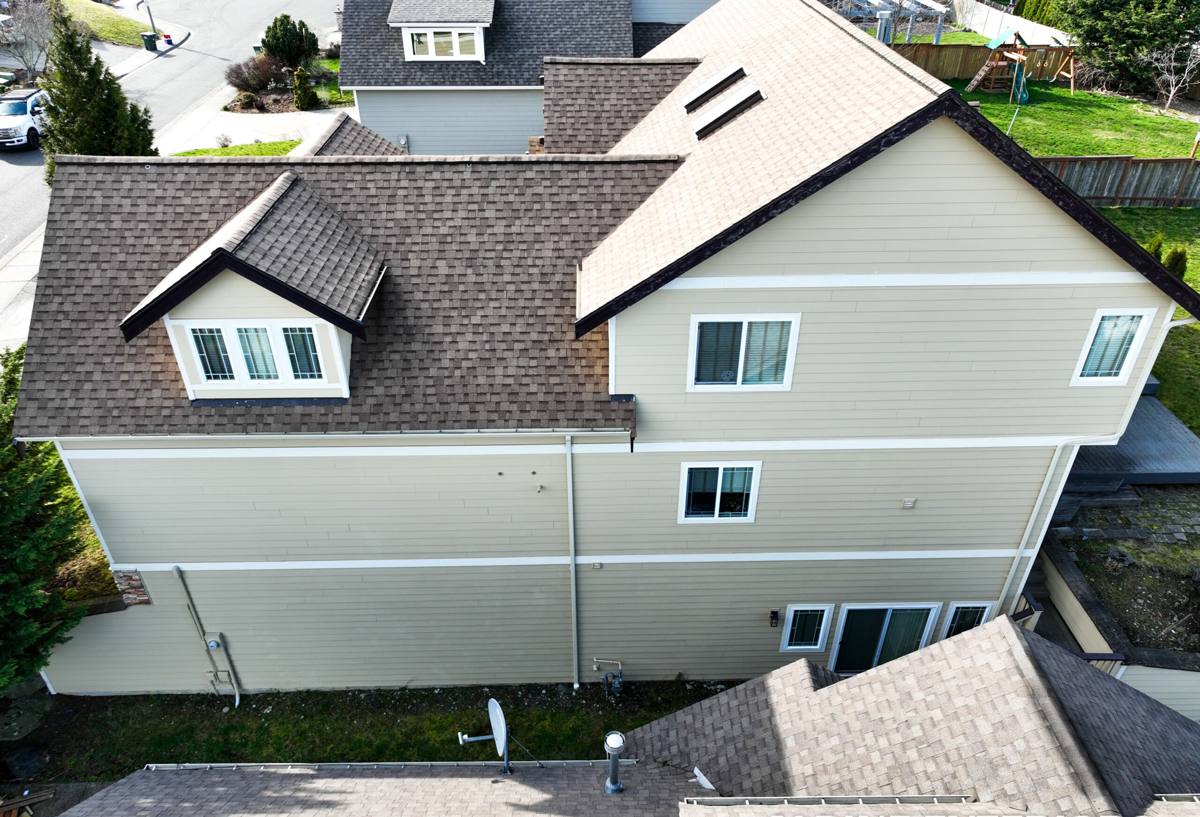
Why This Climate Is Harder on Decks Than It Looks
Salt Air and Metal Hardware
Salt air doesn't just affect boats and railings near the beach — it travels inland on wind and settles on any exposed metal. Standard deck screws, joist hangers, and structural connectors that aren't rated for coastal exposure will corrode faster here than the same hardware would twenty miles inland. Corrosion at a joist hanger or ledger connection isn't cosmetic; it's a structural issue that's expensive to catch late because it's hidden under the decking boards.
Driving Rain and Moisture Load
Birch Bay-area storms often come with wind-driven rain, which pushes water into places a calm rain wouldn't reach — under rail base plates, into end-grain cuts on boards, behind ledger flashing. A deck that sheds water fine in a light drizzle can still be taking on moisture at every unsealed cut end and fastener penetration during a real Whatcom County storm.
Moss, Algae, and Shade
Terrell Creek's tree cover and marine humidity mean moss and algae growth is a near-constant battle on any north-facing or shaded deck surface. Moss holds moisture against the board surface, and on the wrong product that moisture retention accelerates surface wear and makes boards slick and dangerous underfoot. This is less about picking "moss-resistant" boards off a marketing sheet and more about board texture, drainage gapping, and airflow underneath the deck — all things an installer controls, not just the manufacturer.
What a Correctly Built Composite Deck Includes
A composite deck that's actually built for this environment isn't just composite boards screwed to a frame. The parts that matter most are usually the ones you can't see once the project is done.
- Coastal-rated (typically stainless or heavily coated) fasteners and structural hardware at every connection point
- Proper ledger flashing and waterproofing where the deck attaches to the house, so water can't migrate into the wall assembly
- A substructure — joists and beams — treated or protected for ground contact and moisture exposure, not just standard framing lumber
- Correct board spacing and drainage gaps so water sheds through rather than pooling on the surface
- Adequate airflow underneath the deck to let the substructure dry out between rain events
- Hidden fastener systems (where the board profile supports it) to reduce surface penetration points where moisture and grime collect
- Manufacturer-approved details at stair stringers, picture-frame borders, and rail posts, since these are common places for improvised, unsupported fixes
Skipping any one of these doesn't usually show up as a failure in year one. It shows up in year four or five, as soft spots, rust streaks, or a rail post that's gone loose because the blocking underneath wasn't done right.
Composite vs. Other Decking Options for This Area
We install composite because, for most Terrell Creek homes, it holds up to salt air and moisture better than the alternatives with less annual upkeep. That said, it's worth understanding the honest trade-offs rather than taking that as a blanket recommendation for every situation.
| Decking Type | Maintenance in This Climate | Moisture/Salt Air Behavior | Typical Lifespan |
|---|---|---|---|
| Composite (capped) | Occasional wash-down; no staining or sealing | Resists rot and salt corrosion well; surface can still support moss without airflow/drainage detailing | 25–30+ years with proper install |
| Pressure-treated wood | Annual cleaning, periodic staining/sealing | Vulnerable to rot and splintering if sealing lapses; fasteners still need coastal rating | 10–15 years, often less near salt air |
| Cedar | Regular sealing/oiling to hold color and resist moisture | Naturally rot-resistant but still absorbs moisture; graying and moss are common without upkeep | 15–20 years with consistent maintenance |
| Uncapped composite | Low, but more prone to surface staining over time | Core material still handles moisture well; surface more susceptible to mold/algae than capped boards | 20–25 years |
The maintenance column is really the deciding factor for most homeowners we talk to in this area — a deck that needs annual sealing is a deck that gets neglected during a busy summer, and neglect is what shortens lifespan fastest in this climate.
Our Process for a Terrell Creek Composite Deck
1. On-Site Assessment
We look at sun and shade exposure, drainage slope on the lot, proximity to mature trees (a factor in moss and debris buildup), and the condition of any existing structure if this is a replacement. Terrell Creek lots vary block to block in how much tree cover and moisture exposure they get, so this isn't a generic checklist visit.
2. Substructure Evaluation or Build
If we're building new, the frame goes in with coastal-rated hardware and proper ledger flashing from the start. If we're replacing decking over an existing frame, we inspect the substructure first — there's no point putting new composite boards over joists that are already compromised by moisture. We'll tell you plainly if the frame needs work before decking goes down.
3. Board and Hardware Selection
We walk through board color, texture, and fastening options with you, including which profiles support hidden fasteners and which board surfaces perform better in shaded, moss-prone areas of your specific lot.
4. Installation
Boards go down with correct spacing, expansion gaps, and drainage detailing. Stairs, railing, and any picture-framing are built to the manufacturer's specifications so warranty coverage stays intact.
5. Final Walkthrough
We go over basic care — mainly seasonal cleaning to keep moss from getting a foothold — so the deck stays low-maintenance for the long run rather than becoming a chore.
Cost Factors to Expect
Composite decking costs more upfront than pressure-treated wood, but the real cost comparison should include maintenance labor and replacement timing, not just materials. Every project is different, so treat the factors below as what moves the number, not a quote.
| Factor | Why It Affects Cost |
|---|---|
| Deck size and shape | More linear footage of board edges, borders, and cuts increases labor time |
| Board tier | Composite lines range from base capped boards to premium multi-tone, higher-density products |
| Substructure condition | Replacing or upgrading a compromised frame adds cost but is not optional if it's already failing |
| Railing and stair complexity | Custom rail systems, multiple stair sets, or elevation changes add material and labor |
| Site access | Tight lots, sloped yards, or tree-heavy sites near Terrell Creek can slow equipment access and staging |
| Fastening system | Hidden-fastener systems cost more in labor time than surface-screwed boards |
Signs Your Current Deck Needs Attention
If you're not sure whether you need a repair, a resurface, or a full rebuild, these are the signs worth a professional look before they get worse:
- Soft or spongy spots when walking across the deck surface
- Visible rust streaking around fasteners or hardware
- Persistent moss or algae that returns quickly after cleaning
- Gaps opening up between boards or boards that have visibly cupped or crowned
- A railing or stair post that feels loose when you put weight on it
- Water pooling on the surface instead of draining off after rain
- Staining or discoloration near the ledger board where the deck meets the house
Any of these can be early or late-stage, and the difference matters a lot for cost. Catching a ledger flashing issue early is a straightforward fix; catching it after it's rotted the rim joist is a much bigger job.
Why Local Experience on Composite Decking Matters
Composite decking manufacturers write installation guidelines assuming a wide range of climates. They don't write a version specific to Whatcom County's combination of marine humidity, salt exposure, and long wet seasons. That gap gets filled by the installer's judgment — where to add extra drainage gapping, which hardware grade is worth the upcharge, how much airflow clearance a shaded Terrell Creek lot actually needs versus a sunnier spot closer to open water. A crew that's done this work across Birch Bay and the surrounding area has already made those calls dozens of times and knows which details actually matter here versus which are boilerplate from a spec sheet written for a drier climate. That's the difference between a deck that needs real attention in year five and one that's still performing at year twenty.
If you're planning a new deck or replacing an aging one in Terrell Creek, we're happy to walk the property with you and give you a straight assessment — no pressure, no upsell script. Use the form below to request a free estimate.