 Birch Bay Siding
 Composite Decking for Custer Homes
Custer sits just inland from Birch Bay, close enough to Whatcom County's marine air that homes here deal with the same slow, grinding moisture exposure as the waterfront — just without quite as much direct salt spray. That combination of humid air, frequent rain, and long stretches of shade under fir and cedar cover is exactly the environment that wears out a wood deck fast and makes composite decking worth a serious look. We install composite decks for Custer homeowners as a straightforward alternative to the annual sanding-staining-sealing cycle that wood demands out here.
This page is specifically about composite decking as a local service in Custer — not a general product overview. What follows is what we've learned installing and maintaining decks in this part of Whatcom County: what the climate actually does to a deck, what a correct installation looks like, and what it costs to get it right.
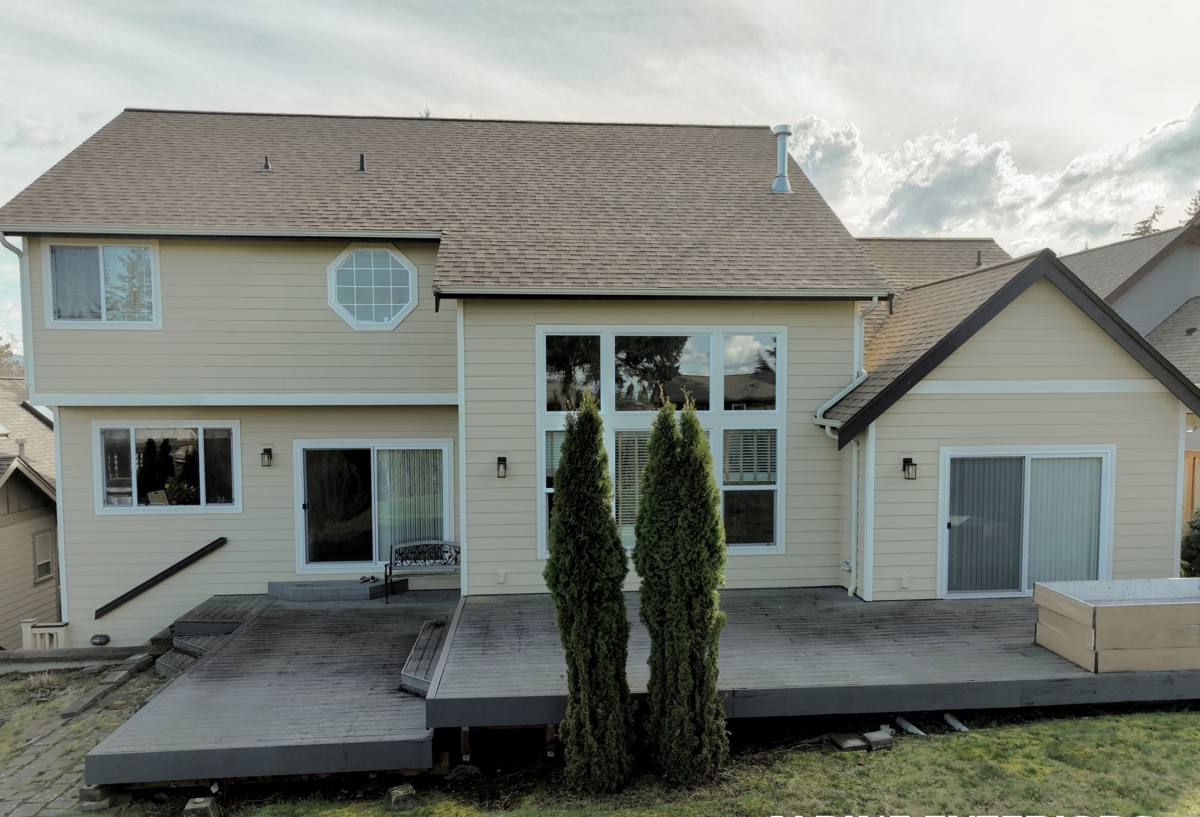
What Whatcom County Weather Does to a Deck
A deck in Custer isn't fighting one big storm event — it's fighting hundreds of small moisture cycles a year. Rain soaks the boards, humid marine air keeps them from drying fully overnight, and shaded areas under trees or roof overhangs stay damp for days at a stretch. That's the exact setup moss and algae need to take hold, and once moss establishes on a wood deck's surface or in the gaps between boards, it holds moisture against the wood constantly, which accelerates rot from the inside out.
A few specific things we see on decks in this area:
- North- and east-facing decks (less direct sun) develop moss and green algae film noticeably faster than south-facing ones
- Gaps between wood deck boards fill with organic debris that holds water against the framing below
- Ledger boards where the deck attaches to the house are a common hidden rot point if flashing wasn't done correctly
- Metal fasteners and hardware corrode faster here than in drier inland climates, especially near Birch Bay's salt-influenced air
- Wood decking left unsealed for even one missed season starts graying and splintering within a couple of years
Composite decking doesn't eliminate moisture exposure — nothing does in this climate — but it removes wood's two biggest weaknesses: it doesn't absorb water into its fiber structure the way solid wood does, and it doesn't need a protective coating that fails and has to be reapplied every year or two.
Composite vs. Wood vs. PVC: What Actually Fits This Climate
Homeowners in Custer usually ask us to compare three options. Here's the honest breakdown based on how each performs in a wet, moss-prone climate — not marketing language.
| Material | Moisture behavior | Moss/algae resistance | Maintenance | Typical lifespan here |
|---|---|---|---|---|
| Pressure-treated wood | Absorbs and releases water, prone to cupping/splitting | Low — needs regular cleaning and sealing | Annual cleaning, sealing every 1-2 years | 10-15 years before major repair or replacement |
| Composite (capped) | Minimal absorption, dimensionally stable | Moderate to good, especially capped boards | Periodic washing, no sealing or staining | 25-30+ years, backed by manufacturer warranty |
| PVC/cellular decking | Essentially no absorption | Good, but surface can show mildew film in deep shade | Occasional washing | 25-30+ years |
Composite is our default recommendation for most Custer projects because it strikes the right balance for this climate: it holds up to moisture cycling far better than wood, costs less than full PVC systems, and the capped composite products available today resist moss and mildew staining well when the deck is designed and built with proper drainage — which matters more than the material choice alone.
Why We Don't Push Bare (Uncapped) Composite
Older, uncapped composite products absorb some moisture at the surface and can develop mold or discoloration in shaded, damp spots — a real problem in a climate like this one. Our standard is capped composite decking, where a polymer shell wraps the board and blocks moisture and organic growth from penetrating the core. It costs a bit more up front, but in a climate with this much rain and shade, the difference in long-term appearance and lifespan is significant enough that we won't install uncapped boards on a project we're putting our name behind.
What a Correct Composite Deck Installation Involves
Composite decking is often marketed as low-maintenance, and it is — but only if the structure underneath it is built correctly for this climate. A composite deck installed on a poorly ventilated or improperly flashed frame will still trap moisture, and trapped moisture rots framing lumber and corrodes fasteners regardless of what the surface boards are made of.
Ledger Board and Flashing
Where the deck attaches to the house is the single most common failure point we find on existing decks in this area. Water that gets behind an unflashed or poorly flashed ledger board runs straight into the rim joist and wall framing, and because it's hidden, it can go undetected for years. We flash every ledger connection with proper metal flashing and moisture barrier detailing, not just caulk, which fails and needs redoing far sooner than most homeowners expect.
Joist Spacing and Substructure
Composite boards flex differently than wood and most manufacturers specify tighter joist spacing than traditional lumber decking allows — often 12" or 16" on-center depending on the board and whether it's installed straight or on a diagonal. Using wood-decking joist spacing under composite boards is a common shortcut that leads to bounce and premature sagging. We build to the manufacturer's structural spec for the specific product installed, not a generic layout.
Fasteners and Hardware
Given the corrosion risk from marine-influenced air, we use stainless steel or coated fasteners rated for coastal exposure throughout the substructure, not standard galvanized hardware that can start rusting within a few seasons out here. Hidden fastening clip systems are our standard for the visible decking surface — they avoid the screw-hole water intrusion points that face-screwing creates, and they leave a cleaner surface that doesn't collect debris in fastener heads.
Drainage and Airflow Underneath
A deck built low to the ground or over a patio needs a real drainage plan — sloped surface, gaps that shed water, and airflow underneath so the substructure can dry out between rain events. In a climate where it can rain steadily for days, a deck that traps standing water or humid, stagnant air underneath is setting itself up for rot regardless of what the top surface is made of.
How Our Process Works
We keep the process straightforward and the same for every Custer project:
- On-site assessment: We look at the existing structure (if there is one), sun/shade exposure, drainage path, and how the deck ties into the house.
- Product and layout selection: We walk through composite board options, colors, and railing systems based on your budget and how the space will be used.
- Written estimate: A clear, itemized quote — no vague allowances that turn into surprise costs later.
- Permitting: Whatcom County and most local jurisdictions require permits for new or substantially rebuilt decks above certain heights; we handle that paperwork as part of the job.
- Demolition and structural work: Removal of old decking if applicable, framing repair or replacement, ledger flashing, and footing/post work.
- Composite installation: Board installation, hidden fastening, edge and stair trim, railing.
- Final walkthrough and cleanup: We walk the finished deck with you and clear the site completely.
Maintaining a Composite Deck in a Moss-Prone Climate
Composite decking cuts maintenance dramatically compared to wood, but "low-maintenance" isn't "no-maintenance" in a climate that sees a long moss season. A little seasonal attention keeps a composite deck looking new for decades.
- Sweep debris (needles, leaves, seed pods) off the surface regularly, especially in shaded corners where it collects and holds moisture
- Wash the deck surface once or twice a year with a soft-bristle brush and mild soap and water — a pressure washer on a low setting works but shouldn't be aimed directly into board seams
- Check and clear any debris buildup in the gaps between boards, where organic material can trap moisture against the board edges
- Inspect railing posts and stair connections annually for any looseness
- Trim back overhanging vegetation that keeps a section of deck shaded and damp longer than the rest
- Address any moss that does appear promptly with a gentle cleaner made for composite surfaces — don't let it sit and spread
What Affects the Cost of a Composite Deck in Custer
| Cost factor | Why it matters |
|---|---|
| Deck size and shape | More square footage and complex angles (curves, multi-level) increase material and labor |
| Existing structure condition | Rotted framing, undersized footings, or failed ledger flashing add repair cost before decking even starts |
| Composite product tier | Entry-level capped boards cost less than premium wood-grain or specialty color lines |
| Railing system | Composite or metal railing adds more than basic wood or cable systems |
| Height and stairs | Elevated decks need engineered footings, guardrails, and stair structures that add labor |
| Site access | Tight side-yard access or long material carries increase labor time |
We don't publish flat per-square-foot pricing because the substructure condition and product tier swing the number too much to be honest about it in the abstract — that's why every quote starts with an actual look at your existing deck or build site.
Why Hire a Crew That Already Works in Custer and Birch Bay
A deck built by someone unfamiliar with this specific climate tends to make the same avoidable mistakes: wood-spacing joist layouts under composite boards, caulk-only ledger connections, standard fasteners that corrode faster than expected, and drainage details that don't account for how much rain this area actually gets. We work on homes throughout Custer, Birch Bay, and the surrounding Whatcom County area regularly, so the structural decisions on your deck — joist spacing, flashing detail, fastener grade, drainage slope — are already dialed in for what this climate does to a deck over years, not just what looks fine on install day.
We also know which composite products have held up well in local conditions over the years we've been installing them here, which matters more than a manufacturer's marketing claims when you're deciding what to put on your own house.
Get a Free Estimate
If you're considering a new composite deck or replacing a tired wood deck in Custer, we're happy to come take a look and give you a straightforward, no-pressure estimate. Fill out the form below and we'll get back to you to schedule a time that works.