 Birch Bay Siding
 Cherry Point Roofs Work Harder Than Most
Cherry Point sits right up against the water in Whatcom County, and that location shapes everything about how a roof ages here. Homes closer to the shoreline take on salt-laden air almost year-round, wind-driven rain comes in sideways during winter storms, and the shaded, damp stretches of the property grow moss faster than most homeowners expect. None of this means a roof is doomed — it means the repair work has to account for conditions that a one-size-fits-all roofing crew from outside the area often misses.
We work on roofs throughout Birch Bay and the surrounding Whatcom County coastline, and Cherry Point comes with its own patterns: fastener corrosion shows up sooner near the water, moss colonizes north-facing slopes and anything under tree cover, and flashing takes more abuse from wind-driven moisture than it would a few miles inland. A roof repair done right here starts with understanding those patterns, not just patching whatever is leaking today.
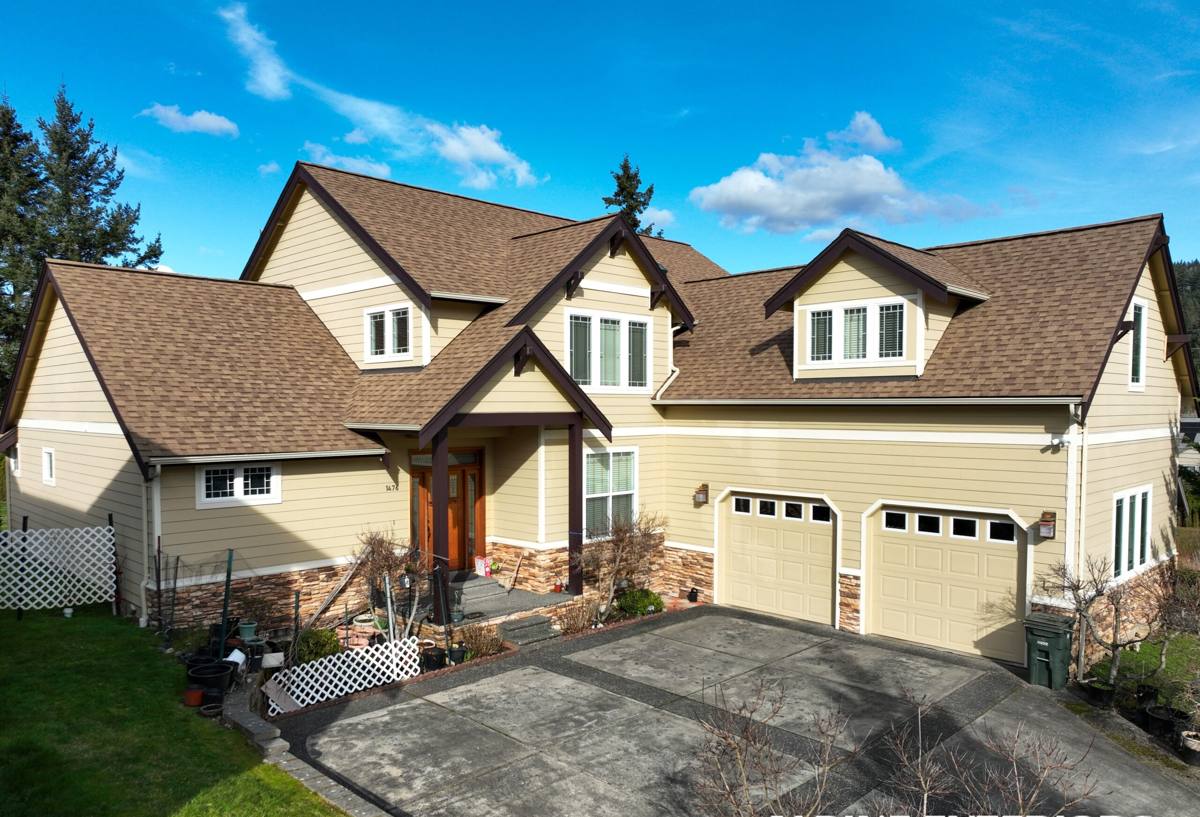
What Salt Air, Rain, and Moss Actually Do to a Roof
Salt Air and Corrosion
Airborne salt accelerates corrosion on anything metal — nail heads, flashing, gutter fasteners, and exposed screws on metal roofing. A fastener that would last two decades inland can start showing rust streaks and backing out years sooner this close to the water. Once a fastener loosens or corrodes through, the seal around it fails, and that's how small leaks start even on a roof that otherwise looks fine.
Driving Rain
Storms coming off the water don't just fall straight down — they push rain sideways and up under shingle tabs, around chimney flashing, and into any gap in the roof-wall transitions. A roof that would shed a normal vertical rainstorm without issue can still leak in a driving-rain event if the flashing details weren't built for wind-driven moisture. This is one of the most common reasons we find water intrusion at points that look dry during a routine inspection on a calm day.
Moss and the Long Wet Season
Whatcom County's wet season runs long, and Cherry Point's tree cover and shaded slopes give moss exactly the damp, low-light conditions it needs. Moss doesn't just look bad — it holds moisture against the roofing surface, lifts shingle edges as it grows, and works its way under tabs and around fasteners. Left alone through a few wet seasons, a moss problem turns into a moisture problem, and a moisture problem turns into a repair or replacement.
Signs a Cherry Point Roof Needs Repair
Most roof problems here show up gradually, and homeowners often notice the symptom (a stain on the ceiling, a damp spot in the attic) long after the actual cause started. Watch for:
- Granules collecting in gutters or at the base of downspouts
- Moss or dark algae streaks on north-facing or shaded slopes
- Rust staining around metal flashing, vents, or fastener heads
- Curling, cracked, or lifted shingle edges, especially on wind-exposed slopes
- Soft spots in the roof deck felt from the attic side
- Water stains on interior ceilings following a wind-driven storm
- Daylight visible around chimney or vent flashing from inside the attic
- Gutters pulling away from the fascia or holding standing water
Any one of these on its own might be minor. Several together usually mean the roof has been dealing with moisture longer than it should have.
What a Correct Repair Actually Involves
A proper roof repair in this climate isn't just swapping out a few shingles. It means tracing the leak or damage back to its actual source, checking the flashing and underlayment around that area, and confirming the repair will hold up against the same conditions that caused the original problem. We typically check:
Flashing and Transitions
Chimney flashing, valley flashing, and the joints where roof planes meet walls are the most common failure points in wind-driven rain. Re-sealing or replacing flashing correctly — with proper laps and fastening — matters more here than in calmer inland climates.
Underlayment Condition
If moisture has been getting past the surface layer for a while, the underlayment beneath it may already be compromised. Patching shingles over failed underlayment just delays the same leak.
Ventilation
Poor attic ventilation traps moisture, which both accelerates deck rot and gives moss and mold more to work with from underneath. A repair that ignores ventilation is treating a symptom.
Fastener and Metal Condition
Given the corrosion risk from salt air, we check fastener condition around the repair area, not just at the visible leak point, since corrosion tends to show up in clusters along the same exposure line.
Common Repair Types We Handle in Cherry Point
| Repair Type | Typical Cause Here | What's Involved |
|---|---|---|
| Localized shingle replacement | Wind lift, granule loss, isolated storm damage | Remove and replace damaged shingles, check underlayment beneath |
| Flashing repair/replacement | Wind-driven rain, corrosion, age | Remove old flashing, inspect deck, install new flashing with proper laps |
| Moss and algae remediation | Shaded slopes, long wet season | Safe removal, treatment, and addressing the underlying shade/drainage issue |
| Deck repair | Long-term moisture intrusion | Cut out and replace rotted decking sections before re-roofing that area |
| Ventilation correction | Trapped attic moisture | Add or correct intake/exhaust venting to reduce future moisture buildup |
| Gutter and edge repair | Wind stress, debris, fastener corrosion | Re-secure or replace sections, correct pitch, clear blockages |
Cost for any of these depends on the extent of hidden damage, not just what's visible from the ground — which is why an honest inspection before any quote matters more than a fast one.
Our Process for a Cherry Point Roof Repair
- Inspection. We look at the roof surface, flashing, attic, and any interior signs of moisture — not just the spot you called about.
- Diagnosis. We trace the actual source of the problem, since the leak point and the damage point are often not the same place with wind-driven rain.
- Honest scope and estimate. We tell you what's actually needed, what can reasonably wait, and what the trade-offs are if you defer part of the work.
- Repair. We match materials and techniques to the exposure of that specific slope — a north-facing shaded section and a wind-exposed section don't get treated identically.
- Follow-up guidance. We tell you what to watch for afterward, especially around moss regrowth and drainage, since prevention matters as much as the repair itself.
Moss: Prevention Matters as Much as Removal
Removing moss without addressing why it grew back there in the first place just buys a year or two before the same repair is needed again. A few things actually reduce moss regrowth on Cherry Point roofs:
- Trimming back overhanging branches to let shaded slopes dry out faster
- Keeping gutters and valleys clear so water doesn't sit against the roofline
- Correcting ventilation so the roof deck isn't staying damp from underneath
- Using zinc or copper flashing strips at ridgelines on moss-prone slopes, where appropriate
- Scheduling a periodic check during the wettest months rather than waiting for visible growth
Materials That Hold Up in This Climate
We don't push one product as a universal answer, because different parts of a Cherry Point property call for different trade-offs. Architectural asphalt shingles rated for higher wind exposure hold up well on most homes here when installed with attention to flashing detail. Metal roofing can perform well too, but it requires fasteners and coatings suited to salt air, or corrosion becomes an issue faster than the material's reputation would suggest. Whatever the material, the flashing, ventilation, and fastening details matter more to long-term performance in this climate than the shingle brand printed on the wrapper.
Why It Matters to Hire a Crew That Already Works This Area
A roofer unfamiliar with Cherry Point's specific mix of salt exposure, wind-driven rain, and shaded moss zones can miss the actual cause of a leak — patching the visible symptom while the real problem (corroded flashing fasteners, trapped attic moisture, a shaded slope that never fully dries) keeps working underneath. We work on roofs throughout Birch Bay and this stretch of Whatcom County regularly enough to recognize these patterns quickly, which means less guesswork, fewer repeat visits, and a repair that's actually built for the conditions your roof deals with every season.
If you're seeing moss buildup, a stain after the last windy storm, or just want an honest read on where your roof stands, we're glad to come out and take a look. The estimate is free, there's no pressure, and you'll get a straight answer about what's actually needed — use the form below to get started.