 Birch Bay Siding
 Window Replacement in Blaine's Coastal Climate
Blaine sits at the northern tip of Whatcom County, close enough to Semiahmoo Bay and Drayton Harbor that salt air isn't an occasional condition — it's a daily fact for most homes in town, waterfront or not. Add in Pacific storm systems that come ashore with real force this close to the border, and windows here take on a different kind of wear than they would a few miles inland. We're based just down the coast in Birch Bay, and Blaine is regular territory for our crew, close enough that we see the same salt air, driving rain, and long moss season on our own jobsites that Blaine homeowners deal with on theirs.
Window replacement is one of those projects that looks straightforward from the outside — pull the old unit, set the new one — but in this climate the details around that swap are what actually determine whether the job holds up. This page covers what Blaine homes typically need from a window replacement, what a correct installation involves, and how our process works for a window job in this specific corner of Whatcom County.
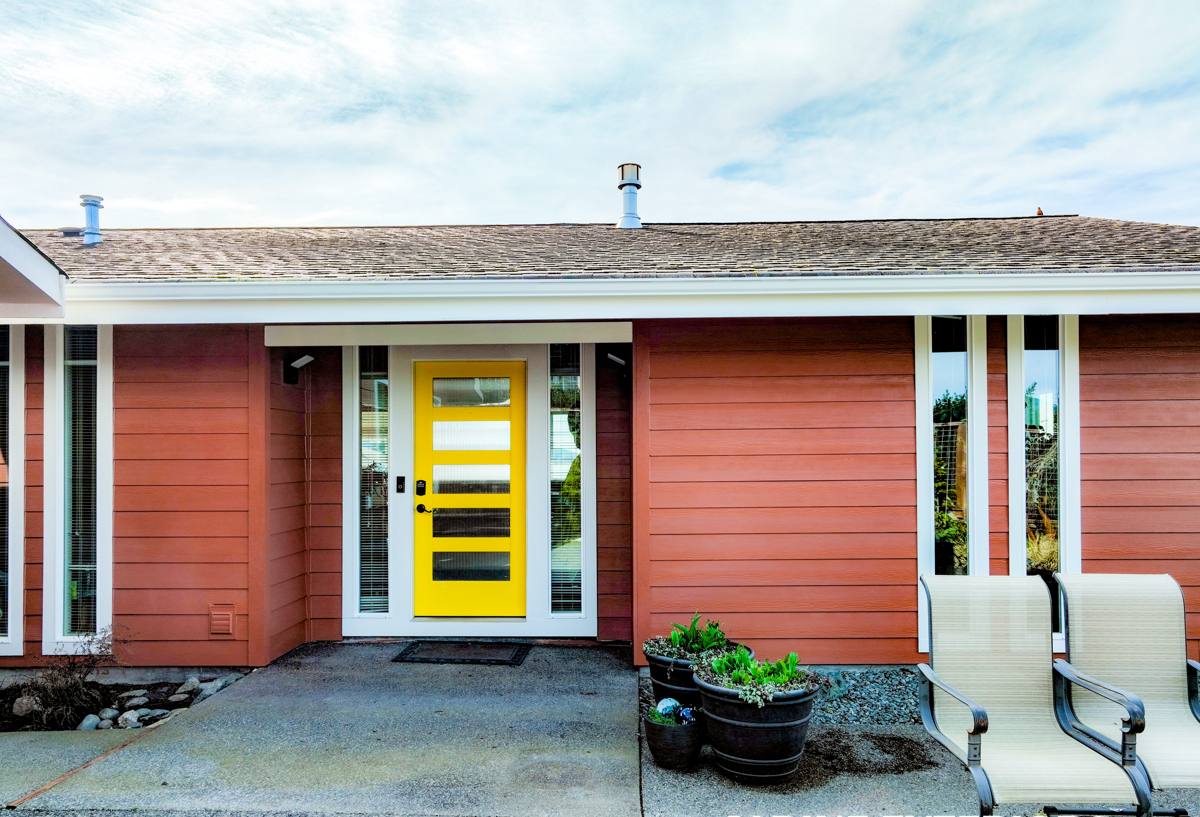
What Blaine's Weather Does to Windows Over Time
Salt Air and Corrosion
Homes near Semiahmoo Bay and Drayton Harbor take a steadier dose of salt-laden air than towns set further from the water. Salt accelerates corrosion in window hardware — hinges, locks, balance mechanisms, and the fasteners holding the frame in place. A corroded lock or a stiff hinge is usually one of the first signs a window's hardware is losing the fight against the air it sits in, well before the glass or frame itself shows obvious damage.
Wind-Driven Rain and Water Intrusion
Storms coming off the water in Blaine rarely fall straight down. Wind pushes rain sideways, driving it up under sills and into flashing joints that would never get tested in a calmer climate. A window that seals fine on a still day can still let water in the moment wind gets involved, and that pattern shows up in Blaine more than it does in more sheltered parts of the county, simply because there's less land and tree cover to slow the wind before it reaches the house.
A Moss and Mildew Season That Runs Long
Mild temperatures and near-constant moisture give moss and mildew a growing season that can run most of the year here. Window sills, trim, and the lower corners of frames are common places it takes hold, especially on shaded or north-facing walls that don't get much direct sun through the winter. Wood trim and sills are usually the first to show it; any material with surface porosity gives moss something to grip.
Signs a Blaine Home Needs Replacement, Not Just Repair
Not every window problem calls for full replacement. A stuck sash, a failed weatherstrip, or a cracked pane can often be repaired on an otherwise sound window. Replacement becomes the honest recommendation when the underlying frame, seal, or glazing has broken down in ways repair can't fix. Signs worth taking seriously include:
- Fogging or a visible film between panes on double- or triple-glazed windows — a sign the seal has failed and the insulating gas has escaped
- Soft, spongy, or visibly rotted wood around the frame or sill
- Windows that won't stay open, won't latch securely, or have become difficult to operate
- Persistent drafts or a noticeable temperature difference near the window even when it's fully closed
- Visible daylight or gaps around the frame where it meets the wall
- Paint or finish that keeps failing shortly after being redone, often a sign moisture is getting into the frame from somewhere
- Noticeably higher heating bills with no other explanation, especially in homes with older single-pane or early double-pane windows
If a window is only a few years old and just needs a hardware adjustment or new weatherstripping, replacement usually isn't the right call yet. We'll tell you that plainly rather than pushing a bigger job than the window actually needs.
Frame Material Choices for This Climate
Frame material has more effect on long-term performance here than it would in a milder, drier location. The main options homeowners weigh are vinyl, fiberglass, aluminum, and wood or wood-clad frames, and each behaves differently under sustained salt air and moisture.
| Frame Material | Salt Air & Moisture Resistance | Maintenance | Notes for Blaine |
|---|---|---|---|
| Vinyl | Good — won't corrode or rot | Low; occasional cleaning | Solid, budget-friendly option for most replacement jobs |
| Fiberglass | Excellent — very stable in moisture and temperature swings | Low | Strong choice for larger units or heavier wind exposure |
| Aluminum | Fair — prone to corrosion in salt air unless properly coated | Moderate | Less common as a primary frame choice this close to the water |
| Wood / wood-clad | Moderate — exterior cladding protects the wood core, but any breach exposes it | Higher, especially on unclad wood | Interior wood look with a protected exterior clad surface can work well if detailed correctly |
We'll walk through the honest trade-offs for your specific home rather than defaulting to one material for every job. A lot of it comes down to budget, how exposed the specific wall or elevation is, and how much upkeep you actually want to take on going forward.
What a Correct Window Replacement Involves Here
Removal and Opening Inspection
The old window comes out carefully, and the opening gets inspected before anything new goes in. This is where hidden problems usually turn up — soft framing, old flashing that's failed, or water staining that points to a leak that's been going on longer than the homeowner realized. Catching that now matters more in Blaine than it would somewhere drier, since moisture problems here don't announce themselves loudly until they're well established.
Flashing and Weatherproofing
This is the step that determines whether a window actually holds up to wind-driven rain. Flashing has to be sequenced correctly — building paper or house wrap, sill pan, side flashing, and head flashing layered so water is always directed outward and downward, never trapped behind the new unit. A window can look perfectly installed and still leak for years if this sequence is wrong, which is part of why so many water problems in older homes trace back to flashing rather than the window itself.
Setting, Shimming, and Sealing
The new window has to be set plumb, level, and square, shimmed correctly so it isn't relying on the fasteners alone to hold its shape, and sealed with the right materials at the right points — not just a bead of caulk around the outside trim. Over-sealing on the exterior without a way for incidental moisture to escape can trap water inside the wall assembly, which causes its own problems over time.
Trim and Finish
Exterior trim gets integrated to match the surrounding siding, and any sill or trim detail is sloped and finished to shed water rather than let it sit. On a home where moss and mildew are a long-season concern, finish quality on the trim isn't cosmetic — it's part of how well that trim resists staying damp.
Our Process for a Blaine Window Replacement
- On-site assessment — we look at each window's condition, the surrounding wall and trim, and any signs of past water intrusion before recommending anything
- Honest recommendation — repair versus replacement, explained with the reasoning, not just a quote
- Material and product selection — walking through frame material and glass package options that fit your budget and the exposure your home actually sees
- Scheduling — a realistic timeline, including lead time if any units need to be ordered
- Removal and opening prep — old windows come out carefully, and any hidden framing or flashing issues get addressed before the new unit goes in
- Installation and flashing — set, shimmed, and flashed to a sequence built for wind-driven rain, not just a calm-weather install
- Trim and finish — exterior trim matched to the surrounding siding and finished to shed water
What Actually Affects the Cost
We won't quote a number without seeing the windows in person, but the factors that consistently move price on a Blaine replacement job are fairly consistent: the number of windows being replaced, frame material, glass package (standard double-pane versus upgraded low-E or triple-pane options), the condition of the existing opening and whether framing repair is needed, and whether it's a straightforward like-for-like swap or a resized or reframed opening. Homes with older, non-standard window sizes sometimes need custom units, which adds cost and lead time compared to stock sizes. We'll walk through which of those factors apply to your project before you commit to anything.
Living With New Windows in a Salt Air Climate
Even a well-installed window in a good frame material benefits from some routine attention in this climate. A short list worth keeping in mind:
- Rinse frames and sills periodically to clear salt residue and organic buildup before it works into hardware or finish
- Check locks, hinges, and balance mechanisms once a year for early corrosion or stiffness, especially heading into the wet season
- Keep weep holes on the exterior sill clear of debris so incidental moisture can drain the way the window is designed to handle it
- Watch for condensation between panes, which signals a failed seal rather than something that can be wiped away
- Address soft trim or staining around a window right away — in this climate, it rarely improves on its own
Why a Local Birch Bay Crew Working Blaine Regularly Matters
Manufacturer installation guidance is written for average conditions in a moderate climate, and Blaine's exposure to salt air and wind-driven rain doesn't fit that description particularly well. A crew that mostly works inland can still install a window competently, but the flashing sequence, sealant choices, and sill details that matter most here don't come up as often somewhere more sheltered. Being based in Birch Bay and working Blaine regularly means we're not guessing at what this stretch of coastline requires — we've seen which frame materials and installation details hold up to this specific combination of salt air, driving rain, and a long moss season, and which corners are never worth cutting even when they'd save time.
That familiarity shows up in the smaller judgment calls too — how much flashing lap a particular wall orientation needs, when a sill benefits from extra attention beyond the standard install, and being straightforward with homeowners about what a window replacement here actually needs to last versus what's just an upsell.
If you're dealing with drafty, foggy, or hard-to-operate windows, or just want an honest read on whether repair or replacement makes more sense for your Blaine home, we're happy to take a look and walk through the options plainly. Reach out below for a free, no-pressure estimate.