 Birch Bay Siding
 Metal Roofing in Blaine: Built for This Coastline
Blaine sits right up against the Strait of Georgia and Semiahmoo Bay, which means homes here take a different kind of weather beating than houses even a few miles inland. Salt-laden air off the water works on exposed metal edges, fasteners, and flashing year-round. Add Whatcom County's long wet season and the moss growth that comes with shaded, north-facing roof slopes, and you've got a roof that's under near-constant low-grade stress. Metal roofing, installed correctly, is one of the better answers to that combination — but "installed correctly" is doing a lot of work in that sentence, and it's where a lot of metal roofs in this area go wrong.
We're Birch Bay Siding Company, and while our name says siding, roofing and siding fail for the same reasons out here: water finding a way in through a detail that wasn't sealed, lapped, or fastened for coastal conditions. Metal roofing is a system we install often for Blaine homeowners specifically because the underlying climate problem is the same one we solve on the wall side of the house every day.
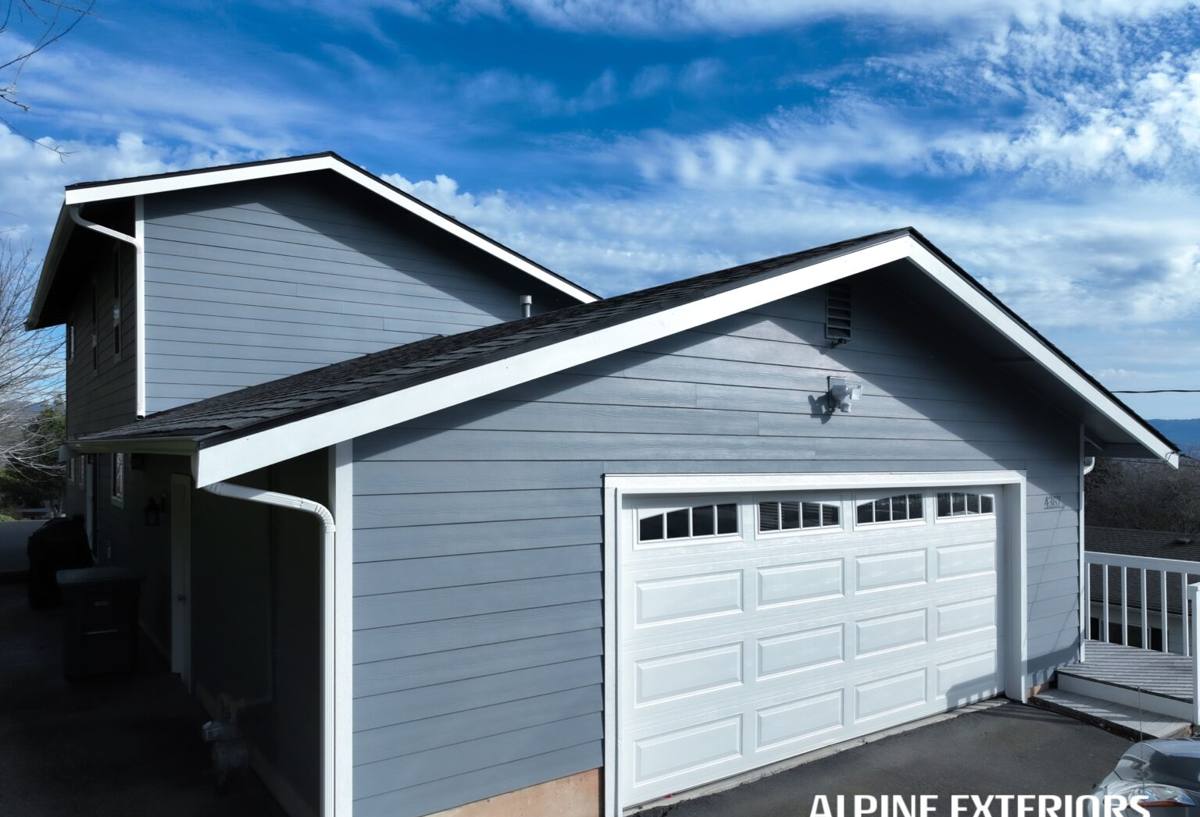
Why Blaine's Climate Changes the Job
Salt Air and Corrosion
Bare or poorly coated fasteners, cut edges left unsealed, and dissimilar metals in contact with each other all corrode faster this close to saltwater. It's not dramatic — you won't see rust after one winter — but over years, small oversights compound into streaking, fastener failure, and eventually leaks at the exact points where corrosion started. The fix isn't a different metal, it's disciplined detailing: sealed cut edges, corrosion-resistant fastener systems matched to the panel, and avoiding metal-on-metal contact between incompatible materials.
Driving Rain and Wind-Driven Water
Storms coming off the water don't just drop rain straight down — wind pushes it sideways and up under laps, ridge caps, and flashing that would be fine in a calmer climate. This is a detailing problem more than a material problem. Panel overlaps, underlayment choice, and flashing at every penetration and transition all need to account for wind-driven moisture, not just gravity drainage.
Moss and Shaded Roof Slopes
Whatcom County's wet season runs long, and shaded or north-facing slopes in Blaine's tree cover stay damp for extended stretches. Moss doesn't damage metal panels the way it damages shingles, but it does hold moisture against the surface longer than the panel would otherwise see, and it clogs valleys and gutter lines, which redirects water somewhere it shouldn't go. Roof design — slope, panel profile, and how water is meant to shed — matters more here than in drier parts of the state.
What a Correct Metal Roof Installation Actually Involves
A metal roof is only as good as the parts nobody sees from the ground. Panels are the visible 80%; the other 20% — underlayment, flashing, fastening, and ventilation — is what determines whether the roof is still watertight in fifteen years.
- Deck inspection and prep: confirming the existing roof deck is sound, dry, and flat before anything goes down — panels won't fix a bad substrate, they'll just hide it temporarily.
- Underlayment: a synthetic or high-temp ice-and-water underlayment suited to metal, giving a second line of defense if wind-driven rain ever gets past the panel laps.
- Panel layout and fastening: panels run and fastened according to the manufacturer's coastal/wind-exposure spec, not a generic inland pattern.
- Flashing at every transition: valleys, ridges, sidewalls, chimneys, skylights, and eaves — each is a different flashing detail, and each is a common failure point when rushed.
- Fastener selection: corrosion-resistant fasteners matched to the panel material, not whatever's cheapest at the supply house.
- Ventilation: proper intake and exhaust airflow so moisture doesn't condense against the underside of the deck, especially relevant given how much moisture this region holds in the air.
Panel Types and How They Perform Locally
Not every metal roofing profile is a good fit for every Blaine home, and the differences matter more here than in a drier climate. The table below is a general guide, not a substitute for looking at your specific roof.
| Panel Type | Typical Use | Coastal Consideration |
|---|---|---|
| Standing seam | Most residential roofs, clean modern look | Concealed fasteners reduce exposed penetration points — generally the best choice for salt-air exposure |
| Exposed-fastener panel | Budget-conscious installs, outbuildings, shops | More fastener penetrations to maintain over time; requires more diligent maintenance near the water |
| Stone-coated steel | Homeowners wanting a shingle-like appearance | Coating adds a wear layer, but cut edges and fasteners still need the same corrosion attention |
| Aluminum panel systems | Homes very close to the water or with prior corrosion issues | Naturally corrosion-resistant, often worth the added cost right on the shoreline |
We'll talk through which profile makes sense for your specific home, your budget, and how exposed your roof actually is to wind and salt spray — a house tucked behind a tree line has different needs than one facing open water.
Our Process for Blaine Homeowners
1. On-Site Assessment
We walk the roof (or inspect from the deck/attic if conditions call for it), check the existing deck condition, look at ventilation, and note every valley, penetration, and transition that will need flashing attention. We also look at how the specific slope is exposed to prevailing wind and rain direction.
2. Honest Written Estimate
You get a clear scope — what's being removed, what's being installed, what the flashing and ventilation plan looks like — and a real price range, not a lowball number that grows once the crew shows up.
3. Correct Installation, In Order
Deck prep, underlayment, flashing, panels, then ridge and trim — each step inspected before the next begins. We don't skip steps to move faster on days when the weather window is short, which matters in a region where dry stretches aren't guaranteed.
4. Walkthrough and Documentation
Before we consider the job done, we walk it with you, point out what was done at each critical detail, and make sure you know what routine maintenance (if any) the specific system needs.
Maintenance: What Actually Matters Long-Term
Metal roofing is low-maintenance compared to most other roofing materials, but "low" isn't "none," especially in Blaine's environment. Realistic upkeep looks like this:
- Keep gutters and valleys clear of moss, needles, and debris so water has a clean path off the roof.
- Periodically check for moss buildup on shaded slopes and remove it gently — pressure washing can damage coatings and force water under laps.
- Have flashing and sealant points inspected every few years, since sealants degrade faster under UV and salt exposure than the panels themselves.
- After major windstorms, a quick visual check for lifted panels, loose fasteners, or shifted flashing is worth the ten minutes.
Why a Crew That Already Works Blaine Matters
Roofing crews that mostly work inland climates sometimes bring inland habits with them — standard fastener specs, standard flashing details, standard underlayment choices — that are fine in a drier, calmer climate and inadequate here. We work Birch Bay, Blaine, and the surrounding Whatcom County coastline regularly, so the coastal-spec details aren't an upcharge or an afterthought; they're just how we build the roof from the start. We also know which slopes in this area tend to hold moss and which orientations catch the worst of the wind-driven rain off the water, because we've seen it play out on roofs nearby.
Signs Your Current Roof Needs Attention
If you're not sure whether you need a repair, a partial re-roof, or a full replacement, a few signs are worth knowing:
- Streaking or discoloration running from fastener heads or panel seams — often an early corrosion signal, not just cosmetic.
- Persistent moss buildup in valleys or on shaded slopes despite cleaning.
- Visible daylight, water stains, or musty smells in the attic near roof penetrations.
- Loose, lifted, or oil-canning (rippled) panels after a windstorm.
- Rust at cut edges, ridge caps, or flashing rather than on the flat panel field.
Some of these are simple repairs; others point to a deeper issue with how the roof was originally detailed. We'll tell you honestly which category yours falls into rather than defaulting to the more expensive answer.
Let's Look at Your Roof
If you're weighing a metal roof for your Blaine home, or you've got an existing metal roof that needs a second opinion, we're happy to take a look. Use the form below to request a free, no-pressure estimate, and we'll walk you through exactly what your roof needs and why.