 Birch Bay Siding
 Why Blaine's Coastal Climate Is Hard on Siding
Blaine sits right up against the water in the northwest corner of Whatcom County, and that location comes with a specific set of siding problems that inland homes in the county rarely deal with in the same combination. Salt-laden air off the bay works its way into fastener heads, trim joints, and any paint film that's starting to fail. Wind-driven rain off the water doesn't fall straight down — it hits siding at an angle, which means it finds every gap in flashing and caulking that a calmer climate would never expose. And the long stretch of damp, low-sun months from fall through spring is exactly what moss, algae, and mildew need to take hold on anything with texture or shade.
None of that is unique to any one street or neighborhood in Blaine — it's the nature of building this close to the Salish Sea. What it means practically is that siding here has to manage moisture and resist organic growth better than a product designed for a drier, more sheltered climate, and it has to hold up to salt exposure without corroding its own fasteners or trim.
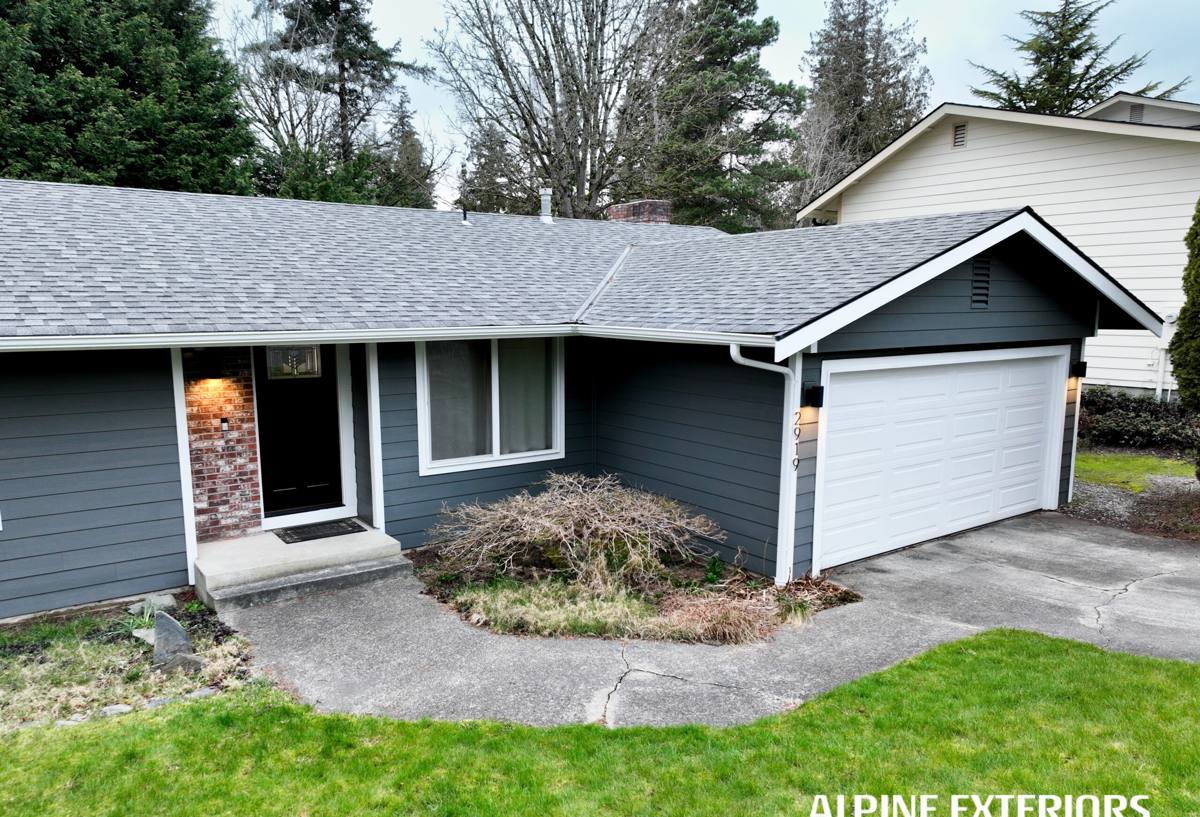
Why Fiber Cement Is the Right Material for This Environment
Fiber cement is cement, sand, and cellulose fiber pressed into a dense, stable board. It doesn't absorb bulk water the way wood does, it doesn't expand and contract with humidity swings the way vinyl and some engineered wood products do, and it's not a food source for the mold and algae that thrive in a wet, shaded coastal yard. That combination is exactly what a Blaine exterior needs.
We install James Hardie fiber cement exclusively — not LP SmartSide, not vinyl, not Cemplank, not Allura, not primed spruce or cedar. That's a deliberate standard, not a brand preference for its own sake. Hardie's boards come from the factory with a baked-on ColorPlus finish that's far more consistent and fade-resistant than field-applied paint, and Hardie engineers separate product formulations for different climate zones — which matters directly in a place where salt air and moisture are constant.
What We Don't Install, and Why
Engineered wood products like LP SmartSide use a resin-treated wood strand core. They perform well in many climates, but wood strand cores are more sensitive to sustained moisture exposure at cut edges and butt joints than fiber cement is — a real consideration on a property that gets salt spray and driving rain. Vinyl siding is affordable and low-maintenance in mild climates, but it's a thin material that can warp in temperature swings and offers little in the way of impact resistance or a premium finished look. Primed wood and cedar look great on day one, but they need a repainting and caulking cycle that most homeowners underestimate, especially in a climate this damp. We'd rather tell a homeowner that upfront than sell a product we know will cost more in upkeep over time.
What a Correct Fiber Cement Installation Actually Requires
Fiber cement is only as good as the installation behind it. The board itself resists moisture well, but a siding system fails at its seams, penetrations, and connections — not through the field of the panel. In a coastal environment like Blaine's, we pay particular attention to a few things that get skipped on lower-bid jobs.
Moisture Management Behind the Cladding
Every wall gets a drainable water-resistive barrier and correctly lapped flashing at windows, doors, and any horizontal trim — installed so that any water that gets past the siding has a clear path down and out instead of sitting against the sheathing. Rain screen detailing that creates a small drainage gap behind the siding is especially valuable here, since it lets wall assemblies dry out between the frequent wet spells this area gets.
Fasteners and Hardware
In a salt-air environment, the wrong fastener corrodes years before the siding around it shows any wear, leaving rust streaks and eventually a loose board. We use corrosion-resistant fasteners rated for the exposure, and we follow Hardie's fastening specs on spacing and penetration depth rather than whatever's fastest.
Clearances and Joint Detailing
Fiber cement needs proper clearance from grade, roof lines, and decks so water doesn't wick up into the bottom edge of the siding, and butt joints need to be shimmed and sealed correctly so they don't become a moss trap or a moisture entry point. These are small details, but they're the difference between siding that looks right for its full warranty period and siding that starts showing streaking and soft spots at the joints within a few winters.
James Hardie Product Lines for This Climate
Hardie makes several product lines, and the right choice for a Blaine home depends on exposure, style, and budget. We help homeowners pick based on which walls take the worst weather — the water-facing side of a house often benefits from a different plank profile or trim detail than a sheltered side.
| Hardie Product | Best Use | What It Offers |
|---|---|---|
| HardiePlank Lap Siding | Most exterior walls | Traditional lap look, widest color and texture selection, most common choice for full re-sides |
| HardiePanel Vertical Siding | Accent walls, gables, modern facades | Clean vertical lines, often paired with lap siding for a two-material look |
| HardieTrim Boards | Corners, window and door casing, fascia | Matches siding durability so trim doesn't fail before the field siding does |
| HardieSoffit Panels | Eaves and overhangs | Resists the moisture and moss buildup common under shaded overhangs in wet climates |
Every one of these comes with Hardie's ColorPlus factory finish as an option, which matters more here than in a drier climate — a factory-baked finish holds up to UV and moisture cycling better than field-painted siding, and it comes with its own finish warranty separate from the product warranty.
How Fiber Cement Compares to the Alternatives Here
Homeowners in Blaine considering a re-side usually have a few materials on their list. Here's an honest comparison based on how each one actually performs in a marine, high-moisture climate — not a marketing comparison.
| Material | Moisture Behavior | Maintenance Cycle | Typical Lifespan Here |
|---|---|---|---|
| James Hardie fiber cement | Doesn't absorb bulk water; stable in humidity swings | Occasional wash; ColorPlus finish rarely needs repainting | 30+ years with correct install |
| Vinyl | Sheds water but can warp/gap with temperature swings | Low, but limited repair options if damaged | 15–25 years, shorter in harsh wind exposure |
| Engineered wood (e.g. LP SmartSide) | Wood-strand core sensitive to sustained edge/joint moisture | Caulk and edge maintenance matters more in wet climates | Variable, heavily install- and maintenance-dependent |
| Cedar / primed wood | Absorbs moisture; prone to rot and moss without upkeep | Repainting and sealing every few years | Highly maintenance-dependent |
Signs Your Current Siding Is Losing the Battle
Because Blaine's climate accelerates certain kinds of siding failure, we look for a specific set of warning signs when we inspect a home here. If you're seeing any of these, it's worth having someone look before it turns into a sheathing or framing repair.
- Persistent moss or dark streaking that comes back within weeks of cleaning
- Soft, spongy spots when you press on the siding, especially near the bottom courses
- Paint that's peeling or bubbling rather than just fading
- Rust streaks running down from nail heads or trim fasteners
- Gaps opening up at butt joints or corners that weren't there a year or two ago
- Visible warping or waviness in the siding panels themselves
- Higher heating bills that coincide with drafts felt near exterior walls
Our Process for a Blaine Fiber Cement Project
- On-site inspection — we walk the exterior, check for existing moisture damage, and note which walls take the worst weather exposure
- Product and color selection — choosing plank profile, trim details, and ColorPlus color based on exposure and the style of the home
- Tear-off and sheathing check — removing the old siding lets us catch any rot or damaged sheathing before it's covered up again
- Water-resistive barrier and flashing — installed and lapped correctly at every window, door, and horizontal transition
- Hardie installation — fastened and spaced to manufacturer spec, with corrosion-resistant hardware throughout
- Trim, caulking, and final detailing — the finish work that determines how the job ages over the next decade
- Final walkthrough — reviewing the finished work with the homeowner before we call it done
Why Hiring a Crew That Already Works in Blaine Matters
Siding installation isn't identical everywhere, and a crew that mostly works drier, inland jobs can miss details that matter on a coastal property. Knowing how far to hold clearances given the wind exposure, which fastener grade actually holds up to salt air over years rather than months, and where moss tends to build up on a shaded, damp wall are things you learn from working this specific stretch of coastline repeatedly — not from a general installation manual. It also means faster, more realistic scheduling around the wetter months here, since fiber cement installation needs reasonably dry conditions to go in correctly.
If your Blaine or Birch Bay home is due for new siding, or you're seeing any of the warning signs above, we're happy to take a look and give you a straightforward assessment — no pressure, no hard sell, just an honest read on what your siding actually needs. Use the form below to request a free estimate.