 Birch Bay Siding
 Decks in Blaine Take a Different Kind of Beating
Blaine sits close enough to the water that a deck here deals with more than sun and foot traffic. Salt-laden air off the Strait and Birch Bay works into fasteners, flashing, and any end-grain that isn't sealed. Driving rain off winter storms drives moisture sideways under railings and through gaps most homeowners never think to check. And Whatcom County's long, wet moss season means anything horizontal — deck boards, stair treads, the tops of rail caps — stays damp far longer than it would inland. None of that means a deck here is doomed. It means the repair has to account for those conditions, not just patch what's visible.
We're a Birch Bay-based crew that works Blaine regularly, so we're not guessing at what the local climate does to a structure over five, ten, or twenty years. We've opened up enough decks in this area to know where the damage actually starts, which is usually not where it first shows up.
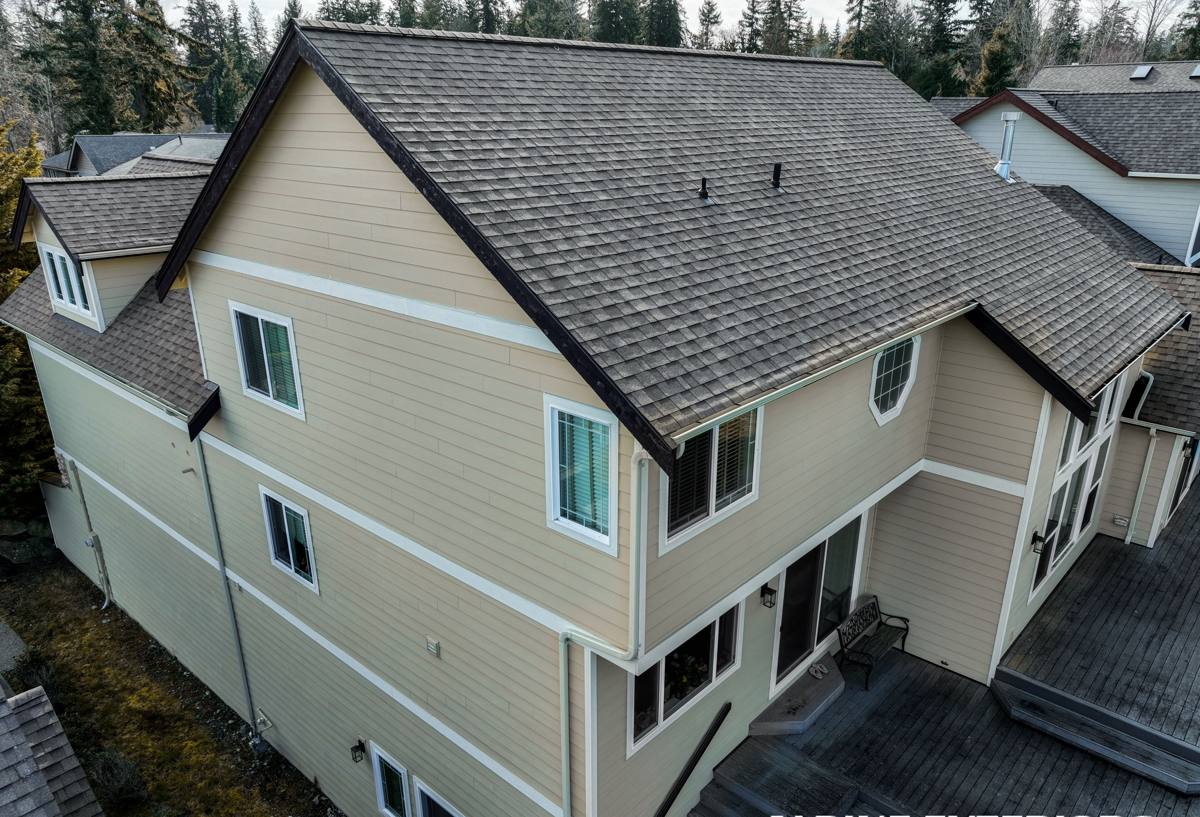
Signs Your Deck Needs Attention
Most deck problems announce themselves quietly before they become expensive. Catching them early is the difference between a repair and a rebuild.
- Boards that feel soft, spongy, or spring back slowly when you step on them
- Rust streaking or bleeding around fastener heads
- Gaps opening up between the deck and the house where the ledger board attaches
- Green or black staining that keeps returning within weeks of cleaning
- Railings or stair stringers that flex or wobble under normal weight
- Visible daylight or water staining underneath the deck near the ledger connection
- A musty smell coming from the crawlspace or storage area beneath the deck
If you're seeing more than one or two of these, it's worth having someone look underneath the deck, not just at the walking surface. Surface staining is cosmetic. Soft framing or a compromised ledger connection is structural, and that's the part that actually determines whether a repair makes sense.
What a Correct Deck Repair Actually Involves
A lot of deck "repairs" amount to swapping a few bad boards and calling it done. That fixes what's visible and leaves the cause untouched. A repair that's actually going to hold up in this climate starts underneath.
The Ledger Board and Flashing
The ledger board — where the deck attaches to the house — is the single most common failure point we find, and it's almost always a flashing problem, not a wood problem. If flashing was installed poorly or is missing altogether, water tracks behind the ledger and into the rim joist and house framing every time it rains. In a place that gets as much driving rain as Blaine does, that's not an occasional event, it's a routine one. Any deck repair worth doing checks this connection first, because no amount of new decking fixes a house that's slowly rotting behind the ledger.
Framing and Structural Members
Joists, beams, and posts take longer to show damage than surface boards because they're usually out of sight. We check for soft spots with a probe, not just a visual look, since rot can travel well past where the wood looks discolored. Undersized or corroded joist hangers are another common issue on older decks — hardware rated for interior use or basic galvanizing doesn't hold up long-term this close to salt air.
The Decking Surface
Individual board replacement only works if the framing underneath is sound. We replace boards that are cupping, splitting along fastener lines, or holding water in checked grain, and we reset fastener patterns so future boards aren't relying on the same weakened holes.
Repair or Replace: How We Actually Decide
Homeowners often assume any deck problem means a full tear-out. Just as often, a deck that looks rough is structurally fine and needs a targeted repair. The honest answer depends on where the damage is and how far it's spread.
| Condition Found | Usually Means | Typical Approach |
|---|---|---|
| Isolated soft or split boards, framing solid | Surface wear, sun and moisture exposure | Board replacement, fastener reset |
| Rust streaking, loose railings | Corroded or undersized hardware | Hardware upgrade, railing re-fastening |
| Soft ledger area, water staining behind deck | Flashing failure at the house connection | Ledger repair or replacement with proper flashing |
| Multiple soft joists, sagging deck surface | Widespread framing rot | Partial to full framing rebuild |
| Posts unstable, footings shifted or undersized | Foundation-level issue | Full structural rebuild recommended |
We'll always tell you plainly when a repair is the right call versus when you're better off putting the money into a rebuild instead of chasing recurring problems on an aging structure.
Materials That Hold Up in This Climate
What you repair with matters as much as the repair itself. In an environment with this much salt air and moisture, some choices age well and some create ongoing maintenance you didn't sign up for.
Pressure-Treated Lumber
Still a solid, economical choice for framing and even decking, provided the fasteners and hardware are rated for treated lumber's chemical makeup. The tradeoff is upkeep — treated wood needs periodic sealing to keep performing well through wet Whatcom County winters, and skipping that maintenance is where most premature failures come from.
Composite and Capped Boards
Composite decking holds up well against moisture and doesn't need staining or sealing, which appeals to a lot of homeowners who want to stop maintaining a deck every year. The tradeoff is upfront cost and the fact that composite still needs sound, properly ventilated framing underneath — it doesn't fix a bad structure, it just sits on top of one.
Cedar and Other Natural Woods
Cedar looks good and resists rot better than untreated softwoods, but it's a softer material that dents and scratches more easily, and it still needs regular sealing to fight the moisture this area gets for months at a time. We'll walk you through what each option actually costs to maintain over time, not just what it costs to install.
Our Repair Process
- Full inspection — We check the ledger, framing, hardware, and surface boards, including probing for soft wood you can't see from the top.
- Honest assessment — You get a clear breakdown of what's failing, what's still sound, and what your realistic options are.
- Written estimate — No surprise scope changes once work starts, unless we find something hidden that changes the picture, in which case we tell you before doing anything.
- Repair work — Flashing correction, framing and hardware replacement, and decking work done in that order, so nothing new gets built on top of an unresolved problem.
- Final check — We confirm fasteners, flashing laps, and drainage are all doing what they're supposed to before we call it finished.
What Deck Repair Typically Costs
Every deck is different, but the biggest cost driver isn't the size of the deck — it's how far the damage has spread before it's addressed.
| Factor | Why It Moves the Price |
|---|---|
| Extent of framing damage | Replacing a few joists costs far less than rebuilding sections of framing |
| Ledger and flashing condition | Correcting a poorly flashed ledger involves opening up the house connection, not just the deck |
| Material choice for replaced boards | Composite and cedar cost more upfront than pressure-treated lumber |
| Access and deck height | Decks that are hard to get under or work above ground level take longer |
| Hardware condition | Corroded hangers, bolts, and brackets add material and labor beyond the visible repair |
Small repairs — a handful of boards, some hardware — are a modest job. Ledger and framing repairs cost more because they involve more disassembly and often some house-side work. We'll give you real numbers after we've actually looked at your deck, not a guess over the phone.
Why a Crew That Already Works Blaine Matters
Deck problems in Blaine tend to follow patterns tied to this specific location — proximity to salt air, the direction storms typically come from, and how long moss season runs compared to areas further inland. A crew that works this area regularly has already seen how those factors play out on decks like yours, which means less time spent diagnosing and more time spent fixing the right thing the first time. We're based in Birch Bay and work in and around Blaine on a regular basis, so we're familiar with the building patterns common to the area and the permitting expectations that come with structural deck work in Whatcom County. That local familiarity matters most when a repair touches the connection to the house — getting that wrong is how a small problem turns into a homeowner's insurance claim a few years later.
Keeping Your Deck Sound After the Repair
A repair holds up longer with a bit of basic upkeep, especially given how long the wet season runs here.
- Sweep debris off the deck regularly so moisture and organic matter don't sit trapped against the boards
- Treat moss growth early in the season rather than letting it establish, since it holds moisture directly against the wood
- Reseal pressure-treated or cedar boards on the schedule recommended for the product, not just when they start looking gray
- Check fasteners and hardware for rust or looseness once a year, ideally before the wet season sets in
- Keep gutters and downspouts near the deck clear so runoff isn't draining directly onto or under it
A few minutes of seasonal attention is a lot cheaper than another repair in a few years.
If your deck is showing any of the signs above, or you just want an honest opinion on its condition, we're glad to come take a look. The estimate is free, there's no pressure attached to it, and you'll get a straight answer about what your deck actually needs — you can request one using the form below.