 Birch Bay Siding
 Asphalt Shingle Roofing for Blaine Homes
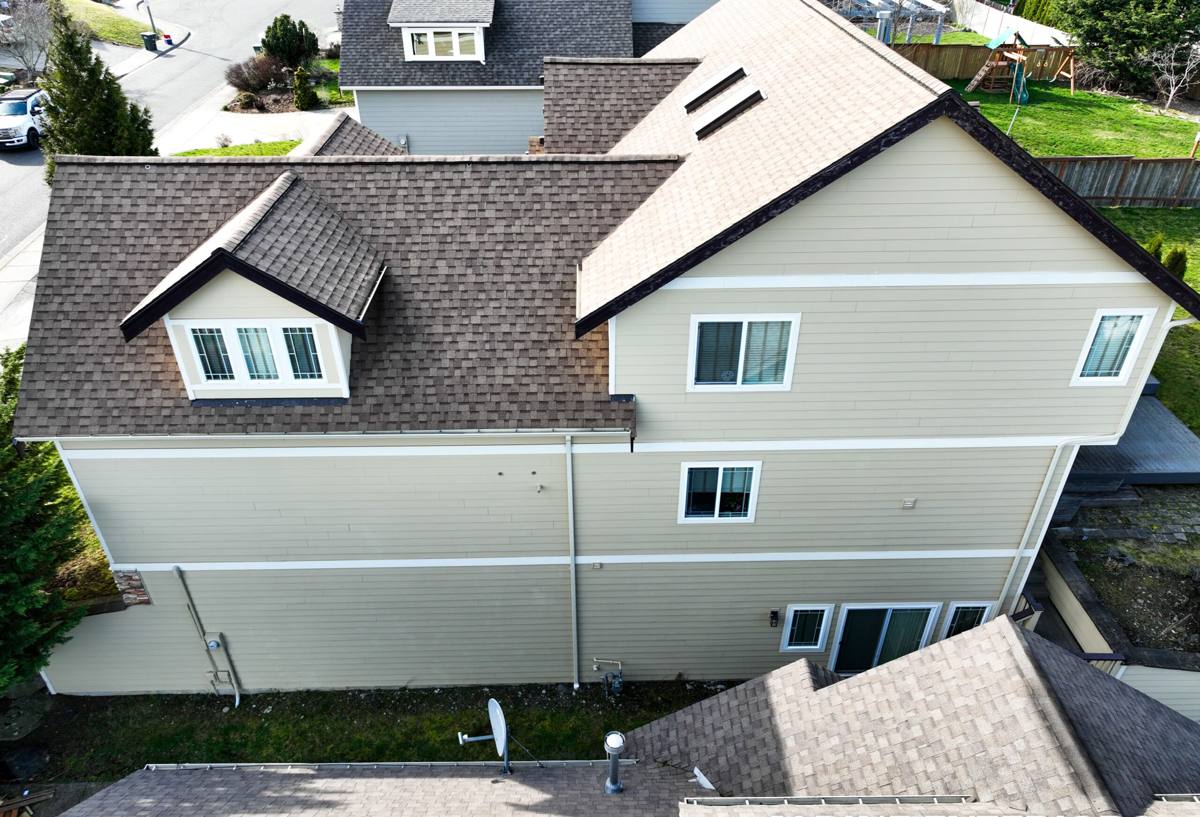
Blaine sits right on the water, close enough to Semiahmoo Bay and the Strait of Georgia that salt-laden air is a daily fact of life, not an occasional nuisance. Add in the Pacific Northwest's long wet season and the shade cover that a lot of Blaine lots have from mature evergreens, and you've got a set of conditions that will find every weak point in a roof faster than almost anywhere else in Whatcom County. Asphalt shingle roofing can absolutely hold up here — it's still the most practical, cost-effective roofing material for most homes in this area — but only when it's specified and installed with this specific climate in mind.
We're based in Birch Bay and work Blaine regularly, so this page isn't a generic rundown of shingle roofing. It's what we've learned about doing this job correctly on homes that sit a few miles from saltwater and under a marine layer that doesn't fully burn off for months at a stretch.
Why Blaine's Climate Is Hard on Shingle Roofs
Salt Air
Airborne salt doesn't just affect metal flashing and fasteners, though that's where it does the most damage. Salt-laden moisture also accelerates the breakdown of the granules on the shingle surface over time, which is what protects the asphalt mat underneath from UV and weather. On a home a mile or two off the water, that granule loss shows up years before it would on a roof further inland.
Driving Rain
This isn't just about total rainfall — it's about wind-driven rain hitting the roof at an angle instead of falling straight down. That kind of weather pushes water up under shingle edges, into nail holes, and along ridge lines, which is exactly where a roof needs to be sealed correctly rather than just covered. A roof that would be fine in a calmer climate can leak here if the underlayment and flashing details were done as an afterthought.
Long Moss Season
Whatcom County's damp, mild stretch from fall through spring is long, and shaded roof sections — north-facing slopes, areas under trees, valleys that don't get direct sun — stay wet for extended periods. That's exactly what moss and algae need to take hold. Once moss gets a foothold, it holds moisture against the shingle surface and can work its way under shingle edges, which shortens the life of the roof well before it's actually worn out structurally.
What a Correctly Built Shingle Roof Needs Here
None of this means asphalt shingles are a poor fit for Blaine. It means the details that get skipped on an easy job in a mild climate can't get skipped here. A roof built for this environment needs:
- Ice-and-water or high-quality synthetic underlayment at eaves, valleys, and around all penetrations — the roof's real waterproofing layer, not the shingles themselves
- Corrosion-resistant fasteners and flashing rated for coastal exposure, not standard-grade hardware that will start rusting within a few seasons
- Proper attic ventilation so moisture from inside the house doesn't condense against the roof deck during our long wet stretches
- Algae-resistant (AR) shingles where the roof has shaded exposure, which is common on Blaine lots with tree cover
- Correct nailing patterns and wind sealing so shingles stay locked down under driving wind and rain rather than lifting at the tabs
- Careful valley and ridge detailing, since these are the spots where wind-driven rain finds its way in first
Skip any one of these and the roof might still look fine for a couple of years. The problems show up later, usually as a slow leak that's hard to trace back to its source.
Choosing the Right Shingle for a Blaine Home
Not every asphalt shingle product is built the same way, and the differences matter more in a coastal, moss-prone climate than they would somewhere drier. Here's how the common categories compare for a home in this area:
| Shingle Type | Typical Lifespan | Wind Rating | Best Fit for Blaine |
|---|---|---|---|
| 3-Tab (economy) | 15–20 years | Lower | Budget projects on low-exposure roofs; less margin against driving rain |
| Architectural / Dimensional | 25–30 years | Higher, with proper nailing | Good standard choice for most Blaine homes; thicker profile handles wind better |
| Premium / Designer | 30+ years | Highest available in shingle products | Exposed, waterfront-adjacent, or high-wind lots where extra margin is worth the cost |
Almost every reputable manufacturer now offers an algae-resistant version of their shingle line, usually using copper-infused granules that resist the blue-green algae staining common in the Pacific Northwest. For a shaded Blaine roof, we treat AR shingles as close to standard rather than an upgrade — the cost difference is small relative to what algae growth costs in cleaning and shortened roof life.
Repair, Recover, or Full Replacement?
Not every roof problem in Blaine calls for a full tear-off. We look at the age of the roof, the condition of the decking underneath, and how widespread the damage is before recommending anything.
Repair
Makes sense when the damage is localized — a section of missing shingles after a windstorm, a flashing leak around a chimney or vent, or isolated moss damage on one slope while the rest of the roof is sound.
Full Replacement
Makes sense when the shingles are near the end of their service life across the whole roof, when there's evidence of water reaching the decking in multiple spots, or when granule loss and cracking are widespread rather than isolated. Patching a roof that's genuinely at the end of its life usually just delays a bigger repair bill.
We'll tell you honestly which category your roof falls into. There's no benefit to us talking a homeowner into a full replacement that a repair would have solved, and we don't do it.
Signs It's Time to Have Your Roof Looked At
- Granules collecting in gutters or at the base of downspouts
- Shingles that look curled, cupped, or cracked, especially on south- and west-facing slopes
- Visible moss or dark streaking on shaded sections of the roof
- Soft spots, sagging, or discoloration on the ceiling or attic decking
- Flashing that looks rusted, lifted, or separated from the roof surface
- Missing shingles or exposed nail heads after a windstorm
- Daylight visible through the roof deck from inside the attic
Our Process for a Blaine Roofing Project
- On-site assessment. We get on the roof, check the attic, and look at flashing, ventilation, and decking condition — not just the shingle surface.
- Honest scope and estimate. You get a clear breakdown of what needs to happen and why, in plain language, with no pressure to upgrade beyond what the roof actually needs.
- Material selection. We walk through shingle options based on your roof's sun and shade exposure, wind exposure, and budget.
- Tear-off and deck inspection (for replacements). Old material comes off and we check the decking underneath for rot or soft spots before anything new goes down.
- Underlayment, flashing, and ventilation done first. These layers matter more than the shingles themselves for keeping water out long-term.
- Shingle installation to manufacturer and wind-rated specifications. Correct nailing pattern, proper exposure, and sealed valleys and ridges.
- Final walkthrough. We show you the completed work and explain anything you should keep an eye on going forward.
Why a Crew That Already Works Blaine Matters
Roofing crews that mostly work drier, inland climates sometimes underbuild for what a coastal Whatcom County roof actually needs — lighter underlayment, standard-grade fasteners, no real plan for moss-prone slopes. That approach might hold up fine somewhere else, but it tends to fail early here.
Because we're based in Birch Bay and work in Blaine regularly, we already know which details matter for homes in this specific stretch of coastline: the exposure patterns, the tree cover that creates shaded, moss-prone roof sections, and the wind-driven rain that comes off the water. That's not something you have to explain to us on day one — it's built into how we scope and install every roof.
Maintenance That Extends Roof Life in This Climate
A well-installed shingle roof in Blaine still needs some upkeep to reach its full service life:
- Keep gutters and downspouts clear so water isn't backing up under the roof edge
- Have moss and debris removed from shaded slopes before it builds up thick enough to hold moisture against the shingles
- Trim back tree limbs that keep sections of roof shaded and damp longer than necessary
- Have flashing and sealant checked periodically, since salt air corrodes these faster than the shingles themselves wear out
- Get a roof looked at after any major windstorm, even if nothing looks obviously wrong from the ground
None of this is expensive or time-consuming, but skipping it in this climate tends to cost more down the line than it would in a drier region.
Get a Straight Answer About Your Roof
Whether you're dealing with a leak, planning ahead for a roof that's getting up in years, or just want an honest read on where things stand, we're happy to take a look. If you're in Blaine and want a free, no-pressure estimate on asphalt shingle roofing — repair or full replacement — fill out the form below and we'll get back to you.