 Birch Bay Siding
 Why Birch Bay Village Roofs Wear Out Faster Than Homes Inland
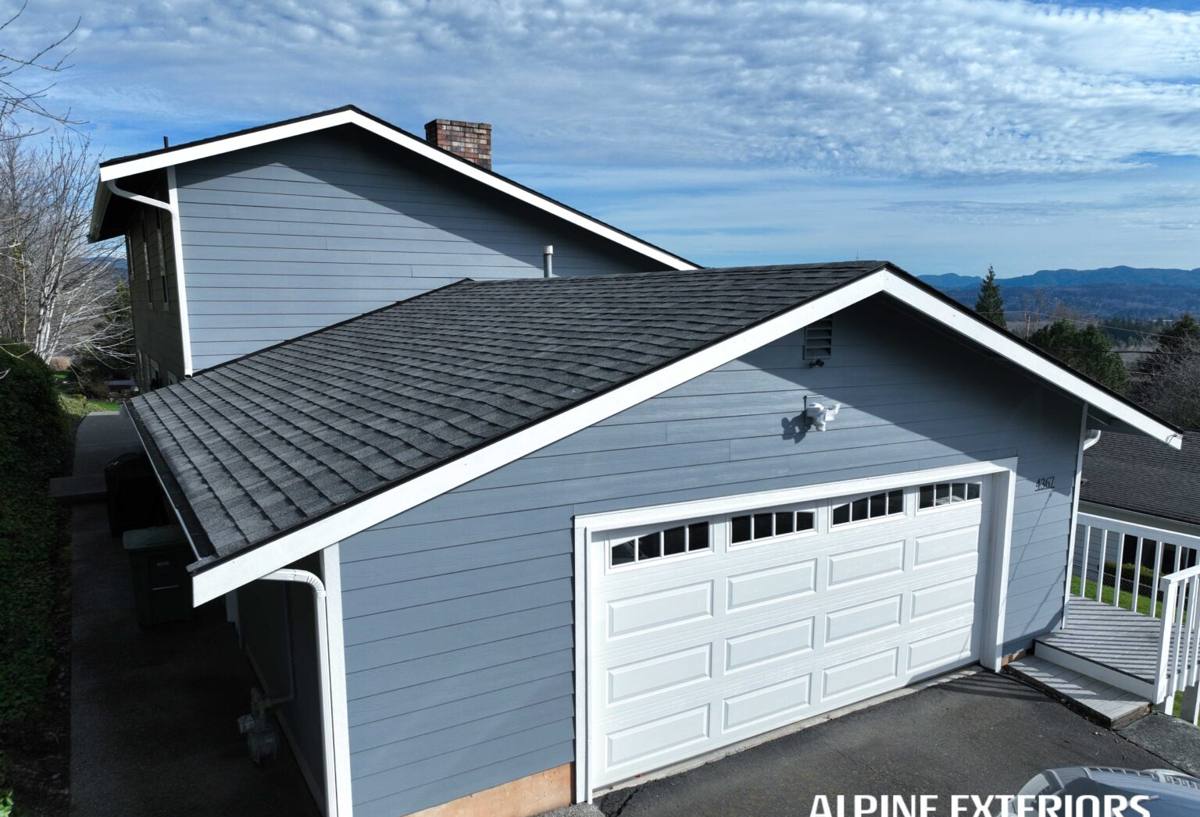
Birch Bay Village sits close enough to the water that the air itself works against a roof. Add Whatcom County's long wet season and heavy tree cover on many lots, and you get a combination that shortens the useful life of a roof compared to a similar home twenty miles inland. If your roof is nearing the end of its service life, or a recent inspection turned up more problems than a patch can fix, it helps to understand what you're actually up against before you pick a replacement roof.
Salt Air and Metal Fastener Corrosion
Salt-laden air off the bay accelerates corrosion on exposed metal — nail heads, flashing edges, vent stacks, and gutter hardware. On a roof that's nearing 20 years old, it's common to find rust bleeding through shingles at fastener points or flashing that's thinned out and started to leak at the seams, even when the shingles themselves still look okay from the ground.
Wind-Driven Rain
Storms coming off the water don't just drop rain straight down — they push it sideways, up under shingle tabs, into valleys, and behind flashing that would be fine in a calmer climate. A roof built for average conditions elsewhere often isn't detailed aggressively enough for wind-driven rain here, which is why underlayment choice and flashing work matter more in Birch Bay Village than they do on a lot of new-roof jobs.
Moss, Shade, and the Long Wet Season
Whatcom County's wet season runs long, and shaded, tree-lined lots common around Birch Bay Village stay damp for extended stretches. That's ideal growing conditions for moss and algae, which hold moisture against the roof surface, lift shingle edges over time, and shorten the life of whatever's underneath. A new roof installed without accounting for this will show moss again within a few seasons.
Signs You Need Replacement, Not Another Repair
Not every roof problem calls for a full tear-off. But there's a point where patching stops making financial sense and starts throwing money at a roof that's already failing underneath. Watch for:
- Granule loss heavy enough that you're finding grit in gutters and downspouts every time it rains
- Shingles that are curling, cupping, or cracking across multiple areas of the roof, not just one spot
- Moss or algae covering more than isolated patches, especially on north-facing or heavily shaded slopes
- Daylight visible through the roof deck from inside the attic, or water stains on attic sheathing
- Soft or spongy decking when walked on, which usually means moisture has already gotten into the wood
- Repeated leaks at the same location after prior repairs
- A roof that's at or past the manufacturer's expected lifespan for its material and local exposure
If you're seeing two or more of these, a replacement roof is almost always the more cost-effective path over the next decade than continuing to chase repairs.
What a Correct New Roof Installation Actually Involves
"New roof" covers a lot of ground, and the difference between a roof that lasts and one that fails early usually comes down to steps that aren't visible once the job is finished.
Tear-Off and Deck Inspection
A full tear-off removes the old roofing down to bare decking. This is the point where hidden damage — soft plywood, rot around chimneys or skylights, prior water intrusion — gets found and fixed before anything new goes down. Skipping this step, or installing over an existing layer, buries problems instead of solving them.
Underlayment and Ice-and-Water Protection
Underlayment is the water-resistant layer between the decking and the visible roofing material. In a climate with sustained wind-driven rain, a synthetic underlayment rated for high wind exposure holds up better than older felt products. Self-adhering ice-and-water shield membrane belongs at eaves, valleys, and around every penetration — these are the areas where wind-driven rain and standing water cause the most leaks.
Flashing at Every Transition
Flashing around chimneys, skylights, vents, and roof-to-wall intersections is where most leaks actually start, not in the open field of the roof. Proper flashing means new metal, correctly lapped and sealed, not reused pieces from the old roof.
Ventilation
A roof needs balanced intake and exhaust ventilation to move moist attic air out before it condenses against the underside of the decking. In a humid coastal climate, poor ventilation is one of the fastest ways to rot a roof deck from the inside, regardless of how good the shingles on top are.
Installing the Roof Covering
Once the deck, underlayment, and flashing are right, the visible roofing material goes on according to the manufacturer's nailing pattern and exposure spacing — details that affect wind resistance and warranty validity, and that are easy to rush on a job that's behind schedule.
Choosing a Roofing Material for a Marine Climate
There isn't one "best" roofing material for every home — it depends on your budget, your roof's exposure, and how much maintenance you're willing to keep up with. Here's how the common options compare for a property like one in Birch Bay Village:
| Material | Typical Lifespan Here | Moss/Algae Resistance | Maintenance | Relative Cost |
|---|---|---|---|---|
| Architectural asphalt shingle | 20-30 years | Moderate; algae-resistant granules help but don't eliminate moss on shaded slopes | Periodic moss treatment and gutter clearing | Lowest to mid |
| Standing seam metal | 40-50+ years | High; smooth surface sheds moisture and resists moss growth | Low; occasional fastener and sealant check | Mid to high |
| Cedar shake | 20-30 years with upkeep | Low without regular treatment; absorbs moisture in a wet climate | High; regular treatment and inspection needed | Mid to high |
We install architectural asphalt shingle and metal roofing on most Birch Bay Village homes. We generally steer homeowners away from cedar shake in this specific setting — not because it's a bad product, but because untreated wood roofing in a marine, high-moisture environment demands a maintenance schedule most owners underestimate, and falling behind on it shortens the roof's life considerably. That's a trade-off worth knowing before you commit, not a mark against the material itself.
What Affects the Cost of a New Roof in Birch Bay Village
Every roof is priced based on its own conditions, but the same factors tend to move the number up or down on jobs in this area:
| Factor | Why It Matters |
|---|---|
| Roof size and pitch | Steeper roofs take longer to work safely and require more fall protection |
| Number of existing layers | Tearing off two layers of old roofing costs more in labor and disposal than one |
| Decking condition | Rotted or soft plywood found during tear-off has to be replaced before installation continues |
| Material choice | Metal and premium shingle lines cost more upfront but shift the cost curve over the roof's life |
| Roof complexity | Valleys, dormers, skylights, and multiple chimneys all add flashing work and time |
| Site access | Tree cover, tight driveways, or difficult staging areas — common on wooded Birch Bay Village lots — affect setup time |
Because of this range of variables, an honest quote requires an on-site look, not a phone estimate. We'll walk you through exactly what's driving your number before any work is scheduled.
How We Handle a New Roof Installation in Birch Bay Village
- Inspection and assessment. We get on the roof, check the decking where accessible, and identify problem areas before recommending replacement over repair.
- Material and scope review. We walk through material options and their trade-offs for your specific roof exposure and budget.
- Permitting. Roof replacement in Whatcom County generally requires a permit; we handle that process as part of the job rather than leaving it to you.
- Site protection. Landscaping, siding, and outdoor living areas get covered before tear-off starts, and we keep the work area contained through demolition.
- Tear-off and deck repair. Old roofing comes off completely, damaged decking gets replaced, and the deck is inspected before anything new goes on.
- Underlayment, flashing, and installation. Ice-and-water shield, underlayment, new flashing, and the roofing material go on in that order, per manufacturer specification.
- Cleanup and walkthrough. We run a magnetic sweep for stray fasteners, clean the site, and walk the finished roof with you before calling the job done.
Why It Matters That We Already Work in Birch Bay Village
A roofing crew that only occasionally works this stretch of Whatcom County is learning the local conditions on your dime. A crew that already works Birch Bay Village regularly knows which slopes hold moss longest, which older homes in the area tend to have undersized attic ventilation, and how much wind-driven rain exposure a given lot actually sees based on its position relative to the shoreline and tree line. That local pattern recognition shows up in better flashing decisions and material recommendations, not just faster scheduling.
It also matters for accountability. A local crew is easy to reach if a question comes up after the job, and has a reputation in the neighborhood worth protecting — which is a different incentive than a company that drives in from out of the area for one job and doesn't come back.
Keeping a New Roof Performing After Installation
A correctly installed roof still needs basic upkeep in this climate to hit its full expected lifespan:
- Clear gutters and downspouts at least twice a year so wind-driven rain has somewhere to go
- Have moss or algae growth treated before it spreads, rather than waiting until it's covering a whole slope
- Trim back tree limbs that keep sections of the roof shaded and damp
- Check flashing and sealant around penetrations every year or two, since these are the most common leak points
- Address any granule loss, lifted shingles, or soft spots promptly rather than letting minor issues sit through another wet season
A new roof is a significant investment, and how it's maintained afterward has almost as much influence on its lifespan as how it was installed.
If your roof is showing its age or you're planning ahead for a replacement, we're happy to take a look and give you a straightforward, no-pressure estimate — just fill out the form below.