 Birch Bay Siding
 Roofing in Bellingham's Marine Climate
Bellingham sits close enough to the water that homes here deal with a specific combination of stresses most inland roofers rarely think about: salt-laden air off the Sound, long stretches of driving rain that can last for days, and a moss season that runs longer than almost anywhere else in the state. None of these problems are dramatic on their own. What they do is work slowly, underneath the surface, until a homeowner notices a stain on a ceiling or a soft spot on the decking and realizes the roof has been failing for longer than they thought.
A roof replacement done right in this part of Whatcom County has to account for all three factors at once — not just swap old shingles for new ones. That means paying attention to ventilation, moisture barriers, fastener choice, and moss-resistant detailing, not only the shingle color on the sample board.
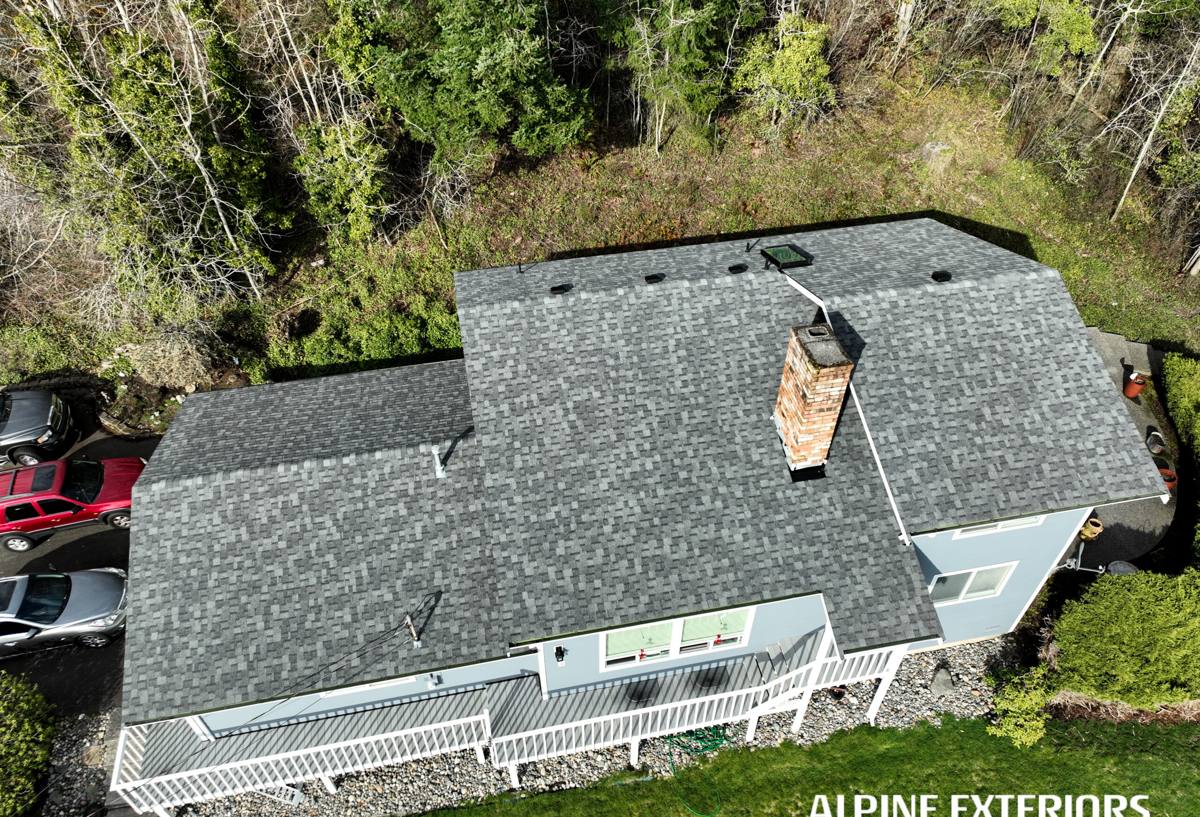
Signs a Bellingham Roof Is Ready for Replacement
Roofs rarely fail all at once. They give warnings first, and in a wet coastal climate those warnings can be subtle. Homeowners in the Bellingham area should watch for:
- Granule loss showing up in gutters or at the base of downspouts
- Shingles that are cupping, curling, or lifting at the edges
- Dark streaking or thick moss growth, especially on north-facing slopes that stay shaded and damp
- Soft or spongy spots when walking the roof, which usually means the decking underneath has taken on moisture
- Daylight visible through the attic roof boards, or damp insulation after a hard rain
- A roof that's simply reaching the end of its expected service life, even if it looks okay from the ground
Any one of these on its own might mean a repair is enough. Several at once, or a roof past 20-25 years old, usually points toward replacement being the more honest recommendation — repairs on an aging roof in this climate tend to become a pattern rather than a fix.
What a Correct Roof Replacement Actually Involves
A roof replacement is more than removing old material and nailing down new shingles. In a climate like ours, the layers underneath the shingles do as much work as the shingles themselves.
Full Tear-Off and Deck Inspection
We remove the old roofing down to the decking rather than layering over it. That's the only way to actually see the condition of the plywood or plank decking underneath — and after years of moisture exposure, it's common to find sections that have softened and need to be replaced before anything new goes down. Roofing over a compromised deck just hides the problem for a few more years.
Moisture Barrier and Underlayment
Given how much rain this region sees, the underlayment matters as much as the shingle itself. We use ice-and-water shield or high-quality synthetic underlayment at vulnerable areas — eaves, valleys, and roof penetrations — where wind-driven rain is most likely to find a way in. This layer is what keeps a roof watertight even if a shingle is ever damaged or lifted in a storm.
Ventilation
Proper intake and exhaust ventilation keeps moist attic air moving instead of condensing against the underside of the deck. In a damp climate, poor ventilation is one of the most common hidden causes of premature deck rot and mold — and it's invisible from the outside, which is exactly why it gets overlooked so often.
Flashing and Valleys
Flashing around chimneys, skylights, and roof-to-wall transitions, along with valley metal where two roof planes meet, is where the majority of leaks actually start — not in the open field of shingles. We replace flashing rather than reusing old pieces, and we detail valleys so water sheds cleanly instead of pooling or backing up under moss buildup.
Roofing Material Comparison for Whatcom County Homes
There's no single "best" roofing material — the right choice depends on budget, how the home is used, and how much long-term maintenance a homeowner wants to take on. Here's an honest comparison of the materials we most often discuss with Bellingham-area homeowners:
| Material | Moss & Moisture Resistance | Salt Air Durability | Typical Lifespan | Maintenance |
|---|---|---|---|---|
| Standard 3-tab asphalt shingle | Fair — needs regular moss treatment | Good with proper fasteners | 15-20 years | Low to moderate |
| Architectural (laminate) asphalt shingle | Good — heavier profile sheds water better | Good | 25-30 years | Low to moderate |
| Standing-seam metal | Excellent — moss struggles to gain a foothold | Very good with coated fasteners and finish | 40-50+ years | Low |
| Cedar shake | Poor without diligent upkeep in a wet climate | Fair — needs regular treatment | 20-30 years with upkeep | High |
We steer most Bellingham homeowners toward architectural asphalt or standing-seam metal, not because other materials are bad products, but because both hold up well against the specific combination of rain and moss this region produces without demanding constant attention. Cedar shake can still be the right call for homeowners who love the look and are committed to the maintenance schedule it requires — that's a legitimate trade-off, not a mistake, as long as it's made with eyes open.
What Affects the Cost of a Bellingham Roof Replacement
Every roof is different, so we don't quote sight-unseen numbers — but the main cost drivers are consistent from job to job:
| Factor | Why It Matters |
|---|---|
| Roof size and number of planes | More squares and more valleys/hips mean more material and labor |
| Roof pitch and access | Steep or hard-to-access roofs take longer and require more safety setup |
| Decking condition | Rotted sections found during tear-off add material and labor to replace |
| Material choice | Asphalt, metal, and specialty materials carry very different price points |
| Ventilation and flashing needs | Homes with inadequate original ventilation may need added intake/exhaust vents |
Most asphalt shingle roof replacements on typical Bellingham-area homes fall into a broad mid-range cost bracket, with metal roofing running higher up front but lower over its much longer lifespan. We'll walk through the specific numbers for your roof during an on-site estimate rather than guessing over the phone.
Our Roof Replacement Process
- On-site inspection — we get on the roof (and in the attic when possible) to assess decking, ventilation, flashing, and current material condition.
- Written estimate — a clear breakdown of material options, scope of work, and cost, with no pressure to decide on the spot.
- Scheduling around weather — we plan tear-off days around the forecast so your home isn't left exposed during a rain system, which matters more here than in drier climates.
- Tear-off and deck repair — old roofing removed, decking inspected, and any soft or damaged sections replaced.
- Underlayment, flashing, and ventilation installed — the layers that actually keep water out over the long run.
- New roofing installed to manufacturer specifications, including proper fastening for coastal wind exposure.
- Final walkthrough — cleanup, magnetic sweep for stray fasteners, and a review of the finished roof with the homeowner.
Why a Birch Bay-Based Crew Matters for Bellingham Homes
We're based in Birch Bay, and Bellingham is well within the part of Whatcom County we work regularly. That local footprint means a few practical things for homeowners here. We're familiar with how local building departments handle roofing permits and inspections, so there are fewer surprises mid-project. We know which detailing choices actually hold up against the moss and rain patterns specific to this stretch of coastline, because we see the results on roofs we've worked on nearby, not just in a manufacturer's brochure. And if a warranty question or a storm-related concern comes up after the job is done, we're a short drive away rather than a call center in another state.
None of that replaces doing the work correctly the first time — but it does mean the crew standing on your roof already understands the climate it has to survive.
Roof Replacement Checklist Before You Decide
- Get a written estimate that itemizes materials, not just a lump-sum number
- Confirm the underlayment and flashing plan, not just the shingle brand
- Ask how attic and roof ventilation will be handled, especially if the home currently has moisture or moss issues
- Verify decking repair is priced as a contingency, not silently skipped if found during tear-off
- Check that the contractor is licensed and insured to work in Washington
- Ask how the crew protects landscaping, siding, and gutters during tear-off
- Get manufacturer warranty terms in writing, along with the workmanship warranty
Get a Free, No-Pressure Estimate
If your Bellingham-area roof is showing its age, moss buildup, or signs of moisture getting in, it's worth having a local crew take a look before small problems turn into deck repairs or interior damage. We'll give you a straightforward, no-pressure assessment and a written estimate — just fill out the form below to get started.