 Birch Bay Siding
 Why Bellingham's Climate Is Hard on Ordinary Siding
Bellingham sits close enough to the water that homes take a steady beating from moisture in three different forms: salt-laden air off the bay, wind-driven rain that hits walls sideways instead of straight down, and a long, damp shoulder season every fall and spring where surfaces barely get a chance to dry out. Add Whatcom County's mossy, shaded lots — tall firs and cedars blocking sun on north and west-facing walls for much of the year — and you have conditions that punish siding materials that depend on paint film or surface coatings to keep water out.
Wood siding swells, checks, and eventually rots at butt joints and lower courses. Vinyl gets brittle and can warp where sun and wind exposure vary across a wall. Engineered wood products that rely on resin-saturated strands are vulnerable at any point where the factory seal gets breached — a nail hole, a cut edge, a scratch from a ladder. None of that is a knock on any one brand; it's just physics. Water finds the weak point, and in a marine climate like Bellingham's, water has a lot of chances to find it.
That's the backdrop for every fiber cement job we do in this area. The material itself, James Hardie fiber cement, is cement-based rather than wood-based, so it doesn't absorb and swell the way organic materials do. But the product is only half the equation — how it's installed determines whether a Bellingham home actually gets the protection the material is capable of providing.
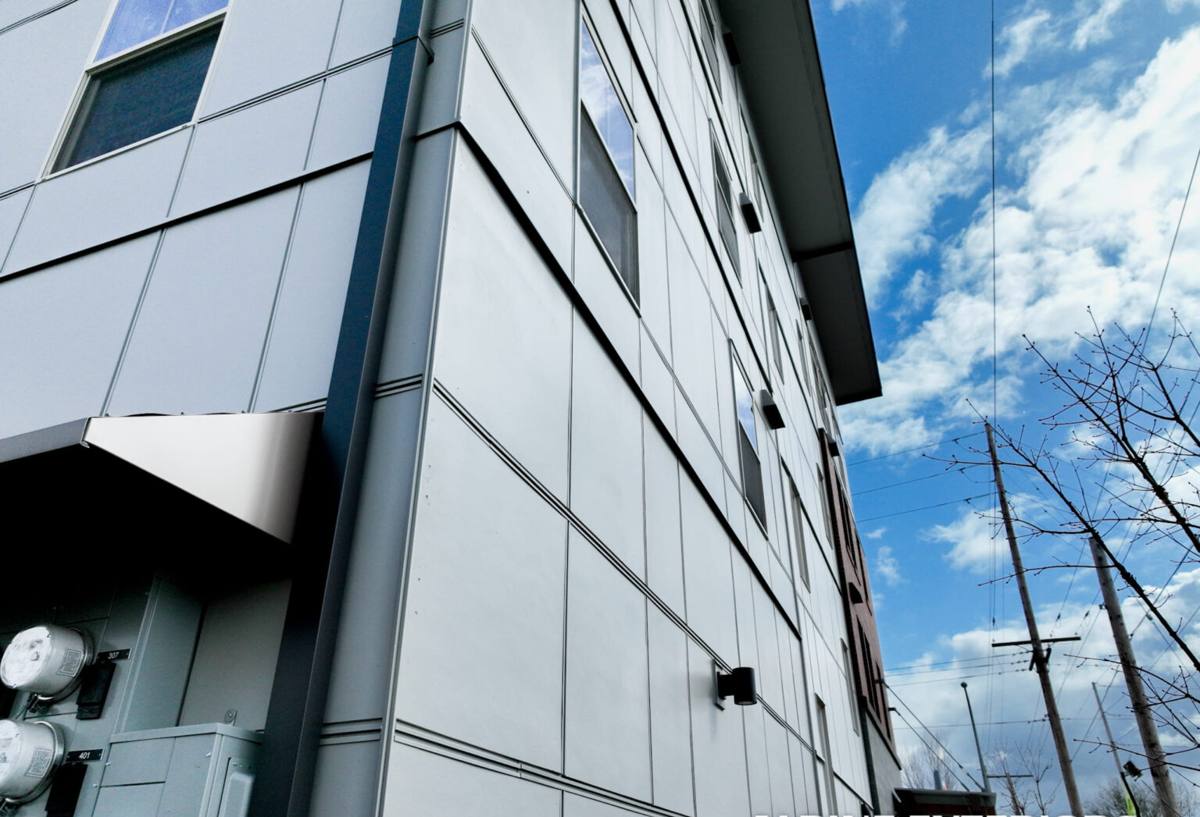
What "Fiber Cement Siding" Actually Means
Fiber cement is a mix of Portland cement, sand, and cellulose fiber, cured into a rigid, dimensionally stable board. It doesn't expand and contract with humidity the way wood does, it won't rot, and it's non-combustible — a real consideration for homes near dry brush or wooded lots common throughout Whatcom County. We install James Hardie exclusively, in the lap, panel, and shingle profiles most common on homes in this area, finished with the factory ColorPlus coating rather than field-applied paint.
That factory finish matters more here than it would in a drier climate. A coating baked on in a controlled factory environment resists fading and cracking far better than paint applied on-site, where humidity and temperature swings during the job can affect cure quality. Less field-applied paint also means fewer future repaint cycles — a real cost consideration when a house is exposed to salt air and rain for eight or nine months of the year.
What a Correct Installation Involves in This Climate
Fiber cement siding fails prematurely almost never because of the board itself — it fails because of how it was hung. In a high-moisture, salt-air environment like Bellingham, a handful of details separate a siding job that lasts decades from one that causes problems in five years.
Drainage plane and rain screen gap
Siding is not the primary waterproofing layer on a house — the weather-resistive barrier behind it is. Our job is to make sure water that gets past the siding (and some always will, in driving rain) has somewhere to go. That means a correctly lapped house wrap or building paper, proper flashing at every window, door, and horizontal transition, and where conditions call for it, a drainage gap that lets bulk water and moisture vapor escape instead of sitting against the sheathing.
Fastening and clearances
James Hardie publishes specific fastener patterns, nailing zones, and minimum clearances — siding-to-grade, siding-to-roofline, siding-to-deck — and those specs exist for a reason. Too little clearance at grade or at a deck ledger is one of the most common causes of moisture intrusion we see on older homes in this region, siding included.
Joints and caulking
Butt joints, corners, and penetrations (hose bibs, vents, light fixtures) are where most water intrusion actually starts. We follow Hardie's joint treatment and sealant guidance rather than closing every gap with caulk and calling it done — over-caulking can trap moisture behind the board just as easily as an open gap can let it in.
Cut edges
Every cut edge on a fiber cement board needs to be primed or sealed before it's closed in. An unsealed cut edge is a point where the board can wick moisture, and on a house exposed to driving rain off the water, those edges take a direct hit.
Our Process for a Bellingham Siding Job
- On-site assessment — we walk the exterior, check the condition of existing sheathing and any evidence of past moisture damage, and note exposure differences between the water-facing side of the house and more sheltered walls.
- Scope and product selection — we confirm profile (lap, panel, or shingle), color line, and trim details, and account for any repair work the sheathing or framing needs before new siding goes on.
- Tear-off and substrate prep — old siding comes off, damaged sheathing is repaired, and the weather-resistive barrier and flashing are installed or corrected before a single piece of Hardie board goes up.
- Installation to manufacturer spec — correct nailing pattern, clearances, joint treatment, and edge sealing throughout, not just on the visible parts of the house.
- Final detailing and walkthrough — caulking, touch-up paint at fastener heads where needed, and a walk-through so you know what to expect from the material going forward.
What Affects the Scope of Your Job
| Factor | Why It Matters in Bellingham |
|---|---|
| Existing siding material | Wood or older engineered siding often hides moisture damage to sheathing that has to be repaired before re-siding. |
| Exposure to prevailing wind and rain | Walls facing the water or open exposure typically need more attention to flashing and joint detail than sheltered walls. |
| Shade and moss exposure | North-facing and tree-shaded walls stay damp longer, which affects both prep work and long-term maintenance needs. |
| Trim and architectural detail | Homes with more corners, dormers, and penetrations require more flashing and joint work per square foot of siding. |
| Access and site conditions | Sloped lots, landscaping, and proximity to neighboring structures affect staging and can add time to the job. |
Living With Fiber Cement Siding in a Marine Climate
One advantage of fiber cement in a climate like this is how little it asks of a homeowner once it's installed correctly. It doesn't need re-staining or the periodic recaulking that wood siding demands. But "low maintenance" isn't "no maintenance," especially with Whatcom County's long moss season working against you.
Moss and organic growth
Moss and algae can grow on any siding surface in shaded, damp conditions, fiber cement included. It's a surface issue, not a structural one on a correctly installed Hardie board, but it's worth an occasional gentle rinse on shaded walls to keep growth from building up and holding moisture against the surface longer than it needs to.
Salt air near the water
Salt air is harder on metal components — fasteners, flashing, hardware — than it is on the fiber cement board itself. This is part of why fastener choice and flashing material matter as much as the siding brand: corrosion-resistant materials in the right places keep small metal failures from becoming siding problems years down the road.
Routine checks
- Look at caulk lines around windows, doors, and penetrations once a year for cracking or separation
- Check clearance at grade and decks hasn't been reduced by landscaping, mulch buildup, or deck additions
- Rinse shaded, moss-prone walls periodically rather than letting growth build up
- Watch for any staining or discoloration at joints, which can be an early sign a joint needs attention
- Have gutters and downspouts checked — misdirected roof water is a common cause of localized siding problems
Why It Matters That We Already Work in Bellingham
Siding installation guidance is written for a national audience, but the details that actually matter — how much clearance to leave at grade on a sloped Whatcom County lot, which walls need extra attention to flashing because of prevailing weather, how a shaded lot changes the maintenance conversation — come from working on homes in this specific area, not from a spec sheet alone. A crew that installs siding in dry inland climates and a crew that works the Birch Bay and Bellingham area year-round are making different judgment calls on the same product, because the conditions aren't the same.
We install James Hardie fiber cement exclusively. Not because it's the only siding product on the market, but because after years of exterior work in this specific climate, it's the one we're willing to stand behind on homes that face salt air, driving rain, and a moss season that doesn't let up for months at a time.
Questions to Ask Before Hiring a Fiber Cement Installer in Bellingham
- Do you follow James Hardie's published fastening, clearance, and joint specifications, and can you explain them?
- How do you handle flashing and drainage detail differently on water-facing versus sheltered walls?
- What's your approach to sealing cut edges before they're closed in?
- Do you inspect and repair sheathing before installing new siding, or just cover what's there?
- Can you walk me through how the warranty works if something goes wrong with installation versus the material itself?
If you're weighing a siding replacement on a Bellingham home, we're happy to take a look and give you a straightforward, no-pressure estimate — including what we see with your specific exposure, existing siding condition, and site. There's a short form below to get started.