 Birch Bay Siding
 Roofing in Custer Has Its Own Set of Problems
Custer sits inland from Birch Bay but still lives inside the same weather system: marine air rolling in off the Salish Sea, long wet stretches from fall through spring, and the kind of shaded, tree-lined lots that keep roofs damp long after a storm has passed. That combination is hard on asphalt shingles in ways that don't show up in a roofing brochure written for a drier climate.
We work on roofs across Whatcom County, and Custer's mix of rural lots, mature trees, and proximity to Birch Bay's salt-laden air means we see the same failure patterns again and again: moss working into shingle mat under the tab line, granule loss on north-facing slopes that never fully dry, and nail pops from decades of expansion and contraction in a house that's rarely bone dry. None of that means asphalt shingles are a bad choice here — they're still the most practical, cost-effective option for most Custer homes. It means the installation and the product choice have to account for the climate instead of ignoring it.
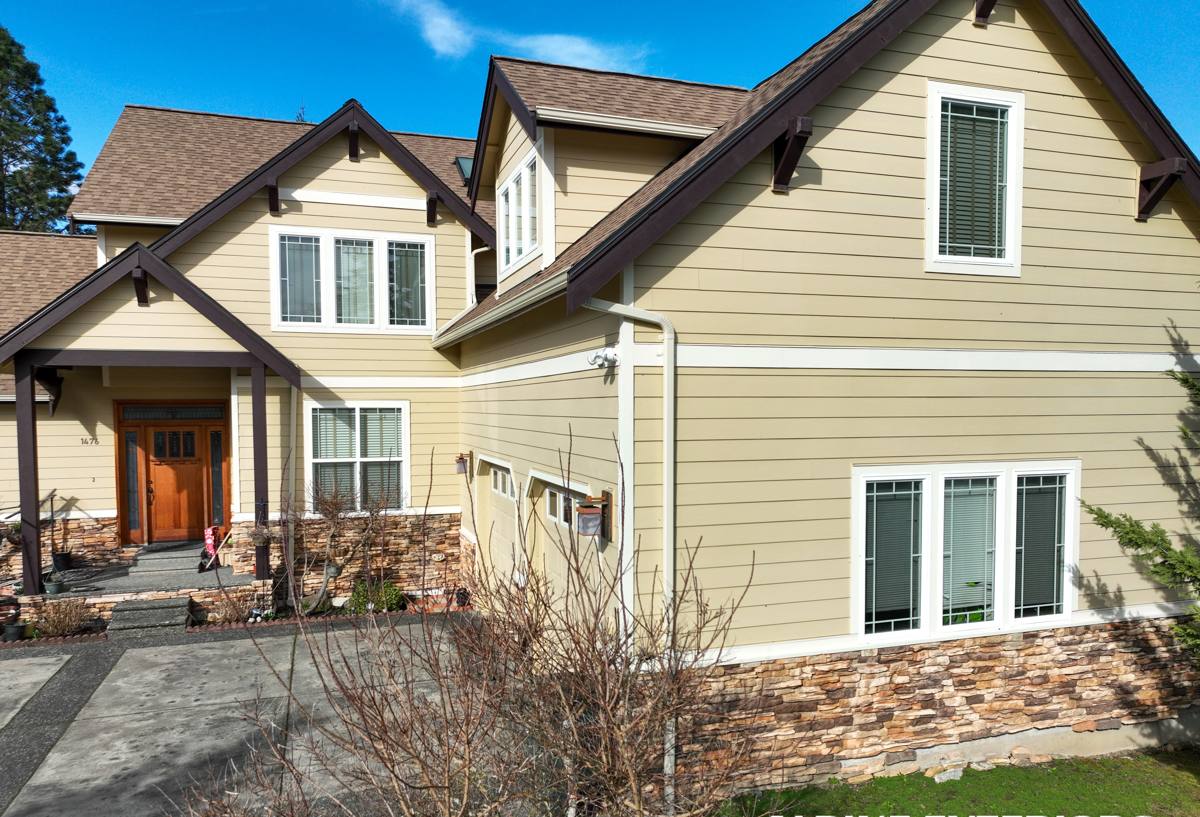
What Salt Air, Rain, and Moss Actually Do to a Roof
Moisture That Never Fully Leaves
A roof in a drier inland climate gets to dry out between rain events. In Custer, especially on shaded or north-facing slopes, that drying window is a lot shorter. Shingles that stay damp longer break down faster, and the felt or synthetic underlayment beneath them is doing more of the waterproofing work for more of the year.
Moss and Organic Growth
Moss doesn't just sit on top of a roof — it roots into the granule surface, holds moisture against the mat, and lifts shingle edges as it grows. Left alone through a full moss season, it can shorten the life of an otherwise sound roof by years. Tree cover common on Custer lots makes this worse by dropping debris that feeds moss and algae growth.
Wind-Driven Rain
Storms off the water don't always come straight down. Wind-driven rain finds any weak point in flashing, fastening, or shingle overlap, which is why the details at valleys, walls, and penetrations matter more here than the shingle brand itself.
What a Correct Asphalt Shingle Roof Involves
A shingle roof is only as good as what's underneath it and around it. The parts that get skipped on a rushed job are exactly the parts that fail first in this climate.
Deck Inspection and Prep
Before anything goes down, the roof deck gets checked for soft spots, delamination, or rot — common where a roof has been leaking slowly for a while without an obvious sign inside the house. Bad decking gets replaced, not covered over.
Underlayment
In a climate this wet, underlayment is not a formality. Synthetic underlayment or a high-quality felt, installed with proper overlap, gives the roof a second line of defense if wind or ice ever gets under a shingle tab.
Ice and Water Barrier at Vulnerable Points
Eaves, valleys, and areas around chimneys and skylights get a self-adhering membrane. These are the spots where wind-driven rain and standing water cause the most damage, and they're the spots most likely to be shortcut on a cheap install.
Flashing
Step flashing at walls, valley flashing, and proper counter-flashing at chimneys are what actually keep water out — shingles alone don't do it. Reused or rusted flashing is one of the most common causes of a "mystery leak" we get called out for.
Ventilation
A roof that can't breathe traps heat and moisture in the attic, which shortens shingle life from underneath and can encourage the kind of condensation and mold issues nobody wants to discover during a remodel. Balanced intake and exhaust ventilation matters as much as anything on the surface.
Nailing Pattern
Manufacturer-specified nailing — correct count, correct placement — is what keeps shingles attached through real wind events, and it's also what most warranties actually require, whether or not the installer mentions it.
Choosing a Shingle for This Climate
Not every shingle line performs the same way in a wet, shaded, moss-prone environment. The table below covers the trade-offs we walk homeowners through.
| Shingle Type | Typical Lifespan | Performs Well When |
|---|---|---|
| 3-tab (standard) | 15–20 years | Budget is the priority and the roof is simple, sunny, and well-ventilated |
| Architectural / dimensional | 25–30 years | Most Custer homes — better wind rating, thicker mat resists moisture longer |
| Algae-resistant (AR) shingles | Same as base line + treated surface | Shaded lots, north-facing slopes, tree cover — common across Custer |
| Impact-rated (Class 4) | Same as base line + reinforced mat | Homes wanting extra durability against debris and hail, sometimes with insurance discounts |
For most Custer properties, we lean toward architectural shingles with an algae-resistant surface simply because of how much tree cover and shade the area gets. It's a professional judgment call based on how the roof will actually age here, not a push toward the most expensive option.
Signs a Custer Roof Needs Attention
- Moss visible along tab edges, ridges, or in valleys — even a thin green line is worth checking
- Granules collecting in gutters or at the base of downspouts
- Shingle edges that look curled, cupped, or lifted
- Dark streaking on north-facing slopes that doesn't wash off in rain
- Soft spots or sagging visible from the ground
- Daylight or water staining in the attic near valleys, chimneys, or vents
- Nail heads visible through the shingle surface
Any one of these on its own might not mean much. Two or three together, especially heading into another wet season, are worth a real inspection rather than a guess.
How Our Process Works
We keep the process straightforward because homeowners deserve to know what's happening on their own roof, in this order:
- On-site inspection — we walk the roof or use a drone where access is limited, and check the deck, flashing, and ventilation, not just the shingle surface
- Honest assessment — repair versus replacement, explained in plain terms with the reasoning behind it
- Written estimate — materials, scope, and timeline spelled out, no surprise add-ons
- Prep and protection — landscaping, siding, and gutters protected before tear-off starts
- Tear-off and deck check — old material removed, deck inspected and repaired as needed
- Underlayment, flashing, and shingle install — done to manufacturer spec, not shortcuts
- Cleanup — magnetic sweep for nails, full debris haul-away
- Final walkthrough — so you can see the finished work before we consider the job done
Why a Crew That Already Works Custer Matters
Roofing crews that mostly work drier, more sheltered inland climates sometimes underbuild for what Whatcom County actually throws at a roof over a Pacific Northwest winter. A crew that's already worked on homes in and around Birch Bay and Custer knows which slopes hold moss longest, which flashing details tend to fail first in wind-driven rain, and how to size ventilation for a roof that's rarely getting a long, dry stretch to recover in. That familiarity shows up less in the sales pitch and more in the parts of the job nobody sees once the shingles are down — the underlayment lap, the valley flashing, the nailing pattern.
It also means faster response if something does come up after the install. A local crew isn't driving in from out of the area for a warranty check or a storm-damage look.
What Affects the Cost of a New Roof
| Factor | Why It Matters |
|---|---|
| Roof size and pitch | Steeper roofs take longer and require more safety setup |
| Number of layers to remove | Tear-off of old layers adds labor and disposal cost |
| Deck condition | Rot or soft decking found during tear-off requires repair before shingles go down |
| Shingle class chosen | Architectural, algae-resistant, and impact-rated products cost more than standard 3-tab |
| Flashing and ventilation needs | Older homes often need flashing and vent upgrades to meet current standards |
| Roof complexity | Valleys, dormers, skylights, and chimneys all add labor time |
We give a written, itemized estimate up front so you know exactly what's driving the number — not a lump sum with no explanation behind it.
Simple Maintenance That Extends the Life of Your Roof
- Clear moss and debris from valleys and shaded slopes at least once a year, ideally before winter
- Keep gutters clean so water isn't backing up under the shingle edge
- Trim back overhanging branches to cut down shade and debris buildup
- Check the attic occasionally for staining, daylight, or musty smell
- Have flashing checked after any major windstorm
- Don't pressure-wash a shingle roof — it strips granules and shortens its life
If you're in Custer and dealing with moss buildup, an aging roof, or just want an honest read on how many years you've got left before replacement makes sense, we're glad to take a look. Estimates are free and there's no pressure to move forward on our timeline instead of yours — use the form below to get started.