 Birch Bay Siding
 Roofing on the Cherry Point Shoreline: A Different Kind of Wear
Cherry Point sits right up against the water in Whatcom County, and that location shapes everything about how a roof ages here. Homes a few miles inland in Birch Bay or Blaine deal with a milder version of the same weather. Out on the Cherry Point shoreline, the salt air is more concentrated, the wind off the strait hits harder, and shaded, damp roof sections stay wet longer into the season. An asphalt shingle roof that would coast through 20-plus years in a drier inland climate can show real wear a decade sooner here if it wasn't built for these conditions from the start.
This isn't a reason to avoid asphalt shingles — they're still one of the most practical, cost-effective roofing options for this area when installed correctly. It's a reason to be deliberate about the shingle class, the underlayment, the flashing details, and the ventilation, because those choices matter more here than they do twenty miles inland.
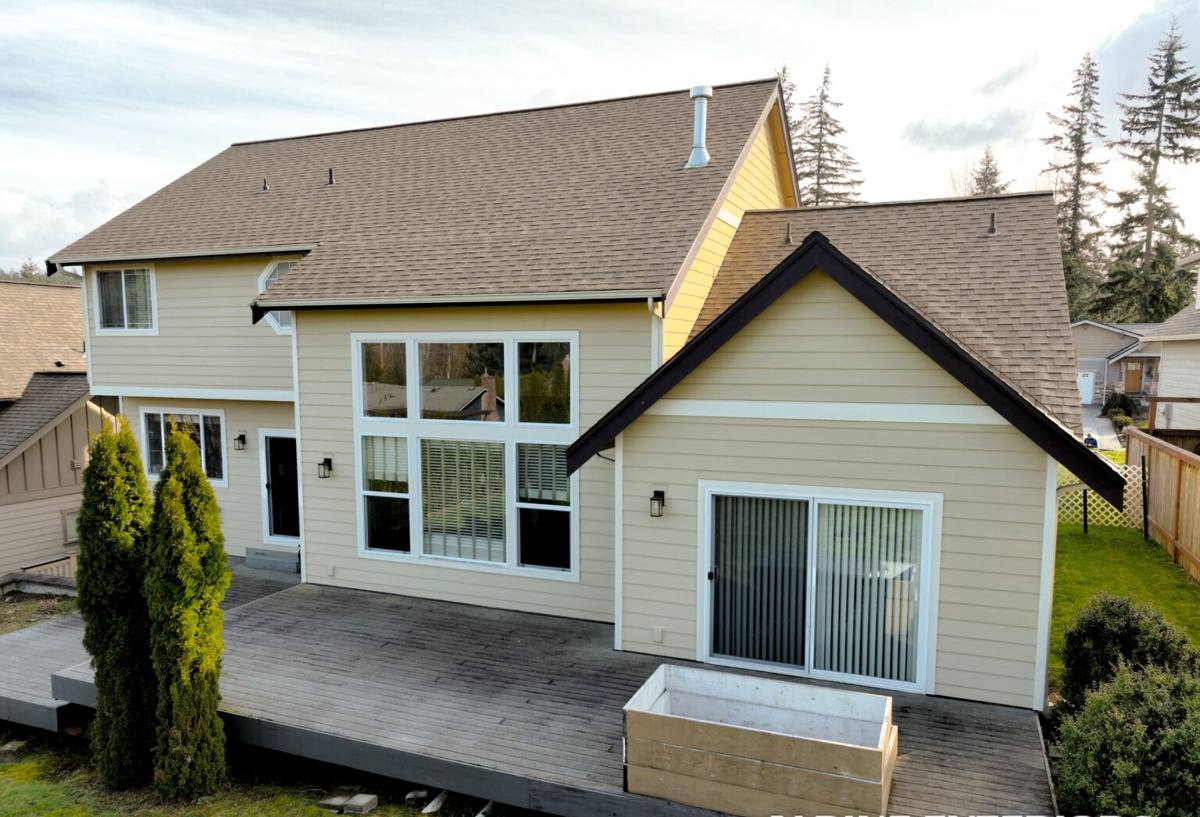
What Salt Air, Rain, and Moss Actually Do to a Shingle Roof
Salt Air and Metal Fasteners
Airborne salt speeds up corrosion on anything metal — nail heads, flashing, drip edge, vent stacks, and gutter hardware. On a roof built with standard-grade fasteners and flashing, that corrosion can loosen nail seals and pit metal edges years before the shingles themselves are due for replacement. The fix isn't complicated: use fasteners and flashing rated for coastal exposure, and don't cut corners on the metal components just because they're a smaller line item than the shingles.
Wind-Driven Rain
Storms coming off the strait tend to push rain sideways, not straight down. That matters at every seam, valley, and edge of the roof, because wind-driven rain finds gaps that a straight-down rain never would. Shingle seal strips, valley construction, and edge flashing all need to account for rain moving horizontally under pressure, not just water running off a slope.
Moss and Sustained Moisture
Whatcom County's long wet season means north-facing slopes, shaded valleys, and areas under tree cover stay damp for extended stretches. That's exactly the environment moss and algae need to take hold. Once moss establishes on a shingle roof, it holds moisture against the surface, works into the shingle edges, and can lift tabs over time — which is how a moss problem turns into a leak problem.
What a Properly Installed Roof Needs to Handle This Climate
A shingle roof built for Cherry Point conditions isn't a different product than what's installed elsewhere — it's the same asphalt shingle system, built with more attention to the details that salt, wind, and moisture actually attack. That means:
- Corrosion-resistant fasteners and flashing throughout, not just on street-facing sections
- Full ice-and-water shield membrane at eaves, valleys, and around every roof penetration
- Shingles rated for the wind exposure this stretch of coastline actually sees
- Balanced intake and exhaust ventilation to keep the underside of the deck dry
- Valley and edge details sealed against sideways-driven rain, not just vertical runoff
Skip any one of these and the roof will likely still look fine for a few years. The failures that come from cutting corners on coastal work tend to show up as leaks, granule loss, and moss colonization well before the shingle's rated lifespan — not as a dramatic, obvious failure right after installation.
Choosing the Right Shingle for This Climate
Not every asphalt shingle product is a good fit for a shoreline property. The table below covers the main categories and how they hold up under Cherry Point conditions specifically.
| Shingle Type | Wind Performance | Moss/Algae Resistance | Best Fit Here |
|---|---|---|---|
| Standard 3-tab | Lower wind rating | None built in | Budget projects on sheltered slopes only |
| Architectural/laminate | Higher wind rating, thicker profile | Varies by line | Most Cherry Point homes — better durability margin |
| Algae-resistant (AR) laminate | Higher wind rating | Copper/ceramic granules resist staining | Shaded or north-facing sections, tree-covered lots |
| Impact-rated laminate | Highest wind rating | Often paired with AR granules | Fully exposed, wind-heavy sites near the water |
For most Cherry Point homes, an architectural shingle with algae-resistant granules is the practical middle ground — it costs more up front than 3-tab, but the wind rating and moss resistance directly address the two things that shorten roof life fastest in this area. On fully exposed lots close to the shoreline, stepping up to an impact- and wind-rated line is worth the conversation even if it adds to the material cost.
Cost Factors Worth Knowing
Roofing costs vary by roof size, pitch, layer removal, and access — we won't quote a number without seeing the roof. But a few things reliably move the price on coastal jobs specifically: the amount of valley and flashing work, whether the existing roof needs a full tear-off versus a straightforward re-cover, and whether ventilation upgrades are needed to correct an existing moisture problem. Homes with more roof penetrations (skylights, multiple vent stacks, chimneys) also cost more to flash correctly, because each penetration is a place where wind-driven rain can get in if it's not detailed properly.
The Layers You Don't See: Underlayment, Flashing, and Ventilation
The shingles get all the attention because they're what you see from the driveway, but the components underneath do most of the actual work of keeping water out.
Underlayment
A synthetic underlayment with a self-adhering ice-and-water membrane at eaves, valleys, and penetrations gives the roof a second line of defense if wind ever drives rain past the shingle seal — which, on this stretch of coastline, it eventually will during a hard storm.
Flashing
Step flashing at walls, valley flashing, and drip edge all need to be corrosion-resistant and properly lapped, not just caulked in place. Caulk is a temporary fix; correctly lapped and fastened flashing is the permanent one. This is one of the most common places we find shortcuts on older Cherry Point roofs during inspections.
Ventilation
Balanced ventilation — enough intake at the eaves and exhaust at the ridge — keeps the attic and roof deck dry from the inside, which matters as much as keeping rain out from the outside. A roof deck that stays damp from trapped indoor moisture rots from underneath, and that kind of damage often isn't visible until the shingles above it are already failing.
How We Handle a Cherry Point Roofing Project
- On-site inspection. We check the deck condition, existing ventilation, flashing details, and any moss or moisture damage before recommending anything.
- Straightforward scope and options. You get a clear explanation of what the roof actually needs — tear-off versus re-cover, shingle class options, and why — not just a single number.
- Tear-off and deck check. If we're removing existing shingles, we inspect the deck underneath for soft spots or rot and address them before anything new goes down.
- Underlayment and flashing first. Ice-and-water membrane, synthetic underlayment, and all flashing go in before a single shingle is installed.
- Shingle installation to manufacturer spec. Correct nailing pattern, exposure, and sealing — the details that determine whether the wind rating actually holds up in a real storm.
- Ventilation check and correction. We confirm intake and exhaust are balanced, and correct it if the existing setup is inadequate.
- Final walkthrough. We go over the finished roof with you before calling the job done.
Signs Your Cherry Point Roof Needs Attention
A few things worth checking from the ground or during a routine walk around the property:
- Dark streaking or green/black patches on north-facing or shaded slopes — early algae or moss growth
- Granules collecting in gutters or at downspout outlets
- Curling, cupping, or lifted shingle edges, especially on wind-exposed sections
- Rust staining around nail heads, vent stacks, or flashing
- Soft or spongy spots when walking the roof, or sagging visible from the ground
- Daylight visible through the roof deck from inside the attic
- Musty odor or visible moisture in the attic, which can point to a ventilation or flashing issue before it shows up as a ceiling stain
Any one of these on its own isn't necessarily an emergency, but they're worth having looked at before the next wet season rather than after a leak shows up inside the house.
Keeping a Shingle Roof Healthy in a Moss-Prone Climate
Even a well-built roof needs some upkeep in this environment. Keeping gutters and valleys clear of debris prevents standing water from sitting against the shingle edges. Trimming back overhanging branches reduces both shade and the amount of organic debris that lands on the roof and feeds moss growth. If moss does appear, it should be removed gently — pressure washing or aggressive scraping strips protective granules and shortens the shingle's life faster than the moss itself would. A periodic visual check, especially after a hard winter storm, catches small issues — a lifted shingle, a gap in flashing — while they're still small.
Why Local Experience in Cherry Point Matters
A roofing crew that regularly works this stretch of the Whatcom County coastline already knows which slopes hold moss longest, how hard the wind actually gets during a winter storm off the strait, and which flashing details tend to fail first on older homes in this area. That's the kind of knowledge that shows up in fewer callbacks and a roof that's actually built for the conditions it faces — not a generic installation that happens to be located near the water.
We also stand behind the work with a workmanship warranty on top of the manufacturer's material warranty, so you're covered on both the product and the installation.
If you're weighing a repair against a full replacement, or just want an honest read on how much life is left in your current roof, we're happy to take a look. Request a free, no-pressure estimate using the form below and we'll walk the roof with you and lay out your real options.