 Birch Bay Siding
 Storm Damage Roof Repair Built for Terrell Creek Conditions
Terrell Creek sits close enough to the water that homes here take a different kind of beating than roofs a few miles inland. Wind off the Strait pushes rain sideways during winter storms, salt air works into fasteners and flashing year-round, and the shaded, moisture-heavy pockets along the creek corridor grow moss faster than open, sun-exposed lots. When a storm damages a roof out here, a quick patch that would hold up in a drier climate often fails within a season or two. We repair storm-damaged roofs with that reality built into the plan, not as an afterthought.
This page covers what storm damage repair actually involves for homes in and around Terrell Creek — what to look for, what a correct repair includes, and how we approach the job so it lasts through the next storm season instead of just the next dry spell.
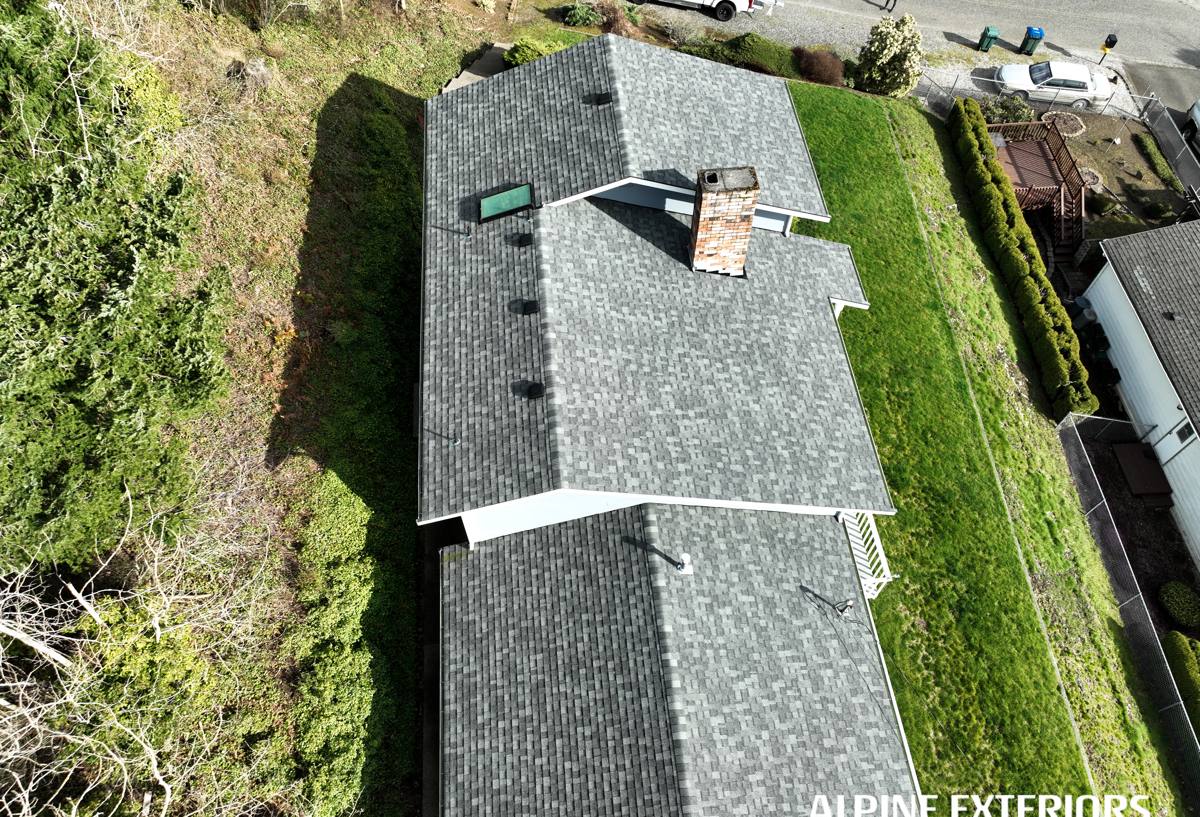
What Terrell Creek's Climate Does to a Storm-Damaged Roof
Whatcom County storms rarely announce themselves with a single dramatic event. More often it's a pattern: a windstorm loosens or lifts shingles, then weeks of driving rain find every gap before anyone notices a problem indoors. By the time a homeowner sees a stain on the ceiling, water has usually been working its way through the decking for a while.
Salt Air and Fasteners
Proximity to Birch Bay and the Strait means airborne salt settles on roofing metal, nail heads, and flashing over time. Salt accelerates corrosion on exposed or under-coated fasteners and thin-gauge metal, which is one reason we pay close attention to flashing condition — not just shingle condition — when we assess storm damage here.
Wind-Driven Rain
Storms coming off the water tend to drive rain at an angle rather than straight down. That matters for repairs because a shingle or flashing detail that would shed rain fine in a calm downpour can still let water in in a Terrell Creek storm if the laps and seals aren't done with that wind direction in mind.
Moss and Shade
Tree cover along the creek keeps parts of many roofs shaded and damp longer than open lots nearby. Moss doesn't just look bad — it holds moisture against shingles and can work under tabs and flashing edges, which turns a minor storm crack into a slow, chronic leak if it's not cleared as part of the repair.
Signs of Storm Damage Homeowners Often Miss
Some storm damage is obvious — a branch through the roof, missing shingles you can see from the driveway. Most isn't. Here's what we check for on every storm-damage call in this area:
- Shingles that look intact from the ground but are cracked, creased, or lifted at the edges up close
- Flashing around chimneys, vents, and roof-to-wall joints that's bent, separated, or has open seams
- Granule buildup in gutters or downspouts, a sign of wind and hail abrasion on the shingle surface
- Soft or discolored spots on interior ceilings, especially near exterior walls or roof valleys
- Moss buildup concentrated around damaged areas, since moss grows faster wherever water is sitting longer
- Gutters pulled away from the fascia or sagging, which points to wind stress on the whole roof edge system
- Nail heads or fastener backouts visible along ridge lines or shingle courses after a windstorm
If you're seeing more than one of these after a storm, it's worth having someone look at the whole roof, not just the visibly damaged spot — storm damage rarely stays contained to one area.
What a Correct Storm Damage Repair Includes
A repair that only replaces the shingles you can see from the ground is a repair that's likely to fail again in the next storm. We work through storm damage in a specific order so nothing gets covered up before it's actually fixed.
1. Full Roof Assessment, Not Just the Damaged Spot
Wind and water damage rarely stop where they're visible. We check the full roof plane, valleys, penetrations, and edges — because a storm strong enough to damage one section usually stressed the fasteners and seals on the rest of the roof too.
2. Decking Inspection
If water got past the shingle layer, the decking underneath may be soft, delaminated, or stained. Replacing shingles over compromised decking doesn't hold — we check decking condition before any new material goes down, and replace sections that won't hold a fastener properly.
3. Flashing and Underlayment Repair
Given how much of this area's damage traces back to flashing and driving rain, we treat flashing repair as its own step, not something bundled into shingle replacement. Underlayment that's been soaked gets replaced, not dried out and reused.
4. Matching and Integrating New Material
New shingles are tied into the existing roof field with proper lap and nailing patterns so the repair sheds water the same way the rest of the roof does — not as a patch that just sits on top.
5. Moss and Debris Clearing
Where moss contributed to the damage or is present near the repair area, we clear it as part of the job. Leaving moss in place next to a fresh repair just sets up the same problem again.
Our Storm Damage Repair Process
| Step | What Happens |
|---|---|
| Inspection | On-site assessment of the full roof, not just the reported damage area, including flashing, decking, and moss condition |
| Written Findings | Clear explanation of what's damaged, what's contributing (age, moss, flashing wear), and what needs to happen |
| Estimate | Straightforward scope and cost range before any work starts — no surprise add-ons mid-job |
| Repair | Decking, flashing, and shingle work completed in that order, with materials suited to coastal wind and moisture exposure |
| Final Check | Walkthrough to confirm the repair area, verify drainage paths, and check nearby sections for related wear |
Repair vs. Replacement: How We Help You Decide
Not every storm-damaged roof needs to be replaced, and not every roof can be reliably patched. The honest answer depends on the roof's age, how widespread the damage is, and how much of the underlying structure is still sound.
| Factor | Leans Toward Repair | Leans Toward Replacement |
|---|---|---|
| Roof age | Under 10-15 years, materials still in good general condition | Nearing or past typical service life for the material |
| Damage extent | Isolated to one section or a few areas | Spread across multiple roof planes |
| Decking condition | Solid, no soft spots found | Multiple areas of soft or delaminated decking |
| Moss/moisture history | Recent or first-time issue | Long-term chronic moss or leak pattern |
| Flashing condition | Sound apart from the storm-damaged area | Widespread corrosion or aging flashing throughout |
We'll tell you plainly which category your roof falls into. If a repair is the honest answer, that's what we'll recommend — we're not looking to sell a full replacement when a targeted fix will hold up.
Why It Matters to Hire a Crew That Knows Terrell Creek
A roofer who mostly works drier, more inland parts of Whatcom County may not think twice about flashing detail or moss clearing on a repair — because it matters less where they usually work. Out here, those details are the difference between a repair that lasts and one you're calling about again next winter.
Working in and around Birch Bay and Terrell Creek regularly means we're used to sizing up roofs for this specific combination of salt exposure, wind direction, and shade-driven moss growth. That's not a marketing point — it's just what shows up on every storm damage call in this part of the county, and it shapes how we scope and price the repair from the start.
After the Repair: Keeping Storm Damage From Coming Back
A good repair job holds up longer with a little basic upkeep, especially in a climate that stays damp and shaded for long stretches of the year.
- Keep gutters and downspouts clear so water doesn't back up under shingle edges during heavy rain
- Have moss addressed before it spreads, especially on shaded or north-facing roof sections
- Trim back tree limbs that overhang the roof, which reduces both moss growth and impact risk in wind
- After any significant windstorm, do a visual check from the ground for lifted or missing shingles
- Have flashing checked periodically, since it tends to wear and corrode faster than the shingles around it in salt-air conditions
Get a Straight Answer on Your Roof
If a recent storm has left you with a leak, missing shingles, or just a nagging feeling something's not right up there, it's worth getting a real look before the next round of weather moves through. We offer free, no-pressure estimates for homes in Terrell Creek and throughout the Birch Bay area — use the form below to get one scheduled.