 Birch Bay Siding
 Why Decks Near Terrell Creek Wear Out Faster Than You'd Expect
Terrell Creek sits close enough to the water and the tree cover that homes in this part of Birch Bay deal with a specific combination of punishment: salt-laden air drifting in off the bay, long stretches of driving rain through fall and winter, and shaded, damp ground that keeps moss and algae established on outdoor surfaces almost year-round. A deck built for a drier inland climate, or built years ago before better fastener and flashing standards existed, tends to show its age here well before it would somewhere less exposed.
Salt air accelerates corrosion on anything metal — nails, screws, joist hangers, bolts. Once those fasteners start to rust and weaken, the deck's structural connections are compromised long before the visible boards look bad. Add in Whatcom County's wet season, where wood stays saturated for days at a time, and you get slower drying, more fungal growth, and wood that softens from the inside out. Moss and algae on the deck surface aren't just cosmetic — they hold moisture against the wood and turn the surface slick and dangerous underfoot.
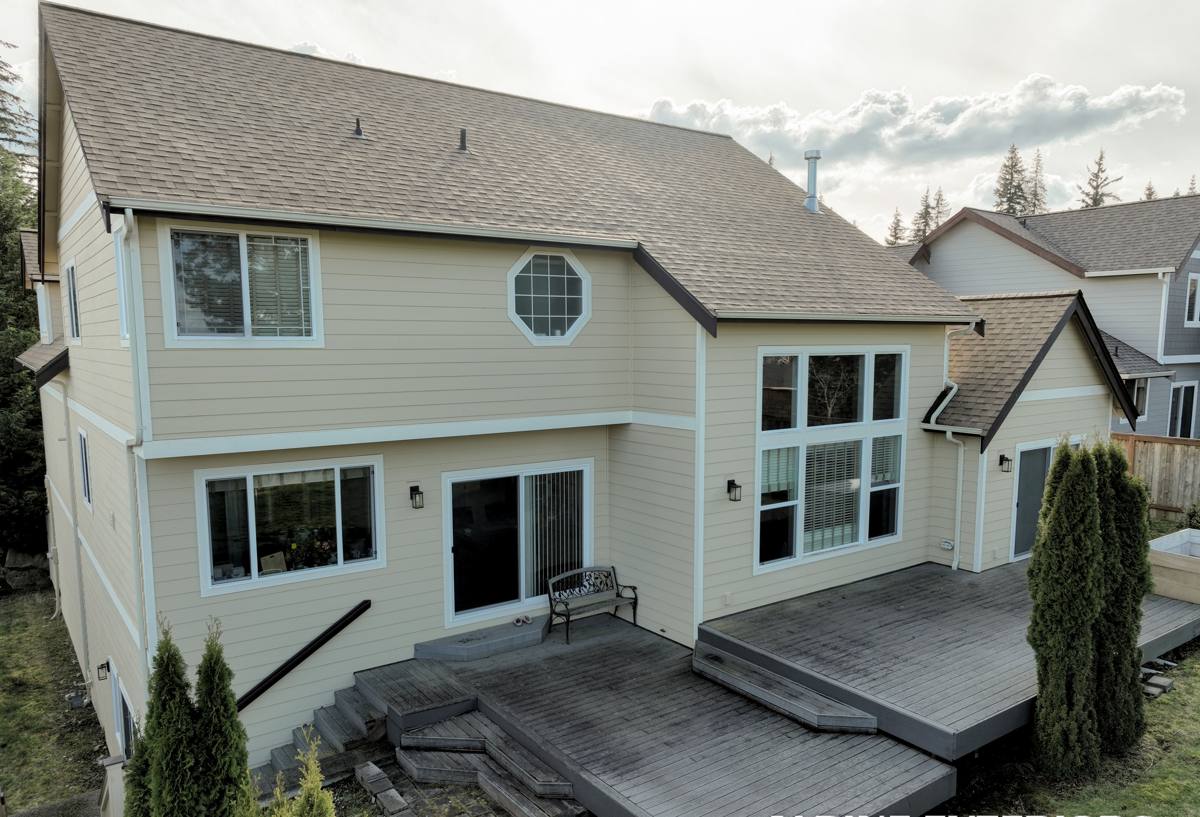
Signs a Terrell Creek Deck Needs Replacement, Not Just Repair
Homeowners often ask whether a deck can be patched instead of rebuilt. Sometimes it can. But there's a point where repair is just delaying a bigger problem, and in a climate like this one, that point comes faster than people expect. Here's what tells us a full replacement is the honest answer rather than a repair:
- Soft or spongy spots in the decking boards, especially near the house or in shaded corners where moss holds moisture
- Rust staining running down from fasteners or hardware, which usually means corrosion has already started under the surface
- A ledger board (where the deck attaches to the house) that shows any give, gaps, or water staining behind it
- Persistent moss or algae that keeps coming back within weeks of cleaning, even after treatment
- Joists or beams that feel spongy when probed, or show fungal growth on the underside
- A deck more than 15-20 years old built with older fastener types or without proper flashing at the ledger
If the problem is isolated to a few boards and the frame underneath is sound, repair is reasonable. If the issues show up at the structural level — ledger, joists, posts, or footings — replacement is the only way to actually fix it rather than mask it for another season.
What a Correct Deck Replacement Actually Involves
A deck replacement done right is not just swapping old boards for new ones. The parts of a deck that fail first in this climate are almost always hidden: the ledger flashing, the fastener hardware, and the framing connections. A rebuild that only addresses the visible decking and ignores those underlying components will fail again in the same way, just a few years later.
Ledger and Flashing
The ledger board — where the deck ties into the house — is the single most important connection on the whole structure, and it's also the point most exposed to water intrusion if it's not flashed correctly. Proper ledger flashing directs water away from the house framing instead of letting it pool and soak in behind the deck. In a rain-heavy climate like Birch Bay's, this detail matters more than almost anything else on the job.
Framing and Fasteners
Given the salt air here, we don't cut corners on hardware. That means corrosion-resistant, coated joist hangers, structural screws rated for exterior and coastal exposure, and post connections designed to shed water rather than trap it against end grain. Standard interior-grade fasteners corrode faster near the water, and once a hanger or bolt weakens, the failure isn't gradual — it can happen suddenly under load.
Footings and Posts
Ground contact near a creek corridor tends to stay wetter longer than open ground. Footings need to be set below frost depth and sized appropriately for the soil conditions, and posts need proper base connectors that keep the wood off standing water rather than resting directly on damp concrete or soil.
Decking Surface and Drainage
The final decking material needs to shed water and dry quickly between rain events, with enough gap spacing between boards for drainage and airflow underneath. A deck built tight to the ground with poor airflow underneath is the fastest path back to moss, mildew, and rot — regardless of what material sits on top.
Choosing Decking Material for a Wet, Salt-Exposed Site
Every decking material has real trade-offs, and the right choice depends on how much maintenance a homeowner wants to take on versus how much they want to spend upfront. We walk through the honest pros and cons rather than pushing one product for every situation.
| Material | Moisture Behavior | Maintenance | Typical Lifespan Here |
|---|---|---|---|
| Pressure-treated wood | Absorbs water, prone to cupping and splintering if not sealed regularly | Annual cleaning and re-sealing recommended | 10-15 years with upkeep |
| Cedar | Naturally rot-resistant but still needs sealing in this climate | Sealing every 1-2 years, regular moss treatment | 15-20 years with upkeep |
| Composite decking | Doesn't absorb water like wood, but can still grow surface algae/moss if not cleaned | Periodic washing, no sealing needed | 20-25+ years, backed by manufacturer warranty |
| PVC/capped composite | Fully resists moisture absorption, best option for constant damp shade | Occasional washing only | 25+ years, longest warranty coverage |
In shaded, damp spots close to the creek where moss takes hold fastest, we usually steer homeowners toward composite or capped PVC decking for the surface boards, simply because it doesn't feed moisture into the material the way wood does. That's not a knock on wood decking — it's a real material, and some homeowners prefer the look and are willing to keep up with the sealing schedule. It's about matching the material's maintenance demands to how much time an owner actually wants to spend on upkeep.
Our Deck Replacement Process
We keep the process straightforward and communicate clearly at each stage, since a deck rebuild touches both the structure of your home and how you use your yard for the season.
- On-site assessment — we inspect the ledger, framing, footings, and existing decking to determine what's driving the failure, not just what's visible on the surface.
- Written scope and estimate — a clear breakdown of what's being replaced, what materials are recommended and why, and a realistic cost range before any work starts.
- Permitting — most deck replacement work that touches structural framing or footings requires a permit through Whatcom County or the local jurisdiction; we handle that paperwork so it isn't left to the homeowner.
- Demolition and disposal — full removal of the old decking, framing, and any compromised posts or footings, hauled off site.
- Structural rebuild — new ledger flashing, corrosion-resistant hardware, framing, and footings sized correctly for the site.
- Decking installation — surface material installed with proper spacing and fastening for drainage and long-term stability.
- Final walkthrough — we go over the finished deck with the homeowner, including basic care guidance specific to the material installed.
Permits and Local Considerations in Whatcom County
Most jurisdictions, including Whatcom County, require a permit for deck replacement when the work involves structural framing, footings, or a change in size or height — even if the footprint stays the same as the old deck. Homes closer to Terrell Creek itself may also fall under additional shoreline or critical-area review depending on proximity to the water, which is worth checking before any demolition begins. We handle the permit process as part of the job rather than leaving homeowners to sort out county requirements on their own, since getting this wrong can mean delays or having to redo work that wasn't inspected properly the first time.
Cost Factors in a Terrell Creek Deck Replacement
Every deck is different, and we don't quote a number without seeing the site, but the factors that move the price up or down are consistent. Understanding them helps a homeowner budget realistically before we even walk the property.
| Factor | Why It Affects Cost |
|---|---|
| Deck size and height | Larger square footage and elevated decks require more material and framing |
| Decking material chosen | Composite and PVC cost more upfront than wood but less in long-term maintenance |
| Extent of structural damage | Rotted framing, compromised footings, or a failed ledger add labor beyond surface-level replacement |
| Site access | Decks with limited equipment access or steep grades near the creek can add labor time |
| Railing and stair work | Code-compliant railings and stairs add material and labor beyond the deck surface itself |
| Permitting requirements | Additional review near shoreline or critical areas can add time to the project timeline |
As a general guide, a straightforward wood deck replacement tends to land at the lower end of the cost range, while a full rebuild with composite or PVC decking, upgraded framing hardware, and new railings sits higher — but the honest number only comes from an on-site look at your specific deck.
Caring for a New Deck in This Climate
A well-built deck still needs some ongoing attention in a climate that stays wet and shaded for long stretches of the year. A little routine care goes a long way toward avoiding the same problems that likely brought you to replacement in the first place.
- Sweep debris and standing leaves off the surface regularly, especially in fall — trapped organic matter is what feeds moss growth
- Rinse off salt spray and grime periodically if the deck faces the bay directly
- Check and clear gaps between boards so water keeps draining rather than pooling
- Inspect the ledger area and any visible framing once a year for early signs of water staining
- If wood decking, plan on resealing every 1-2 years rather than waiting until it visibly needs it
- Address moss at first sign rather than letting it establish — it's far easier to remove early
Why It Matters to Hire a Crew That Already Works Terrell Creek
A deck built for a dry inland yard and a deck built for a shaded, salt-exposed site near Terrell Creek are not the same project, even if they look similar on paper. Crews who don't regularly work this stretch of Whatcom County sometimes default to standard fastener packages, standard flashing details, or standard material recommendations that hold up fine elsewhere but underperform here. We work in Birch Bay and the surrounding area regularly, which means we've seen firsthand how fast moss reestablishes on a shaded deck, how quickly standard hardware corrodes this close to the water, and where the ledger flashing tends to fail first on homes in this specific setting. That local pattern recognition is part of what a homeowner is actually paying for when they hire a crew that knows the area, not just the trade in general.
If you're weighing repair versus replacement, or just want an honest look at what your current deck needs, we're glad to come take a look. Reach out for a free, no-pressure estimate using the form below.