 Birch Bay Siding
 Cherry Point Sits Right Where the Weather Gets Serious
Cherry Point is one of the more exposed stretches of the Birch Bay area, sitting out along the Salish Sea in Whatcom County where the wind has nothing to slow it down before it hits a house. Homes here deal with a combination that inland Whatcom County properties simply don't see in the same way: near-constant salt-laden air, wind-driven rain that hits siding sideways instead of straight down, and a long, damp moss season that can stretch for most of the year. Any one of these is manageable. All three together, over years, is what separates siding that lasts three decades from siding that starts failing in eight or nine.
This page is about one job, done right, in one place: installing new siding on a Cherry Point home. Not a general overview of siding options — the specifics of what this stretch of coastline demands from materials, installation technique, and the crew doing the work.
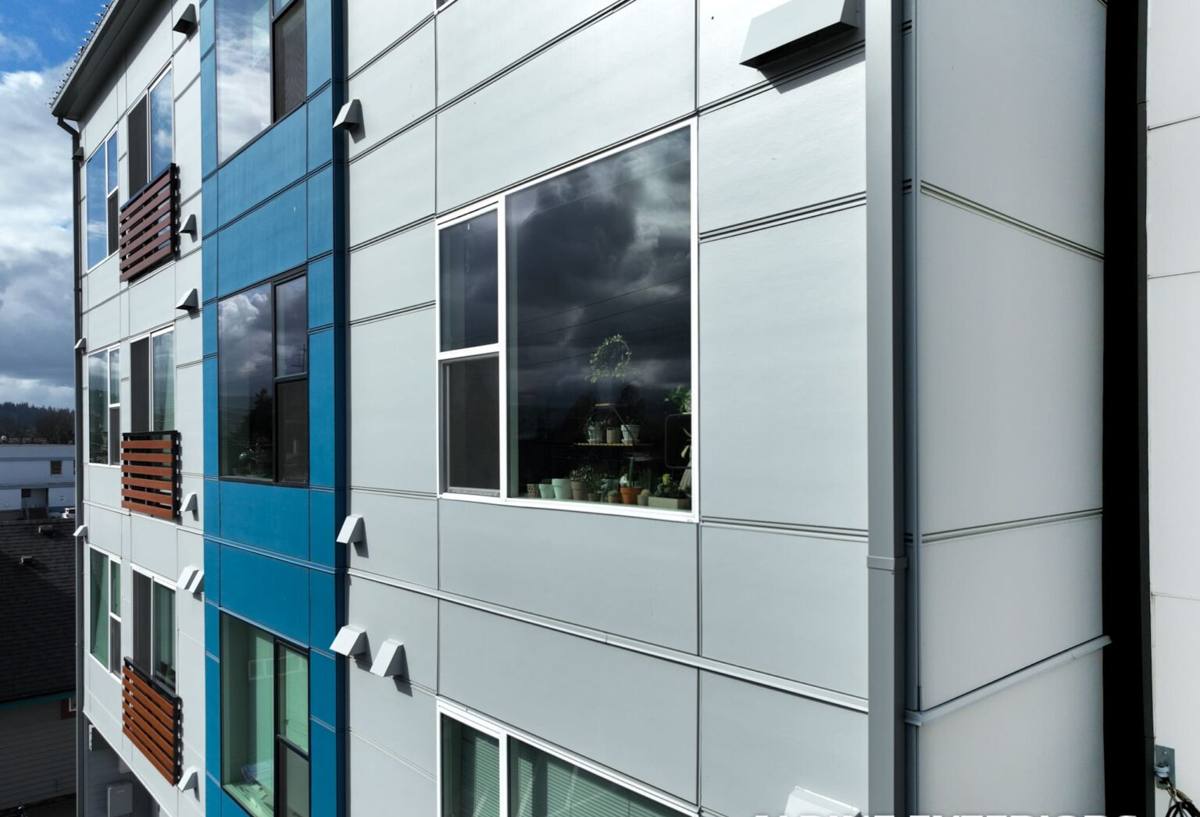
What Salt Air, Driving Rain, and Moss Actually Do to Siding
Salt Air
Airborne salt is corrosive and it doesn't stay outside — it settles into every crevice, seam, and fastener head on the exterior of a house. Over time it accelerates the breakdown of paint films, degrades cheap fasteners, and works its way into any gap in the siding envelope. Products and fastening hardware that aren't rated for coastal exposure age faster here than they would twenty miles inland.
Driving Rain
Wind off the water doesn't let rain fall straight — it drives it horizontally into wall assemblies, which puts real pressure on every seam, joint, and piece of flashing. A siding job that would be fine in a sheltered inland yard can leak within a couple of seasons at Cherry Point if the water-resistive barrier, flashing details, and lap spacing weren't built for wind-driven moisture in the first place.
Moss and Sustained Dampness
Whatcom County's moss season runs long, and Cherry Point's marine humidity keeps siding, trim, and north-facing walls damp for extended stretches. Moss and algae growth on a wall isn't just cosmetic — sustained moisture against a porous or poorly sealed material is what leads to rot, delamination, and paint failure. Siding that can shed water and dry out quickly holds up; siding that stays wet doesn't.
What Correct Installation Actually Involves Here
"Siding installation" sounds like one step, but on a coastal Cherry Point property it's really a sequence of decisions, each of which matters more here than it would in a milder location.
- Sheathing inspection and repair — any rot or soft spots behind the old siding get addressed before anything new goes up. Covering damaged sheathing just traps the problem.
- Water-resistive barrier — a continuous, properly lapped weather barrier is the layer that actually stops incidental moisture that gets past the siding. Gaps or shortcuts here are invisible until they aren't.
- Flashing at every penetration — windows, doors, vents, and any wall penetration need flashing detailed to shed water outward, not into the wall. This is the single most common place coastal installs fail when rushed.
- Rainscreen gap where appropriate — a small air gap behind the siding lets incidental moisture drain and the wall dry out, which matters more in a wet marine climate than in a dry one.
- Correct fastening — fastener type, spacing, and depth affect both wind resistance and long-term corrosion resistance. Coastal exposure calls for hardware that won't be the first thing to fail.
- Proper lap and joint detailing — laps, corners, and butt joints need to be sealed and sequenced so wind-driven rain can't work its way behind a seam.
None of these steps are optional extras — they're what "installed correctly" means on a house that faces this kind of weather. Skipping any one of them is how a siding job that looks fine on day one starts showing problems in year three.
Why We Install Only James Hardie Fiber Cement
We don't install vinyl, LP SmartSide, Cemplank, Allura, primed spruce, or cedar. That's a deliberate standard, not a sales pitch, and it's worth explaining honestly rather than just asserting it.
Vinyl is affordable and easy to install, but it's a thin plastic product that can warp in heat, crack in cold, and it doesn't hold paint — you're stuck with whatever color it came in, fading over time under UV exposure. Wood products, whether cedar or primed spruce, look good initially but require ongoing maintenance in a climate this wet, and they're organic material in an environment built to encourage rot and moss growth. Engineered wood products like LP SmartSide perform reasonably in drier climates but rely on a wood-strand core that is more sensitive to sustained moisture exposure than fiber cement — a real consideration for a marine-exposed lot at Cherry Point.
James Hardie fiber cement is non-combustible, dimensionally stable in wet and dry cycles, and its ColorPlus factory finish is baked on under controlled conditions rather than field-painted, which gives it better fade and moisture resistance at the surface where salt air does the most damage. Hardie's HZ5 product line is specifically engineered for climates with sustained moisture exposure — which describes Cherry Point about as well as anywhere in Whatcom County. It also carries a strong transferable warranty, which matters on a coastal property where you want documented performance, not just a hopeful paint job.
We're not saying every other product is worthless everywhere. We're saying that for a home sitting in Cherry Point's salt air and driving rain, we've seen what holds up over decades and what doesn't, and we've standardized our crew's installation practices around the one product system that consistently performs in this exact environment.
Material Comparison for a Coastal Whatcom County Property
| Factor | James Hardie Fiber Cement | Vinyl | Wood / Engineered Wood |
|---|---|---|---|
| Salt air resistance | Strong — non-organic, factory-finished | Moderate — can fade and become brittle | Weak — organic material, prone to degradation |
| Wind-driven rain performance | Strong when properly flashed and lapped | Moderate — seams and panels can flex | Variable — depends heavily on maintenance |
| Moss/moisture tolerance | High — dries out, doesn't rot | High (doesn't rot, but traps moisture behind it) | Low — sustained dampness accelerates decay |
| Fire resistance | Non-combustible | Combustible | Combustible |
| Maintenance cycle | Repaint every 10-15+ years (ColorPlus extends this) | Low maintenance, but not repairable if damaged | Frequent — recoating, sealing, rot checks |
| Warranty structure | Strong, transferable manufacturer warranty | Varies widely by manufacturer | Typically limited or none on wood |
The table above reflects general product characteristics, not a specific quote — actual performance always depends on installation quality, which is the other half of this equation.
How Our Process Works on a Cherry Point Job
Assessment
We start by walking the exterior and identifying exposure direction, existing moisture damage, and any spots where past work cut corners — this is common on older coastal homes that have been through a repaint or two without a real siding assessment.
Tear-Off and Sheathing Check
Old siding comes off in sections so we can inspect the sheathing underneath as we go, rather than guessing at wall condition from the outside.
Barrier and Flashing
Water-resistive barrier and flashing get installed and detailed for wind-driven rain specifically — this is where we spend the most care, because it's the layer that decides whether the house stays dry for the next 30 years.
Hardie Installation
Panels or lap siding go up to manufacturer spec: correct fastener type and spacing, proper lap exposure, and sealed joints at every seam and corner.
Trim, Caulk, and Final Walkthrough
Trim gets finished, caulking is done at penetrations and transitions, and we walk the job with the homeowner before calling it complete.
What to Check Before Hiring Anyone for This Job
- Do they have experience specifically with coastal or marine-exposed homes, not just siding in general?
- Will they inspect and repair sheathing before installing new siding, or just cover what's there?
- Do they detail flashing for wind-driven rain, not just standard vertical rainfall?
- Are they licensed and insured in Washington, and can they provide proof without hesitation?
- Do they install to the manufacturer's published installation instructions (fastener spacing, clearances, lap exposure) rather than "how we've always done it"?
- Will you get a written scope of work before anything is torn off the house?
Why a Crew That Already Works Cherry Point Matters
Installation technique that works fine on a sheltered inland lot isn't automatically right for a Cherry Point property. A crew that already works this stretch of Whatcom County knows which walls take the worst of the wind-driven rain, how long moss season really runs here, and where past installations in the area have tended to fail. That's not something you can fully substitute with a generic install crew working from a manual — it comes from having done this specific job, in this specific weather, repeatedly.
It also means fewer surprises with permitting, wall assemblies typical to the area's housing stock, and realistic timelines that account for the marine layer and rain windows common to the Birch Bay coastline.
Ready When You Are
If your Cherry Point home is due for new siding, we're glad to come take a look, walk the exterior with you, and give you a straightforward, no-pressure estimate on a James Hardie installation built for this exact climate. There's a form below — reach out and we'll get a time on the calendar.