 Birch Bay Siding
 Building Decks for Cherry Point's Exposed, Salt-Air Climate
Cherry Point sits right up against the Strait of Georgia, north of Birch Bay in Whatcom County, and that shoreline exposure changes what a deck has to survive. Homes here take a steadier dose of salt-laden wind and driving rain off the water than properties further inland, and the long, damp Pacific Northwest off-season gives moss and algae months to take hold on anything that stays wet. A deck built to a generic spec sheet will hold up fine in a drier climate zone. Out here, the same deck needs tighter attention to material choice, fastener selection, and drainage from the first day of framing, or you're looking at soft boards, rusted hardware, and a slick, moss-covered surface well before the deck is due for replacement.
This page covers what we build into every custom deck we put up for Cherry Point homeowners, why it matters in this specific microclimate, and what our process looks like from first call to final walkthrough.
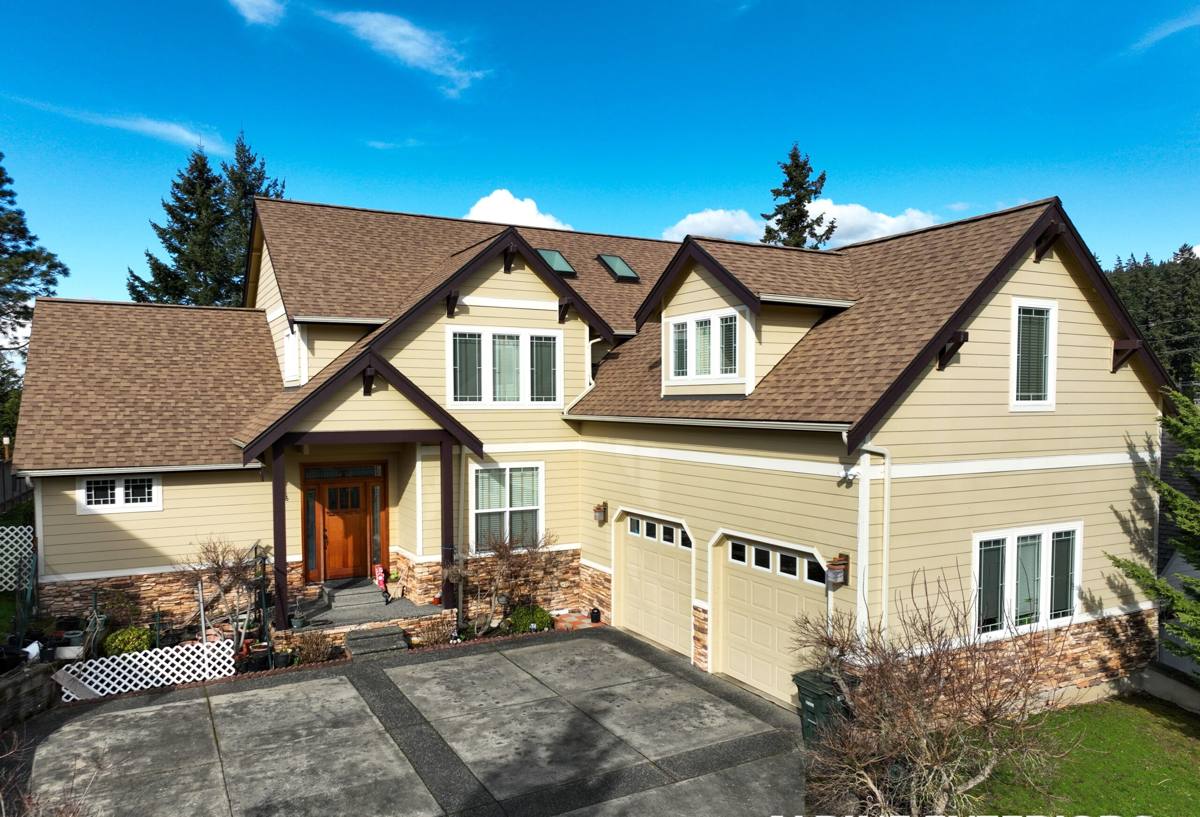
What Salt Air and Moisture Actually Do to a Deck
Corrosion Starts Where You Can't See It
Salt air accelerates corrosion on any exposed metal — fasteners, joist hangers, post bases, and railing hardware. The failure isn't always visible from the top of the deck. Corrosion tends to start at the fastener heads and inside joist hangers where moisture sits against metal, which is exactly where a deck's structural integrity lives. A deck that looks fine on the surface can have compromised connections underneath if the wrong-grade hardware went in during framing.
Wood Movement and Rot in a Wet-Dry Cycle
Whatcom County's marine climate means wood decking and framing go through repeated wet-dry cycles for most of the year, with a genuinely long moss season where surfaces rarely dry out completely between rains. That cycle is what drives cupping, checking, and eventually rot in framing members and decking boards that weren't sealed, spaced, or ventilated correctly at installation.
Choosing the Right Decking Material for a Cherry Point Property
There's no single "best" decking material — the right choice depends on how much maintenance you want to take on, your budget, and how close you are to open water and wind exposure. Here's how the common options actually perform in this climate:
| Material | Salt Air / Moisture Behavior | Maintenance | Typical Lifespan Here |
|---|---|---|---|
| Pressure-treated wood | Good if properly sealed and re-sealed; end grain and fasteners are the weak points | Annual cleaning, re-sealing every 1-3 years | 15-20 years with upkeep |
| Cedar | Naturally rot- and insect-resistant, but softer and needs regular sealing near the water | Sealing every 1-2 years, more frequent cleaning | 15-25 years with upkeep |
| Composite decking | Doesn't absorb moisture like wood; performs well in salt air, but surface can still get slick with moss/algae if not cleaned | Periodic washing, no sealing or staining | 25-30+ years, manufacturer-dependent |
| PVC / capped polymer | Best moisture resistance of the common options, fully sealed surface | Occasional washing | 25-30+ years, manufacturer-dependent |
We'll talk through this table honestly during your estimate rather than steering everyone toward the same product. A cedar deck done right, with correct fastening and a real sealing schedule, is a completely legitimate choice for a Cherry Point home — it just comes with a maintenance commitment that composite and PVC don't. What we won't do is install a low-grade composite or a wood species that isn't suited to constant moisture exposure just because it's cheaper up front; that trade-off shows up as callbacks and premature failure within a few years, and we'd rather have that conversation before the deck is built than after.
Framing and Hardware: Where Coastal Decks Actually Fail First
Fastener and Hardware Grade
Every fastener, joist hanger, and post base on a deck we build in this area is corrosion-rated hardware sized for coastal exposure — not the standard-grade hardware that's fine 30 miles inland but starts rusting within a few seasons this close to the water. This is the single most common shortcut we see on decks that are failing early: the decking and railings look fine, but the hardware holding the frame together is already compromised.
Ledger Board Attachment
The ledger board — where the deck attaches to the house — is the most critical structural connection on most decks, and it's also the one most exposed to trapped moisture if flashing isn't done correctly. We flash every ledger connection to keep water from working its way behind the siding and into the house framing, which is a bigger and more expensive problem than anything happening on the deck itself.
Post Bases and Ground Contact
Posts set in or near ground contact need hardware and, where applicable, wood rated for that exposure, plus a base connection that keeps the post end grain off standing water. In a climate with this much year-round precipitation, a post base that pools water is a rot problem waiting to happen.
Designing for Drainage and Moss Resistance
A deck's shape and layout affect how well it sheds water and resists moss just as much as the material does. We factor in board spacing, deck orientation relative to prevailing wind and rain, and surface drainage so water moves off the deck instead of sitting in shaded corners where moss gets a foothold first. On multi-level or covered decks, we also plan for airflow underneath the structure — a deck that never fully dries out between rains is a deck that grows moss and algae year-round, regardless of what material sits on top.
Railings, Fascia, and Finish Details
Railings and fascia boards take direct wind-driven rain and salt spray, often more than the deck surface itself, and they're usually the first thing you notice looking worn if the wrong hardware or material went in. We match railing hardware to the same corrosion-rated standard as the framing, and we talk through cable, metal baluster, or wood railing options based on how much upkeep you want to take on versus the look you're after. Fascia boards get the same attention to fastening and sealing as the decking, since a rotted fascia board is one of the more common repair calls we get on older decks in this area.
Permits and Code Considerations in Whatcom County
Most new decks and significant deck replacements in Whatcom County require a building permit, and requirements can shift depending on deck height, size, and proximity to property lines or shoreline setbacks — Cherry Point's location near the water can bring shoreline-related considerations into play depending on the specific property. We handle the permitting process as part of every custom deck project, including submitting plans that meet current structural code for railing height, guard spacing, and footing depth. This isn't a step worth skipping — an unpermitted deck can complicate a home sale down the road and, more importantly, an unpermitted structure hasn't been checked against the structural requirements that keep a deck safe.
Our Process for a Cherry Point Deck Project
1. On-Site Assessment
We walk the property, look at sun and wind exposure, drainage, and how the deck will connect to the house, and talk through how you actually want to use the space.
2. Material and Design Conversation
We go through decking, railing, and hardware options honestly, including the maintenance trade-offs, so you're choosing based on real information rather than a sales pitch.
3. Permit and Plan Submission
We handle the Whatcom County permitting paperwork and structural plans so the project is built to code from the ground up.
4. Framing and Build
Ledger flashing, corrosion-rated hardware, and correct fastener spacing go in at every stage — not just on the visible surface.
5. Final Walkthrough
We go over the finished deck together, including what maintenance to expect and when, before we consider the job done.
Deck Maintenance Checklist for Cherry Point Homeowners
Whatever material you choose, a little seasonal attention goes a long way in this climate:
- Sweep off debris and standing water regularly, especially under furniture and planters where moisture gets trapped
- Wash the deck surface at least once or twice a year to clear salt residue, pollen, and early moss growth
- Check railing and fastener hardware annually for early signs of rust or loosening
- Re-seal or re-stain wood decking on the schedule appropriate to the species — don't wait until it looks obviously worn
- Keep gutters and downspouts near the deck clear so runoff isn't draining directly onto it
- Trim back overhanging vegetation to improve airflow and sun exposure on shaded sections
Why Local Experience Matters for This Job
A deck contractor who mostly works inland can build a structurally sound deck that still underperforms out here, simply because the hardware, sealing schedule, and drainage details that matter in a marine climate aren't the ones they think about by default. Working regularly in Birch Bay and along Whatcom County's shoreline means we're not guessing at how salt air and a long wet season treat different materials and connections over time — we're building to what we've seen hold up and what we've seen fail.
If you're planning a new deck or replacing one that's showing its age, we're happy to come take a look and give you a straightforward, no-pressure estimate — just fill out the form below.