 Birch Bay Siding
 Deck Repair Built for Semiahmoo's Marine Climate
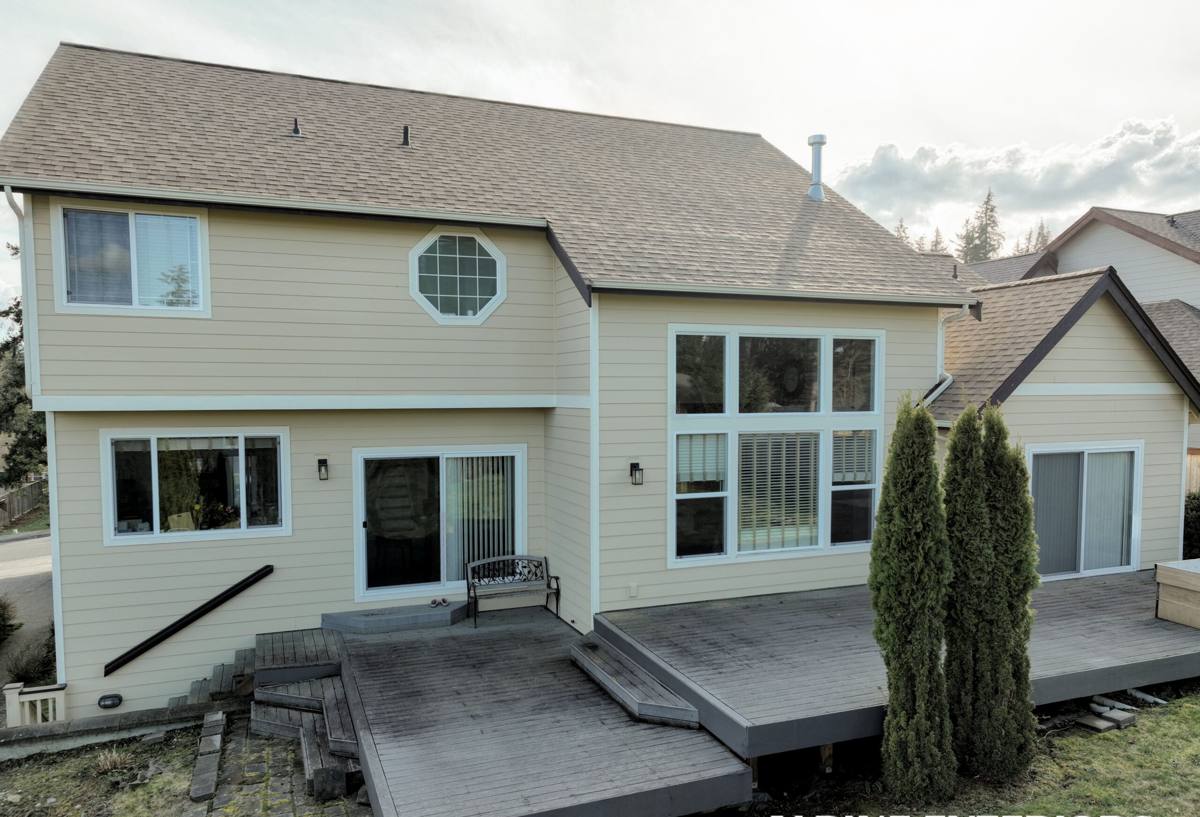
A deck on the Semiahmoo spit or anywhere along this stretch of Whatcom County waterfront lives a harder life than a deck a few miles inland. The combination of salt-laden air off Semiahmoo Bay and Drayton Harbor, near-constant driving rain through the fall and winter, and a moss season that can run eight months or longer puts steady pressure on every joint, fastener, and board on the structure. We repair decks in this area regularly, and the failure patterns we see here are consistently different from what we find on a deck in a drier, more sheltered part of the county.
This page covers what deck repair actually involves for homes in and around Semiahmoo — what breaks down first, how to tell a repair from a replacement situation, and what our process looks like when we come out to look at yours.
Why Coastal Exposure Wears a Deck Down Faster
Salt Air and Metal Fasteners
Airborne salt is corrosive to unprotected or poorly rated hardware. Nails, screws, joist hangers, and bolts that aren't rated for coastal or treated-lumber exposure can start rusting within a few seasons of being installed this close to the water. Once a fastener corrodes, it loses holding strength long before it looks obviously bad from the surface — which is why a deck can feel solid underfoot and still have compromised connections underneath.
Moss, Algae, and Trapped Moisture
Whatcom County's moss season is long, and a deck with any shade or north exposure will grow moss on decking boards, stair treads, and railings almost year-round if it isn't kept clear. Moss holds moisture directly against the wood or composite surface, which slows drying after every rain event and creates the conditions for rot in wood decking and for surface staining and slip hazards on any material.
Driving Rain and Water Intrusion
Rain here doesn't just fall straight down — wind-driven rain gets pushed sideways into ledger connections, under flashing, and into any gap where a board meets the house. Over time this is what causes the two most serious deck problems we see: ledger board rot where the deck attaches to the house, and hidden framing rot underneath decking that still looks fine from above.
Signs Your Deck Needs Repair — And What They Mean
- Soft or spongy spots underfoot, especially near the house or stairs — usually indicates rot in the decking or the framing beneath it
- Boards that have cupped, split, or pulled away from fasteners — sun and moisture cycling working the wood fibers apart
- Rust streaks below screw heads or hardware — a sign fasteners are corroding and losing grip
- Railings or stair posts that wiggle or flex — often a loose or rotted post connection, a safety issue, not cosmetic
- Gaps or dark staining where the deck meets the house siding — a possible sign of ledger board or flashing failure
- Persistent green or black growth that comes back within weeks of cleaning — points to a spot that never fully dries between rains
- Visible daylight or movement between deck boards and joists — fastener withdrawal, common with coastal-grade corrosion
Any one of these on its own might be a straightforward fix. Several at once, especially involving the ledger board or support posts, is worth a proper inspection before anyone uses the deck heavily.
Repair or Replace? How We Make That Call
Not every deck problem in Semiahmoo needs a full rebuild, and we don't default to recommending one. The honest answer usually comes down to what's happening at the structural level versus the surface level.
| Situation | Usually a Repair | Usually a Replacement |
|---|---|---|
| Surface boards | A handful of cupped, split, or stained boards | Most of the decking is failing at once, same age throughout |
| Fasteners | Isolated rust or withdrawal, hardware still sound elsewhere | Corrosion is systemic across the deck's original build |
| Ledger board | Localized soft spot caught early | Rot has spread along most of the ledger's length |
| Framing | One or two joists affected near a known leak point | Widespread joist or beam rot, sagging structure |
| Railings/stairs | Loose posts or a damaged section | Original railing system doesn't meet current code and needs a full redo |
We'll always tell you plainly which category your deck falls into and why, including when a repair is genuinely the right call and a full rebuild would be spending money you don't need to spend.
The Structural Work That Actually Matters
Ledger Board and House Connection
The ledger board — where the deck attaches to the house — is the single most important connection on the structure, and it's also the one most exposed to wind-driven rain if the flashing was installed poorly or has failed over time. When we repair a ledger, we're not just replacing wood; we're making sure proper flashing directs water away from the house rather than behind the deck, and that the fastening pattern meets current structural standards, not just what happened to be there originally.
Joists, Beams, and Posts
Rot in framing members isn't always visible from the top of the deck. We check for soft spots by probing at connection points, joist ends, and anywhere water has historically pooled or run. Any framing member with structural rot gets sistered or replaced — patching over compromised framing just relocates the problem.
Hardware and Fastener Upgrades
When we're already opening up a connection for repair, we upgrade to coastal-rated, corrosion-resistant hardware rather than matching whatever was originally installed, especially for a deck this close to the water. It costs a little more up front and pays for itself by not needing the same repair again in a few years.
Wood vs. Composite: Repair Considerations Differ
What a repair involves depends on what the deck is built from.
Wood Decking
Wood gives you the most straightforward repair — individual boards can be replaced, sanded, and refinished, and the material is forgiving to work with in sections. The trade-off is that wood needs ongoing maintenance in this climate: cleaning, moss treatment, and refinishing on a regular cycle, or rot returns.
Composite Decking
Composite resists rot in the board itself, but it isn't immune to problems — surface staining, moss growth in shaded areas, and fastener or clip failure underneath still happen. Composite repairs require matching the existing board profile and color, which isn't always possible with older or discontinued product lines, so sometimes a full deck surface replacement is the more practical path even when the framing underneath is sound.
Framing, Regardless of Surface Material
Whether the surface is wood or composite, the framing underneath is almost always pressure-treated lumber, and that structure is where the real coastal exposure damage tends to show up first — which is why we inspect underneath the deck, not just the surface, on every repair call.
How Our Deck Repair Process Works
- On-site inspection — we walk the full deck, check underneath where accessible, and probe suspect areas including the ledger, posts, and stair connections
- Honest assessment — you get a clear explanation of what's failing, why, and whether it's a repair or a bigger job, in plain language
- Written estimate — scope and cost laid out before any work starts, no surprise add-ons
- Repair work — structural issues addressed first, then decking, railings, and finish work
- Walkthrough — we go over what was done and what to watch for going forward
Keeping a Semiahmoo Deck in Good Shape Between Repairs
A little seasonal upkeep goes a long way toward preventing the kind of hidden rot and hardware corrosion that's common this close to the water.
- Sweep and clear debris and moss regularly, especially in shaded or north-facing sections
- Check the gap where the deck meets the house siding for staining or softness after heavy rain
- Look at railing and stair post connections a couple times a year for movement
- Keep gutters and downspouts near the deck clear so runoff isn't draining onto it
- Reseal or refinish wood decking on the schedule the product calls for — don't stretch it out in this climate
- Address small issues, like a single soft board or a rusting fastener, before the next wet season rather than after
Why It Matters That We Already Work in Semiahmoo
Deck problems here follow patterns that are specific to this stretch of coastline — salt exposure, wind direction, and the length of the wet season all behave a little differently than they do even a few miles inland. A crew that works Semiahmoo and the broader Birch Bay area regularly knows which connections tend to fail first on a waterfront deck, what fastener grade actually holds up here, and how to flash a ledger board so it survives driving rain rather than just looking right on installation day. That local pattern recognition is what keeps a repair from being a repeat visit.
If you've got a deck in Semiahmoo showing any of the signs above — or you just want an honest read on its condition before another wet season — we're happy to come take a look. Use the form below to request a free, no-pressure estimate.