 Birch Bay Siding
 Why Point Whitehorn Windows Wear Out Faster Than You'd Expect
Point Whitehorn sits close enough to the water that its homes take a different kind of weathering than houses a few miles inland in Whatcom County. The combination is specific: salt-laden air off the water, wind-driven rain that gets pushed sideways into wall assemblies rather than falling straight down, and a moss and algae season that runs long and wet for much of the year. None of these are dramatic on their own, but stacked together over a decade or two, they find every weak point in a window installation.
Salt air is corrosive to metal hardware — hinges, balances, cranks, and screws — even when the frame material itself holds up fine. Driving rain tests seals and flashing in ways that a calm rainstorm never will, because wind pressure can force water uphill and sideways past gaps that would otherwise shed water just fine. And the long damp season means any wood trim or sill that isn't detailed correctly stays wet longer, which is exactly what rot and moss growth need to get established.
None of this means windows in Point Whitehorn are doomed to fail early. It means the installation has to account for these conditions from the start, not as an afterthought.
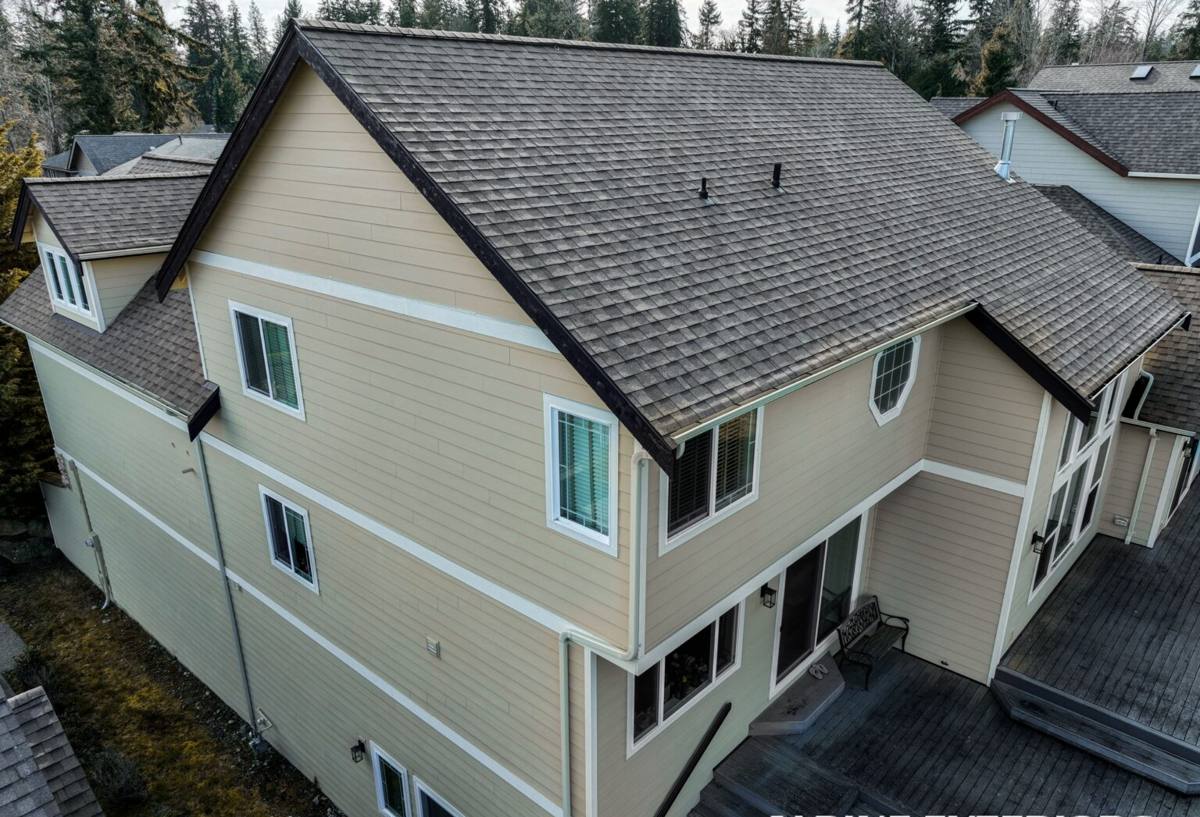
Signs a Window Is Losing the Fight With the Coastal Climate
Most window failures near the water don't show up as a cracked pane. They show up as slow, quiet problems that homeowners often chalk up to "just an old house" before realizing it's actually a moisture or seal issue.
- Fogging or a permanent haze between double-pane glass (the seal has failed and the gas fill is gone)
- Soft or discolored wood on the sill, jamb, or exterior trim around the window
- Windows that are stiff, hard to latch, or won't stay open on their own
- Visible moss, algae, or black streaking building up on the sill or lower frame
- A cold draft at the frame edge even when the window is fully closed and locked
- Paint that keeps bubbling or peeling in the same spot near the window opening
- Condensation forming on the inside of the glass or on the interior trim during cold, wet weeks
Any one of these is worth a look. Several at once, especially on windows facing the prevailing wind and rain, usually means the original installation is no longer keeping water out — even if the window itself still opens and closes fine.
What a Correct Window Replacement Actually Involves
A window replacement is not just swapping an old sash for a new one in the same opening. In a location that takes as much wind-driven rain as Point Whitehorn does, the water management details around the window matter as much as the window itself.
Removal and Opening Inspection
Once the old window is out, the opening gets inspected before anything new goes in. This is the only point in the whole job where the framing, sheathing, and any hidden water damage are actually visible. Skipping this step and just fitting a new window into a compromised opening is how the same problem reappears a few years later, hidden behind new trim.
Flashing and Water Management
Proper flashing directs any water that gets past the exterior cladding back out, rather than letting it sit against the framing. This includes sill pan flashing at the bottom of the opening — the single most important detail for coastal, wind-driven-rain climates — plus correctly lapped side and head flashing so water always sheds downward and outward, never behind the layer below it.
Air Sealing and Insulation
The gap between the window frame and the rough opening needs to be sealed and insulated correctly, not just stuffed with whatever is on hand. Done right, this stops both drafts and the kind of hidden condensation that leads to soft framing years down the road.
Trim, Caulking, and Finish
Exterior caulking and trim are the last line of defense, not the first. They're important, but they're not a substitute for correct flashing underneath — a window that relies on caulk alone to stay dry will eventually leak once that caulk ages, cracks, or gets baked and washed by sun and salt spray.
Choosing a Window That Suits a Coastal Whatcom County Home
Frame material matters more here than it does further inland, mainly because of salt exposure and the sheer amount of moisture in the air for much of the year. There's no single "best" material for every home — it depends on your budget, your home's style, and how much upkeep you want to take on.
| Frame Material | How It Handles Salt Air & Moisture | Maintenance | General Cost Position |
|---|---|---|---|
| Vinyl | Won't corrode or rot; performs consistently in salt air | Low — occasional cleaning | Most affordable |
| Fiberglass | Very stable in wet, salty conditions; resists warping | Low | Mid to higher |
| Wood-clad | Cladding protects the exterior face, but any breach exposes wood to rot risk | Higher — exterior seams need periodic attention | Higher |
| Aluminum | Strong but prone to corrosion pitting near salt air over time | Moderate | Varies by style |
We tend to steer homeowners this close to the water toward vinyl or fiberglass for the exterior-facing performance, not because wood-clad windows are a bad product, but because any home this exposed to salt air and driving rain benefits from a frame material that doesn't depend on an unbroken protective layer to stay sound. That's an honest trade-off conversation we're glad to walk through based on your specific home and budget — it's not a one-size-fits-all answer.
Our Process, Start to Finish
- On-site assessment — we look at each window opening individually, since exposure varies window to window even on the same house
- Honest recommendation — which openings need full replacement versus repair, and what frame material makes sense given exposure and budget
- Written estimate — clear scope, materials, and pricing before any work starts
- Careful removal — protecting interior floors and finishes, minimizing the time each opening sits open
- Opening inspection and repair — addressing any hidden rot or damage found before the new window goes in
- Correct flashing and installation — sill pan, side, and head flashing detailed for wind-driven rain
- Insulation, sealing, and trim — finished inside and out to match your home
- Final walkthrough — every window operated and checked with you before we consider the job done
Why Local Experience in Point Whitehorn Matters
A window installer who mostly works dry, inland jobs isn't wrong about windows in general — but they may not think about sill pan flashing the same way, or budget extra time for weather windows when rain is rolling in off the water. Working regularly in and around Birch Bay and the surrounding Whatcom County coastline means we plan around the wind and rain patterns here instead of learning them the hard way on your house.
It also means we've seen how different frame materials and installation details actually hold up in this specific environment over years, not just in a manufacturer's spec sheet. That's the kind of judgment that only comes from doing the work in the same conditions your home faces, season after season.
Timing the Job Around Coastal Weather
Window replacement requires a dry work window — the opening is exposed to the weather for at least part of the day. In a location with a long wet season and moss-friendly humidity, that means watching the forecast closely and sometimes adjusting a start date rather than rushing an installation between rain bands. It's a small scheduling detail, but it directly affects whether the flashing and sealants go in properly the first time.
Protecting Your Investment After Installation
New windows installed correctly should need very little from you, but a few habits go a long way in this climate:
- Rinse accumulated salt residue and grime off exterior frames a couple of times a year
- Clear moss or debris from sills and tracks before it holds moisture against the frame
- Check exterior caulking annually for cracking, especially after a hard winter
- Keep weep holes on the exterior sill clear so any water that does reach them can drain
- Watch for sticking or hardware stiffness, which can signal a frame is shifting slightly
If your windows in Point Whitehorn are showing any of the wear signs above, or you're simply planning ahead before the next wet season sets in, we're happy to take a look and give you a straight answer about what your home actually needs. Request a free, no-pressure estimate using the form below.